Tea Leaf Reading Journal
 74
74

Tea Leaf Reading Journal
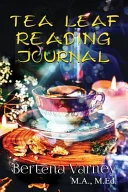
Bertena Varney’s Tea Leaf Reading Journal provides a much-needed, practical framework for those venturing into tasseography. Its strength lies in its unpretentious design, offering blank pages for recording symbols, numbers, and temporal sequences without overwhelming the novice. The journal’s layout encourages a methodical approach, allowing users to build a personal lexicon of the leaves' messages. However, the original blurb’s assertion that the art is ‘lost to many of the young readers today’ feels a touch hyperbolic; the challenge is more about accessibility than outright loss. While the journal itself is an excellent tool for recording, it offers minimal interpretative guidance, which is fitting for its purpose but might leave absolute beginners wanting more foundational knowledge. A particularly useful aspect is the space dedicated to noting the 'time flow,' a concept that brings a crucial linear dimension to the reading. The journal is a solid, functional record-keeping device that supports the learning process, rather than replacing it.
📝 Description
74
Bertena Varney's Tea Leaf Reading Journal, published June 21, 2020, is a practical guide for documenting tasseography sessions.
This journal provides a structured method for individuals interested in tea leaf reading. It helps users record the symbols, numbers, and patterns observed in tea leaves during divinatory readings. The layout is designed to aid in both the immediate capture of readings and subsequent analysis, promoting a deeper comprehension of the practice. Beginners will find its clear format especially useful, as it demystifies the process of observation and interpretation. Experienced practitioners can also use it to maintain a consistent record of their readings and monitor their progress over time.
The journal encourages users to note specific symbols like animals and objects, along with their assigned meanings. It also facilitates the recording of numerical interpretations and the general flow or temporal aspects of a reading. By systematically documenting these elements, readers can build a personal reference and track the development of their intuitive understanding of tasseography.
Tasseography, or tea leaf reading, has a history stretching back centuries, with roots often linked to ancient China and popularization in 17th century Europe. It experienced a revival in the late 19th and early 20th centuries alongside spiritualism. While it was treated as both a pastime and a serious divinatory art during the Victorian era, its transmission has faced challenges. This journal seeks to make the practice more accessible today, bridging the gap between historical methods and contemporary interest.
💡 Why Read This Book?
• Learn to systematically document tea leaf symbols and their observed meanings, moving beyond simple memorization to personal interpretation as encouraged by the journal's structured recording pages. • Practice tracking the 'time flow' within a reading by noting symbol placement relative to the cup's rim and base, a specific technique Varney’s journal helps you record and analyze. • Develop your intuition and observational skills through consistent practice, using the journal's dedicated sections to note recurring patterns and numerical sequences you encounter, as suggested by its design.
⭐ Reader Reviews
Honest opinions from readers who have explored this book.
❓ Frequently Asked Questions
What is the primary purpose of the Tea Leaf Reading Journal?
The journal's primary purpose is to provide a structured method for beginners to record and analyze the symbols, numbers, and temporal flow observed in tea leaf readings, fostering a deeper understanding and personal practice of tasseography.
Who is Bertena Varney, the author of this journal?
Bertena Varney is the author of the Tea Leaf Reading Journal, which was first published on June 21, 2020, aiming to make the ancient art of tasseography accessible to a new generation of practitioners.
Does the journal provide interpretations for tea leaf symbols?
No, the journal focuses on providing a space for the reader to record their observations of symbols, numbers, and time flow. It encourages personal interpretation rather than dictating meanings.
How does the journal help with understanding the 'time flow' in tea leaf readings?
The journal includes dedicated sections for noting the position of symbols within the cup, allowing the reader to map the temporal sequence of events—past, present, and future—as indicated by the leaves.
Is this journal suitable for advanced tea leaf readers?
While designed for beginners, experienced readers can also benefit from the journal as a tool for meticulous record-keeping, tracking personal insights, and observing long-term patterns in their readings.
When was the Tea Leaf Reading Journal first published?
The Tea Leaf Reading Journal by Bertena Varney was first published on June 21, 2020, making it a contemporary resource for learning tasseography.
🔮 Key Themes & Symbolism
Symbolic Interpretation
The journal emphasizes the identification and recording of various symbols that appear in the tea leaves. These can range from simple shapes to complex imagery, each believed to carry specific meanings. The practice encourages users to observe these symbols, note their placement, and begin to build a personal dictionary of interpretations, moving beyond rote memorization to intuitive understanding. The act of writing down these observations helps to solidify their meaning within the reader's practice.
Temporal Analysis
A core concept addressed by the journal is the 'time flow' within a tea leaf reading. By mapping the position of symbols from the rim (future) to the base (past), readers can construct a narrative timeline. The journal provides space to document these temporal indicators, allowing for a more nuanced understanding of how past events influence the present and shape future possibilities. This systematic approach adds depth to the divinatory process.
Personal Practice Development
This journal functions as a tool for cultivating a personal practice of tasseography. It encourages consistent engagement with the divinatory art by providing a structured format for recording insights. By documenting readings over time, users can track their progress, identify recurring themes or symbols, and refine their interpretive skills. The journal supports the journey of becoming a more adept and intuitive tea leaf reader.
Numerological Significance
Beyond visual symbols, the journal prompts users to record numerical patterns observed in the tea leaves. Numbers, whether appearing as clusters or individual digits, are often assigned specific meanings in divination. Documenting these numerical aspects allows for a layered interpretation, complementing the symbolic readings. This focus on numbers adds another dimension to the analytical process of tea leaf reading.
💬 Memorable Quotes
Direct passages from the work, attributed to the author.
“The journal allows the reader to record the symbols, numbers, and the time flow that they find in the cup.”
— This statement highlights the journal's core function: to be a practical tool for documenting the essential components of a tea leaf reading, thereby aiding the learning and practice of tasseography.
“The Ancient Art of Tea Leaf Reading is lost to many of the young readers today.”
— This sentiment expresses the author's concern about the decline in transmission of tasseography knowledge and serves as a motivation for creating an accessible guide for new practitioners.
“This Tea Leaf Reading Journal is great for those that are beginning to read tea leaves.”
— This direct assertion emphasizes the journal's target audience and its suitability as an introductory resource for individuals new to the practice of tea leaf divination.
“It allows the reader to record the symbols, numbers, and the time flow...”
— This phrase succinctly outlines the three primary elements of a tea leaf reading that the journal is designed to help users capture and analyze for deeper understanding.
💡 Key Ideas
Editorial paraphrase of the work's core concepts — not direct quotes.
Original blurb: The Ancient Art of Tea Leaf Reading is lost to many of the young readers today.
This quote indicates a perceived gap in modern esoteric education, suggesting that traditional practices like tasseography are not being passed down effectively, necessitating tools like this journal.
🌙 Esoteric Significance
Tradition
While not strictly tied to a single esoteric lineage like Hermeticism or Kabbalah, tasseography shares roots with scrying and other forms of sympathetic divination prevalent across various mystical traditions. Its practice of seeking meaning in natural patterns aligns with a broader Hermetic principle of correspondence—'As Above, So Below'—where the microcosm (the cup of leaves) reflects the macrocosm (universal forces and personal destiny). The journal facilitates a personal, intuitive engagement with these forces.
Symbolism
The core symbolism in tea leaf reading involves interpreting images formed by the leaves. Common symbols include an anchor, representing stability or a journey's end; a ring, signifying commitment or union; and various animals, each carrying traditional associations (e.g., a dog for loyalty, a snake for transformation or deception). The journal prompts users to record these symbols and their contextual meanings, encouraging a personal interpretation that aligns with established symbolic language.
Modern Relevance
In contemporary esoteric circles, practices like tasseography are experiencing a revival, often integrated with mindfulness, self-care, and personal development trends. Thinkers and practitioners exploring intuitive arts, modern witchcraft, and eclectic paganism find value in accessible divination methods. The Tea Leaf Reading Journal supports this by offering a practical, non-dogmatic approach that empowers individuals to connect with their intuition and explore symbolic language in a tangible way.
👥 Who Should Read This Book
• Novice practitioners of divination seeking a structured and straightforward introduction to tea leaf reading, providing a dedicated space to record observations and build interpretative skills. • Individuals interested in developing their intuition and symbolic literacy through a tangible, accessible practice, using the journal's prompts to note patterns and meanings. • Those exploring eclectic witchcraft or modern paganism who wish to incorporate a historically-rooted, yet easily learned, divinatory art into their spiritual toolkit.
📜 Historical Context
Tasseography, the art of reading tea leaves, gained significant traction in Europe during the 18th and 19th centuries, coinciding with the increasing availability of tea and a broader public fascination with spiritualism and divination. This era saw figures like Madame Blavatsky and the rise of Theosophy, which popularized many esoteric practices. While Varney's journal was published in 2020, it taps into this historical lineage of accessible occult tools. Unlike more academic or ritualistic approaches to divination, which often require extensive study of complex systems like the Kabbalah or Hermetic Qabalah, tasseography was often presented as a more intuitive and accessible parlor art. Its popularity waxed and waned, experiencing a decline in mainstream interest by the mid-20th century but seeing a resurgence in recent decades driven by renewed interest in mindfulness and alternative spirituality. Varney's work emerges in this contemporary context, seeking to revive and simplify a practice that has historical roots but faced challenges in its transmission to younger generations.
📔 Journal Prompts
Record the most prominent symbol in your cup and its perceived meaning for your current situation.
Document any numerical sequences observed and consider their significance.
Analyze the 'time flow' by noting the placement of key symbols from rim to base.
Reflect on the connection between the symbols and your personal feelings during the reading.
Compare symbols across multiple readings to identify recurring themes or patterns.
🗂️ Glossary
Tasseography
The practice of divining the future or gaining insight by interpreting patterns formed by tea leaves, coffee grounds, or wine sediments in a cup.
Symbol
An image or sign formed by the residue of tea leaves in a cup, believed to represent specific concepts, events, or energies relevant to the querent.
Time Flow
The concept within tea leaf reading that maps the temporal progression of events based on the location of symbols within the cup, typically from the rim (future) to the base (past).
Number
Numerical patterns or individual digits observed in the tea leaves, which are interpreted as having specific divinatory significance.
Querent
The person for whom a divination reading is performed; the individual seeking insight or answers.
Interpretation
The process of assigning meaning to the symbols, numbers, and patterns observed in the tea leaves based on traditional knowledge, intuition, and context.
Rim
The top edge of the teacup, often associated with the immediate future in the context of the 'time flow' in tasseography.
This book appears in 1 collection
🔮 Readers Also Liked
Browse all →









From the “Tea Leaf Reading” Collection
View all →





More Free Occult Philosophy Books
View all →