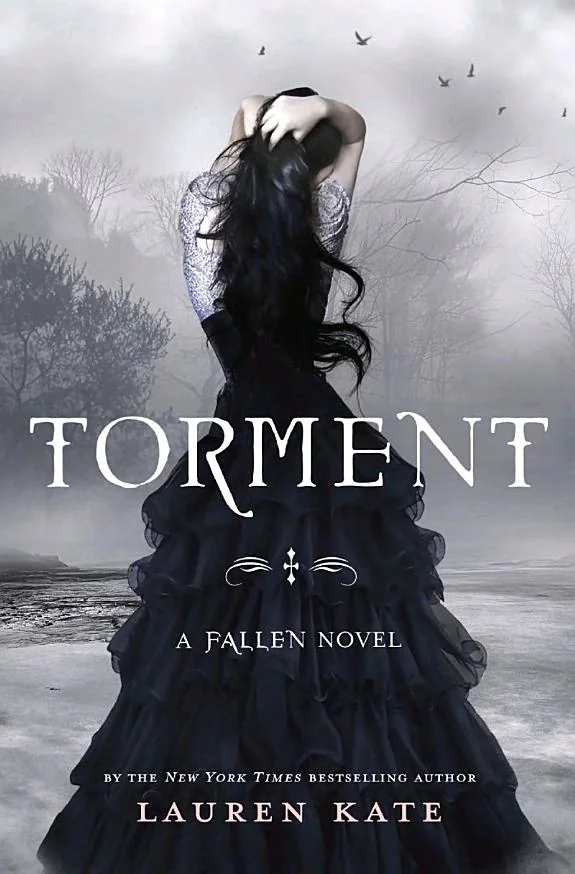
Torment
 72
72

Torment
Lauren Kate's Torment picks up the threads of Luce and Daniel's complicated existence with a determined focus on Luce's burgeoning powers. The novel excels in its depiction of the Nephilim academy, creating a believable, if contained, world for these supernatural beings. Luce's discovery of her ability to manipulate Shadows, her past lives manifesting visually, offers a compelling arc. However, the pacing occasionally falters, with extended periods of introspection that, while necessary for character development, can slow the momentum. The central romance, while foundational, sometimes overshadows the richer potential of the lore being established. The work's strength lies in its consistent world-building and the exploration of Luce's evolving agency. The limitation, perhaps, is the reliance on romantic tension as the primary driver, at times at the expense of broader plot advancement. Ultimately, Torment is a solid continuation for series devotees, deepening the mythology with a focus on Luce's personal discovery.
📝 Description
72
Torment, published in 2010, continues Luce and Daniel's story among Nephilim.
The second book in Lauren Kate's series, Torment, published in 2010, follows Luce Price as she navigates a specialized academy for Nephilim, beings who are half-angel and half-human. She is pursued by dark entities and seeks to understand her connection to them and her own past lives. The narrative expands on the supernatural lore introduced in the first book, Fallen, focusing on Luce's attempts to unravel the mysteries surrounding her existence and her relationship with the fallen angel Daniel.
This young adult novel appeals to readers who enjoy paranormal romance, particularly those interested in angel mythology and reincarnation. It builds upon the established relationship and world-building from the initial installment, offering readers a continuation of the central conflict and romantic arc. The story incorporates elements of hidden societies, unique abilities, and a sense of predestined connection.
Torment arrived in 2010, a time when young adult paranormal romance saw significant popularity. Authors like Stephenie Meyer and Cassandra Clare were also prominent in the supernatural fiction space. Kate's series contributed to this trend by reimagining biblical figures and celestial beings within a contemporary romantic context, adding to the genre's focus on angels and reincarnation.
This novel engages with themes that resonate within certain esoteric traditions, particularly those concerned with reincarnation and the nature of angelic beings. The concept of Nephilim, as presented, touches upon interpretations of biblical texts that discuss offspring of divine or fallen entities. The focus on past lives and a soul's recurring journey is a common thread in spiritual philosophies that posit a continuous existence beyond a single lifetime. The narrative frames these ideas within a contemporary, romantic context, making them accessible to a younger audience interested in supernatural elements.
💡 Why Read This Book?
• Gain insight into the mechanics of Shadow manipulation, a unique power system where past lives physically manifest, offering a distinct perspective on reincarnation beyond simple memory recall. • Understand the specific role of the Nephilim academy as a sanctuary and training ground for angelic-human hybrids, a concept explored in detail throughout the novel's 2010 publication context. • Experience Luce's journey of piecing together fragmented memories from various past lives, providing a concrete example of how ancient souls grapple with contemporary fated connections.
⭐ Reader Reviews
Honest opinions from readers who have explored this book.
❓ Frequently Asked Questions
What are Nephilim in Lauren Kate's Torment?
In Torment, Nephilim are depicted as the offspring of fallen angels and humans. The book is set largely within a school specifically designed to protect and educate these beings, exploring their unique challenges and origins.
How does Luce discover her powers in Torment?
Luce begins to understand her connection to the Shadows that have always followed her. She learns these Shadows are manifestations of her past lives and starts to manipulate them, uncovering memories and truths about her existence.
What is the significance of the Shadows in the book?
The Shadows are not mere apparitions but are revealed to be tangible connections to Luce's numerous past lives. Her ability to perceive and later manipulate them is central to her quest for self-understanding and the revelation of her destiny.
Who is Daniel in relation to Luce in Torment?
Daniel is Luce's cursed angelic boyfriend. Their relationship is a focal point of the series, deeply intertwined with Luce's past lives and the ongoing conflict involving fallen angels. Their connection is a primary driver of the plot.
When was Torment by Lauren Kate first published?
Torment, by Lauren Kate, was first published in 2010. It is the second book in the Fallen series, following the initial installment, Fallen.
What is the primary setting for most of the action in Torment?
The majority of the action in Torment takes place within a specialized school designed for Nephilim. This hidden academy serves as a sanctuary and a place where Luce learns more about her nature and abilities.
🔮 Key Themes & Symbolism
Reincarnation and Past Lives
Torment places significant emphasis on the concept of reincarnation, presenting it not just as a belief but as a tangible force shaping the protagonist's present. Luce perceives her past lives as shadowy manifestations, allowing her to interact with and learn from them. This exploration goes beyond mere memory recall, suggesting a soul's continuous journey through different existences and the karmic threads that bind individuals across time. The narrative uses this theme to explain Luce's unique connection to Daniel and the recurring patterns in her life.
The Nature of Nephilim
The book examines the lore of Nephilim, beings born from the union of fallen angels and humans. The existence of a clandestine school dedicated to them highlights their unique status and the need for protection from both angelic and human worlds. Torment explores the inherent conflict and duality within these beings, caught between celestial heritage and mortal lineage. This concept introduces a fresh perspective on biblical mythology, reinterpreting ancient beings for a contemporary young adult audience.
Shadow Manipulation
A central esoteric concept introduced in Torment is Luce's ability to manipulate Shadows. These are not simply dark areas but are presented as manifestations of her past lives and spiritual essence. Her journey involves understanding the origin of these Shadows and learning to control them. This ability allows her to access fragmented memories, gain insight into her fated destiny, and potentially alter her circumstances. The manipulation of these ethereal entities signifies a growing control over her supernatural heritage.
Fated Love and Destiny
The intense connection between Luce and Daniel is framed within the context of a powerful, fated destiny. Their love transcends individual lifetimes, suggesting a soul-bound relationship that has persisted through centuries. The narrative explores the idea that certain souls are meant to find each other repeatedly, facing trials and tribulations across different eras. This theme addresses the allure of eternal love and the question of whether destiny can be defied or is an immutable force guiding individuals.
💬 Memorable Quotes
Direct passages from the work, attributed to the author.
“I see shadows everywhere. I’ve been seeing them my whole life.”
— This statement captures Luce's lifelong experience of being followed by spectral entities. It serves as the initial clue to her unique nature and the connection to her past lives that the narrative seeks to unravel.
“My past lives are like a ghost, haunting me.”
— This interpretation reflects Luce's perception of her past existences as intrusive and overwhelming. The 'haunting' implies a lack of control and understanding, driving her quest to confront and integrate these fragmented selves.
💡 Key Ideas
Editorial paraphrase of the work's core concepts — not direct quotes.
You’re the only angel who’s fallen for me.
This line highlights the central, forbidden romance between Luce and Daniel, emphasizing the unique and perilous nature of their relationship. It underscores Daniel's status as a fallen angel and the extraordinary circumstances of their bond.
The school is supposed to be a safe place for Nephilim.
This paraphrased concept points to the primary function of the Nephilim academy within the story. It establishes the setting as a sanctuary designed to protect beings with angelic heritage, hinting at external threats and the secrets it holds.
I’m learning to control the shadows.
This paraphrase signifies Luce's developing powers and her growing agency. It marks a turning point from being a victim of her past to actively engaging with and mastering the supernatural elements connected to her being.
🌙 Esoteric Significance
Tradition
While not explicitly tied to a single established esoteric lineage like Hermeticism or Gnosticism, Torment draws heavily on themes present in Abrahamic religious apocrypha and angelology. The concept of fallen angels and their offspring (Nephilim) is a motif found in various occult traditions that interpret biblical texts outside mainstream theology. The work engages with ideas of cyclical existence and soul destiny, which echo concepts found in Theosophy and certain interpretations of reincarnation prevalent in esoteric thought, though presented through a modern YA lens.
Symbolism
The primary symbols in Torment are the 'Shadows' and the 'Nephilim' themselves. Shadows represent the fragmented traces of past lives, the burdens and wisdom carried by a soul across its many incarnations. They are tangible manifestations of Luce's history, a visual representation of her spiritual journey. Nephilim symbolize duality – the inherent conflict and potential arising from the union of the divine (fallen angel) and the mortal (human). Their existence within a hidden academy highlights themes of secrecy, protection, and the struggle for identity.
Modern Relevance
Contemporary explorations of angel mythology in paranormal fiction and urban fantasy continue to draw from the wellspring of lore that Kate's series tapped into. Authors and creators interested in reimagining celestial beings, exploring themes of reincarnation with a supernatural twist, or crafting complex, fated romances often find inspiration in the archetypes presented in Torment. The focus on a female protagonist discovering and mastering her unique, inherited powers also aligns with modern trends in empowering female characters within speculative fiction.
👥 Who Should Read This Book
• Young adult readers aged 13-18 who are avid fans of paranormal romance and have enjoyed series like Twilight or The Vampire Diaries, seeking continued engagement with angelic themes. • Individuals interested in exploring concepts of reincarnation and past lives through a narrative lens, particularly those drawn to fictional accounts of souls existing across multiple lifetimes. • Fans of Lauren Kate's Fallen series who wish to further immerse themselves in the mythology of angels, Nephilim, and the ongoing romantic saga of Luce and Daniel.
📜 Historical Context
Torment, published in 2010, landed squarely in the zenith of the young adult paranormal romance boom, a genre significantly shaped by the cultural phenomenon of Stephenie Meyer's Twilight series. This period saw an explosion of interest in supernatural beings, particularly vampires and angels, reimagined for teen audiences. Lauren Kate's series contributed to this trend by focusing on fallen angels and their Nephilim offspring. In 2010, authors like Cassandra Clare were also establishing their presence with angel-centric urban fantasy in The Mortal Instruments series, indicating a strong market for such narratives. The reception of Torment, like its predecessor, was largely positive among its target demographic, reinforcing the viability of angel lore within contemporary fantasy. While not facing direct censorship, the genre itself was subject to critical discourse regarding its romanticization of potentially problematic power dynamics, a conversation that included many authors of the era.
📔 Journal Prompts
Luce's manipulation of Shadows, reflecting past lives.
The dual nature of being Nephilim.
Daniel's role as a fallen angel.
The significance of the Nephilim academy.
The recurring patterns across Luce's past lives.
🗂️ Glossary
Nephilim
In Torment, Nephilim are the offspring of fallen angels and humans. They possess unique abilities and are often caught between the celestial and mortal realms, requiring protection and understanding.
Shadows
Manifestations of Luce's past lives that have followed her throughout her existence. She learns to perceive and manipulate them, uncovering memories and truths about her soul's journey.
Fallen Angel
An angel who has been cast out of Heaven. Daniel, Luce's love interest, is a fallen angel, his cursed existence being a central element of the series' mythology and conflict.
Reincarnation
The concept that a soul is reborn into a new body after death. Torment explores this extensively, with Luce piecing together fragments of her soul's experiences across multiple lifetimes.
Past Lives
Previous existences of a soul. Luce's journey in Torment is largely about uncovering and understanding the events and connections from her numerous past lives.
Cursed
In the context of Torment, 'cursed' refers to a supernatural affliction or fate imposed upon characters, often involving eternal punishment or a predetermined difficult existence, such as Daniel's.
Angelology
The study of angels. While not explicitly academic within the book, the lore surrounding angels, their hierarchy, and their interactions with humanity forms the basis of the series' supernatural framework.
This book appears in 1 collection
🔮 Readers Also Liked
Browse all →









From the “Angels” Collection
View all →


More Free Occult Philosophy Books
View all →