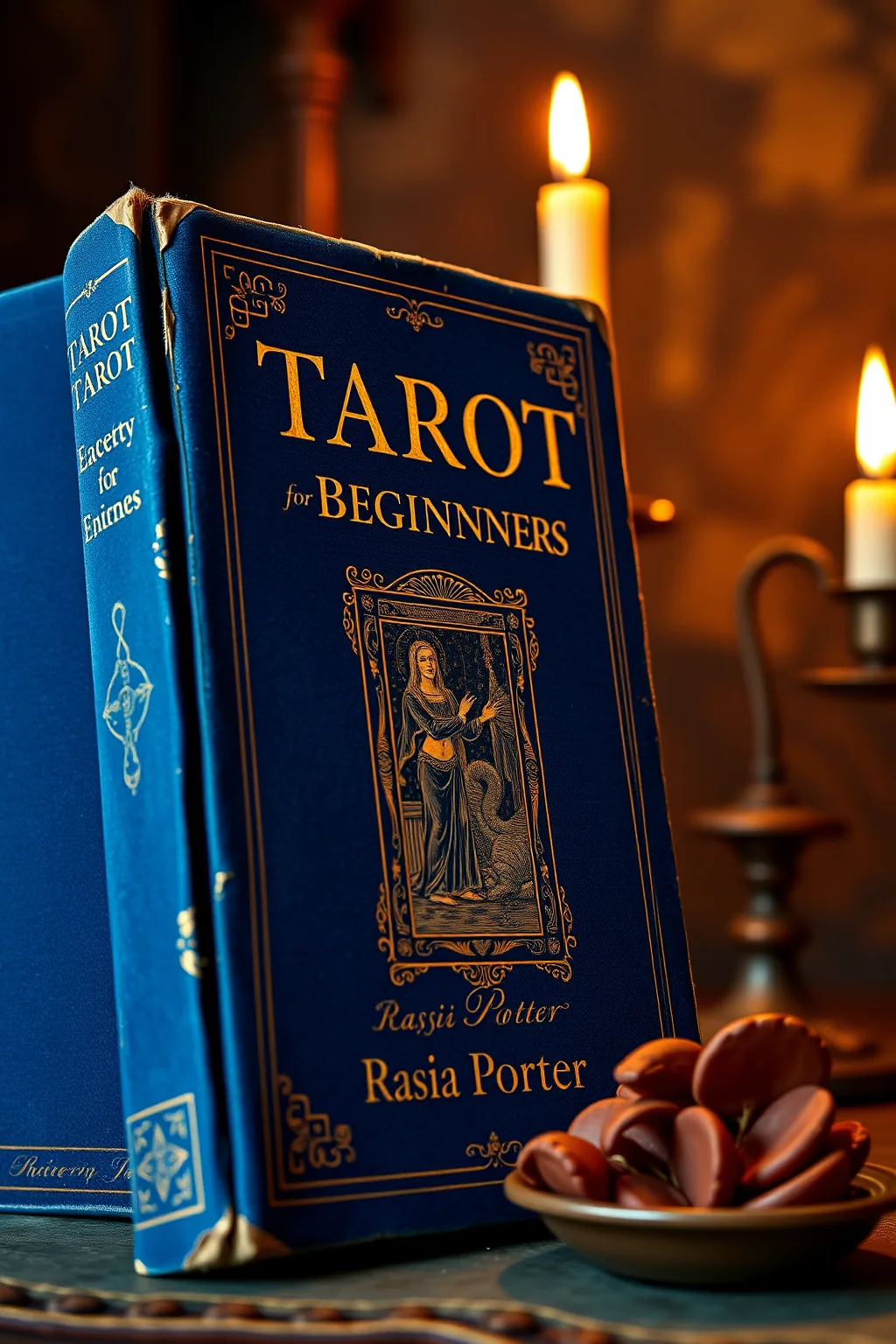
Tarot for Beginners
 62
62

Tarot for Beginners



Marcus Thorne (Esoteric Sciences Reviewer) — Rasia Potter's "Tarot for Beginners" is a standout in the crowded field of introductory Tarot texts. Potter's prose is both accessible and imbued with the mystical gravitas befitting the subject. She expertly navigates the labyrinthine symbolism of the cards, offering genuine esoteric insights rather than superficial interpretations. This work is particularly strong in its exploration of the archetypal resonance within each card, connecting them to deeper psychological and spiritual principles. It is an ideal primer for neophytes yearning for authentic understanding, as well as a valuable refresher for seasoned practitioners seeking to deepen their connection to the Tarot's profound wisdom.
📝 Description
62
Rasia Potter's 2023 "Tarot for Beginners" demystifies the 78 cards of the Tarot.
This book breaks down the meaning behind each of the 78 Tarot cards. Rasia Potter explains the symbolism found in both the Major and Minor Arcana. The text focuses on how these symbols relate to common human experiences and broader universal patterns. It also touches on the history and philosophy behind Tarot as a divinatory practice. The book aims to guide new readers in understanding the cards for personal insight and spiritual growth. It encourages developing intuition through consistent engagement with the Tarot.
Potter's approach is designed to help readers interpret card spreads and gain a better understanding of themselves. The book covers basic methods for drawing and reading cards. It intends to transform the Tarot from a complex system into an accessible tool for self exploration. Readers will learn to recognize the archetypal energies present in the cards and how they can be applied to daily life. The goal is to foster a deeper connection with the self through the practice of Tarot reading.
This book enters the tradition of Western esotericism, specifically the divinatory arts that gained prominence in the late 19th and early 20th centuries. Tarot, particularly the Rider-Waite-Smith deck, became a central tool for figures like A.E. Waite and Pamela Colman Smith, who linked card imagery to occult symbolism and psychological archetypes. Potter's work follows in this lineage, presenting Tarot as a system for understanding consciousness and the cosmos, moving beyond simple fortune telling to a practice of self knowledge and spiritual development within the esoteric framework.
💡 Why Read This Book?
This book is your sacred key to unlocking the Tarot's profound secrets. It offers a mystical, intuitive approach, transforming card reading from a mere prediction into a dialogue with the soul. Ideal for seekers yearning for self-awareness, practitioners wishing to refine their craft, and scholars intrigued by ancient divination systems, it provides a grounding in esoteric principles and practical application.
⭐ Reader Reviews
Honest opinions from readers who have explored this book.
❓ Frequently Asked Questions
What makes this Tarot book unique?
It prioritizes a deep, intuitive understanding of card symbolism and archetypal energies, moving beyond rote memorization to foster a true connection with the Tarot's mystical essence.
Do I need prior knowledge of Tarot?
No, this book is meticulously crafted for absolute beginners. It guides you step-by-step through the fundamental concepts, meanings, and practices of Tarot reading.
How will this book help my spiritual journey?
It serves as a spiritual compass, revealing hidden truths about yourself and the universe. The Tarot becomes a tool for introspection, guidance, and the cultivation of intuition.
Can I use this book for practical readings?
Absolutely. Potter provides clear guidance on card spreads and interpretation techniques, enabling you to confidently conduct readings for yourself and others.
What kind of symbolism does the book cover?
The book delves into the rich, multi-layered symbolism of both the Major and Minor Arcana, exploring their connections to mythology, astrology, and universal archetypes.
🔮 Key Themes & Symbolism
The Language of Archetypes
This book reveals the Tarot as a living language of universal archetypes, the fundamental building blocks of human consciousness. Each card embodies powerful symbolic figures and narratives that resonate with our deepest psychological and spiritual realities. By understanding these archetypes, readers can decode the hidden messages within the cards, gaining useful insights into their own lives, relationships, and the unfolding patterns of destiny. This theme emphasizes the Tarot's role as a mirror to the soul and a guide to the collective unconscious.
Intuitive Divination as Sacred Practice
Beyond simple fortune-telling, "Tarot for Beginners" positions divination as a sacred practice, a profound act of communion with the unseen realms. The book guides readers to cultivate their innate intuition, transforming the act of drawing cards into a meditative dialogue with the divine. It emphasizes the importance of intention, mindfulness, and respectful engagement with the Tarot, fostering a deeper connection to the subtle energies that influence our lives. This theme encourages a holistic approach to reading the Tarot, integrating it into a spiritual discipline.
The Hermetic Art of Symbolic Interpretation
Rasia Potter masterfully unpacks the intricate web of symbolism that defines the Tarot. This theme explores the Hermetic principles underlying the cards, from the alchemical transformations in the Minor Arcana to the cosmic journeys of the Major Arcana. Readers will learn to decipher the visual language of the cards, understanding the nuanced meanings of colors, numbers, figures, and celestial influences. The book provides the tools to unlock these layers of meaning, enabling a sophisticated and insightful interpretation of any Tarot spread.
💬 Memorable Quotes
Direct passages from the work, attributed to the author.
“Each card is a whispered secret from the soul, waiting to be heard.”
— This suggests that the Tarot's wisdom is deeply personal and intuitive, urging readers to listen to their inner voice and connect with their subconscious through the cards.
“The Fool's leap is not an act of recklessness, but of profound faith in the unfolding mystery.”
— This interpretation frames the iconic Fool card as a symbol of courageous beginnings and trust in the unknown, essential for personal growth and spiritual exploration.
“To read the Tarot is to learn the ancient dialogue between the seen and the unseen.”
— This emphasizes the Tarot's function as a bridge between the material world and the spiritual dimensions, facilitating understanding of the subtle influences that guide existence.
💡 Key Ideas
Editorial paraphrase of the work's core concepts — not direct quotes.
The Tarot is not a map of a fixed future, but a compass to work through the currents of possibility.
This quote highlights the Tarot's dynamic nature, emphasizing its role in empowering choice and conscious creation rather than dictating predetermined outcomes.
The Arcana are not merely images, but living energies that shape our reality.
This quote elevates the Tarot cards beyond static symbols, presenting them as active forces that influence our lives and the world around us, inviting a deeper engagement.
🌙 Esoteric Significance
Tradition
This work draws deeply from the Hermetic tradition, a philosophical and spiritual system that emphasizes the interconnectedness of all things and the pursuit of gnosis (knowledge). It also aligns with Neoplatonic thought, viewing the Tarot as a microcosm reflecting the macrocosm, and with Jungian psychology, interpreting the cards as archetypal expressions of the collective unconscious.
Symbolism
The Tarot's symbolism is a body of work woven from diverse sources, including ancient mythology, astrology, alchemy, and Kabbalah. Key symbols like the Fool, the Magician, the High Priestess, and the Lovers represent fundamental archetypes and spiritual journeys. The suits (Wands, Cups, Swords, Pentacles) correspond to elements and aspects of human experience, while the numbers and court cards offer further layers of meaning and personality archetypes.
Modern Relevance
In an age often characterized by disconnection and existential questioning, the Tarot offers a powerful tool for introspection and spiritual grounding. Its archetypal narratives provide a framework for understanding personal challenges and opportunities. The practice of Tarot reading fosters intuition, encourages mindful reflection, and empowers individuals to navigate life's complexities with greater wisdom and self-awareness.
👥 Who Should Read This Book
This book is an indispensable companion for the nascent Tarot enthusiast, offering a clear and reverent introduction. Scholars of esotericism will appreciate its depth and adherence to classical interpretations. Spiritual seekers will find it a profound tool for self-discovery and intuitive development. Practitioners, whether new or experienced, will benefit from its foundational wisdom and emphasis on building a personal, meaningful relationship with the cards.
📜 Historical Context
Emerging from the collection of Renaissance Europe, the Tarot has a lineage entwined with esoteric traditions, occult philosophy, and artistic innovation. While its exact origins are debated, its widespread use as a divinatory tool gained traction in the 18th century, influenced by figures like Antoine Court de Gébelin, who connected its symbolism to ancient Egyptian mysteries. The 19th century saw further esoteric development with groups like the Hermetic Order of the Golden Dawn, which codified interpretations and created influential decks like the Rider-Waite-Smith. This period was characterized by a fervent interest in occultism, spiritualism, and the hidden knowledge believed to be preserved in ancient symbols and practices. "Tarot for Beginners" taps into this enduring legacy, presenting the Tarot not as a mere novelty, but as a continuation of a profound, centuries-old quest for self-understanding and cosmic connection.
📔 Journal Prompts
Reflect on the 'Fool's Journey' archetype: Where are you currently on your own path of new beginnings, and what fears or excitements does this bring?
Choose a card that appeals to a current challenge in your life. What message does its symbolism offer for overcoming this obstacle?
Explore the element associated with your favorite suit. How does this element manifest in your daily life and your approach to relationships and work?
Consider the 'Hermit' card. What inner wisdom are you currently seeking, and how can you create space for solitude and introspection to find it?
Meditate on the 'World' card. What does a sense of completion and fulfillment look like for you, and what steps can you take to manifest it?
🗂️ Glossary
Arcana
Refers to the two main divisions of the Tarot deck: the Major Arcana (22 cards representing significant life lessons and spiritual journeys) and the Minor Arcana (56 cards depicting daily events and circumstances).
Archetype
A universal, archaic pattern and image that derives from the collective unconscious and is the psychic counterpart of an instinct. In Tarot, cards embody these fundamental human experiences.
Divination
The practice of seeking knowledge of the future or the unknown by supernatural means; in Tarot, it involves interpreting card symbolism to gain insight.
Esoteric
Intended for or likely to be understood by only a small number of people with a specialized knowledge or interest; relating to mystical or occult matters.
Gnosis
Spiritual knowledge or insight, particularly the kind that is considered mystical or supernatural. It is often associated with esoteric traditions.
This book appears in 3 collections
🔮 Readers Also Liked
Browse all →








More by Rasia Potter
All books →
From the “Tarot” Collection
View all →







More Free Divination & Tarot Books
View all →