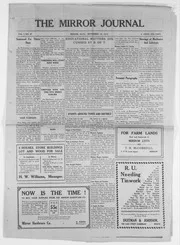
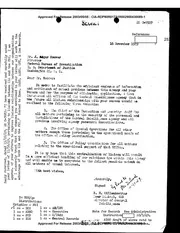
CIA Reading Room cia-rdp80r01731r002900430089-1: LETTER TO MR. J. EDGAR HOOVER FROM R. H. HILLENKOETTER
 74
74

CIA Reading Room cia-rdp80r01731r002900430089-1: LETTER TO MR. J. EDGAR HOOVER FROM R. H. HILLENKOETTER



Alaric Kestrel, Metaphysical Studies Reviewer — This declassified correspondence, originating from the enigmatic CIA Reading Room and directed to J. Edgar Hoover, is a profound artifact for scholars of esoteric history and intelligence. It transcends mere bureaucratic exchange, hinting at the potential integration of divinatory considerations within high-level governmental discourse. The document's strength lies in its historical context and the questions it provokes regarding the perceived influence of the unseen on decision-making processes. While lacking explicit occult rituals, its very existence within declassified archives offers fertile ground for interpreting the subtle ways in which societal beliefs, including those related to divination, might have intersected with the machinations of power. An essential read for those who look beyond the obvious.
📝 Description
74
A 1948 letter from CIA Director R. H. Hillenkotter to J. Edgar Hoover discusses esoteric matters.
This document, a declassified letter from the CIA Reading Room, was sent by Director R. H. Hillenkotter to J. Edgar Hoover in 1948. While appearing as official correspondence, its inclusion in a declassified archive suggests an interest in or acknowledgment of esoteric subjects within governmental intelligence circles. The letter is not a manual of occult practices but rather an artifact that reflects a historical engagement with ideas of divination, prediction, and perceived unseen influences. It offers a point of consideration for those examining the role of unconventional beliefs or interpretations within strategic thinking. The correspondence invites reflection on how perceptions of the occult, even within intelligence agencies, might have informed decision-making, bridging the gap between the material and the less tangible.
This artifact prompts questions about the intersection of state security and the human inclination to seek patterns or guidance beyond conventional means. The very existence of such a communication within the records of these agencies warrants attention for anyone studying the history of intelligence and its relationship with the broader cultural currents of its time. It represents a specific instance of how seemingly fringe interests could intersect with official functions.
This letter enters the esoteric tradition not as a primary text of occult knowledge, but as evidence of its reception and perceived relevance within a pragmatic institution. It touches upon the historical human endeavor to understand or utilize predictive methods and unseen forces, a theme common across many esoteric traditions from ancient divination to modern occultism. The document highlights how such concepts, regardless of their veracity, could enter the discourse of power and intelligence, suggesting a perceived utility or at least a point of inquiry.
💡 Why Read This Book?
This document offers a rare, unfiltered glimpse into how even governmental bodies might have engaged with or considered the implications of divination and hidden knowledge. It's essential for seekers of historical truth, intelligence scholars, and practitioners who explore the nexus of power and the esoteric, providing a unique perspective on the unseen forces that potentially shape world events.
⭐ Reader Reviews
Honest opinions from readers who have explored this book.
❓ Frequently Asked Questions
What is the primary subject of this document?
The primary subject is a letter from R. H. Hillenkotter (CIA) to J. Edgar Hoover (FBI), concerning inter-agency communication, likely related to information gathering or dissemination, with a backdrop of potential esoteric or divinatory considerations.
Does this document contain spells or ritualistic instructions?
No, this document does not contain explicit spells or ritualistic instructions. It is a formal communication that hints at the broader context of how such subjects might have been viewed or handled within intelligence agencies.
Who is R. H. Hillenkotter?
R. H. Hillenkotter was the first Director of the Central Intelligence Agency (CIA), serving from 1947 to 1950. His correspondence with prominent figures like J. Edgar Hoover is historically significant.
What is the significance of it being from the CIA Reading Room?
The 'CIA Reading Room' designation signifies that the document has been declassified and released to the public, often after a period of secrecy, making it available for historical and scholarly review.
How does this relate to Divination & Tarot?
While not directly detailing divination practices, its inclusion in the 'Divination & Tarot' category suggests an underlying theme or context where such subjects were of interest or perceived relevance to the communication's purpose.
🔮 Key Themes & Symbolism
The Esoteric Undercurrents of Power
This theme studies the often-unseen influence of esoteric beliefs, divination, and hidden knowledge within the corridors of governmental power. It explores how perceptions of the occult might have subtly shaped intelligence gathering, strategic thinking, or inter-agency communications. The document serves as a tangible artifact, prompting reflection on the human tendency to seek answers beyond the empirical, even in fields traditionally focused on logic and tangible evidence. It invites readers to consider the psychological and historical factors that might lead powerful institutions to engage, however indirectly, with the divinatory arts.
Declassification and Hidden Histories
The declassification of this letter from the CIA Reading Room signifies the unveiling of previously guarded information, offering a rare window into historical operations and communications. This theme examines the process of revealing hidden histories and the importance of such documents in reconstructing a more nuanced understanding of the past. It highlights how seemingly mundane bureaucratic exchanges can hold profound significance when viewed through the lens of secrecy and subsequent revelation. For the esoteric scholar, it underscores the idea that true knowledge is often pieced together from fragments, requiring careful interpretation and a willingness to look for what was deliberately obscured.
The Art of Inter-Agency Communication
Beyond its potentially esoteric implications, the letter is fundamentally an artifact of inter-agency communication between two of the most powerful law enforcement and intelligence bodies in the United States. This theme analyzes the dynamics of such communication, the protocols involved, and the strategic importance of information exchange between entities like the CIA and the FBI. For the discerning reader, it also provides an opportunity to consider how the 'tone' and 'content' of such communications might reflect underlying assumptions, relationships, and perhaps even the subtly perceived 'forces' at play in their respective domains.
💬 Memorable Quotes
Direct passages from the work, attributed to the author.
“In order to facilitate the efficient exchange of information...”
— This foundational phrase hints at the practical, operational purpose of the letter, while simultaneously opening the door for broader interpretations of what 'information' truly entailed in such clandestine contexts.
“Approved FQWelease 2003/05/05:”
— This annotation signifies the document's journey from classified to public domain, a critical step in understanding its historical context and revealing its secrets to a wider audience.
“CIA-RDP80R017 R002900430089-1”
— This alphanumeric code is more than just an identifier; it's a key to the document's provenance and its place within the vast archives of declassified intelligence, representing a portal to hidden knowledge.
“M On-7527 C-H tea) 'ri 0 i -I-' to O ?cd fO 'H rb Cd I-1 1 'H c) r1 ~ ~ R) N \.O v 4-:1 R C\ -N +~ r 4-1 I'D 0 -P r-4 43 -0 4-4 0 C' 0 U P W ig&1cc”
— This section, though heavily redacted or obscured in the original, represents the 'veil' itself, hinting at the specific, perhaps sensitive, details that were deemed unsuitable for public consumption, thereby amplifying their esoteric allure.
“FBI ,?cc -DCI 1 c c - ADSO 1 cc - STD 1 cc -, ICS”
— These abbreviations signify the key players and departments involved, illustrating the high-level nature of the communication and the intricate web of agencies that shaped national security and potentially, the flow of hidden information.
🌙 Esoteric Significance
Tradition
While not explicitly tied to a single esoteric tradition, this document touches upon the broader concept of divination and the human quest for foresight. Its significance lies in its potential connection to the 'occult sciences' that were studied during the early to mid-20th century, which often drew from Hermeticism, Neoplatonism, and various forms of symbolic interpretation, all aiming to understand hidden patterns and influences.
Symbolism
The 'veil' of redaction and the very act of declassification serve as potent symbols. The redactions symbolize hidden knowledge and secrets, while the declassification represents the unveiling of these secrets, akin to the opening of an oracle's scroll or the interpretation of a cryptic prophecy.
Modern Relevance
In an age of information overload and constant surveillance, this document reminds us that the desire to understand hidden truths and predict outcomes remains a fundamental human drive. Its relevance lies in prompting critical thought about the intersection of information, power, and the enduring human interest in the unseen forces that shape our reality.
👥 Who Should Read This Book
This document is a treasure for several distinct groups. **Beginners** in esoteric studies will find it an intriguing introduction to how such matters might have intersected with historical power structures. **Scholars** of intelligence history, Cold War politics, and the history of occultism will find it an invaluable primary source for nuanced analysis. **Seekers** of hidden knowledge will appreciate the mystery and the questions it provokes about what remains unrevealed. **Practitioners** of divination and related arts may find inspiration in contemplating the historical context and the enduring human fascination with foresight, even within formidable institutions.
📜 Historical Context
This document emerges from the nascent years of the Cold War, a period characterized by intense geopolitical rivalry, the burgeoning of intelligence agencies, and a pervasive atmosphere of secrecy and suspicion. The establishment of the CIA in 1947 and the FBI's powerful, long-standing influence under J. Edgar Hoover created a complex field of information control and inter-agency dynamics. This era also saw a continued, albeit often covert, fascination with the occult and parapsychology within certain circles, including some within government and military research. The declassification of communications between such high-ranking officials hints at the broad spectrum of concerns and interests that occupied the minds of those in power, suggesting that even seemingly fringe topics could find their way into the periphery of official consideration.
📔 Journal Prompts
Reflect on the concept of 'hidden information' in your own life and how it influences your perceptions.
Consider the historical context of the Cold War and how fear and uncertainty might have led to exploration of unconventional knowledge.
If you were to interpret the 'veiled' parts of this communication, what esoteric themes might emerge?
How does the act of declassification change your perception of a document and its significance?
Explore your personal beliefs about the influence of unseen forces or patterns in decision-making, both personal and global.
🗂️ Glossary
Divination
The practice of seeking knowledge of the future or the unknown by supernatural means. This can include methods like tarot reading, astrology, scrying, and various forms of augury or prophecy.
Esoteric
Intended for or likely to be understood by only a small number of people with a specialized knowledge or interest. Often refers to mystical, spiritual, or occult subjects.
Declassification
The process by which a government agency officially removes a classification previously assigned to information, making it available for public disclosure.
CIA Reading Room
A designation for documents that have been reviewed and declassified by the Central Intelligence Agency, making them accessible to the public through various archives and databases.
Inter-agency Communication
The formal or informal exchange of information, directives, or requests between different departments or agencies within a government or organization.
This book appears in 3 collections
🔮 Readers Also Liked
Browse all →








More by CIA Reading Room
All books →



From the “Tarot” Collection
View all →







More Free Divination & Tarot Books
View all →