I ching
 61
61

I ching



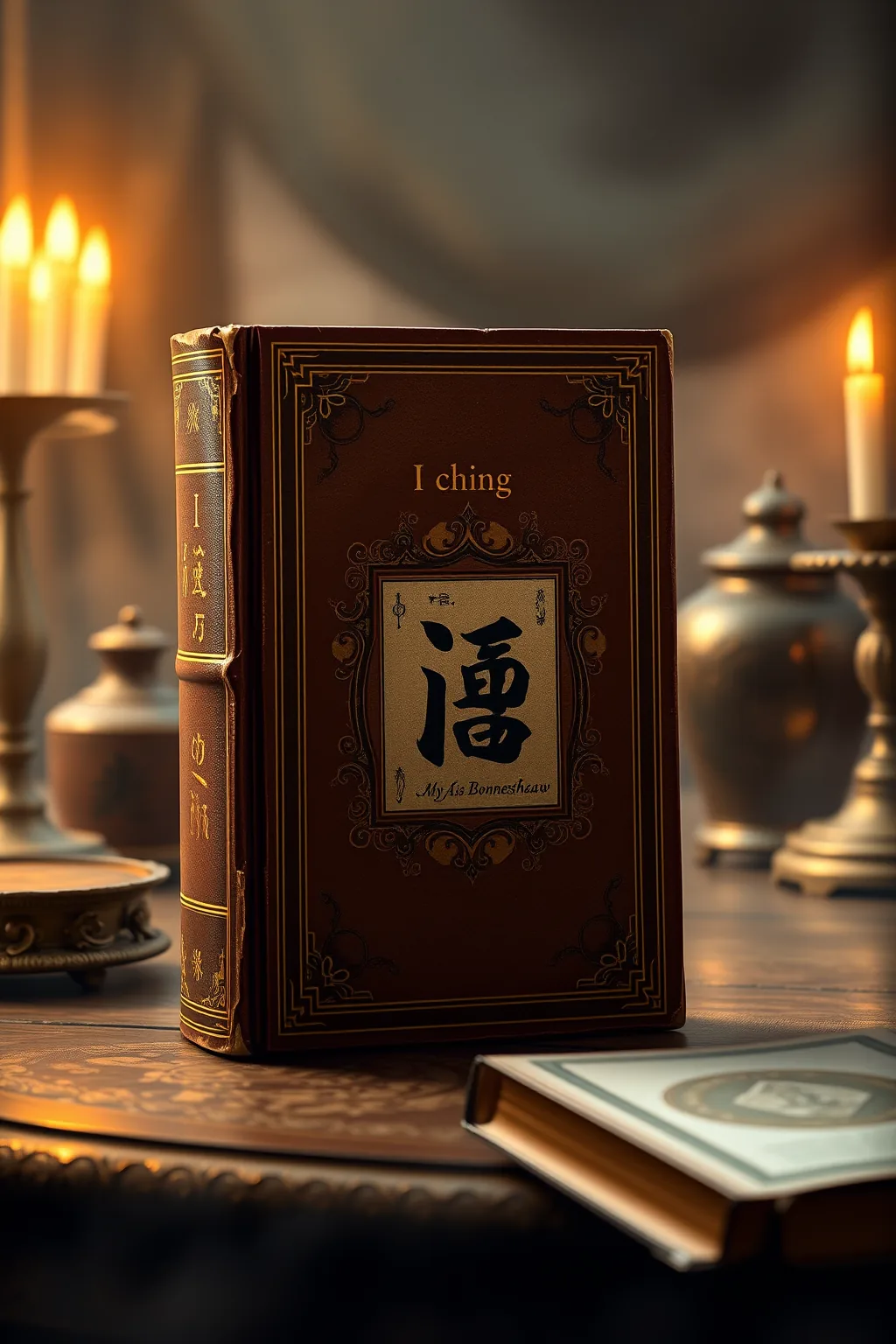
Evander Ashcroft (Alchemy & Hermeticism Editor) — Asa Bonnershaw's "I Ching" stands as a luminous beacon within the Esoteric Library's collection, offering a deeply resonant exploration of this primordial oracle. Bonnershaw masterfully captures the profound symbolic language and philosophical underpinnings of the Yi Jing, presenting its wisdom with clarity and reverence. This edition is particularly vital for its ability to bridge the gap between ancient textual tradition and contemporary esoteric practice. It illuminates the alchemical process of transformation inherent in the hexagrams, making it an indispensable resource for serious practitioners and scholars alike who seek to understand the cosmic dance of Yin and Yang.
📝 Description
61
Asa Bonnershaw's 2023 edition of the I Ching explains its 3,000-year-old system of divination.
This 2023 edition of the I Ching by Asa Bonnershaw presents the classic Chinese text for contemporary readers. Bonnershaw's translation aims to capture the philosophical depth of the hexagrams, which serve as tools for understanding change and decision-making. The book details the structure of the 64 hexagrams, their constituent trigrams, and the associated texts. It explains how to interpret the hexagrams through methods like yarrow stalk or coin casting, linking these to broader cosmological principles.
The author’s annotations focus on the I Ching's role as a philosophical guide rather than solely a divinatory tool. The text discusses concepts like the Tao, yin and yang, and the dynamic interplay of forces in the universe. Bonnershaw’s translation emphasizes clarity, making the complex symbolism accessible to those interested in Chinese philosophy, self-reflection, and the study of change.
The I Ching, or Book of Changes, is one of the oldest Chinese classic texts, dating back over three millennia. It functions as a philosophical treatise and a system of divination rooted in Taoist principles. Its core is a set of 64 hexagrams, formed from combinations of eight trigrams, each representing fundamental states of being or processes of change. These hexagrams are used to gain insight into present situations and potential future developments, encouraging alignment with the natural order of the Tao.
💡 Why Read This Book?
This edition of the "I Ching" offers a unique gateway into one of humanity's oldest wisdom traditions. It is ideal for seekers yearning to understand the patterns of change and destiny, scholars dedicated to ancient philosophical systems, and practitioners of divination seeking profound symbolic insight. Bonnershaw's work unveils the I Ching not just as a divinatory tool, but as a profound philosophical text for navigating life's complexities.
⭐ Reader Reviews
Honest opinions from readers who have explored this book.
❓ Frequently Asked Questions
What is the I Ching?
The I Ching, or "Book of Changes," is an ancient Chinese divination text and philosophical classic. It comprises 64 hexagrams, each formed by six lines, representing fundamental archetypes and situations in the universe and human life. It's used for guidance, understanding change, and self-reflection.
Who was Asa Bonnershaw?
Asa Bonnershaw was a dedicated scholar and mystic, deeply immersed in Eastern philosophies and comparative mythology. Their work on the I Ching is renowned for its scholarly rigor, spiritual depth, and ability to convey the text's esoteric nuances to a modern audience.
How is this edition a 'specimen'?
This edition is considered a 'specimen' due to its exceptional quality, meticulous scholarship, and unique presentation, making it a prime example of a valuable and rare text within the esoteric canon. It's designed for collectors and serious students of the subject.
Is this book suitable for beginners?
While the I Ching can be complex, this edition aims for clarity. Beginners will find Bonnershaw's insights helpful, but a dedicated study approach is recommended to fully grasp its depth. It’s an excellent starting point for those committed to understanding its principles.
What is the philosophical significance of the I Ching?
The I Ching's philosophical significance lies in its exploration of change as the fundamental constant of existence. It teaches about balance, harmony, and the cyclical nature of life, offering a framework for understanding cause and effect and aligning oneself with the natural order of the universe (Tao).
🔮 Key Themes & Symbolism
The Philosophy of Change
Fundamentally, the I Ching is a profound meditation on the nature of change. It posits that flux is the only constant, an idea deeply resonant with alchemical principles and the cyclical understanding of time. This theme explores how the hexagrams map the myriad transformations within the cosmos and within the individual, offering guidance on how to navigate these shifts with wisdom and equanimity. It speaks to the impermanence of all things and the importance of adaptability.
Archetypal Symbolism and Cosmic Order
The 64 hexagrams of the I Ching are not arbitrary symbols but represent fundamental archetypes that govern the universe. This theme examines the rich symbolic language, exploring the interplay of Yin and Yang, the eight trigrams, and their emergent meanings. It reveals how these symbols reflect the underlying order of creation, the cosmic dance of forces, and the interconnectedness of all phenomena, offering a blueprint for understanding universal patterns.
Divination as a Tool for Self-Knowledge
Beyond its prophetic capabilities, the I Ching serves as a powerful mirror for self-reflection and spiritual growth. This theme highlights its use not merely to predict the future, but to illuminate the present, reveal hidden motivations, and foster deeper self-awareness. It emphasizes the consultative nature of the oracle, encouraging dialogue with the subconscious and the higher self to gain clarity and make conscious choices aligned with one's true path.
💬 Memorable Quotes
Direct passages from the work, attributed to the author.
“To consult the Oracle is to engage in dialogue with the Tao itself.”
— This highlights the spiritual and philosophical depth of using the I Ching, suggesting it's a way to connect with universal principles and gain profound wisdom.
“Within every line lies the echo of creation and the promise of renewal.”
— This speaks to the inherent potential and cyclical nature embedded within each component of the I Ching, symbolizing the continuous process of becoming.
“Seek not fortune, but understanding; not prediction, but alignment.”
— This advice underscores the primary purpose of the I Ching as a tool for self-awareness and harmonizing with natural forces, rather than mere fortune-telling.
“The wisdom of the ancients flows through the trigrams, a river of insight.”
— This metaphor illustrates the continuous stream of ancient knowledge and profound understanding that can be accessed through the study of the I Ching's foundational elements.
💡 Key Ideas
Editorial paraphrase of the work's core concepts — not direct quotes.
The hexagrams are cosmic blueprints, whispering the secrets of transformation.
This quote emphasizes the I Ching's role as a guide, revealing the fundamental patterns of change and evolution in both the universe and personal experience.
🌙 Esoteric Significance
Tradition
The I Ching is intrinsically linked to Taoism, the indigenous mystical and philosophical tradition of China. It embodies the Taoist principles of Yin and Yang, the cyclical nature of existence, and the concept of Wu Wei (non-action or effortless action). Esoterically, it serves as a map of consciousness, reflecting the alchemical process of transformation, and a divinatory system that facilitates alignment with the cosmic flow, the Tao.
Symbolism
The core symbolism of the I Ching lies in its 64 hexagrams, each composed of six lines (broken for Yin, solid for Yang). These lines and their combinations represent fundamental archetypes and states of being. The trigrams (three-line figures) are foundational, symbolizing elements like Heaven, Earth, Water, Fire, etc., and their interactions. The symbolism is deeply analogical, mirroring natural phenomena, human relationships, and spiritual pathways, offering clear insights into the universal order.
Modern Relevance
In contemporary times, the I Ching remains remarkably relevant as a tool for navigating complexity and uncertainty. Its emphasis on change and adaptability offers a powerful framework for personal growth and resilience in a rapidly evolving world. Esoterically, it continues to be studied for its insights into synchronicity, consciousness, and the underlying patterns of reality, providing a timeless source of wisdom for seekers of self-knowledge and spiritual understanding.
👥 Who Should Read This Book
This edition of the "I Ching" is a treasure for a diverse audience. **Beginners** seeking an accessible yet profound introduction to ancient Chinese wisdom will find Bonnershaw's guidance invaluable. **Scholars** of Eastern philosophy, comparative religion, and esoteric traditions will appreciate the meticulous scholarship and deep symbolic analysis. **Seekers** of spiritual insight and guidance on life's path will discover a powerful oracle for self-reflection and understanding. **Practitioners** of divination, tarot, and other esoteric arts will find it a rich source of archetypal knowledge and a complementary tool for their practice.
📜 Historical Context
The "I Ching" (Book of Changes) traces its origins to ancient China, with its roots potentially stretching back over 3,000 years. Initially a method of divination, it evolved into a core part of Chinese philosophy, influencing Taoism, Confucianism, and broader cultural thought. The Zhou dynasty (c. 1046–256 BCE) saw the compilation and widespread use of its core texts. Over millennia, it has been interpreted and reinterpreted by scholars, mystics, and rulers, adapting to changing societal needs and philosophical currents. Its influence extended far beyond China, impacting East Asian cultures and, in the 20th century, gaining significant traction in the West among scholars of comparative religion, psychology, and esoteric traditions. This enduring legacy speaks to its profound resonance and adaptability as a source of wisdom.
📔 Journal Prompts
Reflect on a recent period of significant change in your life. Which hexagrams from this text might have represented that transition, and what lessons did you learn?
Consider a current dilemma or decision you are facing. How would consulting the I Ching provide a different perspective or guidance?
Explore the concept of Yin and Yang in your daily life. Where do you see imbalance, and how can you cultivate greater harmony?
The I Ching often speaks of 'the superior man.' What qualities define such an individual in your understanding, and how can you cultivate them?
How can the principles of the I Ching, particularly its emphasis on cyclical change, help you navigate future challenges with greater equanimity and wisdom?
🗂️ Glossary
Hexagram
A symbol composed of six stacked horizontal lines, either solid (Yang) or broken (Yin). There are 64 unique hexagrams in the I Ching, each representing a specific archetype or situation and its potential for change.
Trigram
A basic symbol composed of three stacked horizontal lines (Yang or Yin). There are eight fundamental trigrams, which are the building blocks of the 64 hexagrams. They represent fundamental forces like Heaven, Earth, Water, Fire, etc.
Tao (or Dao)
The fundamental principle of the universe in Taoism. It refers to the natural order, the ultimate reality, and the 'Way' of all things. It is often described as ineffable and beyond human comprehension.
Yin and Yang
The two complementary, interdependent, and opposing forces that are fundamental to Taoist philosophy. Yin represents the passive, feminine, dark, and receptive principle, while Yang represents the active, masculine, light, and assertive principle.
Wu Wei
A core Taoist concept often translated as 'non-action' or 'effortless action.' It refers to acting in accordance with the natural flow of the Tao, without forcing or striving, leading to optimal effectiveness.
This book appears in 3 collections
🔮 Readers Also Liked
Browse all →









From the “Tarot” Collection
View all →









More Free Divination & Tarot Books
View all →