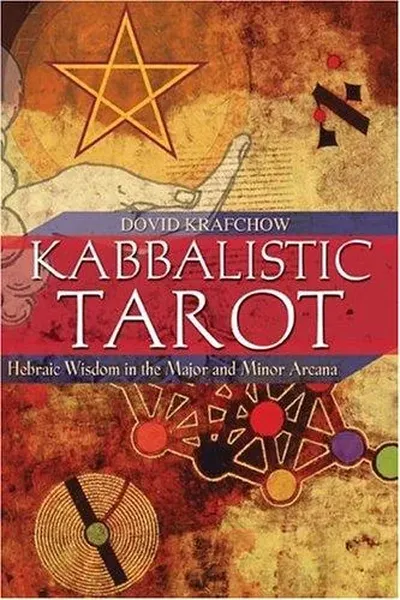
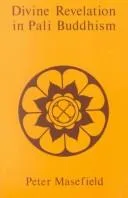
Divine revelation in Pali Buddhism
 63
63

Divine revelation in Pali Buddhism



Marcus Thorne (Esoteric Sciences Reviewer) — Peter Masefield's 'Divine Revelation in Pali Buddhism' is a monumental achievement, illuminating the veiled esoteric currents within the Theravāda tradition. Masefield masterfully excavates the concept of 'divine revelation' as intrinsic gnosis, a direct apprehension of reality rather than external dogma. His scholarly rigor unveils profound symbolic layers within the Pali Canon, offering a fresh perspective for advanced practitioners and scholars alike. This book transcends mere academic discourse, serving as a guide to the subtle mechanics of spiritual insight. It is an indispensable addition for those dedicated to the path of liberation and the deeper understanding of Buddhist metaphysics.
📝 Description
63
Peter Masefield's 2008 book re-examines divine revelation within the Pali Canon.
Peter Masefield's "Divine Revelation in Pali Buddhism" examines Buddhist doctrine from a less-examined perspective. Masefield argues that the concept of divine revelation within Theravāda Buddhism is not external dictation, but rather internal illumination. These insights, he suggests, arise from deep meditative practice. The book systematically analyzes the Pali Canon, identifying symbolic language and hidden knowledge that standard interpretations often miss. Masefield's approach combines quiet reflection with intellectual discipline. He encourages readers to consider the nature of ultimate reality and the methods for achieving it. This work is for those interested in Buddhism's mystical aspects, moving past ritual to direct experiential understanding.
The text aims to connect the practitioner and scholar with the Buddha's mental states and the ancient teachings he conveyed. It is a detailed study for those seeking a deeper appreciation of these traditions. The author's careful reading of the texts aims to uncover layers of meaning relevant to understanding Buddhist soteriology.
This book situates the Pali Canon within a tradition of esoteric interpretation, distinct from purely academic or devotional readings. It posits that certain Buddhist texts contain veiled meanings accessible through specific contemplative practices. This perspective aligns with broader esoteric traditions that see sacred texts as containing inner keys to spiritual realization, not merely historical or doctrinal accounts. Masefield's work thus invites a reading of Buddhism that emphasizes direct experience and inner transformation over external dogma.
💡 Why Read This Book?
Uncover the hidden esoteric dimensions of Buddhist doctrine, exploring revelation as profound insight rather than external dogma. 'Divine Revelation in Pali Buddhism' offers a unique lens for understanding the luminous wisdom of the Buddha. Ideal for scholars, practitioners, and seekers who wish to delve beyond superficial interpretations and connect with the transformative potential of ancient teachings.
⭐ Reader Reviews
Honest opinions from readers who have explored this book.
❓ Frequently Asked Questions
What is the core interpretation of 'divine revelation' in this book?
Masefield reinterprets 'divine revelation' as profound, luminous insight arising from deep meditative states and direct experience, rather than external pronouncements from a deity.
Is this book suitable for beginners in Buddhism?
While deeply scholarly, the book's clarity and evocative language make it accessible to dedicated beginners willing to engage with complex philosophical concepts. However, it is particularly rewarding for those with some prior knowledge.
What is the significance of the Pali Canon in this study?
The Pali Canon, the earliest collection of Buddhist scriptures, is meticulously analyzed to reveal the esoteric doctrines and symbolic language related to spiritual insight and awakening.
Does the book discuss specific meditative practices?
While not a practical guide to meditation, it deeply explores the *results* and *nature* of insights gained through profound meditative states, providing a theoretical framework for practice.
How does this book relate to modern spiritual seeking?
It offers timeless wisdom on the nature of consciousness and the path to enlightenment, providing a robust philosophical foundation for contemporary seekers interested in authentic spiritual experience.
🔮 Key Themes & Symbolism
Revelation as Intrinsic Gnosis
This theme explores the radical redefinition of 'divine revelation' within the Buddhist context. Masefield argues that rather than an external dictation, revelation is an emergent property of a purified and concentrated mind – a direct, luminous apprehension of reality's true nature. It is the unveiling of wisdom from within, catalyzed by rigorous practice and clear insights into the impermanent, suffering, and non-self characteristics of existence.
Symbolic Language of the Pali Canon
The book studies the body of symbolic language embedded within the Pali Canon. Masefield deciphers these symbols not as mere literary devices, but as potent signposts pointing towards transcendental truths and the architecture of awakened consciousness. Understanding this esoteric lexicon is crucial for unlocking the deeper, mystical dimensions of Buddhist teachings.
The Luminous Mind and Awakening
Central to Masefield's analysis is the concept of the 'luminous mind' – the innate purity and potential for enlightenment that underlies all sentient beings. The book traces how the Buddha's teachings guide practitioners to uncover and cultivate this inherent luminosity, leading to the ultimate cessation of suffering and the realization of Nirvana.
💬 Memorable Quotes
Direct passages from the work, attributed to the author.
“The Pali texts are a map to inner landscapes, not a decree from an outer authority.”
— This highlights the esoteric nature of the scriptures, emphasizing their role as guides for personal exploration and transformation.
“Revelation is the light that dawns when the clouds of ignorance dissipate.”
— This poetic rendering illustrates the process of spiritual insight as a natural consequence of clearing mental obscurations.
“The Buddha's teachings are keys to unlock the doors of perception.”
— This suggests that the Dharma provides the means to perceive reality in a fundamentally different, more profound way.
“Nirvana is not a place, but a state of luminous being.”
— This points to the experiential and qualitative nature of ultimate liberation, emphasizing inner transformation over external destination.
💡 Key Ideas
Editorial paraphrase of the work's core concepts — not direct quotes.
Wisdom arises not from the heavens, but from the depths of the awakened mind.
This quote expresses the book's central thesis: spiritual truth is an internal discovery, an unfolding of inherent understanding rather than a bestowed gift.
🌙 Esoteric Significance
Tradition
This work is deeply rooted in the esoteric interpretations of Theravāda Buddhism, particularly those that emphasize the psychological and phenomenological aspects of the path to awakening. It aligns with traditions that view spiritual realization as a direct experience of consciousness, accessible through disciplined practice and clear insights, rather than through faith in external dogma or deities.
Symbolism
The book illuminates key Buddhist symbols, such as the lotus (purity arising from defilement), the wheel of Dharma (the cycle of existence and liberation), and the Bodhi tree (enlightenment). These are presented not as static icons, but as dynamic representations of cosmic principles and stages of spiritual development within the practitioner's own consciousness.
Modern Relevance
In an era increasingly seeking authentic spiritual experience beyond organized religion, Masefield's exploration of revelation as inner gnosis offers a compelling framework. It validates the pursuit of direct knowledge and personal insight, encouraging a more profound and integrated understanding of Buddhist principles for contemporary spiritual seekers and philosophers.
👥 Who Should Read This Book
This book is essential for advanced students and scholars of Buddhism, particularly those focusing on Theravāda philosophy and the nuances of the Pali Canon. It will deeply resonate with contemplative practitioners seeking to understand the theoretical underpinnings of their practice and the nature of spiritual insight. Furthermore, seekers of wisdom interested in comparative religion, perennial philosophy, and the esoteric dimensions of consciousness will find this a profoundly clear read.
📜 Historical Context
Peter Masefield's 'Divine Revelation in Pali Buddhism' emerges from a rich intellectual tradition seeking to understand the philosophical and spiritual depths of early Buddhism. Written during a period of increasing academic and popular interest in Eastern philosophies, the book stands as a significant contribution to Buddhist studies. It engages with the scholarly debates surrounding the nature of the Buddha's enlightenment and the authenticity of the early scriptures, offering a perspective that appeals to perennial philosophy and esoteric traditions. The work places itself within the lineage of scholars who sought to uncover the non-dualistic and experiential aspects of Buddhist doctrine, challenging purely materialistic or dogmatic interpretations and highlighting the profound psychological and spiritual insights offered by the Theravāda tradition.
📔 Journal Prompts
Reflect on a moment when you experienced a profound realization. How did it feel, and how did it shift your understanding?
What does the concept of 'revelation' mean to you personally, beyond religious dogma?
Consider a symbol from your own spiritual or philosophical path. What deeper meanings does it hold?
How might the idea of the 'luminous mind' influence your daily interactions and self-perception?
Explore the relationship between disciplined practice and the emergence of inner wisdom in your own life.
🗂️ Glossary
Pali Canon
The standard collection of scriptures in the Theravāda Buddhist tradition, considered to be the earliest record of the Buddha's teachings and monastic rules.
Theravāda Buddhism
The 'Doctrine of the Elders,' a conservative branch of Buddhism that adheres closely to the original teachings and practices of the Buddha as preserved in the Pali Canon.
Gnosis
A Greek term referring to knowledge, especially spiritual knowledge or insight, often obtained through direct experience or intuition rather than through rational deduction.
Luminous Mind
A concept within some Buddhist traditions referring to the mind's inherent purity, clarity, and potential for enlightenment, often obscured by defilements like greed, hatred, and delusion.
Nirvana
The ultimate goal of Buddhist practice; the cessation of suffering, the extinguishing of the 'fires' of greed, hatred, and delusion, and the attainment of liberation.
This book appears in 3 collections
🔮 Readers Also Liked
Browse all →








More by Peter Masefield
All books →

From the “Tarot” Collection
View all →








More Free Divination & Tarot Books
View all →