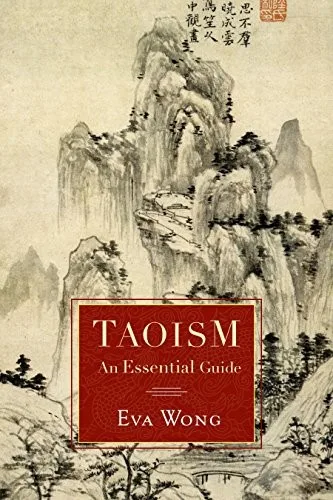
Taoism
 79
79

Taoism
Eva Wong's "Taoism" offers a much-needed corrective to the often-simplistic Western understanding of this vast spiritual tradition. The book succeeds admirably in presenting the breadth of Taoist philosophy and practice, moving beyond the ubiquitous associations with t'ai chi and feng shui to reveal its deeper currents. Wong, a respected scholar and practitioner, guides the reader through meditation, internal alchemy, and the historical development of Taoism with clarity. A particular strength lies in her exposition of the Three Treasures—Jing, Qi, and Shen—as foundational elements of internal cultivation, a concept often glossed over in popular accounts. However, the sheer scope of the subject matter occasionally leads to brevity where more detailed exploration would have been beneficial, particularly concerning the more esoteric magical practices mentioned. Despite this, the work stands as a solid introduction for those seeking genuine engagement with Taoist thought and practice. It is a valuable addition to the Esoteric Library's collection.
📝 Description
79
Eva Wong's "Taoism" clarifies a spiritual tradition often misunderstood.
Eva Wong's "Taoism" moves beyond common associations like t'ai chi and feng shui to detail the depth of this spiritual path. The book covers the philosophy, history, and varied practices that have guided adherents for centuries. Wong distinguishes the core teachings from popular adaptations, presenting Taoism as a living tradition with its own internal disciplines.
The work is for anyone wanting a deeper grasp of Taoism, especially students of esoteric traditions, comparative religion, and Eastern philosophies. Readers interested in meditation, internal alchemy, or physical cultivation will find practical instruction. Practitioners of t'ai chi or feng shui can learn the philosophical roots of their disciplines. The book suits both beginners and those with some existing knowledge.
This book examines Taoism as a spiritual tradition with internal disciplines and practices often hidden from public view. It contrasts the popular image of Taoism with its more complex philosophical and mystical dimensions. By detailing concepts like internal alchemy and meditation, Wong places the book within the context of esoteric contemplative practices that seek transformation through disciplined inner work.
💡 Why Read This Book?
• Gain a nuanced understanding of the Tao, moving beyond simplistic interpretations to grasp its role as the fundamental principle of existence, as explored in the book's philosophical sections. • Discover the practices of internal alchemy and meditation as presented by Eva Wong, offering techniques for cultivating vital energy (Qi) and harmonizing with natural rhythms. • Appreciate the historical lineage of Taoism, understanding its development through key texts and figures, providing context for its enduring influence on East Asian culture.
⭐ Reader Reviews
Honest opinions from readers who have explored this book.
❓ Frequently Asked Questions
What is the Tao in Taoism according to Eva Wong?
Eva Wong explains the Tao as the ineffable, ultimate reality and the fundamental principle underlying all existence. It is the source from which all things arise and to which they return, often described as the 'Way' or the natural order of the universe.
How does Eva Wong's book differentiate Taoism from popular practices like Tai Chi?
Wong's "Taoism" distinguishes the tradition from its popular manifestations by delving into its deeper philosophical tenets, meditation techniques, and internal alchemy. While acknowledging Tai Chi and feng shui, she emphasizes the broader spiritual and cultivation aspects often overlooked.
What are the Three Treasures in Taoist cultivation?
The Three Treasures are Jing (essence), Qi (vital energy), and Shen (spirit). Wong's work details how these are cultivated through specific practices to promote health, longevity, and spiritual development within the Taoist framework.
When was Eva Wong's 'Taoism' first published?
Eva Wong's "Taoism" was first published on March 8, 2011. This edition provides an accessible manual to the multifaceted spiritual tradition.
Does the book cover Taoist magical practices?
Yes, the book touches upon Taoist magical practices as part of its exploration of the tradition's diversity. It presents these within the context of spiritual cultivation and harmonization with the Tao.
Is this book suitable for beginners interested in Eastern philosophy?
Absolutely. Wong's accessible manual is designed to demystify Taoism for a broad audience, making it an excellent starting point for beginners interested in Eastern philosophies and spiritual traditions.
🔮 Key Themes & Symbolism
The Tao and Its Manifestations
The central concept of the Tao is explored not as a deity but as the fundamental, ineffable principle that underlies all existence. Wong elucidates how the Tao manifests through the interplay of Yin and Yang, the primordial dualities that govern the cosmos. This section explains the principle of Wu Wei, or effortless action, as a means of aligning oneself with the natural flow of the Tao, urging practitioners to act in harmony with the universe rather than against it. The understanding of the Tao is presented as the bedrock of all Taoist philosophy and practice.
Internal Cultivation and the Three Treasures
This theme focuses on the profound practices of internal cultivation integral to Taoism, moving beyond external rituals. Wong details the importance of cultivating the Three Treasures: Jing (essence), Qi (vital energy), and Shen (spirit). These are not merely physical or energetic components but are seen as interconnected aspects of one's being. The book explains how specific techniques, including meditation, breathing exercises, and forms of internal alchemy, are employed to refine and strengthen these treasures, leading to greater vitality, mental clarity, and spiritual awareness.
Historical and Philosophical Diversity
Eva Wong situates Taoism within its rich historical and philosophical landscape, highlighting its evolution from ancient origins. The work acknowledges the foundational texts like the Tao Te Ching and I Ching, but also emphasizes the development of diverse schools and practices over centuries. This includes exploring various forms of meditation, physical training (like t'ai chi), and the esoteric traditions of internal alchemy. By presenting this breadth, the book aims to correct the common misconception of Taoism as a monolithic entity, showcasing its adaptability and enduring spiritual depth.
Harmony with Nature and the Cosmos
A core tenet explored is the Taoist emphasis on living in harmony with the natural world and the cosmic order. This involves understanding and respecting the cycles of nature, the balance of Yin and Yang, and the flow of Qi. The book presents Taoism not as a dogma, but as a philosophy and practice for achieving balance within oneself and with the external environment. This perspective influences everything from personal conduct to the understanding of health and well-being, advocating for a life lived in accordance with the Way.
💬 Memorable Quotes
Direct passages from the work, attributed to the author.
“The Tao is less known for its unique traditions of meditation, physical training, magical practice, and internal alchemy.”
— This statement highlights the book's purpose: to reveal the less-publicized, deeper aspects of Taoism that go beyond its popular cultural manifestations like t'ai chi.
“Millions of readers have come to the philosophy of Taoism thanks to the classics Tao Te Ching and the I Ching, or through the practices of t'ai chi and feng-shui.”
— This acknowledges the common entry points for many into Taoism, setting the stage for the book to explore the tradition's greater depth beyond these familiar elements.
“Eva Wong, a leading scholar feng shui master presents the great depth and diversity of Taoist philosophy.”
— This positions the author as a qualified guide, emphasizing her expertise in both academic scholarship and practical application within the Taoist tradition.
“An accessible manual to the oft-misunderstood spiritual tradition.”
— This frames the book as a key resource for clarifying Taoism, aiming to clarify common misconceptions and provide a clear introduction to its core principles.
💡 Key Ideas
Editorial paraphrase of the work's core concepts — not direct quotes.
The work explores the great depth and diversity of Taoist philosophy, practices, and history.
This summarizes the book's comprehensive approach, indicating that it covers not only the philosophical underpinnings but also the historical context and practical applications of Taoism.
🌙 Esoteric Significance
Tradition
This work fits within the broader Hermetic and esoteric traditions by useful a non-Western path to spiritual understanding and transformation. While distinct from Hermeticism, Kabbalah, or Gnosticism, Taoism shares common ground in its focus on inner cultivation, the understanding of universal principles (the Tao mirroring the concept of the One or the Logos), and the use of specific practices to achieve spiritual realization and harmony with the cosmos.
Symbolism
Key symbols include the Yin-Yang symbol, representing the fundamental duality and interconnectedness of all things, and the character 'Tao' (道), signifying the Way or path. The concept of Qi (氣) is also symbolically represented as vital life force energy that permeates the universe and must be cultivated. The book likely explores motifs related to natural elements and celestial bodies as reflections of cosmic order and human potential.
Modern Relevance
Contemporary thinkers and practitioners in fields like mindfulness, alternative medicine, and holistic wellness draw upon Taoist principles. Schools focusing on internal martial arts, Qigong, and advanced meditation techniques continue to reference and build upon the foundational concepts presented by scholars like Wong. The book's emphasis on balance, natural living, and inner harmony remains highly relevant for those seeking spiritual grounding in a fast-paced, often disconnected modern world.
👥 Who Should Read This Book
• Students of comparative religion and Eastern philosophies seeking a comprehensive yet accessible overview of Taoism beyond its popular cultural associations. • Practitioners of t'ai chi, Qigong, or feng shui who wish to deepen their understanding of the philosophical and spiritual roots of their disciplines. • Individuals interested in esoteric traditions, meditation, and internal alchemy looking for a guide to the practices and principles of Taoist cultivation.
📜 Historical Context
Eva Wong's "Taoism," first published in 2011, emerged at a time when interest in Eastern spirituality was high, yet often focused on accessible practices like t'ai chi and feng shui. The book entered a discourse where Taoism was frequently simplified or commodified. Its strength lies in contextualizing these popular elements within the vast, ancient tradition, tracing its philosophical lineage from figures like Lao Tzu and Zhuangzi. The work implicitly engages with scholars like Fung Yu-lan, who extensively documented Chinese philosophy, by providing a more practice-oriented perspective. While not facing overt censorship, the popularization of Taoism sometimes led to its dilution, making Wong's emphasis on its esoteric practices and historical depth a significant contribution. The early 21st century saw a growing academic and popular interest in the practical applications of ancient philosophies, a trend Wong's book directly addresses by bridging classical texts with contemporary understanding and practice.
📔 Journal Prompts
The Tao as the fundamental principle: how does this concept influence your perception of daily events?
Reflect on the Three Treasures (Jing, Qi, Shen) and their current state within you.
Wu Wei in practice: identify a situation where effortless action could replace striving.
The interplay of Yin and Yang: analyze a personal conflict through this dualistic lens.
Historical Taoism: consider how ancient practices might be adapted for modern life.
🗂️ Glossary
Tao (道)
The fundamental, ineffable principle underlying all existence; the 'Way' or natural order of the universe. It is the source and sustainer of all things.
Yin and Yang
The two primordial, complementary forces whose dynamic interplay governs the universe. Yin is associated with passive, feminine, dark, and cool qualities, while Yang is active, masculine, light, and warm.
Qi (Chi)
Vital life force energy that permeates all things. It is the fundamental substance and animating principle of the universe, cultivated through various practices.
Wu Wei
A core Taoist principle often translated as 'non-action' or 'effortless action.' It signifies acting in accordance with the natural flow of the Tao, without forcing or striving.
Jing
Essence; one of the Three Treasures. It is the fundamental vital substance of the body, related to our physical constitution and reproductive energy.
Shen
Spirit or consciousness; one of the Three Treasures. It encompasses mental clarity, emotional balance, and spiritual awareness.
Internal Alchemy (Neidan)
A Taoist practice focused on refining Jing, Qi, and Shen within the body to achieve spiritual transformation, longevity, and immortality, often using meditation and specific energetic techniques.