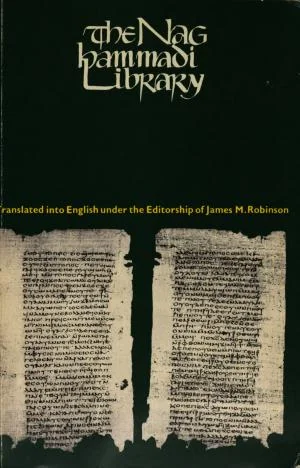
The Nag Hammadi library in English
 83
83

The Nag Hammadi library in English
James M. Robinson's 1988 compilation, The Nag Hammadi Library in English, remains a foundational resource for anyone seeking to understand the landscape of early Christian and Gnostic thought beyond the established canon. The strength of this edition lies in its comprehensive nature and the scholarly authority Robinson brought to the translation and arrangement of these complex Coptic texts. His meticulous work allows for a direct engagement with primary sources that fundamentally altered our understanding of religious diversity in the Roman world. However, the sheer volume and the often esoteric nature of the writings can present a formidable barrier to entry for casual readers; the academic apparatus, while valuable, sometimes overshadows the direct spiritual or philosophical impact of the texts themselves. The Gospel of Thomas, for instance, with its enigmatic sayings, offers profound moments of insight, but navigating its context within the larger library requires dedicated study. This collection is less a narrative and more a theological and philosophical archive, demanding patience and intellectual rigor from its readers.
📝 Description
83
The 1988 English translation of the Nag Hammadi Library offers direct access to early Christian and Gnostic texts.
Published in 1988, James M. Robinson's edited translation gathers early Christian and Gnostic writings found near Nag Hammadi, Egypt, in 1945. These Coptic codices provide insight into a range of religious ideas prevalent in the Roman Empire, especially from the second and third centuries CE. The volume makes these important documents available in English.
This collection is valuable for anyone studying early Christianity, Gnosticism, or comparative religion. It includes non-canonical scriptures that offer a different perspective from standard biblical accounts and reveal alternative spiritual movements present alongside early orthodox Christianity. Students of ancient philosophy and mysticism will also find much to engage with, touching on ideas that have shaped esoteric thought over many centuries.
The discovery of the Nag Hammadi library was a significant archaeological find. For decades, Gnostic thought was known mainly through the critiques of Church Fathers. These texts, however, offer firsthand material. Robinson's translation became a key scholarly resource, addressing a need for accessible scholarship on Gnostic and Sethian writings and providing a contrast to other early Christian groups.
This collection is central to understanding Gnosticism, a diverse set of early religious and philosophical movements. Gnostic traditions often emphasized direct spiritual knowledge or 'gnosis' as a path to salvation, diverging significantly from mainstream early Christian doctrines. The Nag Hammadi texts, unlike those preserved by opponents, show Gnosticism from its own perspective. They reveal a complex theological landscape with varying ideas about the material world, the divine, and humanity's place within creation, influencing later mystical and esoteric currents.
💡 Why Read This Book?
• Gain direct access to the Gospel of Thomas, a collection of sayings attributed to Jesus that offers alternative perspectives on his teachings, distinct from the canonical Gospels. • Understand the concept of the Demiurge, a lesser creator deity often depicted as ignorant or malevolent in Gnostic cosmology, a stark contrast to traditional monotheistic views. • Explore the historical context of the 2nd-century CE religious landscape, where diverse interpretations of Christianity and salvation existed before orthodox doctrines solidified.
⭐ Reader Reviews
Honest opinions from readers who have explored this book.
❓ Frequently Asked Questions
When were the Nag Hammadi texts discovered?
The discovery of the Nag Hammadi library occurred in 1945 near Nag Hammadi, Upper Egypt. These texts, primarily Coptic translations of earlier Greek originals, were found in a sealed jar.
What is the significance of the Gospel of Thomas?
The Gospel of Thomas is significant because it presents a collection of Jesus' sayings without narrative context, offering a different lens on his teachings, often emphasizing inner spiritual knowledge (gnosis).
Who was James M. Robinson?
James M. Robinson was a leading scholar of early Christianity and Gnosticism, renowned for his extensive work on the Nag Hammadi library and its translation into English, published in 1988.
Are these texts considered part of the Christian Bible?
No, the texts within the Nag Hammadi library are considered apocryphal or non-canonical. They were excluded from the final canon of the Christian Bible.
What does 'Gnosticism' refer to in these texts?
Gnosticism, as represented in these texts, refers to a diverse set of religious beliefs emphasizing salvation through esoteric knowledge (gnosis), often positing a flawed creator god and a higher, true divinity.
What language were the original Nag Hammadi texts written in?
The codices found at Nag Hammadi were written in the Coptic language. It is widely believed these were translations from earlier Greek texts.
🔮 Key Themes & Symbolism
Gnosis and Salvation
A central theme across many Nag Hammadi texts is the concept of gnosis, or direct spiritual knowledge, as the path to salvation. This knowledge often involves understanding one's true divine origin, the nature of the cosmos, and the illusory nature of the material world. The texts suggest that this salvific knowledge liberates the divine spark within the individual from the entrapment of the material realm, a perspective that sharply contrasts with salvation through faith or good works alone as understood by emerging orthodox Christianity.
The Divine and the Demiurge
Many of these writings differentiate between the true, supreme, unknowable God and a subordinate creator deity, often termed the Demiurge. This figure, responsible for the flawed material universe, is frequently identified with the God of the Old Testament. This dualistic cosmology presents a challenge to conventional religious frameworks, proposing that the material world is not the perfect creation of an omnipotent deity but rather an imperfect construct of a lesser power, with humanity containing a divine element yearning for return to the Pleroma (fullness).
Alternative Christology
The Nag Hammadi library presents a variety of interpretations of Jesus Christ that diverge from orthodox Christian doctrine. In texts like the Gospel of Thomas, Jesus is often portrayed as a revealer of hidden wisdom, a spiritual guide whose primary function is to impart gnosis to his followers. The emphasis is less on his atoning sacrifice for sins and more on his role as an enlightened being whose teachings unlock the divine potential within the seeker. This view often downplays or reinterprets the significance of his crucifixion and resurrection.
The Nature of Reality
These texts frequently explore a complex cosmology that views the material world as a field of illusion, ignorance, or even imprisonment. Eons, divine emanations, and spiritual hierarchies populate a cosmic drama where the material realm is often seen as a fallen or secondary creation. Understanding the true nature of reality, beyond its superficial material appearance, is paramount for the spiritual aspirant. This metaphysical perspective offers a radical re-evaluation of existence, positioning the material world as a temporary state from which the soul must escape.
💬 Memorable Quotes
Direct passages from the work, attributed to the author.
“Let him who seeks not cease seeking until he finds. When he finds, he will be troubled. When he is troubled, he will marvel, and will reign over all.”
— This saying from the Gospel of Thomas expresses the Gnostic quest. It suggests that the pursuit of spiritual knowledge is arduous and unsettling, leading to a profound transformation and eventual spiritual sovereignty.
“The archons... wished to make man a lover of matter and a forgetter of spirit.”
— This interpretation from the Apocryphon of John describes the malevolent influence of the archons, rulers of the material cosmos, who are depicted as actively working to keep humanity ignorant of its divine origins and spiritual nature.
“The soul that is strong will not be defiled.”
— This concise statement, found within the collection, suggests a Gnostic belief in the inherent purity or resilience of the spiritual essence, implying that true spiritual strength renders the soul impervious to the corrupting influences of the material world.
💡 Key Ideas
Editorial paraphrase of the work's core concepts — not direct quotes.
Jesus said, 'Many are standing at the door, but the celibates are those who will enter the kingdom of heaven.'
This quote from the Gospel of Thomas highlights an ascetic ideal present in some early Christian and Gnostic circles, suggesting that detachment from worldly desires, including physical procreation, was seen by some as a direct path to spiritual attainment.
The kingdom of the Father is not in accordance with the name of the Father, nor with the name of the Mother, but in accordance with the name of the spirit of life.
This passage from the Gospel of Truth points to a Gnostic understanding of the divine that transcends conventional gendered or familial designations, locating the true divine essence in the animating principle of life itself.
🌙 Esoteric Significance
Tradition
The Nag Hammadi library is primarily associated with Gnosticism, a diverse set of religious and philosophical movements that flourished in the early centuries CE. It represents a significant departure from mainstream Judaism and early Christianity, emphasizing salvation through direct, experiential knowledge (gnosis) rather than through faith or ritual alone. These texts often present a complex cosmology with emanations from a supreme, unknowable God, a flawed creator deity (the Demiurge), and the concept of a divine spark trapped within humanity, yearning for return to the spiritual realm.
Symbolism
Key symbols include the Pleroma, representing the fullness of the divine realm from which spiritual beings emanate. The Serpent, often reinterpreted as a positive symbol of gnosis or wisdom, contrasts with its traditional negative portrayal. Light and Darkness are fundamental motifs, symbolizing the spiritual and material realms, respectively, with the Gnostic seeking to move from the latter to the former. The figure of Sophia (Wisdom) is also central, often depicted as falling or errant, leading to the creation of the material world.
Modern Relevance
The Nag Hammadi texts continue to influence modern esoteric thought, particularly within Gnostic revivalist movements and contemporary spiritual explorations of consciousness. Thinkers and practitioners in fields like depth psychology, comparative mythology, and various forms of New Age spirituality often draw upon the library's cosmology and Christology. The emphasis on inner knowledge, the critique of hierarchical authority, and the exploration of alternative spiritual paths resonate with contemporary desires for personal spiritual autonomy and a deeper understanding of the psyche.
👥 Who Should Read This Book
• Scholars of early Christianity and Gnosticism seeking direct engagement with foundational texts that redefined the field. • Spiritual seekers interested in alternative paths to salvation and a critique of conventional religious dogma, offering insights into mystical traditions. • Students of comparative religion and ancient philosophy looking to understand the diverse intellectual and spiritual range of the Roman Empire.
📜 Historical Context
The discovery of the Nag Hammadi library in 1945 was a watershed moment for understanding early Christian and Gnostic movements, a field previously dominated by polemical texts from orthodox Church Fathers. Before 1945, Gnosticism was largely understood through the condemnations of figures like Irenaeus of Lyons in the late 2nd century CE. James M. Robinson’s 1988 English translation of these Coptic codices provided scholars and the public with direct access to primary Gnostic texts, including the Gospel of Thomas and the Apocryphon of John. This era of scholarship followed intense interest sparked by the Dead Sea Scrolls and occurred during a period of significant academic engagement with diverse religious philosophies, including that of Plotinus and the Neoplatonists, who represented a significant philosophical current in the same era. The availability of these texts challenged prevailing narratives about the monolithic development of early Christianity and highlighted the vibrant, often heterodox, spiritual currents that competed for adherents.
📔 Journal Prompts
The concept of gnosis as presented in the Gospel of Thomas.
The role and nature of the Demiurge in the Apocryphon of John.
The spiritual journey of Sophia as depicted in Gnostic cosmology.
The interpretation of Jesus' sayings in the Gospel of Philip.
The contrast between canonical and non-canonical portrayals of salvation.
🗂️ Glossary
Gnosis
Greek for 'knowledge.' In Gnosticism, it refers to intuitive, experiential, and esoteric knowledge of the divine, considered essential for salvation and liberation from the material world.
Demiurge
A figure, often depicted as ignorant or malevolent, who created the material universe. In Gnosticism, the Demiurge is typically distinct from and subordinate to the supreme, unknowable God.
Pleroma
A term meaning 'fullness' or 'totality,' referring to the spiritual field of the supreme God and the divine emanations (aeons) that constitute the true, ultimate reality.
Aeon
Divine beings or spiritual emanations that proceed from the supreme God. They are part of the Pleroma and play roles in Gnostic cosmologies, sometimes including the creation or ordering of the material world.
Archon
Rulers or powers that govern the material cosmos. In Gnostic thought, they often act as intermediaries or agents of the Demiurge, maintaining control over humanity and the material realm.
Apocryphal
Texts that are not accepted as part of the official canon of sacred scripture by a religious community. The Nag Hammadi texts are considered apocryphal by mainstream Christianity.
Coptic
The late stage of the Egyptian language, written using the Greek alphabet with the addition of seven Demotic signs. The Nag Hammadi codices were written in Coptic.
🔮 Readers Also Liked
Browse all →







More by James McConkey Robinson
All books →





More Free Sacred Texts & Gnosticism Books
View all →