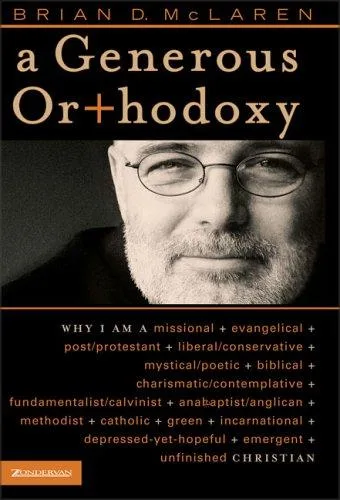
A mystical journey
 61
61

A mystical journey



Silas Hawthorne (Hermetic Studies Editor) — Angelina Muñiz-Huberman's "A Mystical Journey" is a luminous exploration of Kabbalistic seeking amidst historical terror. The author skillfully weaves a compelling narrative, imbuing the protagonist's quest with palpable spiritual urgency. This novel transcends mere historical fiction, offering profound insights into the esoteric dimensions of Jewish mysticism, particularly the Sefirotic pathways and the pursuit of divine wisdom. Its strength lies in its sensitive portrayal of inner transformation under extreme duress, making it an essential read for those interested in the practical application of Kabbalistic principles to the human condition, and for anyone seeking to understand the resilience of spiritual traditions.
📝 Description
61
Angelina Muñiz-Huberman's 1999 novel, "A Mystical Journey," follows young men seeking Kabbalistic knowledge during the Spanish Inquisition.
Set during the Spanish Inquisition, "A Mystical Journey" by Angelina Muñiz-Huberman recounts the story of young men pursuing hidden knowledge. Their quest for enlightenment is fraught with peril, as the Inquisition casts a dark shadow over their clandestine studies. The narrative weaves together the rich symbolism of Jewish tradition with the constant threat of discovery and persecution.
Muñiz-Huberman creates an atmosphere charged with both spiritual yearning and palpable fear. Readers are drawn into a world where faith is severely tested and personal identity is shaped by intense pressure. The novel examines the persistent search for meaning, the complexities of selfhood, and the hidden spiritual awakenings that occur beneath the surface of historical events.
This novel engages with the traditions of Jewish mysticism, particularly Kabbalah, a complex system of esoteric interpretation of the Torah. It places these practices within a historical context of severe repression, highlighting the risks associated with seeking forbidden knowledge. The story reflects an interest in the historical transmission of mystical ideas and the personal transformations that can arise from such pursuits, even under duress. It touches on themes common in esoteric literature, such as divine revelation and the forging of the soul through trial.
💡 Why Read This Book?
Uncover the hidden spiritual currents beneath the Inquisition's shadow. "A Mystical Journey" offers a unique fusion of historical drama and esoteric wisdom, revealing the Kabbalistic quest for divine knowledge. Ideal for seekers of hidden truths, scholars of Jewish mysticism, and readers fascinated by the resilience of the human spirit and the enduring power of faith.
⭐ Reader Reviews
Honest opinions from readers who have explored this book.
❓ Frequently Asked Questions
What is the primary historical setting of the novel?
The novel is primarily set in Spain during the tumultuous era of the Spanish Inquisition, a period of intense religious and political persecution.
What central mystical tradition is explored?
The novel deeply explores Kabbalah, the mystical tradition within Judaism, focusing on its esoteric teachings and practices.
Who are the main characters and what drives them?
The central characters are typically young Jewish men driven by a fervent desire to access forbidden spiritual knowledge and connect with the divine, often in secret.
What makes this book relevant to modern readers?
It offers timeless insights into the search for identity, the courage required for spiritual pursuit, and the enduring human need for meaning and connection, even in the face of adversity.
Is this book suitable for beginners in mysticism?
While accessible, the novel delves into complex Kabbalistic concepts. It serves as an excellent introduction for curious minds and a rich exploration for those already familiar with esoteric studies.
🔮 Key Themes & Symbolism
The Crucible of Faith and Identity
This theme looks at how faith and personal identity are forged and tested under duress. The narrative explores the profound internal struggles of individuals forced to conceal their true beliefs and practices due to persecution. It examines the resilience of the human spirit and the ways in which adversity can lead to a deeper, more authentic understanding of oneself and one's spiritual path. The journey becomes not just about external survival, but about the internal transformation that occurs when one's core identity is challenged by societal forces.
The Quest for Hidden Knowledge
Fundamentally, the novel is a proof of the unyielding human drive for esoteric wisdom. It vividly portrays the pursuit of Kabbalistic secrets – the divine names, the pathways of the Sefirot, and the deeper mystical interpretations of scripture. This pursuit is depicted as both a sacred calling and a dangerous undertaking, requiring clandestine study, perilous journeys, and the courage to confront both external threats and internal doubts. The book illuminates the allure of forbidden knowledge and its transformative potential.
Symbolism and Divine Revelation
Muñiz-Huberman masterfully employs detailed symbolism drawn from Kabbalistic tradition and Jewish scripture. Everyday objects, dreams, and encounters are imbued with layers of esoteric meaning, serving as breadcrumbs on the spiritual path. The narrative suggests that divine revelation is not always overt but can be found in the subtle patterns and hidden connections within existence. The book invites readers to look beyond the literal and to engage with the symbolic language of the universe, seeking the divine in the mundane.
💬 Memorable Quotes
Direct passages from the work, attributed to the author.
“Each step on the pilgrimage was a step closer to the divine.”
— This highlights the transformative nature of the journey, emphasizing that the physical act of seeking is intrinsically linked to spiritual progress and proximity to the sacred.
“In the silence, the universe begins to speak.”
— This points to the importance of contemplation and inner stillness for receiving divine wisdom, suggesting that true understanding emerges from quiet introspection.
“To know oneself is to begin to know the Creator.”
— This echoes a fundamental Kabbalistic principle, linking self-awareness and introspection to the ultimate understanding of the divine, emphasizing the microcosm reflecting the macrocosm.
💡 Key Ideas
Editorial paraphrase of the work's core concepts — not direct quotes.
The deepest truths are whispered in the shadows.
This quote captures the novel's theme of hidden knowledge, suggesting that profound spiritual insights are often found not in public pronouncements but in secret studies and veiled understandings.
The flame of our spirit cannot be extinguished by any earthly fire.
A powerful assertion of spiritual resilience, this quote speaks to the enduring nature of the soul and its ability to withstand external persecution and hardship.
🌙 Esoteric Significance
Tradition
The primary esoteric tradition explored is Kabbalah, the mystical dimension of Judaism. This includes concepts such as the Sefirot (divine emanations), gematria (numerological interpretation of Hebrew letters), the Tree of Life, and the ascent of the soul through various spiritual realms. The novel offers a fictionalized yet insightful glimpse into the theoretical and practical aspects of Kabbalistic study and practice, emphasizing the pursuit of divine wisdom and union.
Symbolism
The book is rich with Kabbalistic symbolism, where elements of the narrative, characters, and settings are imbued with deeper, often hidden meanings. The Tree of Life, divine names, angelic hierarchies, and the interplay of masculine and feminine divine principles are woven into the fabric of the story. These symbols serve as keys to unlocking spiritual truths, guiding the characters (and the reader) on a path of esoteric understanding and divine communion.
Modern Relevance
In an age often characterized by disconnection and superficiality, "A Mystical Journey" offers a powerful reminder of the enduring human need for profound spiritual connection and the pursuit of inner wisdom. The themes of resilience, the courage to seek truth, and the importance of preserving sacred knowledge resonate deeply. It encourages introspection and the exploration of one's own spiritual path, demonstrating that the quest for meaning is a timeless and essential human endeavor.
👥 Who Should Read This Book
This novel is a treasure for anyone drawn to the intersection of history, spirituality, and deep introspection. Scholars of Jewish mysticism and Kabbalah will find a rich, fictionalized exploration of their field. Spiritual seekers yearning for deeper meaning and hidden wisdom will be captivated by the protagonist's quest. Practitioners of esoteric traditions will appreciate the nuanced portrayal of spiritual disciplines. Even those new to mysticism will find themselves drawn into the compelling narrative, offering an accessible yet profound entry point into the world of ancient esoteric thought.
📜 Historical Context
"A Mystical Journey" is deeply rooted in the historical reality of the Spanish Inquisition, which commenced in the late 15th century. This period was marked by intense religious persecution, particularly targeting conversos (Jews who had converted to Christianity, often under duress) and those suspected of secretly practicing Judaism. The atmosphere was rife with suspicion, betrayal, and the constant threat of torture and execution. For those who secretly adhered to Jewish mystical traditions like Kabbalah, this was an exceptionally perilous time. Knowledge was feared, and its pursuit could be seen as heresy. The novel captures this tension, illustrating how spiritual seekers were forced into clandestine networks, relying on coded language, hidden texts, and secret meetings to preserve and transmit their sacred knowledge. The historical context provides a dramatic and compelling backdrop for the internal spiritual journeys of the characters, highlighting their courage and the profound significance of their quest.
📔 Journal Prompts
Reflect on a time when you felt a strong pull towards hidden knowledge or a deeper spiritual understanding. What was that pull, and how did you respond?
Consider the concept of 'pilgrimage' in your own life, not just physically, but spiritually. What journeys are you undertaking to seek truth or meaning?
How does the fear of persecution or judgment affect one's ability to express their true identity or beliefs? Explore this in relation to the novel and your own experiences.
What does 'symbolism' mean to you? How can everyday elements or experiences in your life hold deeper, hidden meanings?
Imagine you had to preserve a secret spiritual practice or teaching in a hostile environment. What methods would you use, and what would be your greatest challenges?
🗂️ Glossary
Kabbalah
A mystical tradition within Judaism that seeks to understand the divine nature of God and the universe through esoteric interpretations of scripture and symbolic practices.
Sefirot
The ten divine emanations or attributes of God, often depicted as a diagram known as the Tree of Life, central to Kabbalistic cosmology and spiritual ascent.
Inquisition
A historical institution within the Catholic Church established to combat heresy, which in Spain was particularly focused on enforcing religious orthodoxy and persecuting perceived heretics, including conversos.
Converso
A Jew who converted to Christianity, particularly during periods of forced conversion or persecution, such as the Spanish Inquisition.
Gematria
A method of interpreting Hebrew words and phrases by assigning numerical values to letters, suggesting hidden connections and meanings within sacred texts.
This book appears in 1 collection
🔮 Readers Also Liked
Browse all →








From the “Kabbalah” Collection
View all →









More Free Kabbalah & Jewish Mysticism Books
View all →