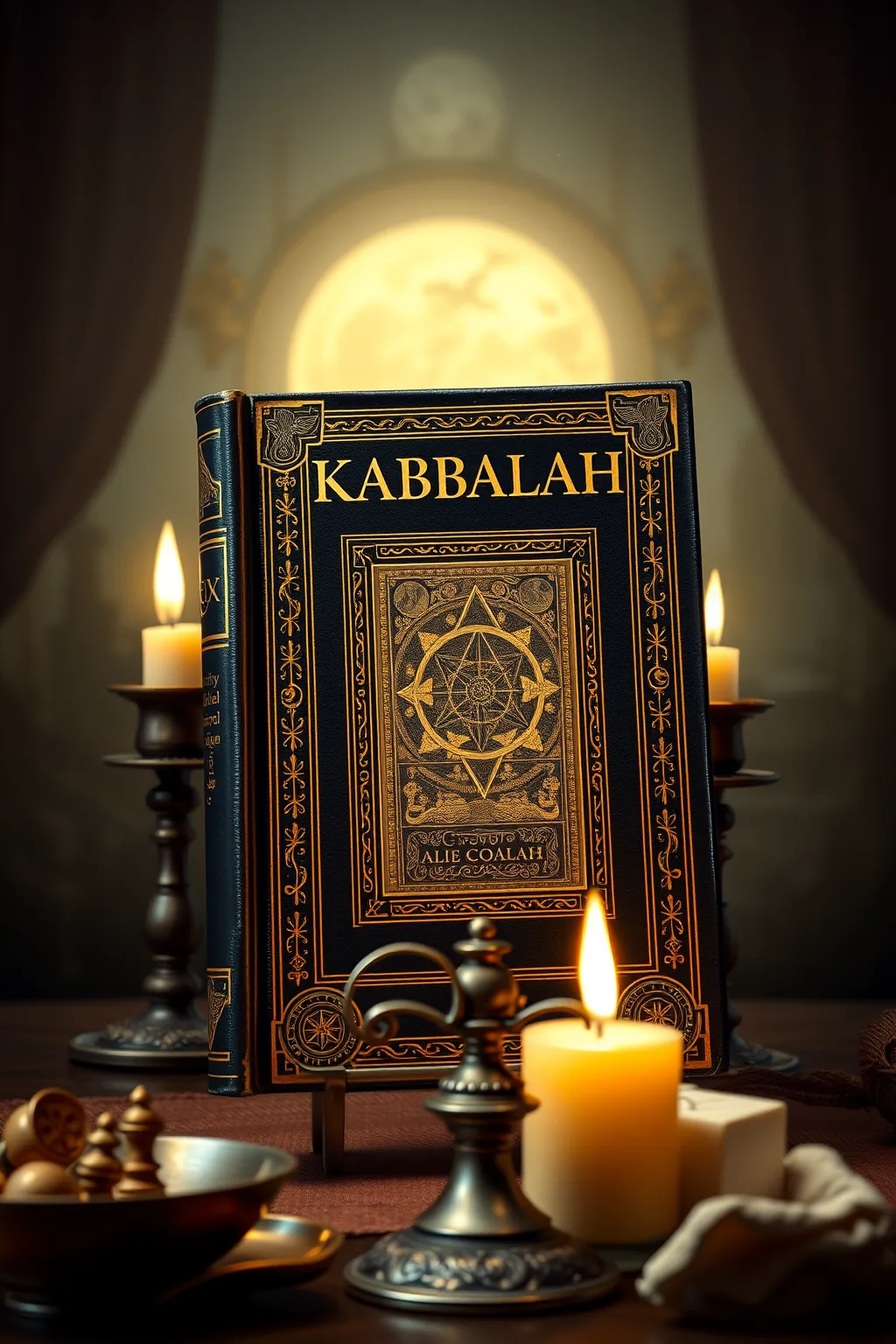
Kabbalah
 61
61

Kabbalah

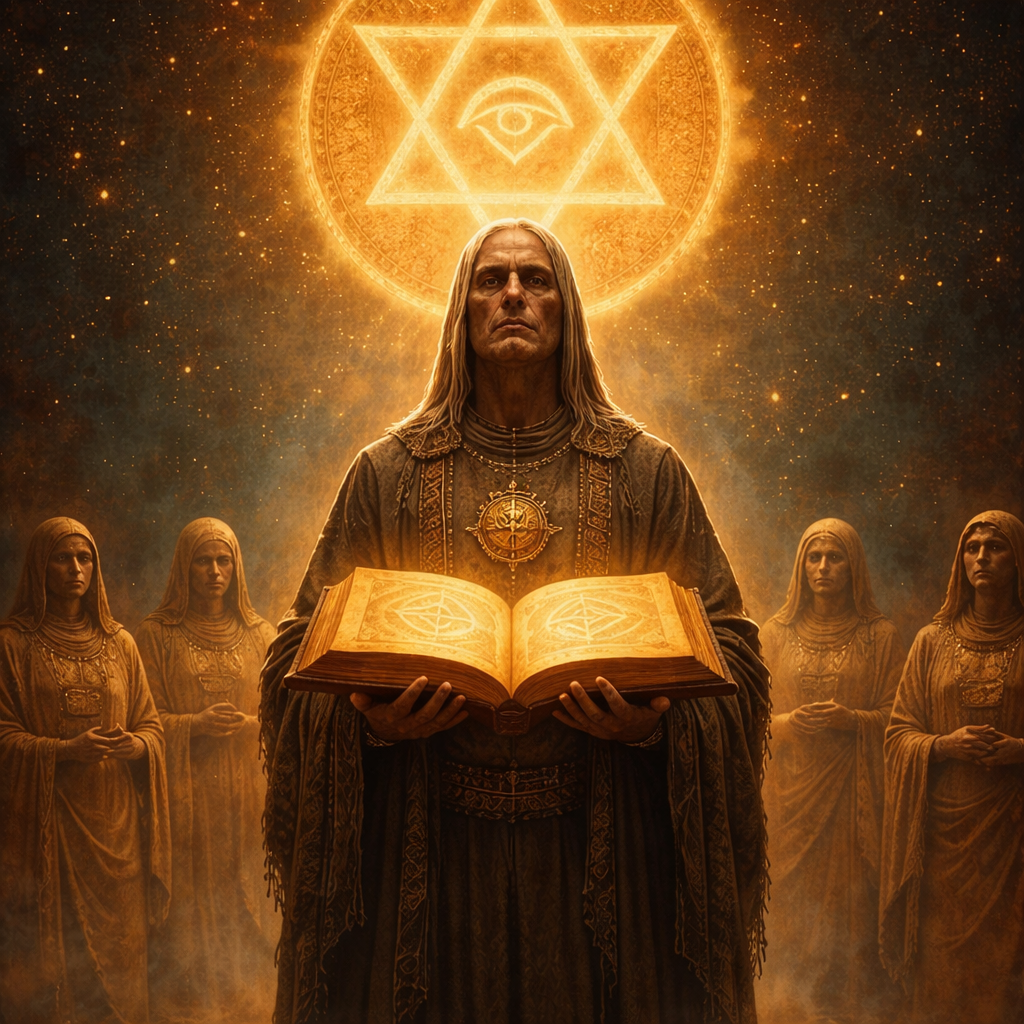

Julien Coallier's 'Kabbalah' stands as a beacon for those seeking to navigate the labyrinthine pathways of Jewish mysticism. Kestrel commends its lucid exposition of complex concepts, particularly the interplay between divine will and human consciousness. The author masterfully bridges the gap between theoretical understanding and practical application, offering esoteric insights that resonate deeply. This work is a vital resource for serious students of Kabbalah, providing a clear, authoritative, and spiritually resonant exploration of its foundational tenets. Its strengths lie in its depth of scholarship and its accessible yet profound engagement with the subject matter.
📝 Description
61
Julien Coallier's 2023 book introduces Kabbalah's core concepts.
This volume examines Kabbalah, the esoteric tradition within Jewish mysticism. Coallier addresses key concepts such as divine emanations and the Tree of Life, a central diagram in Kabbalistic thought. The book also discusses the soul's mystical ascent.
Coallier aims to make this complex symbolism accessible. He explains the hidden meanings within the tradition's language and imagery. The work is intended for those interested in spiritual understanding and cosmic connections. It invites both newcomers and those already familiar with mystical traditions to engage with the metaphysical underpinnings of existence.
The book serves as more than a simple introduction; it is an immersive exploration of Kabbalistic philosophy. It presents significant ideas about God, creation, and humanity's enduring search for spiritual fulfillment. Readers will find discussions on the structure of the cosmos as understood through Kabbalistic teachings.
Kabbalah is a mystical tradition originating in Judaism, with roots stretching back centuries. It seeks to understand the divine nature and the relationship between God and the created world through esoteric interpretations of religious texts. Key elements include the Sephirot, often visualized as the Tree of Life, which maps divine attributes and the process of creation. Kabbalistic practice often involves meditation and contemplation to achieve spiritual insight and a closer connection to the divine.
💡 Why Read This Book?
Embark on a profound spiritual journey and unlock the secrets of creation. 'Kabbalah' by Julien Coallier offers an accessible yet deep exploration of Jewish mysticism, perfect for seekers yearning for esoteric knowledge, scholars desiring rigorous insight, and practitioners aiming to deepen their contemplative practice. Discover the Tree of Life and your place within the cosmic order.
⭐ Reader Reviews
Honest opinions from readers who have explored this book.
❓ Frequently Asked Questions
What is the primary focus of Kabbalah?
The primary focus of Kabbalah is the exploration of the hidden spiritual dimensions of reality, the divine emanations (Sefirot), and the mystical relationship between the Creator and creation.
Is this book suitable for beginners?
Yes, this book is designed to be accessible to both beginners and those with prior knowledge, offering a clear and structured approach to complex Kabbalistic concepts.
What is the Tree of Life in Kabbalah?
The Tree of Life (Etz Chaim) is a central diagram in Kabbalah representing the ten divine emanations through which God manifests and interacts with the universe.
Does this book discuss practical Kabbalistic techniques?
While focusing on the theoretical and philosophical underpinnings, the book lays the groundwork for understanding practical applications and meditative practices within Kabbalah.
What is the historical significance of Kabbalah?
Kabbalah emerged in medieval Jewish circles and has profoundly influenced Jewish thought, spirituality, and mysticism, with its influence extending to various esoteric traditions worldwide.
🔮 Key Themes & Symbolism
The Divine Emanations (Sefirot)
This theme explores the ten Sefirot, the divine attributes or vessels through which the Infinite (Ein Sof) manifests and interacts with the created world. Each Sefirot represents a unique aspect of divine energy, from wisdom and understanding to kindness and strength, forming the intricate structure of the Tree of Life. Understanding these emanations is crucial for comprehending the flow of divine consciousness and its influence on all existence.
The Tree of Life (Etz Chaim)
The Tree of Life is the foundational symbolic map of Kabbalistic cosmology. It depicts the interconnectedness of the Sefirot, revealing the pathways of divine energy and the stages of creation. This sacred diagram serves as a guide for spiritual ascent, meditation, and understanding the intricate relationship between the microcosm (humanity) and the macrocosm (the universe). Its study offers clear insights into the nature of reality and the divine blueprint.
The Ascent of the Soul
This theme looks at the Kabbalistic understanding of the soul's journey, both in this life and beyond. It explores the concept of spiritual evolution, the purification of the self, and the ultimate goal of re-uniting with the Divine. Through contemplation of the Sefirot and the Tree of Life, individuals can start a path of inner transformation, seeking to align their consciousness with higher spiritual realities and achieve a deeper connection to the Infinite.
💬 Memorable Quotes
Direct passages from the work, attributed to the author.
“Within each soul lies a spark of the Infinite.”
— This highlights the core Kabbalistic belief in the divine essence present within every individual, emphasizing inherent spiritual potential.
“The Tree of Life is the blueprint of God's love made manifest.”
— This poetic statement equates the intricate structure of the Tree of Life with divine compassion and the visible expression of God's creative will.
“To know the self is to begin to know the Divine.”
— This points to the introspective nature of Kabbalistic practice, where self-awareness is a key to unlocking spiritual understanding.
“The path to wisdom is paved with paradox.”
— This acknowledges the often counter-intuitive and mysterious nature of esoteric knowledge, suggesting that true understanding requires embracing complexity.
💡 Key Ideas
Editorial paraphrase of the work's core concepts — not direct quotes.
The universe is a divine dialogue, and Kabbalah offers the grammar.
This quote suggests that reality is not static but a dynamic exchange between the divine and the created, with Kabbalah providing the framework to understand its sacred language.
🌙 Esoteric Significance
Tradition
Kabbalah is the preeminent esoteric tradition of Jewish mysticism, offering a highly symbolic and philosophical system for understanding the divine nature, the creation of the universe, and the human soul's relationship with God. It provides a framework for both theoretical contemplation and practical spiritual development, emphasizing hidden meanings within religious texts and the interconnectedness of all existence.
Symbolism
Central to Kabbalah is its wide range of symbolism, with the Tree of Life (Etz Chaim) serving as the primary visual and conceptual map. This diagram, composed of ten Sefirot and 22 paths, represents the divine emanations, the structure of reality, and the pathways of spiritual ascent. Other key symbols include Hebrew letters, divine names, and allegorical interpretations of biblical narratives, all employed to convey profound metaphysical truths beyond literal comprehension.
Modern Relevance
In contemporary times, Kabbalah continues to captivate seekers across diverse backgrounds. Its exploration of consciousness, divine potential, and the interconnectedness of all things resonates deeply with modern spiritual movements and psychological inquiry. The symbolic language and philosophical depth of Kabbalah offer a profound lens through which to examine existential questions, personal growth, and the search for meaning in an increasingly complex world.
👥 Who Should Read This Book
This book is an indispensable resource for anyone drawn to the mysteries of Jewish mysticism. Beginners will find a clear and structured introduction to Kabbalistic concepts, explaining complex ideas. Scholars of religion, philosophy, and comparative mysticism will appreciate its depth and scholarly rigor. Seekers of spiritual wisdom and esoteric knowledge will discover clear insights into the nature of reality and the divine. Practitioners looking to deepen their contemplative practices will find practical guidance and a rich symbolic framework for their journey.
📜 Historical Context
Kabbalah emerged as a distinct mystical tradition within Judaism during the medieval period, primarily in Provence and Spain, flourishing from the 12th century onwards. Its development was deeply intertwined with the spiritual and intellectual climate of its time, influenced by Neoplatonism, Gnosticism, and earlier Jewish mystical texts like the Sefer Yetzirah. The expulsion of Jews from Spain in 1492 led to the dissemination of Kabbalistic ideas across the Jewish diaspora, notably in Safed, where it reached a new zenith. The publication of foundational texts like the Zohar (attributed to Rabbi Shimon bar Yochai but compiled in the 13th century) and the writings of figures like Isaac Luria (the Ari) profoundly shaped its subsequent trajectory. Kabbalah offered a rich esoteric framework for understanding scripture, prayer, and the divine, providing solace and spiritual depth in times of persecution and exile, and its influence continues to resonate in contemporary esoteric thought.
📔 Journal Prompts
Reflect on a moment when you felt a deep sense of interconnectedness with the universe. How might the concept of Sefirot illuminate this experience?
Consider the Tree of Life as a map of your own inner landscape. Which Sefirot resonate most strongly with your current challenges or aspirations?
Meditate on the idea of divine emanation. How does the concept of creation as an ongoing process, rather than a singular event, shift your perspective?
Explore the paradoxes presented in Kabbalistic thought. How do these apparent contradictions lead to a deeper, more nuanced understanding of reality?
How can understanding the esoteric meaning of sacred texts enrich your personal spiritual practice?
🗂️ Glossary
Ein Sof
The Kabbalistic term for the Infinite, the Godhead beyond all conception or description. It represents the absolute, unmanifest, and unknowable aspect of the Divine.
Sefirot
The ten divine emanations or attributes through which the Infinite manifests and creates the universe. They form the structure of the Tree of Life.
Etz Chaim
The Tree of Life, a central diagram in Kabbalah representing the ten Sefirot and the pathways connecting them, symbolizing the structure of the cosmos and the divine flow.
Tzimtzum
The Kabbalistic concept of divine 'contraction' or self-limitation, believed to have occurred to make space for creation. It signifies God's withdrawal to allow for the existence of a separate reality.
Kavanah
Intention or concentration, particularly in prayer and meditation. In Kabbalah, Kavanah refers to the focused spiritual intention required to connect with divine energies and meanings.
This book appears in 1 collection
🔮 Readers Also Liked
Browse all →









More by Julien Coallier
All books →





From the “Kabbalah” Collection
View all →







More Free Kabbalah & Jewish Mysticism Books
View all →