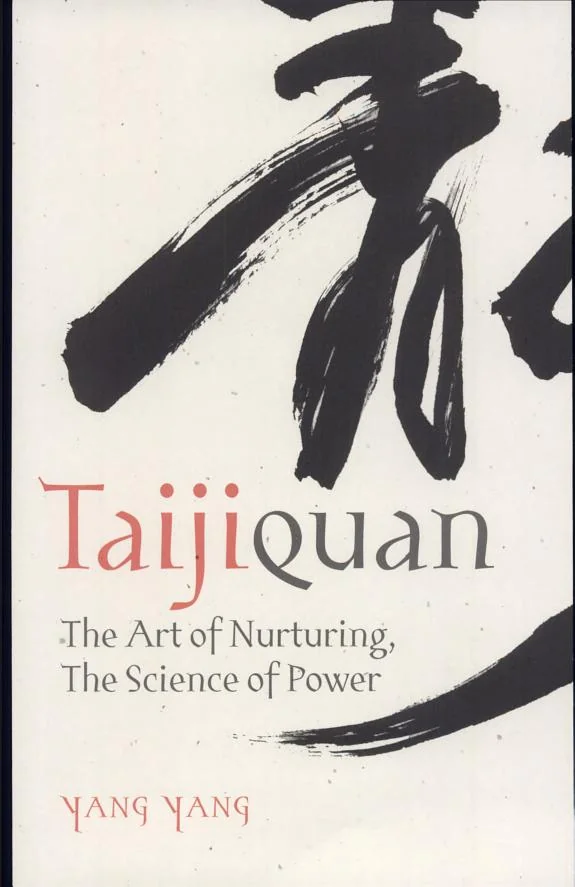
Taijiquan
 75
75

Taijiquan
Yang Yang's "Taijiquan" offers a welcome, rigorously structured approach to a discipline often shrouded in mystique. The book's strength lies in its dual focus: honoring the traditional lineage while grounding it in observable science. The detailed explication of core exercises, particularly the section on "The Purpose of the Core Exercises," is invaluable, providing a clarity that eludes many texts. However, at times, the scientific explanations, while informative, can feel slightly detached from the more intuitive, embodied experience of Taiji, creating a subtle tension between the analytical and the experiential. A particularly striking concept is the emphasis on "necessary integration," highlighting that isolated practice of forms or principles yields incomplete results. This book serves as a vital resource for practitioners seeking to understand the 'why' behind the 'how'.
📝 Description
75
Yang Yang and Scott A. Grubisich's 2005 book reframes Taijiquan beyond mere movement.
Published in 2005, Taijiquan by Yang Yang and Scott A. Grubisich presents the art as a complete system for developing physical skill and spiritual awareness. The authors move past simplistic views to detail the core principles that underpin its practice. They explain how fundamental exercises contribute to the martial, health, and spiritual aspects of Taiji. This work is for dedicated practitioners and academics of internal martial arts who want a more integrated grasp of Taijiquan. It speaks to those who appreciate a connection between Eastern philosophy and current scientific thought. Anyone interested in the fighting techniques, healing properties, or meditative elements of Taiji will find significant content here. The book is especially beneficial for practitioners past the beginner level, offering precise theoretical and practical instruction to enhance their training.
This book engages with the internal martial arts tradition, specifically Taijiquan, which has long been understood in esoteric circles not just as a physical discipline but as a path for spiritual development. It bridges the gap between ancient Taoist principles and modern understanding, seeking to explain the mechanics of both physical and energetic cultivation. The text addresses the deeper, often hidden, aspects of the art that go beyond superficial forms, connecting them to broader concepts of mind-body unity and energetic flow.
💡 Why Read This Book?
• Gain a scientifically-informed understanding of Taiji's core exercises, moving beyond rote memorization to grasp their specific functions as detailed in the foundational sections. • Explore the concept of "necessary integration" to comprehend how martial, physical, and spiritual benefits are synergistically achieved, a perspective distinct from fragmented approaches to internal arts. • Understand Taijiquan's foundational principles through the lens of both Eastern philosophy and Western scientific inquiry, as presented by Yang Yang, a traditionally trained expert.
⭐ Reader Reviews
Honest opinions from readers who have explored this book.
❓ Frequently Asked Questions
What is the primary focus of Yang Yang's book on Taijiquan?
The book focuses on presenting Taijiquan as a comprehensive system, blending traditional teachings with scientific explanations and contemporary understanding to achieve health, martial, and spiritual benefits.
When was the book "Taijiquan" by Yang Yang first published?
The book "Taijiquan" by Yang Yang was first published in 2005.
Does the book "Taijiquan" explain the martial aspects of the practice?
Yes, the book explains the purpose and integration of core exercises to achieve full martial benefits, alongside health and spiritual aspects of Taiji training.
Who is the co-author of the "Taijiquan" book?
The co-author of the "Taijiquan" book is Scott A. Grubisich.
What kind of exercises are detailed in the book?
The book details the core exercises that form the foundation of Taiji practice, explaining their specific roles and integration for holistic development.
What distinguishes this book's approach to Taijiquan?
It skillfully blends Eastern and Western thought, offering traditional teachings alongside scientific explanations and a contemporary understanding of Taiji practice.
🔮 Key Themes & Symbolism
Mind-Body Integration
The work emphasizes that Taijiquan is not merely physical exercise but a profound practice of integrating mind, body, and spirit. It posits that true benefits, whether martial or health-related, arise from the unified action of these components. The text details how specific core exercises are designed to foster this integration, requiring practitioners to align intention, breath, and movement. This holistic approach is presented as fundamental to unlocking the art's deeper potential, moving beyond superficial form to cultivate internal energy and awareness.
Traditional Teachings and Scientific Validation
A central theme is the skillful blending of ancient Eastern wisdom with contemporary Western scientific understanding. Yang Yang, drawing from her deep traditional training, elucidates the principles of Taijiquan, while the book also offers scientific explanations for its efficacy. This dual approach aims to validate the traditional methods through observable phenomena and research, making the practice accessible and credible to a wider audience interested in evidence-based wellness and martial arts.
The Purpose of Core Exercises
This book meticulously breaks down the foundational exercises of Taijiquan, arguing that each movement has a specific purpose within the larger system. It moves beyond simply demonstrating forms to explaining the underlying mechanics, energetic principles, and intended outcomes. The text stresses the 'necessary integration' of these exercises, showing how they build upon one another to develop strength, flexibility, coordination, and internal power, ultimately contributing to the practitioner's overall well-being and martial capability.
Holistic Development
Taijiquan is presented as a path to holistic development, encompassing martial skill, physical health, and spiritual growth. The book argues that these dimensions are not separate but interconnected facets of a single practice. By mastering the core exercises and understanding their integrated purpose, practitioners can achieve benefits across all these areas. This comprehensive perspective positions Taijiquan as a lifelong discipline for cultivating a balanced and fully realized self.
💬 Memorable Quotes
Direct passages from the work, attributed to the author.
“Skillfully blending Eastern and Western Thought, Mater Yang illuminates the traditional teachings as well as offers scientific explanations and a contemporary understanding of Taiji practice.”
— This statement highlights the book's unique approach, positioning it as a bridge between ancient wisdom and modern inquiry. It suggests a comprehensive exploration that respects tradition while embracing empirical understanding.
“Yang describes the core exercises that form the foundation of Taiji practice, and explains the purpose and necessary integration of these exercises...”
— This points to the practical, instructional value of the book. It emphasizes that the work doesn't just present forms but elucidates their specific functions and how they must work together for maximum benefit.
“...to achieve the full health and martial, physical and spiritual benefits of Taiji training.”
— This phrase underscores the holistic aims of Taijiquan as presented in the book, indicating that the practice is designed to cultivate well-being across multiple dimensions of a person's life.
“As both a traditionally trained expert of Taijiquan and...”
— This fragment suggests the author's dual qualification: deep roots in traditional practice combined with an ability to articulate it in a way that speaks to contemporary understanding, likely including scientific or analytical perspectives.
“The text details core exercises, explaining their specific roles in developing martial, health, and spiritual dimensions of the art.”
— This interpretation emphasizes the detailed, functional approach taken by the book regarding fundamental Taiji movements, linking them directly to the diverse benefits sought by practitioners.
🌙 Esoteric Significance
Tradition
While not aligning with a specific Western esoteric school like Hermeticism or Kabbalah, Taijiquan itself is deeply rooted in Taoist philosophy and traditional Chinese medicine. This book fits within the broader esoteric library by exploring internal energy cultivation (Qi), mind-body unity, and the pursuit of harmony with natural principles (the Tao). It represents a practical, embodied form of esoteric discipline, where spiritual development is achieved through meticulous physical practice and philosophical understanding, a common thread in many esoteric traditions that seek transformation through disciplined engagement with universal laws.
Symbolism
The practice of Taijiquan is rich with symbolism, though not always explicitly detailed in this particular text's focus on scientific integration. Concepts like the Yin and Yang, represented by the dynamic interplay of opposing forces within the movements, are central. The 'push hands' (Tui Shou) exercises can symbolize the engagement with life's challenges and the cultivation of yielding strength. The progression through forms can be seen as a metaphor for spiritual development, moving from foundational balance to complex interaction and mastery.
Modern Relevance
Contemporary thinkers and practitioners in fields like somatic psychology, sports science, and integrated wellness draw upon the principles Yang Yang elucidates. Schools focusing on embodied cognition and the scientific study of meditation and martial arts often reference the kind of integrated approach presented here. Modern Taijiquan instructors who seek to provide evidence-based explanations for their students, or those interested in the therapeutic applications of movement arts, find this work important for its blend of tradition and scientific rationale.
👥 Who Should Read This Book
• Dedicated Taijiquan practitioners seeking to deepen their theoretical understanding beyond physical form, particularly those interested in the scientific underpinnings of the art. • Scholars of comparative philosophy and martial arts history looking for a text that bridges Eastern traditional knowledge with Western scientific inquiry. • Individuals interested in holistic health and mind-body practices who wish to explore a discipline that cultivates physical vitality, mental clarity, and spiritual awareness.
📜 Historical Context
Published in 2005, Yang Yang's "Taijiquan" emerged within a global landscape where interest in martial arts and Eastern philosophies was ascendant, yet often fragmented. While the early 2000s saw continued popularization of practices like yoga and martial arts through media and online resources, a demand persisted for texts that offered rigorous, integrated understanding. Yang's work distinguished itself by bridging the gap between traditional lineages and contemporary scientific discourse. Unlike purely historical or philosophical accounts, or manuals focusing solely on physical form, this book offered a synthesis. It provided scientific explanations alongside traditional teachings, addressing a need for empirical grounding in practices often perceived as purely esoteric. This approach resonated with practitioners and academics seeking a more complete picture, moving beyond anecdotal evidence or purely classical interpretations, and engaging with the intellectual currents of the time that sought to understand mind-body connections through both ancient wisdom and modern science.
📔 Journal Prompts
The concept of 'necessary integration' in Taiji practice: how does it apply to your current training?
Reflecting on the blend of Eastern philosophy and Western science presented, which aspect most challenges or affirms your existing beliefs?
Consider the purpose of the core exercises: identify one exercise and its specific contribution to your holistic development.
How does the principle of mind-body unity, as explored in Taijiquan, manifest in your daily life outside of practice?
The interplay of Yin and Yang: identify a situation where you consciously applied yielding strength.
🗂️ Glossary
Taijiquan
A traditional Chinese internal martial art, often practiced for its health benefits and meditative qualities. Also known as Tai Chi Chuan.
Qi (Chi)
A fundamental concept in traditional Chinese culture, referring to the vital life force or energy believed to flow through all living things.
Core Exercises
The foundational movements and practices within Taijiquan that are essential for developing the fundamental skills and principles of the art.
Yin and Yang
A fundamental concept in Chinese philosophy representing complementary, interconnected, and interdependent forces or principles that shape the natural world and human experience.
Martial Benefits
The aspects of Taijiquan practice related to self-defense, combat strategy, and the development of power and effectiveness in physical application.
Spiritual Benefits
The aspects of Taijiquan practice that foster inner peace, mental clarity, self-awareness, and a connection to deeper philosophical or metaphysical principles.
Necessary Integration
The principle that the various components of Taijiquan practice (e.g., form, intention, breath, energy) must work together harmoniously to achieve the art's full potential.
This book appears in 1 collection
🔮 Readers Also Liked
Browse all →









From the “Tai Chi” Collection
View all →








More Free Occult Philosophy Books
View all →