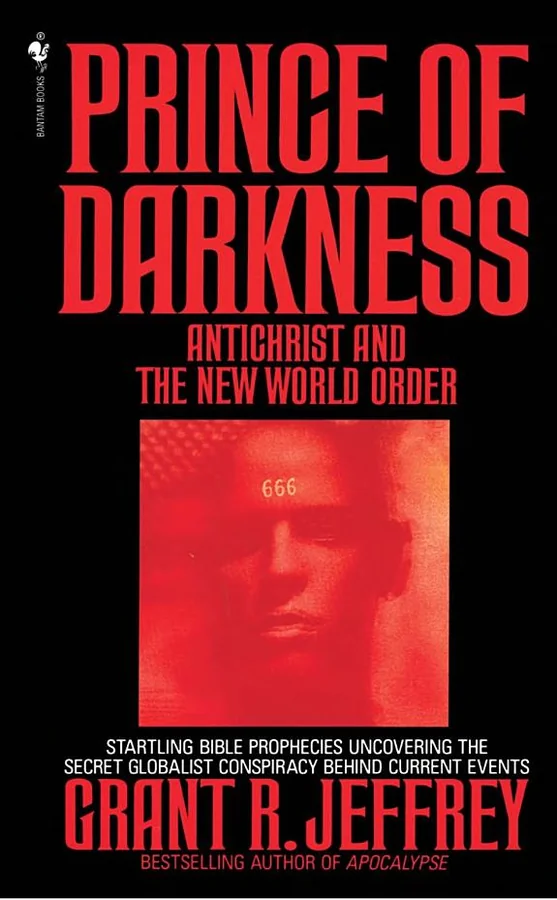
Prince of Darkness
 82
82

Prince of Darkness
Grant R. Jeffrey's "Prince of Darkness" offers a determinedly literalist interpretation of biblical prophecy, attempting to map current events onto ancient eschatological predictions. The book's strength lies in its comprehensive compilation of prophetic passages and its chronological approach to post-1948 events, presenting a clear, albeit narrow, argument. Jeffrey's assertion that the establishment of Israel in 1948 is a primary fulfillment marker is a significant anchor for his thesis. However, the work's limitation is its inherent subjectivity; interpreting complex historical and political phenomena through a singular, predetermined prophetic lens risks confirmation bias. The section discussing the "final prophesied battle" exemplifies this, framing global conflicts as direct precursors to divine intervention without fully engaging with alternative historical or geopolitical analyses.
Ultimately, "Prince of Darkness" serves as a potent articulation of a specific prophetic worldview.
📝 Description
82
Grant R. Jeffrey's 1995 book connects biblical prophecy to modern events, suggesting Israel's founding signals the Messiah's return.
Published in 1995, Grant R. Jeffrey's "Prince of Darkness" examines biblical prophecy and its alleged fulfillment in contemporary history. Jeffrey argues that specific prophecies have demonstrably come true since the State of Israel was established in 1948. He posits these events serve as indicators for the imminent return of the Messiah.
The book is for readers interested in biblical eschatology, end-times prophecy, and the connection between religious scripture and current geopolitical occurrences. Those seeking to understand prophetic timelines and their potential future implications, particularly from a Christian viewpoint, will find this work relevant. It emerged during the mid-1990s, a time of significant interest in apocalyptic literature and prophetic interpretations, influenced by global political shifts and technological growth.
This work fits within a tradition of Christian eschatology, specifically focusing on literal interpretations of biblical prophecy concerning the end times. It engages with a long-standing practice within evangelical circles of deciphering prophetic texts and linking them to historical and contemporary events. The book's premise that current world events are direct fulfillments of ancient predictions places it among various interpretations of apocalyptic literature that seek to identify divine timing and impending divine intervention.
💡 Why Read This Book?
• Gain a specific interpretive framework for understanding biblical prophecy, focusing on the author's analysis of events since the founding of Israel in 1948. • Explore the author's detailed arguments connecting geopolitical shifts to end-times scenarios, offering a unique perspective on the "final prophesied battle." • Understand the author's proposed methods for interpreting scriptural timelines, providing concrete examples of how prophecy is presented as unfolding in real-time.
⭐ Reader Reviews
Honest opinions from readers who have explored this book.
❓ Frequently Asked Questions
What is Grant R. Jeffrey's main argument in Prince of Darkness?
Jeffrey argues that numerous biblical prophecies have been fulfilled since 1948, particularly concerning the establishment of Israel, indicating the imminent return of the Messiah and the final conflict between good and evil.
Which specific historical event does Jeffrey highlight as a key prophetic fulfillment?
The author prominently features the establishment of the State of Israel in 1948 as a pivotal event, interpreting it as a direct fulfillment of biblical prophecy regarding the regathering of the Jewish people.
What does "Prince of Darkness" suggest about the future?
The book posits that the current era is leading directly to a prophesied final battle between forces of good and evil, followed by the return of the Messiah, and suggests ways to prepare for these events.
What is the author's approach to interpreting prophecy?
Jeffrey employs a literalist approach, believing prophecies are meant to be understood directly and that their fulfillment can be observed in contemporary historical and geopolitical events, especially those occurring after 1948.
Who is the intended audience for Prince of Darkness?
The book is primarily aimed at individuals interested in biblical eschatology, end-times prophecy, and those seeking to understand current events through the lens of prophetic fulfillment, often from a Christian perspective.
When was Prince of Darkness first published?
Grant R. Jeffrey's "Prince of Darkness" was first published in 1995, positioning it within a wave of interest in apocalyptic and prophetic literature during that decade.
🔮 Key Themes & Symbolism
Fulfilled Prophecy Since 1948
The core theme is the author's assertion that numerous biblical prophecies have found their literal fulfillment in events transpiring after 1948. Jeffrey meticulously outlines specific prophecies, from the re-establishment of Israel to subsequent geopolitical tensions, presenting them as undeniable evidence of divine timing and an approaching eschatological climax. This approach anchors the interpretation of scripture within a concrete historical timeline, aiming to provide verifiable proof of prophetic accuracy.
The Imminent Return of the Messiah
Directly linked to fulfilled prophecy, this theme posits that the current age is the final phase before the Messiah's return. Jeffrey interprets contemporary global events, particularly those perceived as signs of increasing conflict and societal upheaval, as direct precursors. The book aims to equip readers with an understanding of these signs, fostering a sense of urgency and preparedness for the anticipated spiritual and cosmic events.
The Final Battle Between Good and Evil
Jeffrey frames the end times as a climactic confrontation between divine forces and malevolent powers, often referred to as Armageddon or the "Prince of Darkness." This theme draws heavily on apocalyptic scripture, portraying a cosmic struggle with wide implications for humanity. The book suggests that understanding this battle is crucial for reading through the coming catastrophe and aligning oneself with the forces of good.
Escaping the Coming Catastrophe
As a practical outgrowth of the prophetic analysis, this theme offers guidance on how individuals can prepare for and survive the predicted end-times events. Jeffrey likely advocates for spiritual readiness, faith, and adherence to divine principles as the means of protection. The book aims to provide not just an analysis of prophecy but also actionable advice for readers seeking spiritual security.
💬 Memorable Quotes
Direct passages from the work, attributed to the author.
“38 prophecies fulfilled since 1948 point to the Messiah's imminent return.”
— This statement expresses the book's central thesis, highlighting the author's focus on a specific timeframe and a quantifiable number of prophetic fulfillments as evidence for an approaching eschatological event.
“Incontrovertible proof that the final battle is at hand.”
— Jeffrey presents his findings not as speculation but as definitive evidence, suggesting a high degree of certainty in his interpretation of prophetic signs and their connection to current events.
“How we can escape the coming catastrophe.”
— This phrase points to the practical, salvific aspect of the book, indicating that it offers guidance and a pathway for individuals to find safety or redemption amidst predicted global turmoil.
“The author of Apocalypse.”
— This attribution signifies Jeffrey's established role as a writer on eschatological themes, linking "Prince of Darkness" to his previous work and suggesting a consistent exploration of apocalyptic subjects.
💡 Key Ideas
Editorial paraphrase of the work's core concepts — not direct quotes.
The final prophesied battle between the forces of good and evil is at hand.
This quote emphasizes the author's belief in an impending, divinely ordained conflict, framing current global events as direct precursors to this ultimate confrontation between opposing spiritual forces.
🌙 Esoteric Significance
Tradition
While rooted in Christian eschatology, the book engages with themes common in esoteric thought, particularly the idea of historical cycles culminating in a cosmic confrontation and a subsequent new era. It diverges from traditions like Hermeticism or Kabbalah by adhering to a specific, literal interpretation of biblical narratives rather than exploring symbolic or allegorical meanings across diverse mystical systems.
Symbolism
The "Prince of Darkness" itself serves as a potent symbol, representing the ultimate adversarial force against divine order, often identified with Satan or a demonic entity. The concept of "fulfilled prophecy" acts as a symbolic key, unlocking the perceived divine plan embedded within historical events. The "final battle" symbolizes the ultimate triumph of good over evil, a recurring motif in many spiritual and mythological traditions.
Modern Relevance
Jeffrey's work continues to influence contemporary Christian discussions on eschatology and end-times prophecy. His literalist approach and focus on geopolitical events as signifiers remain relevant for certain segments of the Christian community, particularly those engaged with pre-millennial dispensationalism. The book's methodology, linking specific historical occurrences to prophetic texts, can be seen reflected in online prophecy communities and ongoing debates about global events.
👥 Who Should Read This Book
['• Students of Christian eschatology seeking a literalist interpretation of end-times prophecy, particularly focusing on events since 1948.', '• Readers interested in the intersection of biblical prophecy and modern geopolitical history, who want to understand how scriptural predictions are applied to contemporary events.', '• Individuals looking for a structured argument connecting current global affairs to the author\'s view of an impending "final battle" and the return of the Messiah.']
📜 Historical Context
Grant R. Jeffrey's "Prince of Darkness" emerged in 1995, a period marked by significant geopolitical shifts following the Cold War and a burgeoning interest in eschatological interpretations within evangelical Christianity. The late 20th century saw a proliferation of books and media focusing on end-times prophecy, often spurred by events like the Gulf War and the rise of global communication technologies. Jeffrey's work aligns with a tradition of dispensationalist theology, which emphasizes a literal interpretation of biblical prophecy and a belief in distinct historical eras ordained by God. While not directly engaging with contemporary academic biblical scholarship that often questions literal prophetic fulfillment, Jeffrey's book resonated with a popular audience seeking concrete answers to complex world events through scriptural frameworks. The reception was largely within religious circles, where similar interpretations were already prevalent, rather than in broader academic discourse.
📔 Journal Prompts
The concept of "fulfilled prophecy" as presented in the book.
Interpretations of events post-1948 in relation to the "Prince of Darkness."
The author's understanding of the "final prophesied battle."
Reflections on "escaping the coming catastrophe" through faith.
The role of the State of Israel (1948) in the author's prophetic timeline.
🗂️ Glossary
Eschatology
The branch of theology concerned with death, judgment, and the final destiny of the soul and of humankind. In this context, it refers specifically to the study of end-times prophecy.
Messiah
In Jewish and Christian theology, the promised deliverer and king who will bring an era of peace and salvation. Jeffrey focuses on the Christian interpretation of the Second Coming.
Prophecy
A prediction of what will happen in the future, especially one made under divine inspiration. Jeffrey examines biblical texts he believes contain such predictions.
Dispensationalism
A theological system that divides human history into discrete periods (dispensations) during which God interacts with humanity in different ways, often emphasizing a literal interpretation of prophecy.
Armageddon
In Christian eschatology, the site of a final battle between good and evil described in the Book of Revelation. It symbolizes a great, decisive conflict.
Catastrophe
An event causing great and often sudden damage or suffering. In the book, this refers to the predicted end-times events preceding the Messiah's return.
Incontrovertible Proof
Evidence that is impossible to deny or dispute. Jeffrey uses this term to describe his interpretation of events as definitively confirming prophetic predictions.
This book appears in 1 collection
🔮 Readers Also Liked
Browse all →









From the “Prophecy” Collection
View all →






More Free Occult Philosophy Books
View all →