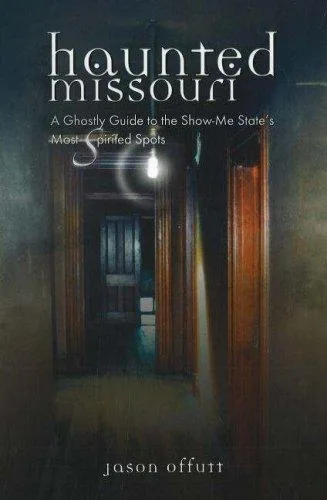
Haunted Missouri
 79
79

Haunted Missouri
Jason Offutt’s *Haunted Missouri* functions less as an investigation and more as an archive of the state’s spectral lore. Its strength lies in its comprehensive cataloging of hauntings, presenting a broad spectrum of reported phenomena across diverse Missouri locales, from the St. Louis Gateway Arch's vicinity to isolated rural communities. Offutt's prose is unadorned, which serves the purpose of presenting these tales factually, as they have been told. However, this same restraint can lead to a certain flatness; the accounts, while numerous, sometimes lack the evocative detail that might truly unsettle or intrigue the reader. A notable example is the recurring theme of residual hauntings tied to the Civil War, a period that clearly left its mark on the state's psychic landscape, yet the descriptions often feel like mere recitations of reported events rather than explorations of their deeper implications. The book’s limitation is its lack of critical analysis or a deeper dive into the psychology of belief. It is a solid compilation, but it rarely pushes beyond the surface of the legends it presents. Ultimately, *Haunted Missouri* is a valuable compendium for those seeking an exhaustive list of the state's spectral stories.
📝 Description
79
Jason Offutt's 2007 book collects spectral accounts and folklore from across Missouri.
Haunted Missouri is a survey of local legends and reported hauntings, first published in 2007. It is not a scholarly analysis but rather an ethnographic collection of stories gathered from residents and local historians across the state. Offutt organizes these accounts by region, including both widely known historical hauntings and lesser-known anecdotal tales. The book's method is direct, focusing on presenting the narratives themselves with little authorial comment. This allows the inherent mystery and the reported experiences of individuals to come to the forefront.
The volume suits enthusiasts of regional folklore, ghost stories, and American paranormal traditions. Readers interested in Missouri's specific history and spectral lore will find it a useful resource. It appeals to those who enjoy stories about unexplained events and the cultural context surrounding them. Amateur investigators and local historians looking to understand supernatural narratives within a specific geographic area will also find value here. Those who prefer a straightforward presentation of anecdotal evidence are likely to find this book engaging.
This work fits into the tradition of regional paranormal cataloging, a genre that saw increased interest in the late 20th and early 21st centuries. It taps into a popular fascination with finding the uncanny within familiar settings and everyday history, reflecting a broader cultural trend of re-examining local lore through a spectral lens. Unlike purely academic studies, it prioritizes the relaying of personal testimonies and community legends, embodying a form of modern folklore collection.
💡 Why Read This Book?
• Learn about specific spectral locations like the Lemp Brewery in St. Louis, understanding how its dark history and reported phenomena contribute to its reputation as a haunted site. • Discover the persistent folklore surrounding the Missouri State Penitentiary, gaining insight into the enduring narratives of paranormal activity within its walls. • Explore the various accounts of Civil War-related hauntings across Missouri, recognizing how historical trauma manifests in local spectral legends.
⭐ Reader Reviews
Honest opinions from readers who have explored this book.
❓ Frequently Asked Questions
What kinds of hauntings are documented in Haunted Missouri?
The book documents a wide array of alleged paranormal occurrences, including apparitions of human figures, disembodied voices and sounds, unexplained temperature drops, and poltergeist-like activity affecting objects and people.
Does Haunted Missouri focus on a specific time period for its hauntings?
While many hauntings are tied to historical events, particularly the Civil War and early industrial periods in Missouri, the book also includes more contemporary reported sightings and spectral events.
Are the stories in Haunted Missouri based on eyewitness accounts?
Yes, the majority of the accounts presented are based on interviews with eyewitnesses, local historians, and individuals who have directly experienced or investigated the reported phenomena.
Does Jason Offutt offer explanations for the hauntings?
Offutt primarily presents the stories as reported, refraining from offering definitive explanations or debunking claims. The focus is on documenting the folklore and alleged experiences themselves.
Which regions of Missouri are most represented in Haunted Missouri?
The book covers the entire state, with significant attention given to areas with rich historical significance, such as St. Louis, Kansas City, and sites related to the Civil War.
Is Haunted Missouri suitable for skeptics?
Skeptics might find the book interesting as a collection of folklore and cultural narratives, but it does not present evidence intended to convince doubters, focusing instead on the existing legends.
🔮 Key Themes & Symbolism
Regional Spectral Lore
The book meticulously compiles ghost stories and purported hauntings specific to the state of Missouri. It moves beyond generic tales to highlight the unique spectral range woven from the state's history, geography, and cultural narratives. From the industrial scars of St. Louis to the battlefields of the Civil War, Offutt demonstrates how localized events and tragedies seem to manifest as persistent paranormal phenomena, imprinting themselves onto the landscape and the collective consciousness of its inhabitants. This focus on regional specificity makes the collection a valuable resource for understanding how folklore takes root and endures within particular communities.
The Imprint of History
A central theme is the idea that significant historical events, particularly those marked by violence or strong emotion, can leave an energetic imprint on locations. The numerous accounts tied to the Civil War in Missouri serve as prime examples, suggesting that the residual energy of conflict and suffering continues to manifest. Offutt's work implicitly argues that understanding these historical echoes is key to comprehending the reported hauntings, presenting a perspective where the past is not merely remembered but actively, if supernaturally, present.
Oral Tradition and Anecdotal Evidence
Offutt relies heavily on the oral tradition, gathering stories passed down through generations or reported by contemporary witnesses. The book functions as an archive of these anecdotal accounts, emphasizing their role in shaping a community's understanding of its own history and its supernatural dimensions. By presenting these narratives without extensive debunking or over-analysis, the work respects the integrity of the folklore itself, highlighting how these stories persist and evolve through retelling and shared belief within Missouri.
The Unseen Presence
The collection explores the pervasive idea that certain places are inhabited by unseen presences, whether they be residual energies, intelligent hauntings, or unexplained phenomena. The book catalogues diverse manifestations, from fleeting apparitions to persistent atmospheric disturbances, suggesting a world layered with subtle, often unsettling, energies. This theme taps into a fundamental human curiosity about what lies beyond the veil of ordinary perception, finding ample material within Missouri's documented spectral occurrences.
💬 Memorable Quotes
Direct passages from the work, attributed to the author.
“The Lemp Brewery in St. Louis is said to be haunted by the spirits of its former owners, the Lemp family.”
— This highlights how specific, well-documented locations with tragic histories are often focal points for paranormal belief, suggesting a connection between family misfortune and lingering spectral presence.
“Many Civil War battle sites in Missouri are reportedly still sites of spectral activity.”
— This points to the concept of residual hauntings, where intense historical events, particularly violent ones, are believed to leave an energetic imprint that manifests as recurring phenomena.
“Reports of unexplained noises and apparitions persist at the Missouri State Penitentiary.”
— This illustrates how environments associated with prolonged human suffering and confinement can become centers for reported paranormal activity, often linked to the experiences of those who were incarcerated.
“Local folklore often attributes strange occurrences to the spirits of those who died under mysterious circumstances.”
— This emphasizes the role of unsolved mysteries and unresolved tragedies in fueling ghost stories, suggesting that a lack of closure in life may translate into a continued, unexplained presence.
“Ghost stories in Missouri are often tied to specific geographical features or historic buildings.”
— This underscores the localized nature of paranormal belief, where spectral narratives are deeply embedded in the physical and historical range of a particular region.
🌙 Esoteric Significance
Tradition
While not explicitly aligned with a single esoteric lineage, *Haunted Missouri* intersects with folk magic and animistic traditions that perceive spirits and energies as inherent to places. It draws from the broader Western esoteric interest in hauntings and residual energies, often explored within spiritualism and parapsychology circles. The book implicitly engages with concepts of sympathetic magic and the idea that intense human experiences can imprint themselves onto the material world, a theme found in various occult philosophies that explore the connection between consciousness and environment.
Symbolism
The book frequently features the symbolism of residual hauntings, where historical events, particularly those involving violence or tragedy like the Civil War, are seen as leaving energetic imprints. Locations themselves—old buildings, battlefields, and prisons—become potent symbols of past trauma and lingering consciousness. Apparitions, whether spectral figures or disembodied sounds, symbolize the unresolved aspects of human experience and the porous boundary between the physical and energetic realms, suggesting that certain places hold elements of lives lived and deaths experienced.
Modern Relevance
Contemporary interest in urban exploration, historical preservation, and the psychological impact of place speaks to the themes in *Haunted Missouri*. The book's catalog of hauntings can inform modern parapsychological investigations and discussions on psychogeography, the study of the specific effects of a geographic environment on the emotions and behavior of individuals. It also contributes to the ongoing fascination with local history and folklore, providing a resource for those exploring the intersection of collective memory, belief, and the paranormal in American culture.
👥 Who Should Read This Book
• Enthusiasts of American folklore and regional ghost stories, seeking a comprehensive collection of Missouri's spectral legends. • Paranormal investigators and researchers interested in documented accounts of hauntings for comparative study or potential investigation sites. • Local historians and community members wanting to understand the supernatural narratives that are part of Missouri's cultural heritage.
📜 Historical Context
Published in 2007, *Haunted Missouri* emerged during a period of intense popular interest in the paranormal, amplified by reality television and the internet. This era saw a widespread cataloging of regional hauntings across the United States, with authors like Jason Offutt contributing to a growing body of work dedicated to America's spectral landscape. The book taps into a tradition of folklore collection that gained momentum in the late 19th and early 20th centuries, exemplified by figures like Charles L. Edwards and his *Historic Haunts of America*. While Offutt's work focuses on anecdotal evidence rather than academic analysis, it reflects a cultural fascination with the uncanny embedded in local history. The reception of such books was generally positive among enthusiasts, solidifying a genre that treats local legends as tangible, albeit supernatural, historical artifacts.
📔 Journal Prompts
The spectral accounts from the Lemp Brewery, analyze the reported phenomena.
Reflect on the Civil War hauntings documented; what historical energies might persist?
Consider the role of the Missouri State Penitentiary in its spectral folklore.
How do the reported hauntings connect to specific geographical features in Missouri?
Examine the oral tradition behind a chosen haunting from the book.
🗂️ Glossary
Apparition
A ghost or ghostlike image of a person. In the context of the book, it refers to visual sightings of supernatural figures reported at specific locations.
Residual Haunting
A type of haunting where paranormal activity is believed to be an imprint or recording of a past event, replaying itself due to strong emotional energy, rather than an interactive spirit.
Poltergeist Activity
Paranormal phenomena characterized by physical disturbances such as loud noises, moving objects, or physical assaults, often attributed to an unseen force or entity.
Folklore
The traditional beliefs, customs, and stories of a community, passed through the generations by word of mouth. In this book, it specifically refers to local ghost stories and legends.
Eyewitness Account
A firsthand report of an event or phenomenon by someone who observed it directly. The book relies heavily on these for its documented hauntings.
Local Legend
A story or narrative that is widely believed within a particular community or region, often concerning historical events, notable figures, or supernatural occurrences.
Spectral
Relating to or resembling a ghost or specter; ghostly. Used to describe the nature of the reported phenomena and locations.
🔮 Readers Also Liked
Browse all →









More Free Occult Philosophy Books
View all →