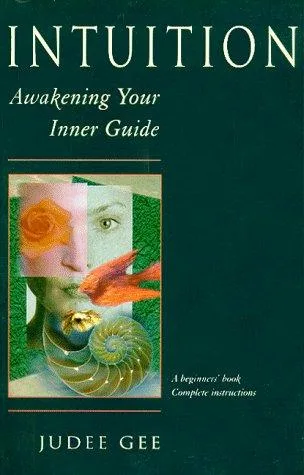
Intuition
 75
75

Intuition
Judee Gee's "Intuition" provides a refreshingly grounded perspective on a faculty often shrouded in New Age platitudes. The book’s strength lies in its methodical approach, attempting to articulate the process of intuitive knowing without resorting to purely mystical language. Gee’s examination of how the subconscious processes information and presents it as a sudden insight is particularly well-articulated, drawing parallels to early 21st-century cognitive science. However, the work occasionally suffers from a lack of concrete, experiential examples; while the theory is sound, readers seeking vivid case studies might feel a slight void. A passage discussing the 'thin seeing' of intuitive perception, where subtle environmental cues are processed unconsciously, highlights the book’s analytical rigor but could have benefited from more illustrative narrative. Ultimately, "Intuition" offers a valuable, if somewhat academic, framework for understanding this elusive human capacity.
📝 Description
75
Judee Gee's 2003 book, Intuition, examines intuitive perception as a cognitive faculty.
Published in 2003, Intuition by Judee Gee moves beyond simple anecdotes to investigate the mechanisms and philosophical questions surrounding intuitive perception. Gee presents intuition not as an mystical gift, but as a cognitive ability that people can access. The book is for anyone interested in consciousness studies, esoteric philosophy, or ways to improve inner perception.
It covers how intuition works, how to develop it, and its part in personal growth and spiritual exploration. Readers familiar with Jungian psychology or phenomenology will find much to consider. Gee distinguishes intuitive insight from logical reasoning, looks at the subconscious role in intuitive jumps, and discusses how to use intuitive awareness daily. The text also touches on how to verify intuitive experiences and separate them from mere wishful thinking.
Gee's work, appearing in 2003, fits within a tradition that bridges psychological inquiry and philosophical exploration of immediate apprehension. It draws upon figures like Carl Jung, whose ideas on archetypes and the collective unconscious offered early frameworks for understanding non-linear perception. The book engages with contemporary psychological thought while connecting it to older philosophical discussions about direct knowing, placing it within a lineage concerned with inner experience and consciousness beyond ordinary rational processes.
💡 Why Read This Book?
• Gain a structured understanding of how intuition operates, moving beyond vague notions to its cognitive underpinnings, as explored in Gee's analysis of subconscious pattern recognition. • Learn practical methods for distinguishing genuine intuitive signals from mere mental noise, a crucial skill for personal discernment as discussed in the text's practical applications. • Understand intuition's place within broader philosophical and psychological discourse, referencing figures like Carl Jung and the concept of the collective unconscious.
⭐ Reader Reviews
Honest opinions from readers who have explored this book.
❓ Frequently Asked Questions
When was Judee Gee's 'Intuition' first published?
Judee Gee's 'Intuition' was first published in 2003. This places its emergence within a period of growing interest in consciousness studies and psychological exploration.
What is the main focus of Judee Gee's 'Intuition'?
The book primarily focuses on demystifying intuition, exploring its cognitive mechanisms, philosophical implications, and practical cultivation beyond purely anecdotal or mystical accounts.
Does 'Intuition' by Judee Gee discuss Jungian concepts?
Yes, the work engages with psychological frameworks that resonate with Jungian thought, particularly concerning the subconscious and non-rational forms of knowing, situating intuition within a broader psychospiritual context.
Is 'Intuition' suitable for beginners in esoteric studies?
Yes, the book offers a structured approach that can be accessible to beginners interested in understanding intuition from both psychological and philosophical angles, without requiring prior esoteric knowledge.
What are the practical takeaways from Judee Gee's 'Intuition'?
Readers can expect to learn about distinguishing intuitive signals, understanding the subconscious role in insight, and applying intuitive awareness more effectively in daily life.
What is the historical context of the book 'Intuition'?
Published in 2003, it reflects early 21st-century discussions on consciousness and perception, interacting with contemporary psychological theories and philosophical traditions concerning immediate apprehension.
🔮 Key Themes & Symbolism
Cognitive Mechanisms of Intuition
Gee's exploration moves beyond the mystical to examine the psychological and neurological underpinnings of intuitive leaps. The work discusses how the subconscious mind processes vast amounts of information, recognizing patterns and synthesizing data below the threshold of conscious awareness. This allows for the 'sudden' arrival of insights, which are then interpreted by the conscious mind. The text probes the interplay between sensory input, memory, and the emergent quality of intuitive knowing, suggesting it is an accessible cognitive function rather than an ineffable gift.
Distinguishing Intuition from Other States
A significant aspect of the book addresses the challenge of discerning authentic intuition from wishful thinking, biases, or projections. Gee outlines criteria and self-reflective practices to help readers differentiate genuine inner guidance from desires or conditioned responses. This involves understanding the subjective nature of experience and the importance of validation through subsequent events or integrated understanding. The focus is on developing a discerning awareness that can reliably access and interpret intuitive signals.
Practical Cultivation and Application
The book provides frameworks for actively cultivating intuitive abilities. This includes techniques for quieting the analytical mind, enhancing sensory awareness, and creating conditions conducive to intuitive reception. Gee emphasizes that intuition is a faculty that can be strengthened through consistent practice and mindful attention. Its application is explored across various life domains, from decision-making and problem-solving to interpersonal relationships and personal growth, highlighting its utility in navigating complex situations.
Intuition in Philosophical Context
Gee situates the concept of intuition within broader philosophical traditions that have grappled with immediate apprehension and non-rational knowledge. The work touches upon how intuition offers a different mode of access to reality compared to empirical observation or logical reasoning. By examining its role, the book contributes to ongoing dialogues about the nature of consciousness, knowledge acquisition, and the complex ways humans understand themselves and the world around them.
💬 Memorable Quotes
Direct passages from the work, attributed to the author.
“Intuition functions as a rapid, holistic processing of information, often bypassing linear logic.”
— This highlights the core argument that intuition is not magical but a highly efficient cognitive process. It suggests that our minds can synthesize complex data streams very quickly, presenting a conclusion or insight without the need for step-by-step reasoning.
“The challenge lies in differentiating the signal of intuition from the noise of personal desire or conditioned response.”
— This points to the practical difficulty many face when trying to access their intuition. It emphasizes the need for self-awareness and critical discernment to ensure one is acting on genuine inner guidance rather than egoic impulses.
“Cultivating intuition requires intentional practice and a receptive state of mind.”
— This suggests that intuition is not solely an innate talent but a skill that can be developed. The emphasis on practice and receptivity implies that conscious effort and a willingness to be open are key to enhancing this faculty.
“Understanding the subconscious role is key to explaining the origins of intuitive insights.”
— This interpretation underscores the book's approach to grounding intuition in psychological processes. By linking intuition to subconscious activity, Gee aims to make it more understandable and less reliant on supernatural explanations.
“Intuitive knowing offers a complementary mode of understanding to rational analysis.”
— This positions intuition not as a replacement for logic but as an equally valid, albeit different, way of apprehending truth or making sense of situations. It advocates for integrating both modes of knowing for a more complete perspective.
🌙 Esoteric Significance
Tradition
While not strictly adhering to a single lineage, Gee's work on intuition fits within the broader Western Esoteric tradition's interest in non-rational faculties of perception. It reflects the Gnostic emphasis on inner knowing and the Hermetic principle of 'As Above, So Below' by exploring how inner states reflect outer realities. The book departs from purely mystical traditions by grounding its exploration in psychological and cognitive frameworks, making it accessible to those interested in the 'how' of esoteric experience.
Symbolism
The primary 'symbol' explored is intuition itself, treated as an inner faculty. Within the context of esoteric thought, intuition can symbolize the 'Third Eye' or the faculty of divine perception, allowing direct apprehension of truth. The book's focus on subconscious processing can be linked to the alchemical concept of the 'prima materia' – the raw, unformed potential from which higher consciousness can be extracted. The 'signal' versus 'noise' metaphor also acts symbolically, representing the discernment required to separate authentic spiritual insight from worldly distractions.
Modern Relevance
Gee's approach to intuition remains highly relevant today, particularly within fields like coaching, mindfulness, and integrated psychology. Modern practitioners of somatic experiencing and mindfulness-based stress reduction (MBSR) often implicitly or explicitly employ the principles discussed, seeking to access embodied wisdom and non-verbal knowing. Thinkers in the transpersonal psychology movement continue to draw on frameworks that validate intuitive experience as a crucial aspect of human development and well-being, aligning with Gee's endeavor to legitimize this faculty.
👥 Who Should Read This Book
• Aspiring practitioners of psychological introspection seeking to understand and cultivate their inner knowing, moving beyond anecdotal beliefs to structured exploration. • Students of consciousness studies interested in the intersection of cognitive science, philosophy, and esoteric thought regarding non-rational perception. • Individuals seeking practical guidance on discerning authentic inner guidance from mental clutter, enhancing decision-making and personal insight.
📜 Historical Context
Published in 2003, Judee Gee's "Intuition" arrived during a flourishing period for consciousness studies and the popular integration of psychological concepts into self-help and spiritual inquiry. The early 2000s saw continued engagement with the work of Carl Jung, whose theories on archetypes and the collective unconscious provided a rich backdrop for discussions on non-rational knowing. Gee's text navigated this landscape by attempting a more systematic, less purely mystical, approach to intuition, distinguishing itself from the more ethereal New Age literature prevalent at the time. It engaged with contemporary cognitive psychology, seeking to bridge the gap between subjective experience and observable mental processes. While not directly engaging with a specific contemporary author in overt debate, the book implicitly responded to the broader discourse initiated by thinkers exploring the frontiers of the mind, such as Daniel Kahneman and Amos Tversky's work on heuristics and biases, albeit from a more affirmative stance on intuition's value.
📔 Journal Prompts
The subconscious processing of intuitive insights: explore its function.
Distinguishing the 'signal' of intuition from the 'noise' of desire.
Reflect on a time intuitive awareness clarified a complex situation.
The role of receptive states in accessing intuitive perception.
How might integrating intuitive knowing complement rational analysis in your life?
🗂️ Glossary
Intuitive Leap
A sudden cognitive event where a conclusion or understanding is reached without conscious, step-by-step reasoning. It is often experienced as an immediate knowing or insight.
Subconscious Processing
Mental activity that occurs below the level of conscious awareness, involving pattern recognition, memory retrieval, and information synthesis that can inform conscious thought.
Holistic Processing
A cognitive approach where information is understood or processed as a complete system or whole, rather than through the analysis of individual parts.
Conditioned Response
An automatic reaction or behavior learned through past experiences and associations, which may mimic intuitive insight but stems from established patterns.
Receptive State
A mental and emotional condition characterized by openness, quietude, and a lack of resistance, conducive to receiving subtle information or insights.
Phenomenological Approach
A philosophical method that focuses on the subjective experience of individuals, aiming to understand the structure and meaning of phenomena as they appear to consciousness.
Non-rational Knowledge
Forms of knowing or understanding that do not rely primarily on logic, empirical evidence, or sequential reasoning, often associated with intuition, insight, or direct apprehension.
🔮 Readers Also Liked
Browse all →









More Free Occult Philosophy Books
View all →