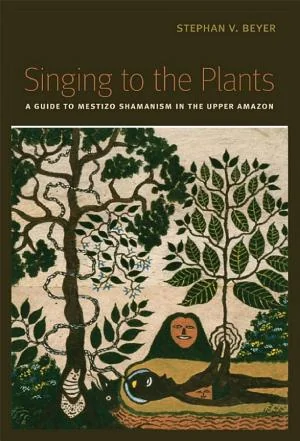
Singing to the Plants
 83
83

Singing to the Plants
Stephan V. Beyer's "Singing to the Plants" offers a rare and detailed look into the spiritual ecology of the Upper Amazon's mestizo communities. The strength of this work lies in its deep immersion and respectful portrayal of practices that blend indigenous shamanism with elements of folk Catholicism. Beyer avoids sensationalism, instead presenting a nuanced exploration of plant intelligence and its integration into daily life, healing, and sorcery. A particularly compelling aspect is the detailed account of how specific plants are perceived as having distinct personalities and spiritual agency, a concept often reduced to mere superstition in less rigorous studies.
However, the book’s academic tone, while laudable for its rigor, may at times feel dense for the casual reader. The sheer volume of ethnographic detail, while invaluable for scholars, occasionally obscures the narrative flow. A more direct engagement with the subjective experience of plant-induced states, perhaps through more extended direct testimony, could have further illuminated the profound nature of these traditions. Despite this, "Singing to the Plants" stands as a significant contribution to the study of ethnobotany and esoteric Amazonian practices.
📝 Description
83
Stephan V. Beyer's 2010 study examines mestizo Amazonian plant traditions.
Singing to the Plants offers an anthropological look at the mestizo communities of the Upper Amazon. Stephan V. Beyer details their unique belief systems, which blend folk Catholicism with indigenous Amazonian shamanism. The book focuses on the communities' relationship with psychoactive and medicinal plants, documenting oral traditions, healing practices, and sorcery rituals.
This work is for anthropologists, ethnobotanists, and scholars of religion interested in the spiritual and medicinal use of Amazonian plants. It is also for those studying folk Catholicism, shamanism, and cultural syncretism. Readers who want to understand the practical and spiritual applications of Amazonian flora beyond academic study will find this a useful resource.
Beyer's book comes from a tradition of Amazonian ethnography that grew in the late 20th century. It builds on earlier studies of indigenous Amazonian cultures and the effects of European colonization. The book pays particular attention to mestizo populations, who are often overlooked in favor of purely indigenous groups. It reflects a scholarly interest in the connections between religion, medicine, and plant use in the Amazon.
This book fits within the esoteric tradition of exploring plant consciousness and communication, particularly as understood through shamanic practices. It examines how specific hallucinogenic plants, like Ayahuasca, are viewed not just as tools but as spiritual entities within the mestizo worldview. The research documents the social structures and beliefs that govern the respectful use of these botanical agents, connecting practical ethnobotany with deeper spiritual understandings of the natural world.
💡 Why Read This Book?
• Gain specific knowledge about the mestizo syncretism in the Upper Amazon, understanding how folk Catholicism integrates with indigenous shamanism and plant use, as detailed in the book's ethnographic accounts. • Learn about the perceived consciousness and spiritual agency of specific plants, moving beyond simplistic views of psychoactive substances to grasp their role as interlocutors, a concept central to the book's findings. • Understand the practical and spiritual applications of Amazonian flora within a specific cultural context, as the book meticulously documents healing and sorcery rituals informed by deep botanical knowledge.
⭐ Reader Reviews
Honest opinions from readers who have explored this book.
❓ Frequently Asked Questions
What is the primary focus of Stephan V. Beyer's "Singing to the Plants"?
The book focuses on the ethnobotany and spiritual practices of mestizo communities in the Upper Amazon, exploring their unique syncretic blend of folk Catholicism and indigenous shamanism, with a particular emphasis on their relationship with medicinal and psychoactive plants.
When was "Singing to the Plants" first published?
The original publication date for "Singing to the Plants" by Stephan V. Beyer was June 30, 2010.
What are some key concepts explored in the book regarding plant use?
The book explores concepts of plant consciousness, spiritual agency attributed to plants, and their role as 'interlocutors' in healing and sorcery. It details how specific hallucinogens are understood within the mestizo belief system.
Who are the 'mestizos' discussed in the book?
Mestizos in this context are the Spanish-speaking descendants of Hispanic colonizers and indigenous peoples of the Amazon jungle. They live both in urban centers and small villages, retaining unique cultural and religious traditions.
Does the book discuss specific Amazonian plants?
Yes, the book delves into the use of potent plant hallucinogens and medicinal flora within the mestizo culture, with Ayahuasca being a prominent example of plants perceived to have spiritual significance and communicative abilities.
What is the academic discipline of the author, Stephan V. Beyer?
Stephan V. Beyer is an ethnobotanist and anthropologist, bringing a scholarly yet deeply respectful approach to his study of Amazonian plant traditions and spiritual practices.
🔮 Key Themes & Symbolism
Plant Consciousness and Communication
The work presents a compelling case for the mestizo belief in plant consciousness, where flora are not merely resources but active spiritual entities with distinct personalities and communicative capacities. This perspective challenges Western reductionism, detailing how specific plants, particularly potent hallucinogens, are seen as vital interlocutors in shamanic practices, facilitating healing and spiritual insight by engaging directly with human consciousness. The book elucidates the nuanced understanding of these plant intelligences within the Amazonian context.
Syncretism of Belief Systems
Singing to the Plants meticulously documents the syncretic religious field of the Upper Amazon mestizo culture. It highlights the fascinating fusion of Iberian folk Catholicism with indigenous Amazonian spiritual traditions, including shamanism, sorcery, and ancestor veneration. This blending manifests in unique rituals, prayers, and cosmologies where Christian figures and saints may coexist with or be reinterpreted through the lens of indigenous plant spirits and jungle deities, creating a rich and complex spiritual worldview.
Ethnobotany and Healing Practices
The book serves as a significant ethnobotanical resource, detailing the traditional knowledge of medicinal and psychoactive plants among Amazonian mestizos. It goes beyond mere cataloging, exploring the cultural context, preparation methods, and spiritual significance attached to these botanicals. The healing practices described are deeply interwoven with shamanic cosmology, where plant-based remedies are administered not just for physical ailments but also for spiritual imbalances, underscoring a holistic approach to well-being.
Mestizo Culture and Identity
Singing to the Plants offers a window into the often-underrepresented mestizo culture of the Amazon. It portrays them not simply as a transitional group but as a distinct cultural entity shaped by their unique history of acculturation and adaptation. The book illustrates how mestizos maintain a complex identity, drawing from both European and indigenous heritage, particularly evident in their distinct religious expressions, social structures, and profound connection to the Amazonian environment and its plant life.
💬 Memorable Quotes
Direct passages from the work, attributed to the author.
“Mestizos have retained features of a folk Catholicism and traditional Hispanic medicine, and have incorporated much of the religious tradition of the Amazon.”
— This highlights the core syncretism explored in the book, showing how mestizo culture is a unique fusion, neither purely European nor purely indigenous, but a distinct entity shaped by both influences, particularly in spiritual and healing practices.
“Some mestizos have migrated to Amazon towns and cities, such as Iquitos and Pucallpa; most remain in small villages.”
— This factual statement grounds the study geographically and socially, indicating the diverse living situations of the mestizo population and setting the stage for understanding how their practices might vary between urban and rural settings.
“They have incorporated... especially its healing, sorcery, and the use of potent plant hallucinogens.”
— This points to the central role of shamanic traditions and plant medicine in the mestizo spiritual life. It emphasizes that these are not peripheral elements but deeply integrated aspects of their culture, influencing their understanding of health, spirituality, and the natural world.
“The Spanish-speaking descendants of Hispanic colonizers and the indigenous peoples of the jungle.”
— This definition is crucial for understanding the demographic and historical roots of the mestizo population studied, explaining their position as a bridge between two major cultural streams in the Amazon.
“The use of potent plant hallucinogens, including [Ayahuasca]”
— This specifically names a key element of the mestizo spiritual practice, signaling the book's deep engagement with the use of entheogens and their significance within the cultural and ritualistic framework of the Amazon.
🌙 Esoteric Significance
Tradition
This work fits within the broader esoteric study of shamanism and plant-based spiritual traditions, often intersecting with anthropological approaches to esotericism. While not strictly Hermetic or Kabbalistic in the Western sense, it engages with the fundamental esoteric principle of communication with nature spirits and intelligences, viewing plants as conscious beings. It aligns with traditions that explore altered states of consciousness for spiritual insight and healing, a common thread in many esoteric lineages worldwide.
Symbolism
A primary symbol is the plant itself, elevated beyond its botanical form to represent consciousness, spirit, and a gateway to other realms. The act of 'singing' to the plants symbolizes a reciprocal relationship based on respect, intention, and communication, rather than mere extraction. Ayahuasca, as a frequently used plant spirit, symbolizes transformation, visionary experience, and the deep, often challenging, spiritual journey required for healing and self-understanding within this cultural context.
Modern Relevance
Contemporary thinkers and practitioners in psychedelic studies, ethnobotany, and eco-spirituality draw on works like "Singing to the Plants." It informs discussions on non-ordinary states of consciousness, the ethical use of entheogens, and the potential for interspecies communication. The book's detailed ethnography provides valuable data for those exploring the therapeutic and spiritual applications of plant medicines, as well as for activists advocating for the preservation of indigenous and mestizo knowledge systems.
👥 Who Should Read This Book
• Anthropologists and ethnobotanists studying Amazonian cultures, seeking detailed ethnographic data on mestizo spiritual practices and plant use. • Students of comparative religion and shamanism, interested in syncretic belief systems that blend indigenous traditions with external influences like Catholicism. • Individuals curious about the spiritual and consciousness-altering properties of plants, looking for a scholarly yet accessible exploration of plant intelligence and interspecies communication.
📜 Historical Context
Stephan V. Beyer's "Singing to the Plants," published in 2010, emerged during a period of renewed academic and public interest in ethnobotany and shamanism, particularly concerning the Amazon basin. This era saw a continuation of late 20th-century trends in anthropology that increasingly valued indigenous knowledge and challenged colonial perspectives. While earlier ethnographers like Philippe Descola and Eduardo Viveiros de Castro were reshaping the understanding of Amazonian cosmologies, Beyer's work specifically focuses on the syncretic mestizo populations, a group often less studied than purely indigenous communities. The book's detailed ethnography contributed to the ongoing scholarly conversation about cultural hybridity and the sophisticated spiritual systems embedded in plant use. Reception was primarily within academic circles, appreciated for its rigorous fieldwork and nuanced portrayal, avoiding the sensationalism sometimes associated with studies of shamanism and plant hallucinogens.
📔 Journal Prompts
The perception of plant consciousness within mestizo culture.
Syncretic elements in mestizo folk Catholicism and Amazonian traditions.
The role of Ayahuasca in healing and sorcery as described.
Your own relationship with the plant world and its perceived intelligence.
Experiences or beliefs surrounding the communication with non-human intelligences.
🗂️ Glossary
Mestizo
In the context of the Upper Amazon, refers to individuals of mixed Spanish and indigenous ancestry, who have developed a distinct cultural and religious identity blending European and native traditions.
Shamanism
A range of indigenous spiritual practices characterized by the shaman's ability to mediate between the human and spirit worlds, often through altered states of consciousness, for purposes of healing, divination, and spiritual guidance.
Folk Catholicism
A localized and often syncretic form of Catholicism that incorporates popular beliefs, rituals, and practices distinct from official church doctrine, often blending with pre-Christian or indigenous traditions.
Sorcery
In this context, refers to the use of spiritual or magical means, often involving plant substances and specific rituals, to influence events, cause harm, or achieve desired outcomes, distinct from healing practices.
Plant Hallucinogens
Botanical substances that, when ingested, induce altered states of perception, mood, and cognition, often associated with visionary experiences and spiritual insights in various cultural contexts.
Ayahuasca
A potent psychoactive brew traditionally made from specific Amazonian vines and leaves, used by indigenous and mestizo shamans for healing, divination, and spiritual exploration.
Syncretism
The merging or attempted merging of different religions, cultures, or schools of thought, resulting in a new, hybrid system, as seen in the blending of Catholic and indigenous beliefs among Amazonian mestizos.
This book appears in 1 collection
🔮 Readers Also Liked
Browse all →









From the “Shamanism” Collection
View all →







More Free Occult Philosophy Books
View all →