The Philosophy of the Commentators, 200-600 AD

 76
76

The Philosophy of the Commentators, 200-600 AD
Richard Sorabji's magnum opus, *The Philosophy of the Commentators, 200-600 AD*, offers a rigorous examination of a crucial, yet often overlooked, period in Western thought. Its strength lies in its exhaustive detail and its clear exposition of complex philosophical arguments that underpinned the development of Neoplatonism. Sorabji’s careful reconstruction of how thinkers like Proclus systematically engaged with Plato and Aristotle reveals a sophisticated intellectual ecosystem. A limitation, however, is the sheer density of the material, which may present a barrier for those not already steeped in the primary philosophical sources. The discussion of Porphyry’s commentaries on Aristotle’s *Categories*, for instance, while illuminating, requires significant prior knowledge. Despite this, the book stands as an indispensable reference for understanding the exegetical tradition that shaped late ancient philosophy. It is a scholarly achievement that clarifies the intellectual lineage of Western metaphysics.
📝 Description
76
Richard Sorabji's 2000 work analyzes philosophical commentary from 200 to 600 AD.
This volume examines the intellectual activity of commentators on philosophical texts between 200 and 600 AD. Richard Sorabji details how thinkers of this period engaged with earlier traditions, particularly Platonism and Aristotelianism, and shaped their interpretations for later thinkers. The book focuses on the methods and reasons behind these commentaries, highlighting the philosophical arguments and conceptual changes that emerged from close study of earlier works.
The era from 200 to 600 AD saw a significant shift in philosophical discussion. As Greek philosophy matured, the emphasis moved from original writing to detailed explanation and combination of existing ideas. This period included the rise of Neoplatonism, with figures like Plotinus, Porphyry, and Proclus creating complex philosophical systems that drew heavily on Plato and Aristotle. They often presented these ideas through a more spiritual or religious viewpoint. The commentaries from this time served to keep earlier teachings alive and understandable, while also adapting them to new intellectual and cultural contexts. These efforts laid groundwork for philosophical developments in the medieval and Renaissance periods.
The period covered, 200-600 AD, is crucial for understanding how philosophical systems, especially Neoplatonism, developed esoteric interpretations of classical thought. Thinkers like Iamblichus and Proclus sought deeper, often mystical meanings within the dialogues of Plato and the works of Aristotle. Their commentaries were not mere exegesis but elaborate systems designed to reveal hidden truths and spiritual practices, aiming to guide the practitioner towards a higher state of being. This work situates the practice of commentary within this tradition of seeking concealed knowledge and spiritual ascent.
💡 Why Read This Book?
• Gain insight into the hermeneutical methods employed by philosophers in late antiquity, understanding how texts from Plato to Aristotle were interpreted and re-contextualized between 200 and 600 AD. • Explore the philosophical underpinnings of Neoplatonism, particularly the systematic commentaries of figures like Proclus, and grasp their metaphysical frameworks. • Understand the crucial role of commentary in the preservation and development of philosophical ideas, recognizing its significance in bridging the gap between classical and medieval thought.
⭐ Reader Reviews
Honest opinions from readers who have explored this book.
❓ Frequently Asked Questions
What is the primary focus of Richard Sorabji's The Philosophy of the Commentators?
The book focuses on the philosophical commentaries written between 200 and 600 AD, examining how thinkers of that era interpreted and developed earlier Greek philosophical traditions, especially Platonism and Aristotelianism.
Which philosophical schools are most prominent in this period?
Neoplatonism is the dominant school, with key figures like Plotinus, Porphyry, Iamblichus, and Proclus whose works are extensively analyzed.
What makes the commentaries from 200-600 AD significant?
These commentaries were vital for preserving, interpreting, and adapting classical philosophical ideas to the intellectual and religious climate of late antiquity, influencing subsequent philosophical and theological traditions.
Who are some of the key commentators discussed in the book?
The book extensively discusses figures such as Porphyry, Iamblichus, and Proclus, detailing their approaches to commenting on Plato and Aristotle.
What is the relationship between this book and original Greek philosophy?
Sorabji's work analyzes how later philosophers (commentators) engaged with and understood the original works of Plato and Aristotle, showing the evolution of these ideas over centuries.
Is this book suitable for beginners in philosophy?
While comprehensive, the book's depth and focus on scholarly analysis make it more suitable for advanced students and scholars of ancient philosophy rather than absolute beginners.
🔮 Key Themes & Symbolism
The Nature of Commentary
This theme examines how philosophical commentary, particularly during the period of 200-600 AD, evolved from simple exegesis into a sophisticated philosophical practice. Thinkers like Porphyry and Proclus didn't merely explain texts; they used them as springboards for their own metaphysical and epistemological arguments. The work highlights how these commentaries preserved ancient thought while simultaneously reinterpreting it for a new era, often infusing it with Neoplatonic doctrines concerning the divine, the soul, and the cosmos.
Neoplatonic Metaphysics
The book delves deeply into the metaphysical systems developed by Neoplatonists, which formed the core of many commentaries on Plato and Aristotle. It explores concepts such as the One, Intellect (Nous), and Soul, and their intricate hierarchical relationships. The commentaries reveal how these thinkers conceptualized the structure of reality, the nature of ultimate principles, and the path of the soul towards divine union, often through detailed analysis of Platonic dialogues and Aristotelian treatises.
Engagement with Aristotle
A significant aspect explored is the Neoplatonic engagement with Aristotle, often perceived as a counterpoint to Plato. Sorabji details how commentators like Porphyry and Simplicius adapted Aristotelian logic and cosmology to fit within a Neoplatonic framework. This involved reinterpreting Aristotelian concepts, such as his unmoved mover or his theory of the soul, to align with or complement Platonic emanational hierarchies, demonstrating a complex intellectual dialogue across philosophical schools.
The Soul's Ascent
The commentaries frequently address the Neoplatonic doctrine of the soul's journey from the material world back to its divine source. This theme is explored through the exegetical strategies employed by figures like Iamblichus and Proclus, who analyzed Plato's dialogues (such as the *Phaedo* and *Phaedrus*) to map out the stages of purification, contemplation, and eventual ecstatic union. The commentaries provide detailed accounts of the obstacles and aids on this spiritual path.
💬 Memorable Quotes
Direct passages from the work, attributed to the author.
“Commentaries were not mere passive transmissions but active philosophical engagements.”
— This highlights the active role of commentators in shaping philosophical thought, demonstrating that their interpretations were not simply about preserving old ideas but about developing new philosophical arguments and systems.
“The interpretation of Plato's Forms by later commentators.”
— This points to the significant effort by thinkers in late antiquity to understand and integrate Plato's concept of Forms into their own metaphysical frameworks, often extending or modifying its original meaning.
“Aristotle's physics as reinterpreted through a Neoplatonic lens.”
— This suggests how commentators sought to reconcile Aristotelian scientific and cosmological ideas with Neoplatonic emanational theories, demonstrating a sophisticated effort to synthesize different philosophical traditions.
“The soul's purification as a necessary step for philosophical understanding.”
— This emphasizes the ethical and spiritual dimension of philosophy in late antiquity, where moral and spiritual development was seen as integral to the attainment of true knowledge.
“The hierarchical structure of reality from the One down to matter.”
— This captures a central Neoplatonic doctrine, illustrating how commentators explained the unfolding of existence from a single, transcendent principle through various levels of being.
🌙 Esoteric Significance
Tradition
This work directly engages with the Neoplatonic tradition, a lineage often considered foundational to Western esotericism. While not strictly an esoteric text itself, it meticulously dissects the philosophical underpinnings of Neoplatonism, which provided a metaphysical framework for many later esoteric movements, including Hermeticism, Gnosticism, and various mystical branches of Christianity and Islam. Sorabji’s analysis reveals how Neoplatonic commentaries on Plato and Aristotle served as conduits for complex cosmological, psychological, and theological ideas that resonate with esoteric concerns about divine ascent and hidden knowledge.
Symbolism
The commentaries discussed often employ symbolic interpretation of philosophical texts, treating dialogues like Plato's *Timaeus* as containing cosmic blueprints. Key motifs include the concept of the One as an ineffable source, the Intellect (Nous) as the area of Forms, and the World Soul as the animating principle of the cosmos. The ascent of the soul, often depicted as a journey through various spiritual hierarchies or purification stages, is another crucial symbolic narrative. These elements provided a rich symbolic language for understanding the relationship between the divine, the human, and the material world.
Modern Relevance
Contemporary thinkers and practitioners in fields ranging from comparative philosophy to Western Esotericism continue to draw upon the intellectual heritage illuminated by Sorabji's work. The systematic metaphysical structures and contemplative techniques explored in the commentaries of Proclus and others inform modern interpretations of Neoplatonism. Furthermore, the emphasis on the soul's journey and the philosophical underpinnings of spiritual practice found in these ancient texts remain relevant for contemporary spiritual seekers and philosophers exploring consciousness, transcendence, and the perennial questions of existence.
👥 Who Should Read This Book
• Students of Ancient Philosophy: Those studying Plato, Aristotle, and particularly Neoplatonism will find this a definitive resource for understanding the interpretative traditions that shaped these thinkers' reception. • Scholars of Late Antiquity: Researchers interested in the intellectual history of the period between 200 and 600 AD will gain crucial context on the philosophical discourse and its evolution. • Practitioners of Esoteric Traditions: Individuals interested in the philosophical roots of Western esoteric thought, especially Neoplatonism, will find detailed explanations of the metaphysical concepts that underpin many esoteric systems.
📜 Historical Context
The period from 200 to 600 AD represents an important era in the development of Western philosophy, characterized by the flourishing of Neoplatonism and the intense engagement with classical texts. As the Roman Empire transitioned through significant social and political changes, philosophical inquiry shifted towards synthesis and interpretation. Thinkers like Plotinus (c. 204/5 – 270 AD) laid the groundwork for this new direction, and his successors, Porphyry, Iamblichus, and Proclus, built upon his ideas through extensive commentaries. These commentaries were not mere academic exercises; they were vital instruments for preserving, transmitting, and evolving the philosophical legacy of Plato and Aristotle. They engaged with Stoicism and other contemporary schools, often reframing classical doctrines within a spiritualized, hierarchical worldview. The intellectual currents of late antiquity, influenced by a growing interest in mysticism and religious thought, found expression in these detailed philosophical analyses, shaping the trajectory of medieval philosophy in both the Latin West and the Byzantine East.
📔 Journal Prompts
The Neoplatonic concept of the One as a philosophical starting point.
Porphyry's method of commenting on Aristotle's logical works.
The role of the soul's ascent in Proclus's interpretation of Plato.
The synthesis of Platonic and Aristotelian ideas by commentators.
The significance of intellectual currents between 200-600 AD for philosophical transmission.
🗂️ Glossary
Neoplatonism
A philosophical system originating in the 3rd century AD, founded by Plotinus, which sought to synthesize Plato's philosophy with mystical and religious elements, emphasizing emanations from a supreme, transcendent One.
Commentary (Exegesis)
The practice of writing detailed explanations and interpretations of existing philosophical or religious texts, common in late antiquity as a means of preserving and developing thought.
The One
In Neoplatonism, the ultimate, transcendent, and ineffable source of all reality, from which all existence emanates in a hierarchical fashion.
Nous (Intellect)
The second hypostasis in Neoplatonic thought, emanating from the One. It is the area of the Forms or Ideas, where divine thought resides.
Soul (Psyche)
The third hypostasis in Neoplatonism, emanating from Nous. It bridges the intelligible and sensible worlds, and its journey is central to Neoplatonic ethics and metaphysics.
Forms (Ideas)
In Platonic and Neoplatonic philosophy, the perfect, eternal archetypes or essences of things that exist in the intelligible realm (Nous).
Hypostasis
In Neoplatonic metaphysics, a fundamental level or principle of reality, such as the One, Intellect, and Soul, which emanates from the preceding level.
🔮 Readers Also Liked
Browse all →









More by Richard Sorabji
All books →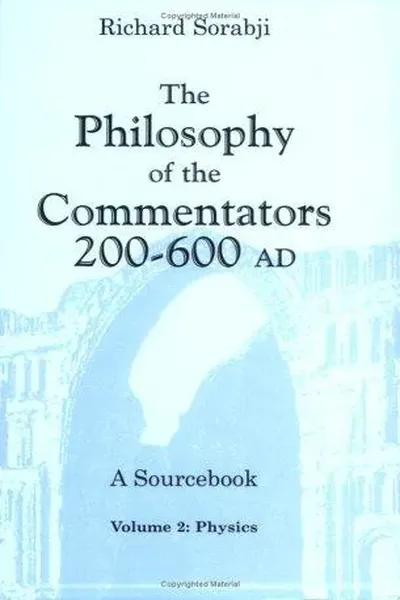
More Free Occult Philosophy Books
View all →