Geomancy and other forms of divination
 78
78

Geomancy and other forms of divination
Palazzo and Zavattero’s *Geomancy and Other Forms of Divination* presents a sober, methodical approach to practices often shrouded in mystique. The work’s strength lies in its clear exposition of geomantic figures, meticulously detailing their generation and astrological correspondences, a process that can feel opaque in lesser texts. For instance, the detailed breakdown of the 16 figures and their inherent qualities provides a solid foundation for practical application. However, the book occasionally feels more like a compendium than a deeply analytical treatise. While it lists other divinatory methods, the exploration can feel somewhat brief compared to the extensive treatment of geomancy, leaving the reader wanting more depth on, say, the historical lineage of scrying. The 2018 publication date belies a deep engagement with historical sources, a commendable effort. Ultimately, it serves as a valuable, if somewhat specialized, manual for the serious student of these ancient arts.
📝 Description
78
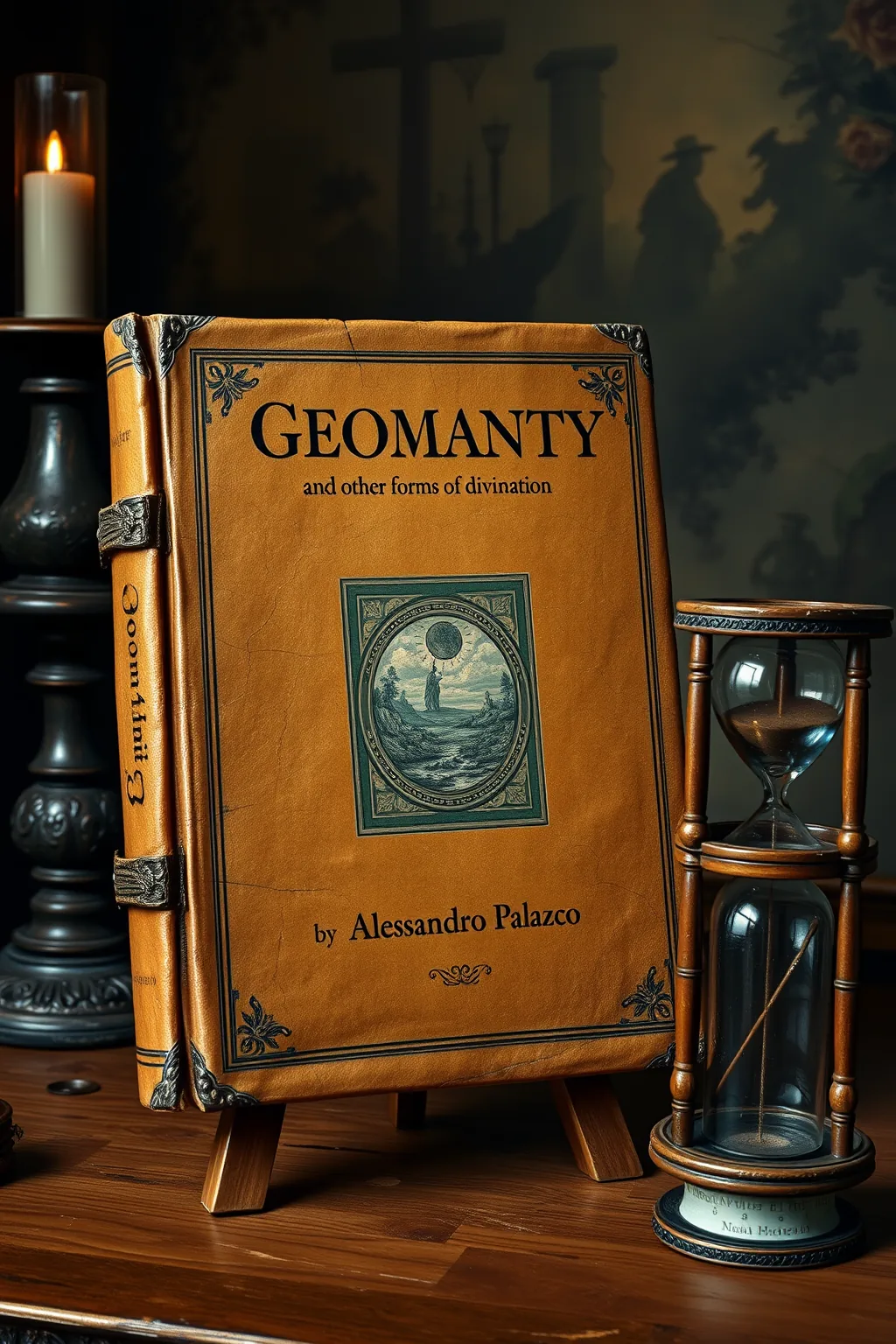
Alessandro Palazzo and Irene Zavattero published this volume on geomancy in 2018.
This 2018 volume by Alessandro Palazzo and Irene Zavattero examines geomancy and other divinatory arts. It functions as both a practical manual and a theoretical study of methods used to interpret celestial and terrestrial phenomena for foresight. The book is suitable for both novices beginning with divination and experienced practitioners aiming to broaden their skills. It addresses readers who engage with these practices seriously and with an academic mindset. Palazzo and Zavattero's research connects to a long history of divination, tracing roots to ancient Mesopotamia and Classical Greece. Geomancy, specifically, has a significant past, moving from the Islamic world into medieval Europe. There, it became part of Western esoteric traditions alongside astrology and other forms of prophecy.
The text explains the core ideas of geomancy. This includes how figures are created from astrological combinations and how to interpret them. It also discusses other techniques like scrying and different symbolic methods of prediction. The authors highlight the common logical structures and symbolic language found across various divinatory systems. This approach emphasizes the shared principles that unite these diverse practices.
This work situates itself within the long lineage of divination, a practice with origins in ancient Mesopotamian and Classical Greek traditions. Geomancy, a central focus, traveled from the Islamic world to medieval Europe, becoming interwoven with Western esoteric systems. It shares historical space with practices like astrology and other oracular arts. The book examines the underlying logic and symbolic frameworks that connect these varied methods of seeking knowledge about the future.
💡 Why Read This Book?
• Learn the precise method for generating the 16 geomantic figures, a core practice rooted in medieval Islamic and European esoteric traditions, offering a structured approach to divination not found in casual guides. • Understand the astrological significations of each geomantic figure, connecting earthly patterns to celestial influences as explored in Chapter 3, providing a richer interpretive framework. • Gain practical insights into the historical development of geomancy, as detailed in the work's historical context sections, appreciating its place within broader Western esoteric thought since the Middle Ages.
⭐ Reader Reviews
Honest opinions from readers who have explored this book.
❓ Frequently Asked Questions
What is the primary focus of 'Geomancy and Other Forms of Divination'?
The book primarily focuses on geomancy, detailing its principles, the generation of its figures, and their astrological correspondences. It also explores other related divinatory practices, providing a broad yet focused overview of these esoteric arts.
When was 'Geomancy and Other Forms of Divination' first published?
The book was first published in 2018 by authors Alessandro Palazzo and Irene Zavattero, making it a relatively modern entry into the study of ancient divinatory systems.
Is this book suitable for absolute beginners in divination?
Yes, the book is structured to guide both beginners and those with some experience. It lays out foundational concepts clearly, particularly regarding geomancy, making it accessible for newcomers to the subject.
Does the book cover the historical origins of geomancy?
The book touches upon the historical context of geomancy, situating it within the broader history of divination and its spread from the Islamic world into Europe, though its primary emphasis is on practical application.
What makes this book different from other divination guides?
Its methodical, almost scholarly approach to geomancy, detailing the generation of figures and their astrological links with precision, distinguishes it. It aims for clarity and practical application grounded in tradition.
Are other forms of divination discussed besides geomancy?
Yes, while geomancy receives the most extensive treatment, the book also introduces and discusses other divinatory methods, offering a wider perspective on symbolic interpretation and prognostication.
🔮 Key Themes & Symbolism
The Sixteen Geomantic Figures
The core of the book revolves around the 16 geomantic figures, which are derived from astrological combinations. Palazzo and Zavattero detail their systematic generation through methods like tossing dice or drawing points, and crucially, their unique symbolic meanings and astrological correspondences. Each figure, from 'Laetitia' (Joy) to 'Pessima' (Worst), is presented with its planetary ruler, zodiacal sign, and qualities, forming a complex symbolic language for interpretation.
Astrological Correspondences
A significant aspect of the work is its deep integration of astrology. The book explains how geomantic figures are not arbitrary but are tied to specific planetary and zodiacal influences. This connection allows for a nuanced interpretation, where the patterns generated on earth are seen as reflections or traces of celestial configurations, bridging the macrocosm and microcosm.
Practical Application and Interpretation
Beyond theory, the authors provide guidance on how to practically employ geomancy for seeking answers to specific questions. The text emphasizes a methodical approach to casting and reading the figures, offering frameworks for interpreting the resulting patterns in relation to the querent's concerns. This practical focus makes it a valuable resource for practitioners.
Comparative Divinatory Systems
While geomancy is central, the book situates it within a broader context of divinatory practices. It touches upon other methods, highlighting commonalities in symbolic logic and the human desire to understand hidden patterns. This comparative element enriches the reader's understanding of divination as a many-sided field of esoteric inquiry.
💬 Memorable Quotes
Direct passages from the work, attributed to the author.
“Each figure possesses a unique essence, tied to planetary powers and zodiacal qualities.”
— This reflects the core principle that geomantic figures are imbued with specific energies and characteristics derived directly from their astrological associations, influencing their interpretation.
“Methodical generation ensures the integrity of the divinatory message.”
— This emphasizes the importance of following precise procedures when casting geomantic figures, suggesting that accuracy in the method leads to accuracy in the interpretation.
“Geomancy bridges the tangible world with the unseen currents of fate.”
— This interpretive statement underscores the book's perspective on geomancy as a tool that connects the observable physical realm with the more subtle, often fated, energetic influences.
💡 Key Ideas
Editorial paraphrase of the work's core concepts — not direct quotes.
The 16 figures are a language, a grammar of the terrestrial reflection of celestial influences.
This paraphrased concept highlights the book's view of geomancy not as random chance, but as a structured system where earthly patterns (the figures) mirror and interpret cosmic forces.
Understanding the houses and their rulers is key to interpreting the spread.
This paraphrased concept points to the practical application of geomancy, where knowledge of the 'houses' (positions in the geomantic chart) and their governing influences is crucial for deciphering the overall meaning of a reading.
🌙 Esoteric Significance
Tradition
This work fits within the Western Esoteric tradition, particularly its Hermetic and astrological branches. Geomancy, as presented, is a divinatory art that operates on principles of correspondence, mirroring the Hermetic dictum 'As Above, So Below'. It draws heavily on astrological symbolism, a foundational element in many Renaissance and later magical systems.
Symbolism
Central symbols include the sixteen geomantic figures themselves, each representing a unique combination of elemental and planetary forces (e.g., 'Fortuna Major' signifying good fortune, often linked to Jupiter). Another key motif is the astrological house system used in geomantic charts, which provides a framework for understanding how different aspects of life are represented and interpreted through the figures' positions.
Modern Relevance
Contemporary practitioners of ceremonial magic, astrology enthusiasts, and those exploring modern paganism or witchcraft often draw upon geomancy. The clear, structured nature of the figures makes it an accessible entry point for learning divination, and its systematic approach appeals to those seeking to integrate esoteric practices into a more ordered, philosophical framework.
👥 Who Should Read This Book
• Aspiring diviners seeking a structured, historically-informed method for prognostication, who will benefit from the detailed breakdown of geomantic figure generation and interpretation. • Students of Western Esotericism interested in the practical application of astrological principles within a non-astrological framework, gaining insight into medieval and Renaissance occult thought. • Practitioners of magic or comparative occult studies looking to expand their toolkit with a time-tested system that connects celestial and terrestrial patterns for insight.
📜 Historical Context
Published in 2018, Alessandro Palazzo and Irene Zavattero's work emerges within a contemporary resurgence of interest in esoteric practices, yet it grounds itself firmly in historical traditions. Geomancy, known as 'ʿilm al-raml' (the science of the sand) in Arabic, flourished in the Islamic world from the medieval period onward, influencing figures like Ibn Khaldun. It subsequently spread into Europe around the 12th century, becoming a significant part of Western occultism, integrated into magical grimoires and practiced by figures such as Cornelius Agrippa. This book arrives at a time when academic study of esotericism is growing, providing a detailed manual that contrasts with more popular, less rigorous introductions. It engages with a lineage that includes early forms of fortune-telling and astrological prognostication, situating itself within a tradition that faced both scholarly curiosity and occasional ecclesiastical suspicion throughout history.
📔 Journal Prompts
The concept of 'Ptolemaic' vs. 'Equatorial' figures in geomancy.
Reflect on the astrological associations of the four 'Chiefest Fathers' (Populus, Acquisitio, Fortuna Major, Puella).
Consider the historical journey of geomancy from the Islamic world to medieval Europe.
Analyze the symbolic meaning of a specific geomantic figure in relation to a personal question.
Compare the structured generation of geomantic figures to other intuitive divination methods.
🗂️ Glossary
Geomancy
An esoteric practice of divination involving the casting of figures derived from astrological combinations, traditionally by marking points in sand or on paper.
Geomantic Figure
One of the 16 distinct patterns generated in geomancy, each with specific symbolic meanings, astrological associations, and interpretations.
Astrological Correspondence
The association of a geomantic figure with specific planets, zodiacal signs, or elements, which informs its interpretation.
House (in Geomancy)
A specific position within a geomantic chart where figures are placed, each house representing a different area of life or inquiry.
Querent
The person for whom a divination is performed; the individual asking a question.
Scrying
A form of divination involving gazing into a reflective surface (like a crystal ball or mirror) to receive visions or insights.
ʿIlm al-raml
The Arabic term for geomancy, literally meaning 'the science of the sand'.