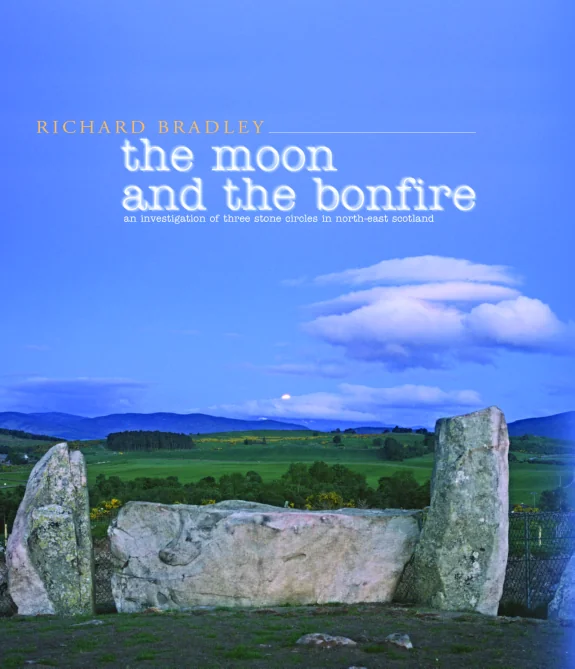
The Moon and the Bonfire
 76
76

The Moon and the Bonfire
Richard Bradley and Sharon Arrowsmith's "The Moon and the Bonfire" offers a much-needed bridge between rigorous archaeological reporting and public engagement with Scotland's megalithic heritage. The detailed examination of sites like Aikey Brae, drawing on excavation and fieldwalking data, provides a solid foundation for understanding these landscapes. A particular strength lies in the approachable prose, which avoids the jargon often found in academic texts, making the complex process of archaeological interpretation comprehensible. However, the focus on specific sites, while necessary for depth, occasionally leaves one wishing for broader comparative analysis of Neolithic and Bronze Age ritual practices across Britain. The passage discussing the potential astronomical alignments at Tomnaverie, though speculative, highlights the book's success in posing intriguing questions about the builders' worldview. This work is a valuable resource for anyone seeking to understand the tangible remnants of ancient ritual in North-East Scotland.
📝 Description
76
Richard Bradley and Sharon Arrowsmith's 2007 book details investigations of three Scottish stone circles.
This volume details archaeological investigations at three significant stone circles in North-East Scotland: Tomnaverie, Cothiemuir Wood, and Aikey Brae. The work presents findings from excavation and fieldwalking projects, seeking to illuminate the purpose and context of these prehistoric monuments. The authors use an accessible writing style, supported by photographs and diagrams, to help readers visualize the sites and recovered artifacts. The book outlines the methodologies used in the field projects, offering insight into archaeological research practices. It moves beyond reporting data to offer interpretations of the findings, considering the broader cultural and ritualistic context of the periods when these circles were active. Ultimately, 'The Moon and the Bonfire' aims to re-establish a link between contemporary audiences and these ancient monuments, demonstrating how careful study can reveal layers of meaning and human activity associated with them.
While primarily an archaeological report, the book touches on the potential ritualistic and spiritual resonance of prehistoric stone circles. It places these sites within a historical context of human activity and belief systems, inviting readers to consider their enduring significance. The work implicitly engages with the esoteric tradition of seeking deeper meaning in ancient earthworks and megalithic structures, connecting past practices to present understanding.
💡 Why Read This Book?
• Gain a tangible understanding of archaeological fieldwork through the detailed analysis of excavations at Tomnaverie, Cothiemuir Wood, and Aikey Brae, learning how fieldwalking uncovers past human activity. • Appreciate the challenges and rewards of interpreting ancient ritual sites by engaging with the authors' specific methodologies and conclusions regarding the function of these stone circles. • Develop a deeper connection to Scotland's prehistoric past by exploring the tangible evidence presented for the builders' potentially sophisticated understanding of their landscape and celestial cycles.
⭐ Reader Reviews
Honest opinions from readers who have explored this book.
❓ Frequently Asked Questions
What specific stone circles are detailed in 'The Moon and the Bonfire'?
The book focuses on three primary stone circles in North-East Scotland: Tomnaverie in Deeside, Cothiemuir Wood on Donside, and Aikey Brae in Buchan, alongside related fieldwalking projects.
Who are the authors of 'The Moon and the Bonfire'?
The book is authored by Richard Bradley and Sharon Arrowsmith, with its first publication dating to 2005.
What archaeological methods are discussed in the book?
The work details excavation techniques and fieldwalking projects conducted at the mentioned stone circle sites, offering insights into how archaeological data is gathered.
What is the primary goal of the book regarding public awareness?
The authors aim to heighten public awareness and interest in prehistoric stone circles by presenting research in an engaging and approachable style.
Does the book offer interpretations of the stone circles' purpose?
Yes, beyond reporting findings, the book offers interpretations of the sites' context and potential ritualistic or social functions, connecting them to the broader landscape.
What kind of illustrative material can be expected?
Readers can anticipate plenty of illustrative material, including photographs and diagrams, to help visualize the archaeological sites and findings.
🔮 Key Themes & Symbolism
Megalithic Landscapes
The book centers on the megalithic monuments of North-East Scotland, particularly the stone circles of Tomnaverie, Cothiemuir Wood, and Aikey Brae. It explores how these sites were integrated into their surrounding environments, suggesting they were not isolated structures but part of a broader ritualistic and social landscape. The authors analyze the physical evidence to reconstruct potential patterns of movement and activity around these circles, offering a perspective on how ancient peoples interacted with and perceived their monumental constructions.
Archaeological Fieldwork
Central to the work is the detailed account of archaeological investigations, including excavation and fieldwalking. The authors present the methodologies employed, explaining the process for a general audience. This includes how artifacts are recovered and cataloged, and how environmental data is collected and analyzed. The focus is on demonstrating how systematic fieldwork can reveal the history and usage of sites like the three stone circles discussed, providing concrete data to support interpretations.
Ritual and Symbolism
Beyond the physical remains, 'The Moon and the Bonfire' examines the potential ritualistic and symbolic significance of the stone circles. While acknowledging the speculative nature of such interpretations, the authors discuss possibilities related to astronomical observation, community gatherings, and spiritual practices. The arrangement of stones, their orientation, and associated finds are examined for clues about the beliefs and worldview of the people who created and used these sites during the Neolithic and Bronze Age periods.
Public Engagement with Heritage
A core objective of the book is to foster greater public interest in prehistoric heritage. By presenting complex archaeological research in an accessible and engaging manner, supported by rich illustrations, Bradley and Arrowsmith aim to reconnect contemporary society with these ancient monuments. The work advocates for an appreciation of these sites not just as historical artifacts but as enduring elements of the cultural landscape that continue to hold mystery and significance.
💬 Memorable Quotes
Direct passages from the work, attributed to the author.
“The project was geared towards investigating the relationship between these monuments and their immediate surroundings.”
— This statement expresses the book's methodological focus, emphasizing that the study of stone circles like Aikey Brae requires understanding their context within the wider landscape, not just the stones themselves.
“This study... re-connects us with the mysterious monuments of the past.”
— This highlights the book's ambition to serve as a conduit between modern readers and ancient peoples, fostering a sense of continuity and shared human experience through the exploration of megalithic sites.
“Written in an engaging and approachable style with plenty of illustrative material.”
— This description points to the authors' success in making complex archaeological findings accessible, using visual aids and clear language to bring the sites of Tomnaverie and others to life for a broad audience.
“The findings from excavations at three stone circles and two fieldwalking projects.”
— This factual statement grounds the book's content in specific archaeological activities and locations, indicating the concrete evidence and research methods underpinning the presented interpretations.
“Whilst a report on excavations... may not seem very appealing this book does much to heighten public awareness and interest.”
— This acknowledges the potentially dry nature of archaeological reports but asserts the book's success in transforming technical data into compelling narratives that spark curiosity about Scotland's ancient past.
🌙 Esoteric Significance
Tradition
While not overtly tied to a specific esoteric lineage like Hermeticism or Kabbalism, the book engages with themes often explored in earth-based spiritual traditions and archaeoastronomy. It touches upon the ancient human impulse to align structures with celestial events and to imbue natural landscapes with meaning, concepts found in various pagan and nature-focused spiritual practices. The work acts as a bridge, grounding esoteric interests in tangible archaeological evidence from sites like Tomnaverie.
Symbolism
The primary symbols are the stone circles themselves, representing community, ritual, and potentially cosmological understanding. The moon, referenced in the title, often symbolizes cyclical time, the feminine principle, and hidden knowledge. Bonfires, also in the title, evoke themes of purification, celebration, and connection to elemental forces. The arrangement and orientation of stones at sites like Aikey Brae suggest a deliberate symbolic language related to seasons, astronomical events, or spiritual journeys.
Modern Relevance
Contemporary practitioners of Druidry, paganism, and earth-centered spirituality often draw inspiration from the kind of research presented in 'The Moon and the Bonfire'. It provides a factual basis for understanding the potential uses and meanings of ancient sites that are frequently revisited for pilgrimage or ritual. Thinkers exploring archaeoastronomy and the phenomenology of sacred landscapes continue to cite works that investigate the relationship between monuments, environment, and human perception.
👥 Who Should Read This Book
• Enthusiasts of Scottish history and archaeology interested in the prehistoric period, seeking detailed yet accessible information on specific megalithic sites. • Individuals exploring earth-based spiritual traditions or archaeoastronomy, who wish to connect esoteric concepts with concrete archaeological evidence and landscape studies. • Students of anthropology or comparative religion looking for case studies on the interpretation of ritual behavior and the social significance of ancient monuments.
📜 Historical Context
Published in 2005, 'The Moon and the Bonfire' emerged during a period of increasing public interest in archaeology, fueled partly by media portrayals and a growing awareness of heritage sites. The intellectual climate saw ongoing debates within archaeology regarding landscape archaeology and the interpretation of ritualistic behavior in prehistoric societies. Authors like Mike Parker Pearson were similarly exploring the social and symbolic dimensions of megalithic monuments. Bradley himself was a prominent figure whose work often engaged with the social archaeology of the British Neolithic and Bronze Age. While not facing significant censorship, the book contributed to a broader academic and public conversation about understanding the past through material culture, moving beyond purely functional explanations.
📔 Journal Prompts
The symbolic significance of the Moon and Bonfire in relation to ancient stone circles.
Reflections on the fieldwalking techniques used at Cothiemuir Wood and their implications.
How the authors' interpretation of Aikey Brae challenges or confirms your understanding of prehistoric ritual.
Consider the connection between Tomnaverie's location and its potential astronomical alignments.
Personal resonance with the idea of re-connecting with mysterious monuments of the past.
🗂️ Glossary
Stone Circle
A prehistoric monument consisting of a ring of standing stones, often associated with ritualistic or ceremonial activities during the Neolithic and Bronze Age periods.
Fieldwalking
An archaeological survey method involving systematic walking across a landscape to visually identify and record surface artifacts, providing clues about past human activity.
Excavation
The principal method of archaeology, involving the careful digging and recording of buried layers (strata) to uncover and interpret past human occupation and activity.
Megalithic
Relating to prehistoric structures made from large stones, such as Stonehenge or the stone circles discussed in the book.
Neolithic
The later Stone Age, a period characterized by the development of agriculture and settled communities, typically dating from around 10,000 BCE to 4,500 BCE in Britain.
Bronze Age
A prehistoric period following the Neolithic, characterized by the widespread use of bronze for tools and weapons, roughly from 3,300 BCE to 600 BCE in Britain.
Archaeoastronomy
The study of how ancient peoples understood astronomical phenomena and how they incorporated these observations into their structures and cultures.
This book appears in 1 collection
🔮 Readers Also Liked
Browse all →









From the “Stone Circles” Collection
View all →








More Free Occult Philosophy Books
View all →