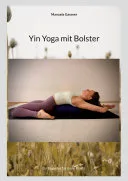
Yin Yoga mit Bolster
 83
83

Yin Yoga mit Bolster
Manuela Gassner’s "Yin Yoga mit Bolster" offers a much-needed antidote to the relentless tempo of modern existence. The book's strength lies in its clear articulation of Yin Yoga’s core philosophy: yielding rather than striving. Gassner effectively explains how sustained, passive holds, supported by bolsters, can access deeper physical and energetic layers often overlooked in more active practices. A particularly insightful passage discusses the 'listening' to the body’s subtle signals during a long hold, a concept central to the practice's effectiveness. However, the work occasionally leans towards descriptive rather than prescriptive, leaving some practitioners, especially those new to Yin, seeking more detailed guidance on alignment variations for different body types. Despite this minor limitation, the book serves as a valuable introduction to a restorative and introspective yoga form.
📝 Description
83
Manuela Gassner's 2026 book, Yin Yoga mit Bolster, centers practice on stillness and sustained holds.
This book details a yoga practice focused on stillness, prolonged postures, and conscious release. It offers a contrast to the common emphasis on activity by creating space for slowing down. The approach encourages attending to and understanding the body rather than pushing it. The method targets the body's connective tissues through passive poses held for extended periods, typically while seated or lying down. The core idea is that time and mindful awareness replace forceful effort and goal-driven ambition.
The book is for people seeking an alternative to a fast-paced life. It appeals to those interested in a gentler, more introspective yoga that promotes deep relaxation and internal awareness. Individuals experiencing physical tension or mental fatigue will find its methods useful. Yoga teachers can also benefit by learning techniques for profound rest and energetic release, moving beyond more active styles.
Published in 2026, "Yin Yoga mit Bolster" arrives as mindfulness and somatic practices are widely recognized. While passive stretching and meditative movement have historical ties to various yogic and contemplative traditions, Yin Yoga as a specific style gained traction in the late 20th century, influenced by figures like Paul Grilley. Gassner's work extends this by concentrating on how bolsters aid longer, deeper holds, differentiating it from earlier, broader discussions of passive stretching.
💡 Why Read This Book?
• Gain practical techniques for deep relaxation by learning how to utilize bolsters effectively in passive poses, as detailed in the book's posture guides, allowing for sustained release of connective tissues. • Understand the philosophical shift from effort-based practice to mindful surrender, embracing the concept of 'time replacing strength' to foster a more intuitive connection with your body's signals. • Discover how Yin Yoga, as presented by Manuela Gassner, offers a pathway to 'deceleration' and internal listening, providing a potent counter-practice to the demands of a high-activity lifestyle.
⭐ Reader Reviews
Honest opinions from readers who have explored this book.
❓ Frequently Asked Questions
What is the primary difference between Yin Yoga and other yoga styles as presented in "Yin Yoga mit Bolster"?
"Yin Yoga mit Bolster" emphasizes that Yin Yoga focuses on passive, long-held poses, primarily seated or reclined, to target deeper connective tissues. Unlike more dynamic styles, it prioritizes stillness and mindful release, with time and awareness replacing muscular effort.
How does the use of a bolster enhance the Yin Yoga practice described in the book?
The book details how bolsters provide essential support in passive poses, allowing practitioners to relax more fully and hold postures for extended periods (several minutes). This support facilitates deeper stretching and release in the fascia and connective tissues.
When was "Yin Yoga mit Bolster" first published?
Manuela Gassner's "Yin Yoga mit Bolster" was first published on February 25, 2026.
Is this book suitable for beginners in yoga?
Yes, the book is designed to introduce a practice of stillness and conscious release. Its focus on passive holds and supported postures makes it accessible for beginners seeking a gentler, introspective approach to yoga.
What is the core philosophy behind the practice of Yin Yoga as explained by Manuela Gassner?
The core philosophy, as explored in the book, centers on 'listening' to the body rather than 'making' it do something. It advocates for deceleration, conscious release, and allowing time and perception to achieve benefits, contrasting with effort-driven practices.
Does the book offer specific poses or sequences?
While the book focuses on the principles and philosophy of Yin Yoga with bolsters, it guides readers through the methodology of passive holds and conscious release, implying the application to various suitable postures.
🔮 Key Themes & Symbolism
The Practice of Stillness
This work champions a profound stillness, contrasting sharply with the dynamism often associated with physical disciplines. It posits that true release and deep tissue work occur not through exertion, but through sustained, passive holding. The book guides the reader to cultivate an internal quietude where the body's subtle communications can be perceived. This emphasis on 'verweilen' (lingering) and 'bewusstes Loslassen' (conscious letting go) is central to accessing the restorative potential of Yin Yoga, allowing time itself to become a therapeutic agent.
Body as a Source of Wisdom
A core tenet explored is the shift from external instruction to internal reception. Instead of 'making' the body perform, "Yin Yoga mit Bolster" advocates for 'hearing' it. This involves cultivating a heightened somatic awareness, particularly during the extended holds characteristic of Yin Yoga. The book encourages practitioners to observe sensations without judgment, allowing the body's inherent intelligence to guide the depth and duration of each posture, fostering a non-striving, receptive relationship with one's physical form.
Deceleration and Conscious Release
In an era defined by constant activity and performance metrics, this book offers a vital counter-narrative. It introduces a practice specifically designed for 'Entschleunigung' (deceleration). The methodology focuses on the deliberate release of tension, not through forceful action, but through supported stillness. The use of bolsters is integral to this process, enabling the body to relax into positions that encourage the lengthening of connective tissues. This conscious release fosters a profound sense of calm and energetic recalibration.
Time Over Effort
The book fundamentally reorients the practitioner's perspective on achieving results. It introduces the concept that 'Zeit ersetzt Kraft' (time replaces strength) and 'Wahrnehmung ersetzt Ziel' (perception replaces goal). This principle suggests that prolonged, passive engagement with postures, facilitated by props like bolsters, is more effective for deep tissue work and relaxation than muscular effort or striving for a specific outcome. It's an invitation to trust the process and allow the benefits to unfold gradually.
💬 Memorable Quotes
Direct passages from the work, attributed to the author.
“The body is not made, but heard.”
— This concise statement expresses the book's core philosophy: shifting from an active, goal-oriented approach to a receptive, awareness-based practice. It suggests that true understanding and benefit come from listening to internal signals rather than imposing external demands.
“Time replaces strength, perception replaces goal.”
— This aphorism highlights the unique methodology of Yin Yoga as presented. It contrasts with more vigorous practices by emphasizing that sustained duration and mindful awareness, rather than muscular force or achievement, are the primary drivers of release and therapeutic effect.
“A space for deceleration opens.”
— This phrase points to the book's function as an offering of respite. In a world that often demands constant activity, the practice described provides a sanctuary for slowing down, fostering introspection and a deeper connection with oneself.
“The deeper structures of the body are addressed.”
— This indicates the specific physiological focus of Yin Yoga. It distinguishes the practice by its intention to work with the fascia, ligaments, and joints – the body's less visible, yet crucial, supportive framework.
“The practice is one of stillness, lingering, and conscious release.”
— This expresses the fundamental elements of the Yin Yoga approach described. It emphasizes the passive nature of the poses, the importance of duration, and the mindful intention to let go of physical and mental tension.
🌙 Esoteric Significance
Tradition
While not explicitly tied to a single esoteric lineage, "Yin Yoga mit Bolster" draws upon principles resonant with Taoist concepts of stillness and yielding, and Buddhist Vipassanā (insight) meditation's focus on present-moment awareness. Its emphasis on the body's energetic channels (though not explicitly named in the blurb) aligns with broader yogic and Traditional Chinese Medicine (TCM) frameworks that inform many esoteric systems. The practice itself can be seen as a modern, somatic interpretation of contemplative disciplines aimed at cultivating inner balance and subtle energy awareness.
Symbolism
The bolster itself can be seen as a symbol of support and surrender – a yielding to gravity and form, rather than resistance. The prolonged stillness in poses symbolizes the Taoist 'wu wei' (non-action) and the Buddhist concept of equanimity. The focus on deeper connective tissues hints at the subtle body, the energetic matrix often discussed in esoteric traditions, suggesting that physical release can lead to energetic unblocking and a more integrated sense of self.
Modern Relevance
Gassner's work is highly relevant to contemporary mindfulness-based stress reduction (MBSR) programs and somatic experiencing therapies. Its emphasis on deceleration and internal listening appeals to secularized contemplative practices and trauma-informed bodywork. Thinkers and practitioners in fields ranging from therapeutic yoga to embodied cognition are increasingly exploring how passive, sustained postures can influence nervous system regulation and promote psychological well-being, making this book a valuable resource for modern somatic practitioners.
👥 Who Should Read This Book
• Individuals seeking stress reduction techniques: Those overwhelmed by modern life will find practical methods for cultivating stillness and conscious release, enabling them to counteract the effects of constant activity. • Yoga practitioners interested in deeper tissue work: Students and teachers looking to explore beyond muscular engagement will benefit from the detailed approach to accessing fascia and connective tissues through passive holds. • Mindfulness practitioners: Anyone aiming to deepen their capacity for present-moment awareness and internal listening will find the book's philosophy on 'hearing' the body highly applicable.
📜 Historical Context
Manuela Gassner's "Yin Yoga mit Bolster," published in 2026, enters a contemporary yoga landscape where somatic awareness and restorative practices have achieved widespread recognition. While the practice of passive stretching and contemplative movement has ancient roots, Yin Yoga as a formalized style gained significant traction in the late 20th century, notably through the work of Paul Grilley and Sarah Powers, who explored its application to the deeper connective tissues. Gassner’s contribution builds upon this lineage by specifically detailing the therapeutic integration of bolsters, a prop that facilitates extended, supported holds. This focus differentiates her work from earlier, broader explorations of passive stretching within the Western yoga movement. The book arrives at a time when Western culture, particularly post-2020, has shown increased interest in practices that counter high-stress lifestyles, making Gassner's emphasis on 'deceleration' particularly relevant.
📔 Journal Prompts
The practice of stillness: How does the concept of 'verweilen' (lingering) challenge your typical approach to physical activity?
Body as a source of wisdom: Reflect on a subtle sensation experienced during a prolonged, passive posture.
Deceleration: Identify one area in your daily life where you can intentionally practice 'Entschleunigung'.
Time over effort: Consider how the principle of 'Zeit ersetzt Kraft' might apply to a non-physical challenge you face.
Conscious release: Describe the difference between actively pushing into a stretch and passively releasing into it.
🗂️ Glossary
Yin Yoga
A style of yoga characterized by passive, long-held postures, primarily seated or reclined, targeting the deeper connective tissues (fascia, ligaments, joints) rather than muscles.
Bolster
A long, cylindrical cushion used in yoga to provide support and aid relaxation in passive postures, allowing for deeper, more comfortable holds.
Loslassen
German for 'to let go' or 'release'. In the context of the book, it refers to the conscious relaxation of physical tension and mental resistance during practice.
Entschleunigung
German for 'deceleration' or 'slowing down'. The book advocates for this as a counterpoint to the fast-paced nature of modern life, achieved through practices like Yin Yoga.
Fascia
A band or sheet of connective tissue, primarily collagen, that binds muscles, bones, and organs together. Yin Yoga aims to stress and lengthen the fascia.
Passive Hold
A yoga posture held without muscular engagement, typically supported by props, allowing gravity and time to create the stretch.
Somatic Awareness
An awareness of the physical body, its sensations, and internal states. The book encourages cultivating this through mindful attention during practice.