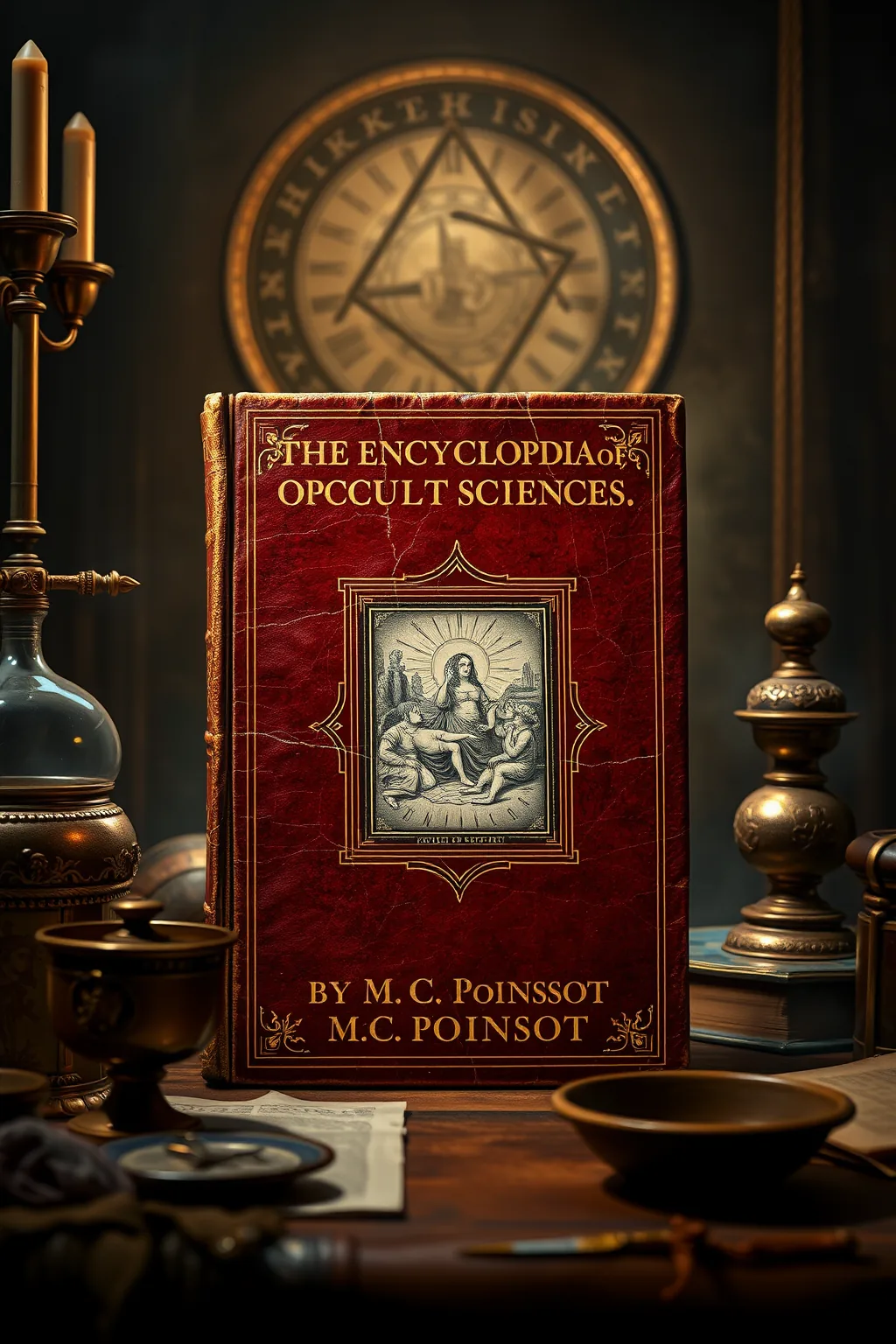
The Encyclopedia of Occult Sciences
 80
80

The Encyclopedia of Occult Sciences



M.C. Poinsot's 'The Encyclopedia of Occult Sciences' is a treasure trove for anyone interested in the esoteric and the occult. Published in 1939, this work is a meticulous compilation of mystical and occult knowledge that remains relevant today. Poinsot's encyclopedia is particularly valuable for its comprehensive coverage of various occult disciplines, from alchemy to theosophy. The book's historical context adds depth to its content, as it reflects the renewed interest in the occult during the early 20th century. For modern esoteric seekers, this text serves as an invaluable guide, offering insights into the philosophical foundations of occult practices. The detailed explanations and historical anecdotes make it an engaging read, even for those new to the subject. The encyclopedia's thoroughness and scholarly approach ensure that it is a reliable resource for both academic study and personal exploration.
📝 Description
80
Published by M.C. Poinsot, this encyclopedia details occult sciences.
M.C. Poinsot's Encyclopedia of Occult Sciences covers mystical and esoteric knowledge. The book examines occult philosophy, its symbolic languages, and arcane wisdom passed down through history. It creates an atmosphere of reverence and intrigue, where the lines between the visible and invisible worlds become indistinct. Poinsot intends this work for those seeking hidden truths, occult scholars, and practitioners of mystical arts. The text aims to help readers understand existence's deeper layers and the symbolic frameworks of reality. Through rich symbolism and esoteric insights, the author guides readers through ancient wisdom, revealing cosmic interconnectedness.
This encyclopedia fits within the broader tradition of esoteric scholarship that seeks to understand hidden or secret knowledge. It engages with systems of thought that often lie outside mainstream academic or religious discourse, focusing on principles believed to govern the universe and human consciousness on a deeper level. Such works typically draw upon a mix of philosophy, mythology, and mystical experience to construct their worldview.
💡 Why Read This Book?
Reading 'The Encyclopedia of Occult Sciences' today offers a unique opportunity to explore the foundational texts of esoteric knowledge. This book provides a deep dive into the mystical traditions that have shaped modern occult practices. Whether you are seeking to understand the philosophical underpinnings of the occult or looking to expand your spiritual horizons, this encyclopedia is an essential resource. It offers a comprehensive overview of various occult disciplines, making it an invaluable guide for both beginners and experienced practitioners. By studying this work, readers can gain a deeper appreciation for the rich history and complex philosophies that underpin the esoteric arts.
⭐ Reader Reviews
Honest opinions from readers who have explored this book.
❓ Frequently Asked Questions
Who is the author of 'The Encyclopedia of Occult Sciences'?
The author of 'The Encyclopedia of Occult Sciences' is M.C. Poinsot, a noted scholar in the field of occult studies.
What topics does the book cover?
The book covers a wide range of occult topics, including alchemy, astrology, ceremonial magic, and theosophy.
Is this book suitable for beginners?
Yes, this book is suitable for both beginners and experienced practitioners, as it provides a comprehensive overview of occult disciplines.
🔮 Key Themes & Symbolism
Symbolism in Occult Philosophy
The Encyclopedia of Occult Sciences delves deeply into the detailed symbolism that underpins occult philosophy. Symbols are the language of the mystical, and Poinsot's work unpacks their meanings and significance. Through the exploration of ancient and modern symbols, readers gain insight into the hidden layers of reality and the interconnectedness of all things.
Hidden Knowledge and Mystical Traditions
This book uncovers the hidden knowledge that has been passed down through mystical traditions. Poinsot provides a comprehensive overview of various esoteric practices and beliefs, revealing the wisdom that has been kept secret for centuries. This theme is crucial for understanding the deeper mysteries of existence and the spiritual paths that lead to enlightenment.
Philosophical Significance of the Occult
The philosophical significance of the occult is a central theme in this encyclopedia. Poinsot explores how occult philosophy challenges and expands our understanding of the universe. By examining the philosophical underpinnings of mystical traditions, readers are invited to question their assumptions and explore new ways of thinking about reality.
💡 Key Ideas
Editorial paraphrase of the work's core concepts — not direct quotes.
The symbols of the occult are the keys to hidden realms.
This quote underscores the importance of symbolism in unlocking the mysteries of the occult.
Mystical traditions hold the wisdom of the ages.
This line highlights the enduring value of ancient esoteric knowledge in modern times.
The seeker of truth must journey into the depths of the unknown.
This passage encourages readers to embrace the journey into the mystical and esoteric.
The universe is a collection of interconnected symbols.
This quote emphasizes the interconnectedness of all things in the cosmic dance of existence.
Occult philosophy challenges our perceptions of reality.
This line invites readers to question their assumptions and explore new philosophical horizons.
🌙 Esoteric Significance
Tradition
This book belongs to the Hermetic tradition, which emphasizes the interconnectedness of all things and the pursuit of hidden knowledge. Hermeticism draws on ancient Egyptian and Greek philosophical ideas, focusing on the mysteries of the cosmos and the spiritual journey of the individual. Poinsot's work is a proof of this tradition, offering a deep exploration of its symbols and teachings.
Symbolism
Key symbols in this book include the alchemical symbols of transformation, the mystical numbers, and the archetypal figures that represent the stages of spiritual development. Each symbol is imbued with layers of meaning, revealing the hidden truths of the universe and guiding the seeker on their journey to enlightenment. Poinsot's detailed analysis of these symbols provides a body of esoteric insights.
Modern Relevance
The Encyclopedia of Occult Sciences remains relevant today, as modern practitioners and scholars continue to draw on its wisdom. The book's exploration of symbolism and hidden knowledge speaks to contemporary seekers who are interested in the deeper mysteries of existence. Many modern esoteric and spiritual movements, such as neo-Hermeticism and the New Age, owe a debt to Poinsot's work, making it an essential resource for those exploring the mystical and occult.
👥 Who Should Read This Book
Beginners interested in the occult will find this book to be an accessible and comprehensive introduction to the field. Scholars of the occult will appreciate its thorough exploration of symbolism and hidden knowledge. Spiritual seekers will be drawn to its philosophical significance and the insights it offers into the deeper layers of reality. Practitioners of the mystical arts will find it to be an invaluable resource for deepening their understanding of occult philosophy and its applications.
📜 Historical Context
Written during a time when interest in the occult was resurging, The Encyclopedia of Occult Sciences by M.C. Poinsot stands as a significant contribution to the field. The late 19th and early 20th centuries saw a renewed fascination with mystical and esoteric traditions, as people sought to understand the deeper layers of reality. Poinsot's work captured the essence of this era, providing a comprehensive overview of occult philosophy that has influenced generations of seekers and scholars. Its impact can still be felt today in various esoteric and spiritual movements, making it a timeless resource for those interested in the hidden knowledge of the universe.
📔 Journal Prompts
Reflect on a symbol from the book that resonated with you. What does it mean to you personally?
How has your understanding of occult philosophy changed after reading this book?
What hidden knowledge from the book has had the most impact on your spiritual journey?
Consider a philosophical insight from the book. How does it challenge your current beliefs?
Write about a mystical tradition discussed in the book that you would like to explore further.
🗂️ Glossary
Hermeticism
A mystical and philosophical tradition based on the writings of Hermes Trismegistus, emphasizing the interconnectedness of all things and the pursuit of hidden knowledge.
Alchemy
An ancient practice involving the transformation of substances, often symbolizing spiritual and personal transformation.
Symbolism
The use of symbols to represent abstract ideas or qualities, often employed in mystical and esoteric traditions.
Occult Philosophy
The study of hidden knowledge and mystical traditions, seeking to understand the deeper layers of reality and the spiritual journey.
Esoteric Knowledge
Knowledge that is intended for a small group of people or that requires special initiation or training to understand.
This book appears in 3 collections
🔮 Readers Also Liked
Browse all →









From the “Occultism” Collection
View all →





More Free Occult Philosophy Books
View all →