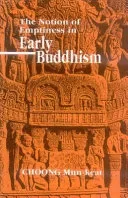
The Notion of Emptiness in Early Buddhism
 82
82

The Notion of Emptiness in Early Buddhism
Mun-keat Choong's exploration of emptiness in early Buddhism offers a welcome clarity to a concept often shrouded in mystification. The strength of this book lies in its rigorous comparative textual analysis, demonstrating a clear lineage of the śūnyatā doctrine from the Pali Canon to early Chinese translations. Choong’s assertion that the fundamental message regarding emptiness remains consistent across these traditions is compelling. A potential limitation for some readers might be the academic tone, which, while precise, can occasionally feel dense. The detailed examination of specific suttas, such as those found in the Samyutta Nikaya, provides concrete grounding, but requires careful attention. Choong's argument that early Buddhism offers a practical method for overcoming mental afflictions through understanding emptiness is the book's most vital takeaway. It successfully argues that the concept is not an abstract philosophical puzzle but a salvific teaching. This book offers a solid, evidence-based foundation for understanding a crucial Buddhist doctrine.
📝 Description
82
Mun-keat Choong's 1999 study argues for a core agreement on emptiness between early Indian and Chinese Buddhist texts.
Mun-keat Choong's scholarly work, published in 1999, scrutinizes the doctrine of emptiness (śūnyatā) as it appears in early Buddhist texts. Choong undertakes a comparative analysis, examining both the Pali Canon and early Chinese Buddhist scriptures. The central thesis proposes a fundamental accord between these traditions. It suggests that, despite differences in language, the Buddha's original teachings on emptiness constitute a unified philosophical and soteriological system.
This book is chiefly for academics, students of comparative religion, and serious practitioners of Buddhist philosophy who are already acquainted with Buddhist terms. However, its clear writing makes it accessible to general readers interested in learning about essential Buddhist ideas without needing extensive prior knowledge. It furnishes a structured way to understand a central aspect of Buddhist thought.
This book engages with the early Buddhist understanding of emptiness, a concept central to liberation in many Buddhist traditions. It examines how this idea was articulated in the foundational scriptures of both the Indian and Chinese streams of Buddhism. By seeking congruence between these early textual sources, Choong's work contributes to understanding a core contemplative practice aimed at overcoming suffering through the realization of non-inherent existence.
💡 Why Read This Book?
• Gain a precise understanding of emptiness (śūnyatā) as presented in the Pali Canon and early Chinese Buddhist texts, moving beyond common misconceptions. • Discover how the historical Buddha, circa 5th century BCE, articulated emptiness as a practical method for overcoming mental suffering, as detailed in the text's comparative analysis. • Grasp the doctrinal continuity of emptiness across different early Buddhist scriptural traditions, as demonstrated through Choong's textual scholarship.
⭐ Reader Reviews
Honest opinions from readers who have explored this book.
❓ Frequently Asked Questions
What is the primary focus of The Notion of Emptiness in Early Buddhism?
The book's primary focus is a comparative textual investigation into the doctrine of emptiness (śūnyatā) within the early Buddhist canon, specifically examining the Pali and early Chinese versions of Buddhist scriptures.
Does this book explain emptiness as nihilism?
No, the book clarifies that early Buddhist emptiness is not nihilistic. Instead, it describes phenomena as lacking inherent, independent existence, a concept central to the path of liberation from suffering.
Who is the author, Mun-keat Choong?
Mun-keat Choong is the author of this scholarly work on early Buddhist philosophy, first published in 1999. His research focuses on comparative Buddhist studies.
What makes the book's approach unique?
Its unique approach lies in its direct comparison of the Pali and early Chinese Buddhist canons regarding the doctrine of emptiness, aiming to establish the coherence of the historical Buddha's teachings across these traditions.
Can a beginner understand this book?
While academic, the book is written to be accessible to general readers with little prior knowledge of Buddhism, offering a clear exposition of core concepts like emptiness.
What is the significance of the Pali and Chinese canons in this study?
The Pali Canon represents the Theravada tradition's version of early Buddhist scriptures, while the early Chinese canon contains translations of texts that also preserve early Buddhist teachings, allowing for a comparative study of the emptiness doctrine.
🔮 Key Themes & Symbolism
Śūnyatā as Soteriological Tool
This work emphasizes that emptiness, or śūnyatā, in early Buddhism is not merely an abstract philosophical concept but a crucial tool for spiritual liberation. The book details how understanding the non-inherent existence of phenomena, as presented in texts from the Pali Canon and early Chinese translations, directly leads to the cessation of suffering. It highlights the Buddha's recorded teachings, circa 5th century BCE, as providing a method for practitioners to dismantle the causes of mental distress by realizing this fundamental truth.
Textual Congruence Across Traditions
A central argument is the remarkable alignment between the doctrine of emptiness as found in the Pali Canon and early Chinese Buddhist scriptures. Despite differing languages and cultural contexts, Choong demonstrates that the core message concerning emptiness remains consistent. This comparative approach validates the transmission and preservation of the Buddha's original insights, underscoring the universality of his message regarding the nature of reality and the path to enlightenment.
Early Buddhism vs. Later Interpretations
The book implicitly distinguishes the early Buddhist understanding of emptiness from later, potentially more complex or divergent, interpretations that emerged in various Mahayana schools. By focusing on the foundational scriptures, Choong aims to establish a clear baseline for what the historical Buddha himself likely taught about emptiness. This focus provides readers with a direct connection to the earliest articulations of this profound doctrine.
Practical Method for Mental Well-being
Beyond its philosophical implications, the book presents emptiness as a practical method for overcoming the ills of the mind. It explains how realizing the absence of self and inherent existence can dismantle attachment, aversion, and delusion – the root causes of psychological suffering. Choong guides the reader through how this understanding functions as a direct antidote to mental afflictions, offering a path towards peace and equanimity.
💬 Memorable Quotes
Direct passages from the work, attributed to the author.
“The teaching of the historical Buddha as connected with emptiness.”
— This core assertion frames emptiness not as a later addition but as a fundamental element of the Buddha's original discourse. It suggests that understanding emptiness is key to understanding the Buddha's entire salvific project.
“These two versions, although differently worded, record in common that the teaching of the historical Buddha as connected with emptiness.”
— This highlights the book's central thesis: despite variations in scriptural canons (Pali vs. Chinese), the fundamental doctrine of emptiness attributed to the Buddha remains consistent, pointing to a shared early Buddhist understanding.
“The general reader, with little or no prior knowledge of Buddhism, can discover in this book how early Buddhism provides a vision and a method to help in overcoming the ills of the mind.”
— This indicates the book's accessibility and practical relevance. It frames Buddhist emptiness not just as theory but as a practical guide for psychological well-being and liberation from suffering.
“Emptiness in early Buddhism is presented as a description of phenomena devoid of inherent, independent existence.”
— This concise definition clarifies the specific meaning of emptiness within the scope of the book, differentiating it from nihilistic or absolute void interpretations and linking it to the nature of reality.
“The Pali and Chinese version of the early Buddhist canon.”
— This refers to the primary textual sources investigated in the book, representing two major streams of early Buddhist scriptural transmission and providing the basis for comparative analysis.
🌙 Esoteric Significance
Tradition
While early Buddhism itself is not typically categorized within Western esoteric traditions like Hermeticism or Kabbalah, its exploration of emptiness touches upon themes resonant with mystical paths. The concept of realizing a reality beyond conventional perception aligns with mystical quests for ultimate truth. Choong's work, by grounding emptiness in early Buddhist texts, provides a non-sectarian, philosophically rigorous foundation that can inform comparative mystical studies and esoteric practices focused on transcending the illusory nature of the perceived world.
Symbolism
The primary 'symbol' explored is emptiness (śūnyatā) itself, representing the absence of inherent, fixed self-nature in all phenomena. In an esoteric context, this can be seen as a radical deconstruction of ego-bound perceptions, akin to concepts of 'apophatic' theology or the 'unmanifest' in various mystical traditions. The book's focus on the 'vision and method' implies that realizing this emptiness is not merely an intellectual exercise but a transformative realization, symbolized by the Buddhist path towards liberation (nirvana).
Modern Relevance
Contemporary thinkers and practitioners interested in mindfulness, non-duality, and transpersonal psychology often draw upon early Buddhist concepts. Choong's scholarly work provides a crucial bridge, offering precise textual and philosophical grounding for these modern applications. Individuals exploring secular interpretations of Buddhist ethics, contemplative practices, or philosophies that question the nature of self and reality will find this book's meticulous analysis of śūnyatā foundational to their understanding.
👥 Who Should Read This Book
• Students of comparative religion and philosophy seeking to understand the core doctrines of early Buddhism through textual analysis. • Practicing Buddhists and meditation practitioners wishing to deepen their theoretical understanding of emptiness (śūnyatā) as taught by the historical Buddha. • Academics and researchers in Buddhist studies, particularly those focusing on textual criticism and the early development of Buddhist thought across Indic and Sinitic traditions.
📜 Historical Context
When Mun-keat Choong's "The Notion of Emptiness in Early Buddhism" was first published in 1999, the academic study of Buddhism was increasingly characterized by rigorous textual criticism and comparative analyses. The field was actively engaged in reconstructing the earliest strata of Buddhist thought, often contrasting it with later Mahayana developments. Choong's work fits within this trend, focusing on the śūnyatā doctrine as found in both the Pali Canon (traditionally considered the earliest complete canon) and early Chinese translations of Buddhist scriptures. This comparative approach was significant, as it sought to bridge linguistic and cultural divides in Buddhist textual transmission. While scholars like Edward Conze had already extensively translated and analyzed Mahayana sutras discussing emptiness, Choong’s focus remained on the foundational layers. The book’s contribution was to assert a strong continuity of the emptiness teaching across these distinct early traditions, offering a unified perspective on the historical Buddha's intent.
📔 Journal Prompts
The concept of emptiness (śūnyatā) as a method for overcoming mental ills.
The congruence between Pali and early Chinese Buddhist canons regarding emptiness.
The Buddha's teachings on phenomena devoid of inherent existence.
Reconciling the 'vision' and 'method' of emptiness for practical application.
The historical Buddha's specific connection to the doctrine of emptiness.
🗂️ Glossary
Emptiness (Śūnyatā)
In early Buddhism, this refers to the lack of inherent, independent existence in all phenomena. It is not nihilism but a description of reality that serves as a basis for liberation from suffering.
Pali Canon
The standard collection of scriptures in the Theravada Buddhist tradition, written in the Pali language. It is considered by many scholars to represent the earliest extant record of the Buddha's teachings.
Early Chinese Buddhist Canon
A collection of Buddhist scriptures translated into Chinese, including texts that preserve teachings from early Buddhism, often predating or contemporary with the Pali Canon's compilation.
Historical Buddha
Refers to Siddhartha Gautama, the founder of Buddhism, as distinct from later interpretations or celestial Buddhas. This book focuses on his original teachings.
Soteriology
The doctrine or study of salvation. In Buddhism, it concerns the path to liberation from suffering (dukkha) and the cycle of rebirth (samsara).
Inherent Existence
The concept that things possess a fixed, independent, and unchanging nature or essence. Early Buddhism teaches that phenomena lack this kind of existence.
Phenomena
All observable or perceivable things, events, or states of affairs. In Buddhist philosophy, phenomena are understood to be impermanent and without inherent self.