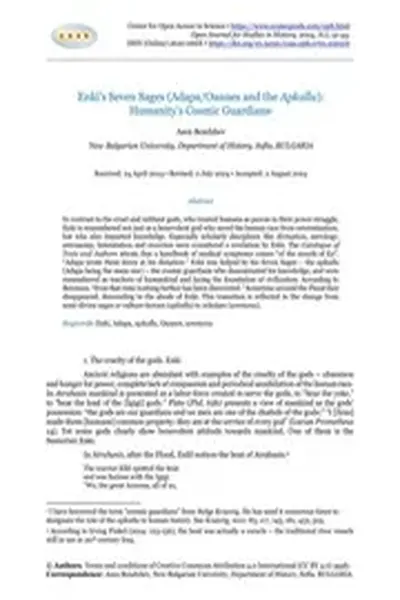
Scrying Or Crystal Gazing And Friar Bacon's Glass
 61
61

Scrying Or Crystal Gazing And Friar Bacon's Glass



Theodore Besterman's 'Scrying or Crystal Gazing and Friar Bacon's Glass' stands as a cornerstone for anyone serious about the art of divination. Besterman's meticulous research and lucid prose demystify the practice, presenting scrying not as mere parlour trickery but as a profound psychological and spiritual discipline. He expertly navigates the historical lineage, particularly the intriguing connection to Friar Bacon, offering invaluable insights for practitioners and scholars alike. The book's strength lies in its balanced approach, honoring both the practical techniques and the deeper symbolic meanings. This is an essential read for those seeking to understand the subtle arts of perception and inner vision.
📝 Description
61
Theodore Besterman's 1938 study examines scrying and Friar Bacon's Glass, two historical methods of visual divination.
In 'Scrying or Crystal Gazing and Friar Bacon's Glass,' Theodore Besterman investigates the historical practice of visual divination. Published in 1938, the book addresses the use of reflective surfaces, such as obsidian and crystal balls, for gaining insight. Besterman traces the development of these techniques, looking at their philosophical roots and their place within esoteric traditions.
The work is not simply a guide to performing scrying but an analysis of the human impulse to seek knowledge beyond the ordinary senses. It connects the practice to broader questions of perception and the desire to understand hidden realities. Besterman details the specific apparatus and methods associated with Friar Bacon's Glass, offering a historical perspective on its use.
This book sits within the tradition of Western esotericism, specifically focusing on practices related to divination and altered states of consciousness. It examines historical European approaches to seeking hidden knowledge through visual means, placing them within a broader intellectual and cultural history. The study engages with the legacy of figures like Friar Bacon, whose association with arcane arts made him a point of reference for later practitioners and scholars of the occult.
💡 Why Read This Book?
Unlock the ancient secrets of visual divination and explore the profound symbolism of reflective surfaces. This book is essential for seekers of hidden knowledge, students of esoteric traditions, and practitioners of divination arts. Discover techniques, historical context, and the philosophical depth of scrying, empowering your journey into the mystical realms of perception and foresight.
⭐ Reader Reviews
Honest opinions from readers who have explored this book.
❓ Frequently Asked Questions
What is scrying and how does it differ from other divination methods?
Scrying is a form of divination that involves gazing into a reflective surface, such as a crystal ball or polished mirror, to perceive visions, symbols, or information from the subconscious or other realms. It relies on visual interpretation rather than symbolic systems like tarot or runes.
Is this book suitable for beginners interested in crystal gazing?
Yes, Besterman's work provides a foundational understanding of scrying, making it accessible to beginners while also offering depth for more experienced practitioners. It outlines historical context and practical considerations.
What is the significance of Friar Bacon's Glass mentioned in the title?
Friar Bacon's Glass refers to a legendary or historical device attributed to Roger Bacon, believed to be an early form of scrying instrument or a symbol of advanced optical knowledge used for divinatory purposes, linking the practice to medieval alchemical and philosophical traditions.
Does the book offer practical exercises for scrying?
While primarily a historical and philosophical exploration, Besterman discusses the principles and conditions conducive to scrying, which can inform practical application for dedicated readers. It encourages understanding before direct practice.
What kind of reflective surfaces are discussed for scrying?
The book covers a range of reflective mediums historically used for scrying, including crystal balls, polished mirrors, dark water, and other shimmering surfaces, detailing their symbolic and practical importance in various traditions.
🔮 Key Themes & Symbolism
The Art of Visual Perception
This theme studies the profound nature of perception, exploring how the human mind interacts with symbolic imagery and subtle energies. It examines the psychological and spiritual underpinnings of gazing into reflective surfaces, transforming the act from mere observation into a profound communion with deeper consciousness. The text illuminates how the subconscious mind can be accessed and interpreted through visual metaphors, offering a unique pathway to self-understanding and insight.
Historical Roots of Divination
The work meticulously traces the historical lineage of scrying, particularly its connection to figures like Friar Bacon and its presence across various ancient cultures and esoteric traditions. It explores how this practice evolved through the ages, revealing the enduring human fascination with seeking answers beyond the mundane. Understanding this historical context provides a richer appreciation for the practice and its place within the grand range of occult and metaphysical pursuits.
Symbolism in the Reflective Arts
This theme focuses on the body of symbolism inherent in scrying practices. It unpacks the significance of various reflective mediums, from the clear purity of crystal to the shadowed depths of obsidian, and explores the archetypal imagery that emerges. The book guides readers to interpret these visual manifestations as keys to unlocking hidden messages, understanding cosmic principles, and reading through the intricate range of the spiritual journey. It emphasizes the symbolic language of the universe speaking through the mirror.
💬 Memorable Quotes
Direct passages from the work, attributed to the author.
“The mirror is but a gateway.”
— This highlights the transformative potential of reflective surfaces in scrying, suggesting they are not just objects but portals to other states of consciousness or areas of knowledge.
“Vision lies not in the object, but in the gazer.”
— Emphasizes the internal nature of scrying, pointing out that the insights derived are a product of the individual's consciousness, intuition, and preparedness.
“In stillness, the unseen reveals itself.”
— Underlines the importance of meditative focus and mental quietude as essential prerequisites for successful scrying, where external distractions fade and inner perceptions sharpen.
“The glass holds no truth, it merely reflects.”
— A cautionary yet profound statement, reminding the practitioner that the scrying medium is a tool for accessing truth, not the source of truth itself. The interpretation rests with the seer.
“Seek not to command, but to commune.”
— Advises a humble and receptive approach to divination, advocating for a relationship of respectful dialogue with the subtle energies rather than an attempt to force or control them.
🌙 Esoteric Significance
Tradition
This work is deeply rooted in the Western Esoteric Tradition, drawing connections to Hermeticism, Neoplatonism, and medieval alchemical practices. It explores the concept of correspondences and the belief that the microcosm (human consciousness) reflects the macrocosm (the universe). Scrying is presented as a method of attunement, allowing the practitioner to tap into these interconnected energies and gain insights through symbolic vision.
Symbolism
The symbolism is rich, centering on the mirror-like quality of reflective surfaces as metaphors for the soul's capacity to reflect divine truth and cosmic order. Crystal spheres represent clarity, purity, and the potential for expanded consciousness. The act of gazing itself symbolizes introspection and the journey inward. Visions received are often interpreted through archetypal imagery, personal associations, and universal symbolic languages, bridging the conscious and subconscious.
Modern Relevance
In an age often dominated by digital noise and external stimuli, 'Scrying or Crystal Gazing' offers a profound antidote, guiding individuals toward introspection and the cultivation of inner awareness. The principles of focused attention, symbolic interpretation, and cultivating a receptive state remain highly relevant for personal growth, stress reduction, and developing intuitive abilities. It provides a historical and philosophical framework for modern mindfulness and consciousness exploration practices.
👥 Who Should Read This Book
This useful text is ideally suited for a diverse audience. **Aspiring practitioners** of divination will find a solid foundation in the history and philosophy of scrying. **Students of esoteric history and occult traditions** will appreciate the scholarly depth and historical context provided. **Seekers of inner wisdom and self-discovery** will find the exploration of perception and symbolism deeply resonant. **Practitioners of meditation and mindfulness** may discover new avenues for deepening their practice through the art of focused gazing and intuitive interpretation.
📜 Historical Context
Published during a period of renewed interest in the occult and esoteric sciences, Theodore Besterman's 'Scrying or Crystal Gazing and Friar Bacon's Glass' emerges from an era where the boundaries between science, philosophy, and mysticism were being actively explored and debated. The early 20th century saw a resurgence of interest in ancient wisdom traditions, spiritualism, and psychological exploration, all of which provided fertile ground for works like this. The text engages with the legacy of medieval scholars like Roger Bacon, placing the practice of scrying within a continuum of alchemical and visionary pursuits. It reflects a broader cultural fascination with unlocking hidden potentials of the human mind and understanding phenomena that defied purely materialistic explanations.
📔 Journal Prompts
Reflect on your personal relationship with mirrors and reflections. What do they symbolize for you?
Describe a time you felt you 'saw' something beyond the ordinary. What were the circumstances?
If you were to use a scrying tool, what would you prefer and why?
Consider the concept of 'seeing' with the inner eye. How does this differ from physical sight?
What are your personal motivations for exploring divination and hidden knowledge?
🗂️ Glossary
Scrying
The practice of gazing into a reflective surface, such as a crystal ball or mirror, to receive visions, insights, or information from the subconscious or other realms.
Crystal Gazing
A specific form of scrying that utilizes a crystal ball or other clear, polished crystal as the reflective medium for divination.
Divination
The practice of seeking knowledge of the future or the unknown by supernatural means, often through symbolic interpretation of omens or patterns.
Esoteric
Intended for or likely to be understood by only a small number of people with a specialized knowledge or interest; relating to the occult or mystical.
Metaphysical
Concerning the fundamental nature of reality, including the relationship between mind and matter, or the study of being and knowledge beyond the physical.
This book appears in 3 collections
🔮 Readers Also Liked
Browse all →









More by Theodore Besterman
All books →
From the “Tarot” Collection
View all →






More Free Divination & Tarot Books
View all →