Ramayana
 69
69

Ramayana



Sophia Crane (Associate Editor) — Sanjay Patel's Ramayana is a triumphant fusion of artistic brilliance and spiritual depth. His signature Pixar-esque charm breathes accessible life into the profound complexities of Hindu scripture, making its esoteric wisdom readily digestible. The visual language is rich with symbolism, offering new layers of understanding for both seasoned practitioners and curious newcomers. Patel masterfully captures the essence of Rama's divine quest and the cosmic battle against Ravana, highlighting themes of righteousness, sacrifice, and the unwavering power of devotion. This adaptation is a rare gem, illuminating the spiritual heart of the Ramayana with a clarity and beauty that resonates deeply. Highly recommended for anyone seeking a visually captivating and spiritually enriching encounter with ancient Indian wisdom.
📝 Description
69
Sanjay Patel's 2023 Ramayana adaptation translates a 2,000-year-old epic into modern visual language.
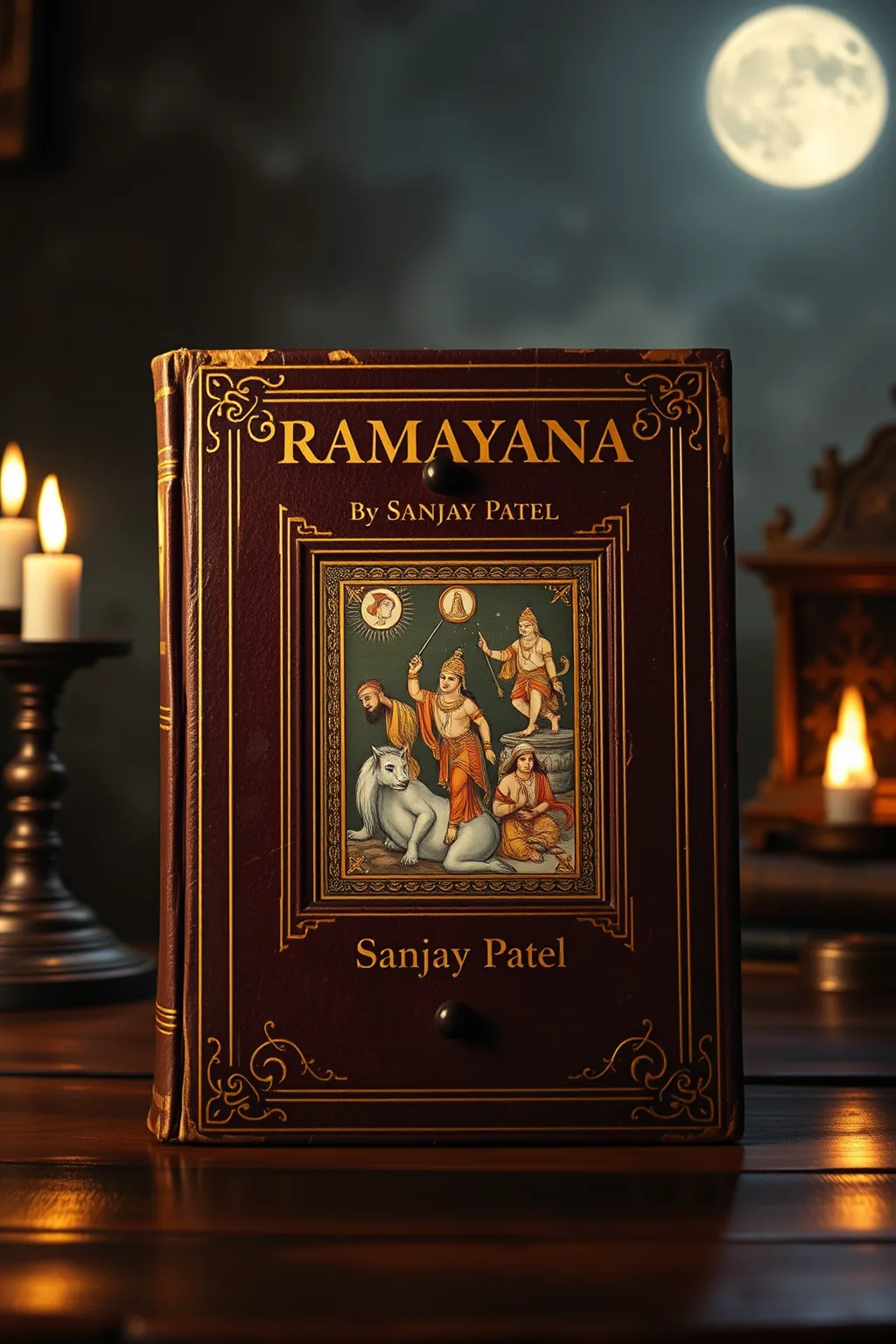
Sanjay Patel's adaptation of the Ramayana presents the ancient Indian epic through vibrant illustrations. The book follows Prince Rama, an avatar of Vishnu, as he battles the demon king Ravana to rescue his wife Sita. Patel's visual style brings the celestial beings and mythical creatures of the story to life.
The narrative highlights Rama's struggle with duty and divine purpose, alongside Sita's loyalty and resilience. Key elements such as Hanuman, the monkey god, and the magical weapons used in the conflict are depicted with attention to their symbolic meaning. The story contrasts forces of order (dharma) with chaos (adharma), illustrating the eternal conflict between good and evil.
This version aims to make the core themes of faith, righteousness, and the eventual victory of good accessible. It reveals the deeper philosophical currents within the tale, suggesting its continued significance for contemporary readers.
The Ramayana, an epic poem central to Hinduism, is rich with philosophical and spiritual teachings. Its narrative often functions as a vehicle for exploring concepts like karma, rebirth, and the nature of divinity. The characters embody ideals and challenges relevant to spiritual practice. Patel's work, by focusing on these symbolic dimensions and the interplay of light and shadow, connects the epic's ancient wisdom to a modern understanding of spiritual truths and personal growth.
💡 Why Read This Book?
This Ramayana adaptation offers a visually stunning entry point into one of Hinduism's most sacred epics. Ideal for seekers of spiritual wisdom, art enthusiasts, and those drawn to mythic narratives, it unpacks complex themes of dharma, karma, and divine love through accessible, vibrant illustrations. Discover the profound symbolism and philosophical underpinnings of this timeless story in a format that ignites the imagination and nourishes the soul.
⭐ Reader Reviews
Honest opinions from readers who have explored this book.
❓ Frequently Asked Questions
Is this a direct translation of the original Ramayana?
While it captures the essence and narrative arc of Valmiki's Ramayana, this is an artistic adaptation. Sanjay Patel infuses the story with his unique visual style and a lighter narrative tone, making it accessible for a contemporary audience.
What is the spiritual significance of the Ramayana?
The Ramayana is a cornerstone of Hindu philosophy, illustrating the principles of dharma (righteousness), karma (action and consequence), and the divine nature of humanity through the life of Lord Rama. It's a guide to ethical living and spiritual enlightenment.
Who is Sanjay Patel and why is his style suited for this book?
Sanjay Patel is a veteran animator from Pixar, known for his whimsical and expressive visual storytelling. His ability to render complex characters and fantastical worlds with warmth and clarity makes the epic's deities and demons relatable and its spiritual journey engaging.
Can I understand the Ramayana without prior knowledge of Hinduism?
Absolutely. Patel's adaptation is designed to be accessible to readers of all backgrounds. The narrative is clear, and the illustrations provide visual cues that enhance understanding of the characters and their motivations.
What kind of esoteric themes are present in this adaptation?
The book subtly explores themes of divine intervention, the soul's journey, the battle between inner demons and virtues, and the power of unwavering faith. The symbolism within the illustrations often hints at deeper metaphysical meanings.
🔮 Key Themes & Symbolism
The Archetypal Hero's Journey
Fundamentally, the Ramayana chronicles Prince Rama's epic quest, mirroring the universal archetypal journey of the hero. This narrative structure, deeply embedded in esoteric traditions, illustrates the soul's path through trials, temptations, and eventual spiritual realization. Rama's exile, his battles against Ravana, and his eventual return to his rightful kingdom symbolize the individual's struggle with ego, the overcoming of inner and outer obstacles, and the attainment of self-mastery and divine union. Patel's visual interpretation emphasizes the heroic struggle and the inherent divinity within the protagonist, offering a powerful metaphor for personal growth and transcendence.
Dharma and Cosmic Order
The concept of Dharma, encompassing righteousness, duty, and cosmic law, is the guiding principle of the Ramayana. This esoteric concept dictates the moral and spiritual order of the universe. Rama's unwavering adherence to Dharma, even in the face of immense personal suffering, serves as a profound lesson in ethical conduct and spiritual integrity. The epic explores the consequences of defying Dharma, as exemplified by Ravana's hubris, and the ultimate triumph of those who uphold it. Patel's artwork visually distinguishes between the forces of order and chaos, inviting contemplation on the balance of universal energies and the importance of aligning oneself with divine principles.
The Power of Devotion and Divine Love
The Ramayana is a proof of the transformative power of Bhakti, or devotional love. The unwavering devotion of Sita to Rama, Hanuman's selfless service, and the loyalty of Rama's allies underscore the profound spiritual strength that arises from pure love and surrender. This theme resonates deeply within mystical traditions, highlighting the soul's yearning for connection with the Divine. The narrative demonstrates that through sincere devotion, even the most insurmountable challenges can be overcome. Patel’s illustrations often capture the tender moments and profound bonds between characters, emphasizing the spiritual potency of love and commitment.
💬 Memorable Quotes
Direct passages from the work, attributed to the author.
“Courage is not the absence of fear, but the triumph over it.”
— This emphasizes the spiritual discipline required to face inner demons and external challenges, a common theme in ascetic practices.
“Even the smallest spark can ignite the greatest flame.”
— Highlighting the potential for growth and transformation within every individual, no matter how humble their beginnings.
“True strength lies in compassion.”
— A profound statement on the spiritual power derived from empathy and kindness, essential for spiritual evolution.
“The path of duty is often the path of enlightenment.”
— Connects adherence to Dharma with the ultimate goal of spiritual awakening and self-realization.
💡 Key Ideas
Editorial paraphrase of the work's core concepts — not direct quotes.
The heart knows its own path.
This quote speaks to the inner wisdom and intuitive guidance that transcends logical reasoning, a core tenet in many esoteric paths.
🌙 Esoteric Significance
Tradition
The Ramayana is deeply rooted in the Vaishnavism tradition of Hinduism, which venerates Vishnu as the supreme deity. Esoterically, it is viewed as a profound allegory for the soul's journey. Prince Rama represents the higher self or divine consciousness, while Sita symbolizes the individual soul (Jivatma) bound by illusion and seeking liberation. The epic's narrative is interpreted as a cosmic drama illustrating the principles of spiritual evolution, the overcoming of ego-driven desires (represented by Ravana), and the ultimate reunion of the soul with the Divine.
Symbolism
The Ramayana is rich in symbolism. Rama's blue complexion signifies his divine nature. The Rakshasa (demon) Ravana embodies ignorance and ego. Hanuman, the devoted monkey god, represents the power of pure devotion and the awakened mind. The magical weapons symbolize spiritual powers and virtues. The construction of the bridge to Lanka signifies overcoming seemingly insurmountable obstacles through collective effort and divine will. The golden deer, a deceptive illusion, highlights the dangers of materialistic desires that lead one astray from the spiritual path.
Modern Relevance
In contemporary times, the Ramayana offers a powerful framework for navigating life's complexities. Its themes of duty, resilience, and the pursuit of righteousness remain profoundly relevant. For spiritual seekers, it provides a blueprint for self-discovery and ethical living. The story's emphasis on overcoming adversity through inner strength and faith speaks to modern challenges. Patel's adaptation makes these ancient lessons accessible and visually engaging, encouraging readers to reflect on their own 'quests' for truth, love, and spiritual fulfillment in a world often filled with illusion and distraction.
👥 Who Should Read This Book
This visually captivating Ramayana is ideal for a diverse audience. **Beginners** to Hindu mythology will find it an accessible and enchanting introduction. **Scholars** of comparative mythology and religious studies will appreciate Patel's unique interpretation and the detailed artwork. **Spiritual seekers** and practitioners of Eastern philosophies will discover profound allegorical meanings and timeless wisdom. Those interested in **art and illustration** will be captivated by the lush, whimsical style. Ultimately, anyone drawn to epic tales of heroism, love, and the eternal battle between good and evil will find this adaptation a deeply rewarding experience.
📜 Historical Context
The Ramayana, attributed to the sage Valmiki, is one of the two major Sanskrit epics of ancient India, dating back likely to the 4th century BCE or earlier. It emerged during a period of significant philosophical and religious development in India, when the Vedic traditions were evolving and the foundations of what would become Hinduism were solidifying. The epic's narrative, steeped in the concepts of dharma, karma, and divine avatars, served as a moral and spiritual guide for countless generations. Its influence permeated not only religious practice but also art, literature, and societal norms across the Indian subcontinent and Southeast Asia. The story's enduring appeal lies in its exploration of universal human experiences and its timeless moral lessons, making it a central to Indian cultural identity and a source of spiritual inspiration for millennia.
📔 Journal Prompts
Reflect on a time you had to overcome a significant obstacle in your life. How did you find the inner strength to persevere?
Consider the concept of 'Dharma' in your own life. What are your duties and responsibilities, and how do they align with your spiritual path?
Explore the nature of devotion. How can cultivating devotion, in any form, enhance your connection to something greater than yourself?
Identify a personal 'demon' or negative trait (like ego, fear, or greed). What 'weapons' or spiritual practices can you employ to overcome it?
How does the concept of divine love, as depicted in the Ramayana, resonate with your understanding of love and relationships?
🗂️ Glossary
Dharma
In Hinduism, Dharma refers to one's righteous duty, moral law, cosmic order, and spiritual path. It is the principle that upholds the universe and guides ethical conduct.
Avatar
An avatar is a divine being who descends to Earth in human or animal form to restore dharma and protect the righteous. Lord Rama is an avatar of Vishnu.
Rakshasa
A Rakshasa is a powerful, often malevolent, supernatural being in Hindu mythology, typically depicted as demons or ogres, embodying chaos and unrighteousness.
Bhakti
Bhakti is the path of devotion, a fervent love and surrender to a deity. It is considered a powerful means of achieving spiritual liberation in Hinduism.
Yuga
A Yuga is an epoch or age in Hindu cosmology, representing cycles of time. The Ramayana primarily takes place during the Treta Yuga, a period of righteousness.
This book appears in 3 collections
🔮 Readers Also Liked
Browse all →









More by Sanjay Patel
All books →

From the “Tarot” Collection
View all →









More Free Divination & Tarot Books
View all →