Tarot for Beginners
 61
61

Tarot for Beginners



Ophelia Vance, Mystical Literature Reviewer — Abigail Welsh's "Tarot for Beginners" stands as a beacon for those drawn to the subtle currents of divination. It transcends the superficial, offering a deeply resonant exploration of the Tarot's archetypal language and its philosophical underpinnings. Welsh's prose is both accessible and imbued with a genuine reverence for the esoteric tradition, making complex concepts feel like intimate revelations. This work is an indispensable primer for neophytes seeking authentic guidance, as well as a refreshing perspective for seasoned practitioners. It expertly bridges the gap between the symbolic and the practical, empowering readers to engage with the cards as mirrors of the soul and guides to inner transformation. A truly illuminating contribution.
📝 Description
61
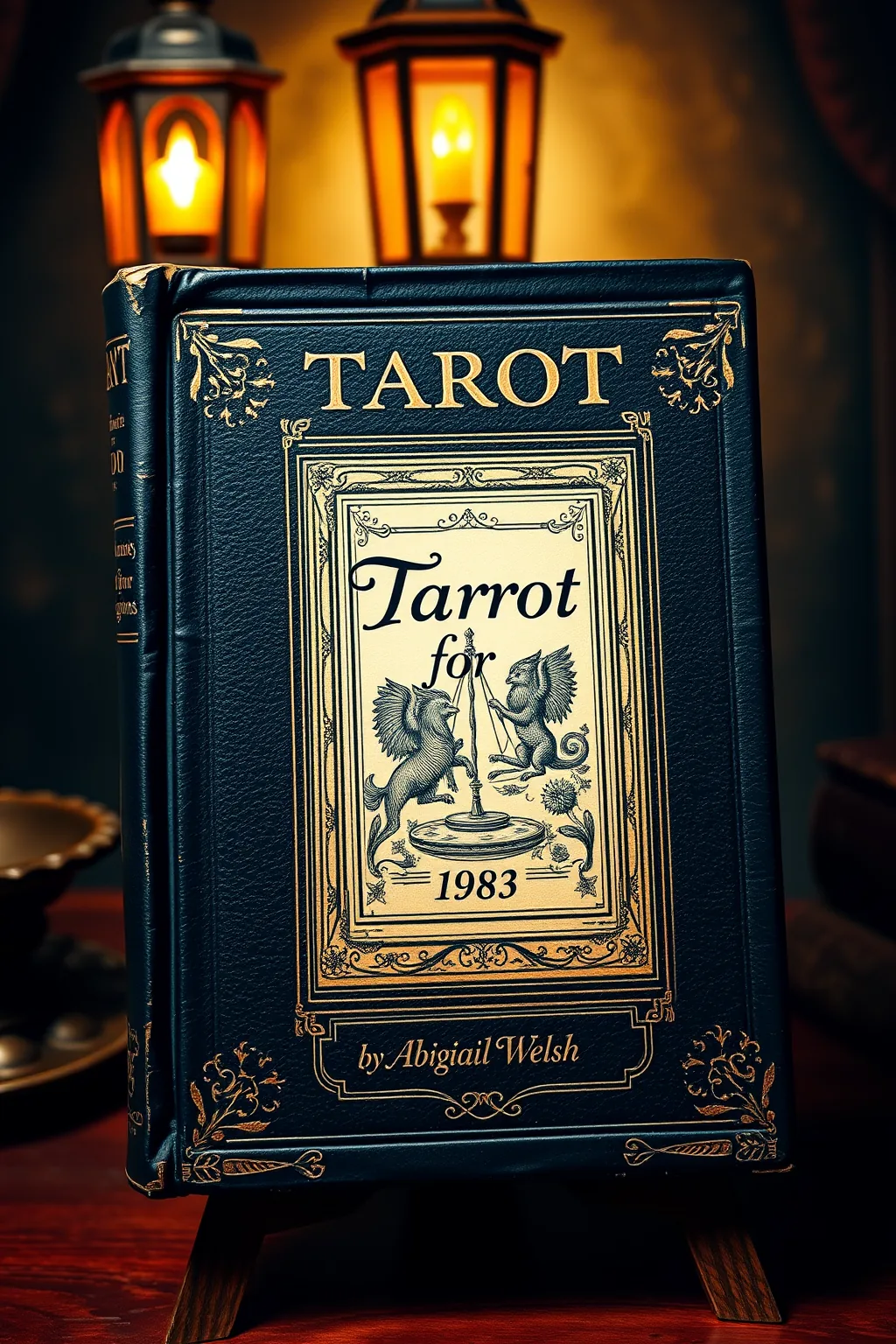
Abigail Welsh published 'Tarot for Beginners' to demystify the 78 cards.
Abigail Welsh's 'Tarot for Beginners' approaches the 78 Tarot cards as more than just tools for predicting the future. Instead, the book presents them as a system for understanding consciousness and universal principles. Welsh focuses on the symbolism within both the Major and Minor Arcana, explaining the archetypal forces that influence our lives. The text aims to be accessible to those new to Tarot, scholars, and practitioners alike.
The book offers a structured way to learn about the Tarot. It discusses concepts such as fate and free will through the lens of the cards. Welsh's aim is to provide a clear introduction to the esoteric tradition of the Tarot, encouraging a deeper personal connection with its symbolism and a better understanding of oneself and the wider world.
This book enters the Western esoteric tradition that views Tarot as a symbolic language for spiritual and psychological insight. It follows in a lineage that interprets the cards not solely for divination, but as a map of the psyche and the cosmos. Such interpretations often draw from Hermeticism, Kabbalah, and Jungian psychology, seeing the archetypes within the cards as reflections of universal human experiences and spiritual truths. Welsh's work aims to make these complex ideas understandable for newcomers.
💡 Why Read This Book?
Unravel the profound symbolism of the Tarot and gain access to a timeless system of wisdom. This book is ideal for spiritual seekers, aspiring diviners, and anyone curious about the archetypal language of the soul. Discover how the cards can illuminate your inner landscape, guide your decisions, and foster profound self-understanding, transforming your approach to life's mysteries.
⭐ Reader Reviews
Honest opinions from readers who have explored this book.
❓ Frequently Asked Questions
What is the primary purpose of learning Tarot?
The primary purpose is to access a rich symbolic language that offers insight into the self, life's challenges, and potential pathways. It serves as a tool for introspection, guidance, and understanding the subtle energies at play.
Do I need any prior mystical experience to read this book?
No, "Tarot for Beginners" is specifically designed for individuals with no prior experience. It starts with the foundational elements, demystifying the cards and their meanings in an approachable manner.
How quickly can I expect to learn to read Tarot?
While mastery takes time and practice, this book provides a solid foundation for understanding card meanings and basic spreads within a few weeks of dedicated study.
Are the interpretations in this book strictly traditional?
Abigail Welsh offers interpretations that honor traditional meanings while encouraging personal intuition and subjective connection with the cards, fostering a dynamic and evolving practice.
What is the philosophical significance of the Tarot?
The Tarot reflects universal archetypes, psychological journeys, and the cyclical nature of existence, offering a framework for understanding human experience and our connection to the greater cosmos.
🔮 Key Themes & Symbolism
The Archetypal Language of the Soul
This theme looks at the profound concept of the Tarot as a visual lexicon of the human psyche and universal archetypes. It explores how figures like The Fool, The Magician, and The High Priestess represent fundamental aspects of our journey, from innocence and potential to wisdom and intuition. The book guides readers to recognize these archetypes not just as card images, but as living energies that resonate within us, offering a mirror to our inner world and the cosmic forces that shape our lives.
Decoding the Symbolism of the Arcana
Central to Welsh's teaching is the intricate web of symbolism embedded within each Tarot card. This section illuminates the body of colors, numbers, celestial influences, and mythological references that imbue the cards with layered meanings. Readers will learn to decipher the visual language, understanding how a specific gesture, an element, or a background detail can unlock deeper layers of interpretation, transforming the cards from static images into dynamic conduits of knowledge.
The Tarot as a Tool for Inner Transformation
Beyond mere prediction, this theme emphasizes the Tarot's transformative power as a catalyst for personal growth and self-awareness. The book positions the Tarot not as a rigid oracle, but as a dynamic partner in introspection, encouraging readers to use card readings to confront shadows, embrace strengths, and navigate life's transitions with greater clarity and wisdom. It highlights how consistent engagement with the Tarot can foster intuition, empower decision-making, and ultimately lead to a more conscious and fulfilling existence.
💬 Memorable Quotes
Direct passages from the work, attributed to the author.
“Each card is a whisper from the universe, waiting to be heard.”
— This evocative phrase highlights the subtle, intuitive nature of Tarot reading and the potential for useful insights when one is open to its messages.
“Within the Major Arcana lie the blueprints of human experience.”
— This suggests that the 22 Major Arcana cards represent the fundamental archetypes and life lessons common to all humanity.
“The Minor Arcana paint the everyday canvas of our lives.”
— This distinguishes the Minor Arcana as representing the more mundane, yet significant, events and energies encountered in daily existence.
💡 Key Ideas
Editorial paraphrase of the work's core concepts — not direct quotes.
The Tarot is not a map of the future, but a mirror of the soul.
This quote expresses the book's core philosophy: the Tarot's primary function is introspection and self-understanding, rather than deterministic fortune-telling.
The Fool's leap is the beginning of every great journey.
This quote emphasizes the importance of courage, faith, and embracing the unknown, as represented by the foundational card of The Fool.
🌙 Esoteric Significance
Tradition
This work aligns with the Western Esoteric Tradition, particularly the Hermetic and Kabbalistic streams that have heavily influenced Tarot interpretation. It draws upon the concept of the "as above, so below," integrating the Tarot’s symbolic language with spiritual principles and the interconnectedness of the universe. The emphasis is on the Tarot as a tool for gnosis – direct spiritual knowing – and personal evolution within this rich occult framework.
Symbolism
The esoteric significance of the Tarot lies in its dense, multi-layered symbolism. Each card, from the celestial bodies depicted to the posture of its figures, is imbued with meaning derived from astrology, numerology, alchemy, and mythology. The Major Arcana represent archetypal journeys and spiritual principles, while the Minor Arcana, in their four suits (Wands, Cups, Swords, Pentacles), reflect the elements and the practical manifestations of life, offering a comprehensive symbolic language for understanding existence.
Modern Relevance
In an age often characterized by fragmentation and a disconnect from the numinous, the Tarot offers a powerful pathway back to inner wisdom and symbolic literacy. Its relevance lies in its ability to provide a framework for navigating complex emotions, making conscious choices, and fostering a deeper connection to one's intuition and the subtle energies of the universe. "Tarot for Beginners" makes this ancient system accessible, empowering modern individuals to use it as a tool for personal empowerment and spiritual growth.
👥 Who Should Read This Book
This book is a welcoming embrace for the absolute beginner, offering a clear and non-intimidating entry point into the vast world of Tarot. Aspiring diviners will find the foundational knowledge essential for building a robust practice. Spiritual seekers and those on a path of self-discovery will appreciate the Tarot's capacity to illuminate inner landscapes and guide personal evolution. Even seasoned practitioners might rediscover fundamental insights or find new perspectives through Welsh's approachable yet profound methodology.
📜 Historical Context
The Tarot, with its roots tracing back to 15th-century Italy, has evolved from a card game into a profound divinatory and symbolic system. Its esoteric significance blossomed particularly during the 18th and 19th centuries, fueled by occult revival movements and figures like Antoine Court de Gébelin, who linked the cards to ancient Egyptian mysteries, and later Eliphas Lévi, who connected them to the Kabbalah. This era saw the Tarot embraced by secret societies and mystics as a key to unlocking hidden knowledge and understanding the macrocosm and microcosm. Abigail Welsh's work, while accessible to modern readers, draws upon this rich lineage of esoteric interpretation, presenting the Tarot as a continuation of these ancient wisdom traditions.
📔 Journal Prompts
Reflect on the journey of The Fool. Where in your life are you currently at the precipice of a new beginning?
Choose a card that speaks to you today and write a short story or poem from its perspective.
How does the symbolism of the suit of Cups relate to your emotional experiences this week?
Consider the balance of light and shadow in The High Priestess. What hidden knowledge might you be overlooking?
If The Magician were to offer you a tool for manifestation, what would it be and how would you use it?
🗂️ Glossary
Major Arcana
The 22 trump cards of the Tarot deck, representing significant life lessons, archetypal energies, and profound spiritual journeys.
Minor Arcana
The 56 cards of the Tarot deck, divided into four suits (Wands, Cups, Swords, Pentacles), which represent the everyday experiences, challenges, and opportunities of life.
Archetype
A universal, primal symbol or motif that recurs in the myths, art, and literature of many cultures, representing fundamental human experiences and patterns of behavior.
Divination
The practice of seeking knowledge of the future or the unknown by supernatural means, often through the use of tools like the Tarot.
Intuition
The ability to understand something immediately, without the need for conscious reasoning; a direct, unmediated insight often associated with Tarot reading.
This book appears in 3 collections
🔮 Readers Also Liked
Browse all →
From the “Tarot” Collection
View all →
More Free Divination & Tarot Books
View all →