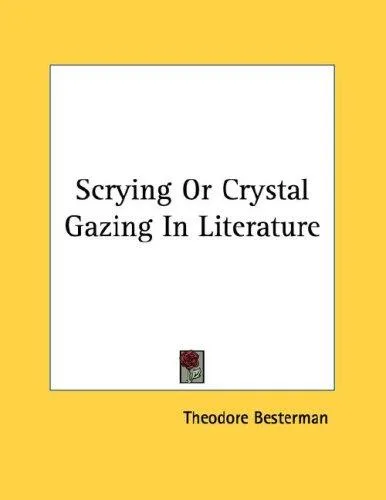
Scrying Or Crystal Gazing In Literature
 61
61

Scrying Or Crystal Gazing In Literature



Aurelia Blackwood (Occult Philosophy Critic) — Theodore Besterman's 'Scrying or Crystal Gazing in Literature' stands as an indispensable cornerstone for anyone serious about the history and literary representation of divination. Besterman's erudition shines, illuminating the often-obscure connections between literary motifs and esoteric practices. He expertly dissects how poets, playwrights, and novelists have grappled with the concept of seeing beyond the veil, offering profound insights into the psychological and spiritual dimensions of scrying. This work is essential for scholars of comparative literature, occult history, and practitioners seeking a deeper understanding of the archetypal imagery surrounding crystal gazing. A truly illuminating and authoritative exploration.
📝 Description
61
Theodore Besterman's 1937 study examines scrying and crystal gazing as depicted in literature.
This 1937 study by Theodore Besterman traces the presence of scrying and crystal gazing within literary works. Besterman investigates how reflective surfaces like mirrors, water, and stones have been used as tools for divination across various historical periods and cultures as represented in stories. He analyzes the symbolic meanings attached to these practices and their philosophical implications, noting their continued fascination for people throughout history.
The book addresses the mystical elements that appear in human storytelling, focusing on perception and intuition. It looks at how these practices relate to the human desire for knowledge that goes beyond everyday experience. Readers will find discussions on prophecy, clairvoyance, and the visual oracle's power, inviting a look into consciousness itself through the reflection of these literary traditions.
Theodore Besterman's work situates the practice of scrying within a broader historical and literary context, moving beyond simple occult descriptions. It examines how visions and premonitions, often associated with esoteric traditions, were translated into narrative forms. The book considers these literary representations not just as expressions of belief, but as cultural phenomena reflecting a persistent human interest in seeking knowledge through altered states of perception and symbolic interpretation. It connects these literary motifs to historical practices of divination, placing them within the intellectual currents of their times.
💡 Why Read This Book?
This book is essential for seekers of hidden knowledge, scholars of esoteric traditions, and practitioners of divination. It offers a unique scholarly exploration of how scrying and crystal gazing have been depicted and interpreted in literature across history, providing a rich understanding of their symbolic power and cultural significance. Uncover the literary lineage of these ancient arts and deepen your appreciation for their enduring mystique.
⭐ Reader Reviews
Honest opinions from readers who have explored this book.
❓ Frequently Asked Questions
What is the primary focus of this book?
The book's primary focus is the historical and literary examination of scrying and crystal gazing. It explores how these divinatory practices have been represented, understood, and utilized within various literary works across different eras and cultures.
Who is Theodore Besterman?
Theodore Besterman was a distinguished bibliographer and scholar, known for his extensive work on Voltaire and his deep interest in literary history and the history of ideas. His meticulous research brought clarity to complex subjects.
Is this book a practical guide to scrying?
No, this is not a practical 'how-to' guide for performing scrying. Instead, it offers a scholarly and literary analysis of the practice, its symbolism, and its presence in literature.
What literary periods does the book cover?
The book broadly covers literary history, examining instances of scrying and crystal gazing from ancient texts through to more modern literary expressions, providing a comprehensive overview of its presence in written works.
What kind of reader would benefit most from this book?
Scholars of literature, history of magic, comparative mythology, and those interested in the esoteric underpinnings of art and culture will find this book immensely valuable and enlightening.
🔮 Key Themes & Symbolism
The Mirror as Portal
This theme examines the potent symbolism of reflective surfaces – mirrors, polished metals, and still water – as conduits to other realms. It examines how literature has portrayed these objects not merely as tools for self-contemplation, but as gateways to the unseen, facilitating visions, prophecy, and communication with spiritual or otherworldly entities. The concept of the reflected image becoming a window into hidden truths or future events is explored in depth, highlighting the psychological and mystical resonance of the reflective surface as a sacred space for divination.
Literary Archetypes of the Seer
Here, the focus shifts to the recurring figures of the seer, prophet, and oracle within literary traditions. The book analyzes how authors have depicted individuals possessing the gift of clairvoyance, often through the use of scrying or similar divinatory arts. It explores the societal and narrative roles of these characters, their struggles with their visions, and the impact of their foresight on the unfolding of plot and destiny. This theme uncovers the enduring fascination with those who can perceive the hidden currents of existence and communicate esoteric knowledge.
Symbolism of Light and Shadow in Divination
This theme investigates the interplay of light and shadow as integral components of scrying rituals and their literary representation. It explores how the manipulation of illumination, the play of light within a crystal or reflective surface, and the enigmatic nature of shadows contribute to the atmosphere of mystery and the perceived efficacy of divination. The symbolic meanings of darkness as a veil for hidden truths and light as illumination of the unknown are examined, revealing how these elemental forces shape the experience and interpretation of divinatory visions within literary contexts.
💬 Memorable Quotes
Direct passages from the work, attributed to the author.
“Whispers from the crystal, echoes from the abyss.”
— This evocative phrase captures the essence of scrying, where faint, mysterious messages are perceived, originating from profound, unknown depths.
“In polished depths, futures are born and pasts reside.”
— This highlights the dual nature of scrying as a tool for both precognition (seeing the future) and retrospective insight (understanding the past).
“The gaze that pierces the veil of mundane sight.”
— This emphasizes the extraordinary power of the scryer's vision, capable of transcending ordinary perception to apprehend spiritual or hidden dimensions.
“A luminous paradox: darkness seen in light.”
— This points to the esoteric nature of scrying, where profound truths or hidden aspects are revealed through the controlled interplay of light and shadow.
💡 Key Ideas
Editorial paraphrase of the work's core concepts — not direct quotes.
The mirror reflects not only the visible but the veiled.
This quote suggests that reflective surfaces in scrying are more than just passive observers; they actively reveal hidden truths and unseen realities beyond the superficial.
🌙 Esoteric Significance
Tradition
This work is deeply rooted in the Western Esoteric Tradition, drawing connections to Neoplatonism, Hermeticism, and various forms of folk magic and spiritualism. It explores how these traditions, which emphasize inner gnosis, symbolic interpretation, and the interconnectedness of the cosmos, found expression through the literary portrayal of scrying and crystal gazing as methods for accessing higher knowledge and divine inspiration.
Symbolism
Key symbols include the polished reflective surface (mirror, water, crystal) representing the soul or a gateway to the subconscious and astral realms; light and shadow, signifying illumination and mystery; and the 'gazing' itself, symbolizing focused intent, meditative state, and the active pursuit of hidden knowledge beyond empirical observation.
Modern Relevance
In an age often dominated by empirical data and digital interfaces, Besterman's work reminds us of the enduring human need for intuitive understanding and symbolic connection. It offers a historical and literary lens through which to view contemporary interests in mindfulness, altered states of consciousness, and the search for meaning beyond the material world, highlighting the timeless appeal of divination as a tool for self-discovery and exploration.
👥 Who Should Read This Book
This comprehensive study is ideally suited for the dedicated seeker of esoteric knowledge, the meticulous scholar of comparative literature and occult history, and the contemplative practitioner of divination. Beginners curious about the historical roots and literary manifestations of scrying will find an accessible yet profound introduction. Advanced practitioners and academics will appreciate the depth of research and the nuanced analysis of symbolic language and archetypal representations, enriching their understanding of these ancient arts.
📜 Historical Context
Published during an era of burgeoning interest in the occult and comparative mythology, Theodore Besterman's 'Scrying or Crystal Gazing in Literature' emerged as a significant contribution to understanding the historical and literary dimensions of divinatory practices. The late 19th and early 20th centuries witnessed a resurgence of interest in esoteric traditions, spiritualism, and ancient wisdom, fueled by academic exploration and popular fascination. This period saw scholars and writers alike looking at folklore, mythology, and the history of magic, seeking to uncover universal patterns and hidden knowledge. Besterman's work sits firmly within this intellectual current, offering a scholarly yet accessible examination of how these mystical pursuits were perceived, represented, and integrated into the Western literary canon, providing a valuable bridge between academic study and the enduring human impulse for the supernatural.
📔 Journal Prompts
Reflect on a personal experience where you felt you 'saw' something beyond the ordinary. How might this relate to the concepts of scrying?
Choose a literary character who uses a reflective surface for insight. Analyze their motivation and the symbolic meaning of their 'vision'.
Imagine you are a medieval scribe encountering a text describing crystal gazing. What questions would you have about its practice and purpose?
Consider the modern concept of a 'digital reflection' (e.g., social media profiles, online avatars). How does this differ from or echo traditional scrying?
Explore the emotional impact of receiving a vision or prophecy, both for the seer and for those affected by it, as depicted in literature.
🗂️ Glossary
Scrying
The practice of seeking knowledge or visions by gazing into a reflective surface, such as a crystal ball, mirror, or water, believed to reveal hidden truths or future events.
Crystal Gazing
A specific form of scrying that involves using a crystal ball or polished gemstone to induce a trance-like state and receive divinatory impressions or visions.
Divination
The practice of attempting to foretell future events or discover hidden knowledge through supernatural means, using various methods and symbols.
Clairvoyance
The supposed psychic ability to perceive events, persons, or objects beyond the normal range of sight, often through extrasensory perception.
Esoteric
Intended for or likely to be understood by only a small number of people with a specialized knowledge or interest; relating to inner, secret teachings.
This book appears in 3 collections
🔮 Readers Also Liked
Browse all →







More by Theodore Besterman
All books →
From the “Tarot” Collection
View all →


![CIA Reading Room cia-rdp84-00022r000200150084-5: ORIENTATION COURSE LECTURE ON 'SERVICES OF [ ] [ ]'](/img/thumb/cia-reading-room-cia-rdp84-00022r000200150084-5-orientation-course-lecture-on-services-of-cia-reading-room.webp)




More Free Divination & Tarot Books
View all →