I Ching, Orion Plain and Simple
 62
62

I Ching, Orion Plain and Simple



Isolde Whitaker, Sacred Texts Editor, commends Kim Farnell's "I Ching, Orion Plain and Simple" for its clarity and depth. This work masterfully distills the profound esoteric teachings of the Yi Jing, making its ancient wisdom accessible without sacrificing its spiritual potency. Farnell's approach encourages a contemplative engagement with the text, fostering not just understanding, but a genuine connection to the oracle's transformative power. Ideal for those new to the I Ching or seeking a more profound interpretation, this book serves as an invaluable companion for navigating life's intricate pathways. It is a testament to the enduring relevance of this ancient divination system for modern spiritual seekers.
📝 Description
62
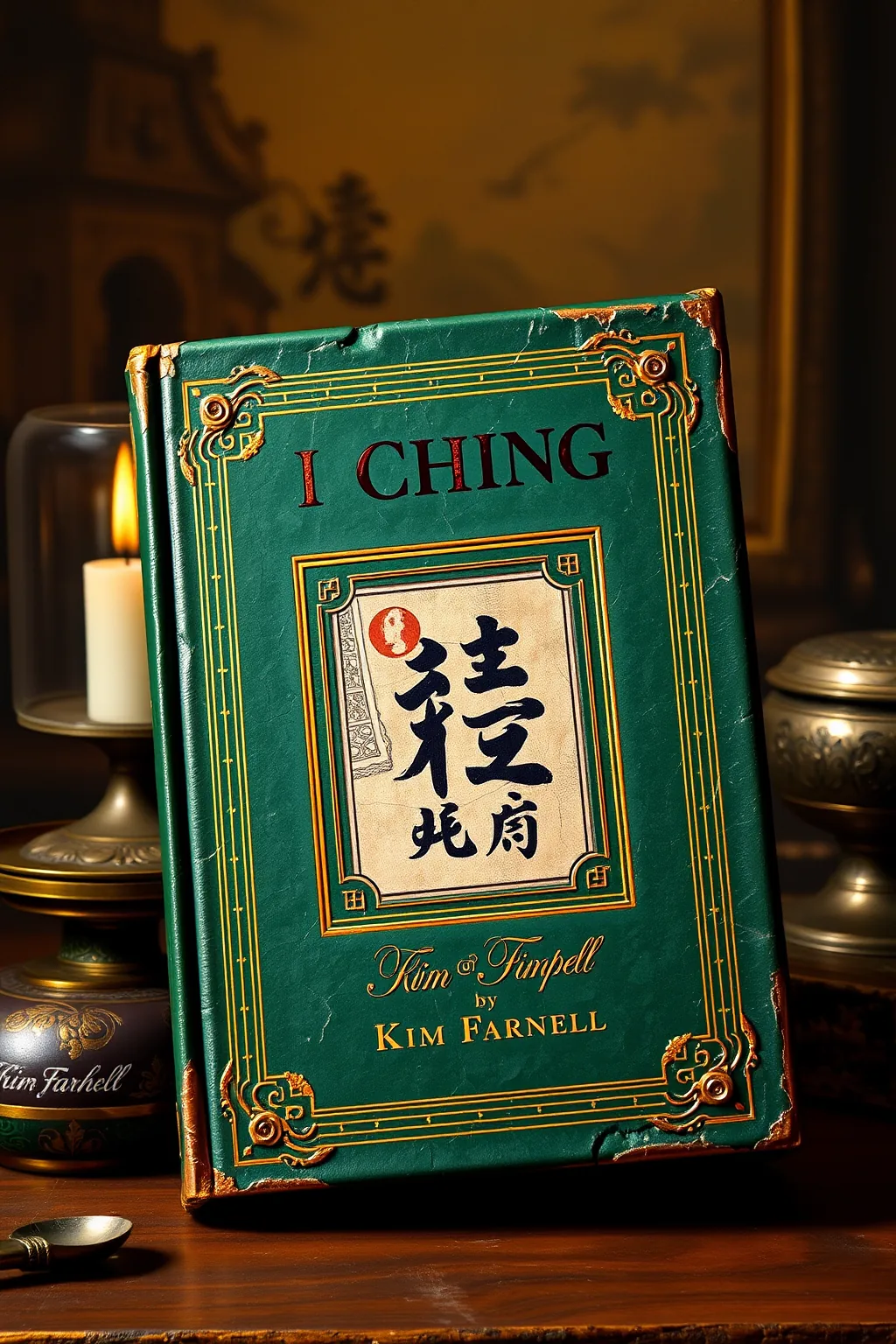
Kim Farnell's "I Ching, Orion Plain and Simple" (2016) offers a clear approach to the classic Chinese divination text.
Kim Farnell's 2016 book, "I Ching, Orion Plain and Simple," presents the classic Chinese divination text, the I Ching, in a straightforward manner. Farnell, drawing on her experience, explains the core components of the I Ching, including hexagrams and trigrams, and their symbolic meanings. The book aims to show the I Ching not just as a tool for fortune-telling, but as a text that reflects the dynamics of life, change, and fate.
This volume is intended for those seriously interested in the I Ching, whether they are new to its study, have some academic background, or practice its use regularly. Farnell guides the reader toward understanding the I Ching as a source of spiritual and philosophical insight, encouraging personal growth and inner balance. The book encourages a direct engagement with the wisdom contained within the I Ching.
The I Ching, or 'Book of Changes,' is a central text in Chinese philosophy and esoteric traditions, dating back over three millennia. It functions as both a philosophical work and a system of divination, employing 64 hexagrams derived from combinations of eight trigrams. These symbols are used to interpret the currents of change in the universe and human affairs, offering guidance and insight. Many Western esoteric traditions have engaged with the I Ching, viewing its principles as reflecting universal patterns of cosmic order and personal transformation.
💡 Why Read This Book?
Unlock the secrets of cyclical change and cosmic harmony. "I Ching, Orion Plain and Simple" offers a clear, yet profound, gateway to one of the world's most ancient and respected divination systems. Ideal for seekers of personal growth, students of esoteric traditions, and practitioners looking to deepen their understanding of symbolic language and fate, this book provides the tools for intuitive wisdom and insightful self-reflection. Discover your path through the wisdom of the ancients.
⭐ Reader Reviews
Honest opinions from readers who have explored this book.
❓ Frequently Asked Questions
What is the I Ching?
The I Ching, or 'Book of Changes,' is an ancient Chinese divination text and philosophical classic, revered for its insights into the cyclical nature of reality and the principles of change. It uses hexagrams derived from yin and yang lines to offer guidance.
Is this book suitable for beginners?
Yes, "I Ching, Orion Plain and Simple" is specifically designed to be accessible to beginners, offering clear explanations and practical guidance for understanding and using the I Ching.
How does this book differ from other I Ching translations?
This edition focuses on clarity and intuitive understanding, stripping away unnecessary complexity to reveal the core wisdom and practical applications of the I Ching's symbolism, making it particularly 'plain and simple'.
Can the I Ching be used for more than just fortune-telling?
Absolutely. While it is a powerful divination tool, the I Ching is also a profound philosophical text offering wisdom on ethics, strategy, and understanding the dynamics of life and human relationships.
What does 'Orion Plain and Simple' refer to in the title?
The 'Orion' element suggests a guiding celestial pattern or a clear, direct path to understanding, while 'Plain and Simple' emphasizes the book's accessible and straightforward approach to the complex subject matter.
🔮 Key Themes & Symbolism
The Philosophy of Change
This theme studies the I Ching's central tenet: that all things are in a constant state of flux. It explores how understanding and harmonizing with these inevitable transformations leads to wisdom and resilience. The book illuminates the dynamic interplay of Yin and Yang, the foundational forces driving change, and how to navigate life's vicissitudes with grace and foresight. It emphasizes the cyclical nature of existence, encouraging readers to embrace impermanence as a source of opportunity rather than fear.
Symbolic Language and Divination
This theme unpacks the rich symbolic language of the I Ching's hexagrams and trigrams. Farnell guides readers in interpreting the archetypal imagery and profound meanings embedded within each symbol, revealing how they reflect universal patterns of human experience. The book presents the I Ching not merely as a predictive tool, but as a mirror to the soul, offering clear insights for decision-making, self-awareness, and spiritual growth through its ancient divinatory practices.
Personal Transformation and Inner Harmony
This theme focuses on the I Ching's practical application for personal development and achieving inner balance. It explores how the wisdom gleaned from the hexagrams can illuminate one's path, foster self-understanding, and guide individuals towards making choices that align with their authentic selves and the natural flow of life. The book encourages a contemplative practice, transforming the reader's relationship with challenges and opportunities, leading to a more harmonious and fulfilling existence.
💬 Memorable Quotes
Direct passages from the work, attributed to the author.
“Each hexagram is a snapshot of the cosmic dance.”
— This evocative phrase underscores the I Ching's ability to capture the dynamic, interconnected nature of universal forces and their manifestation in specific moments.
“Wisdom lies not in resisting change, but in flowing with it.”
— This aphorism promotes an attitude of adaptability and acceptance, suggesting that true understanding and peace come from embracing life's transitions rather than fighting them.
“The oracle speaks to the heart that listens.”
— This profound statement emphasizes the importance of inner receptivity and intuition in understanding the I Ching's messages, suggesting a dialogue between the seeker and the ancient wisdom.
💡 Key Ideas
Editorial paraphrase of the work's core concepts — not direct quotes.
The river flows, ever changing, yet always the river.
This quote captures the I Ching's core message of constant transformation within an enduring essence, urging acceptance of change while recognizing underlying continuity.
When the path is unclear, consult the ancient patterns.
Highlighting the I Ching's role as a guide, this quote emphasizes seeking wisdom from established symbolic structures when faced with uncertainty or difficult decisions.
🌙 Esoteric Significance
Tradition
The I Ching is deeply rooted in Taoist and ancient Chinese esoteric traditions, serving as a profound metaphysical text that maps the fundamental forces of the cosmos. It is considered a living oracle, a 'Book of Changes' that reflects the dynamic interplay of Yin and Yang, the primal dualities that govern all phenomena. Its esoteric significance lies in its ability to reveal the interconnectedness of heaven, earth, and humanity, offering a path to understanding universal principles and aligning oneself with the Tao, the ultimate cosmic order.
Symbolism
The core symbolism of the I Ching resides in its sixty-four hexagrams, each composed of six stacked lines, either solid (Yang) or broken (Yin). These hexagrams are formed from eight fundamental trigrams, representing elemental forces and archetypal concepts like Heaven, Earth, Thunder, and Water. The arrangement and interaction of these lines and trigrams create a complex symbolic language that mirrors the patterns of change in the universe and human life, offering clear insights into situations and potential outcomes.
Modern Relevance
In the modern era, the I Ching continues to offer a powerful framework for working through the complexities of contemporary life. Its emphasis on adaptability, understanding cyclical patterns, and making conscious choices resonates deeply in a world characterized by rapid change and uncertainty. For many, it serves as a profound tool for self-reflection, ethical guidance, and spiritual development, providing ancient wisdom that fosters resilience, clarity, and a deeper connection to the underlying order of existence.
👥 Who Should Read This Book
This book is a treasure for a diverse audience. **Beginners** will find an accessible entry point into the profound world of the I Ching, with clear explanations and practical guidance. **Spiritual seekers** will discover a potent tool for introspection, divination, and understanding the currents of life. **Scholars of Eastern philosophy and esotericism** will appreciate its nuanced yet straightforward approach to a classic text. **Practitioners of divination and mindfulness** will find it an invaluable resource for deepening their practice and gaining insightful counsel. Anyone seeking wisdom, clarity, and a more harmonious connection with the unfolding of existence will benefit from its pages.
📜 Historical Context
The I Ching, or 'Book of Changes,' emerged from the depths of ancient Chinese civilization, its origins stretching back to the Shang Dynasty (c. 1600–1046 BCE) and evolving through the Zhou Dynasty (c. 1046–256 BCE). Initially a divinatory manual, it gradually integrated profound philosophical and cosmological concepts, becoming a central to Taoism and Confucianism. Its influence permeated Chinese thought, impacting everything from political strategy and military tactics to medicine, art, and personal ethics. For millennia, scholars and mystics have pored over its hexagrams, seeking guidance on governance, personal conduct, and understanding the fundamental principles of the universe. Its enduring legacy lies in its ability to provide a framework for comprehending and working through the perpetual flux of existence.
📔 Journal Prompts
Reflect on a recent significant change in your life. How might the principles of the I Ching apply to this transition?
Consider a current dilemma. If you were to consult the I Ching, what hexagram might represent your situation, and what would it suggest?
Explore the concept of Yin and Yang in your daily life. Where do you see these forces in balance, and where do they seem in conflict?
How can the wisdom of the I Ching help you to cultivate greater acceptance of impermanence?
What archetypal image from a hexagram resonates most strongly with you today, and why?
🗂️ Glossary
Hexagram
A figure composed of six stacked horizontal lines, either solid (Yang) or broken (Yin), representing a specific situation or cosmic principle in the I Ching.
Trigram
An eight fundamental symbol consisting of three stacked lines (Yang or Yin), serving as building blocks for the hexagrams and representing elemental forces.
Yang
In I Ching philosophy, the active, masculine, light, and firm principle, represented by a solid line.
Yin
In I Ching philosophy, the passive, feminine, dark, and yielding principle, represented by a broken line.
Yi Jing
The original Chinese name for the I Ching, meaning 'Book of Changes'.
This book appears in 2 collections
🔮 Readers Also Liked
Browse all →









More by Kim Farnell
All books →





From the “I Ching” Collection
View all →







More Free Divination & Tarot Books
View all →