Scholastic magic

 63
63

Scholastic magic

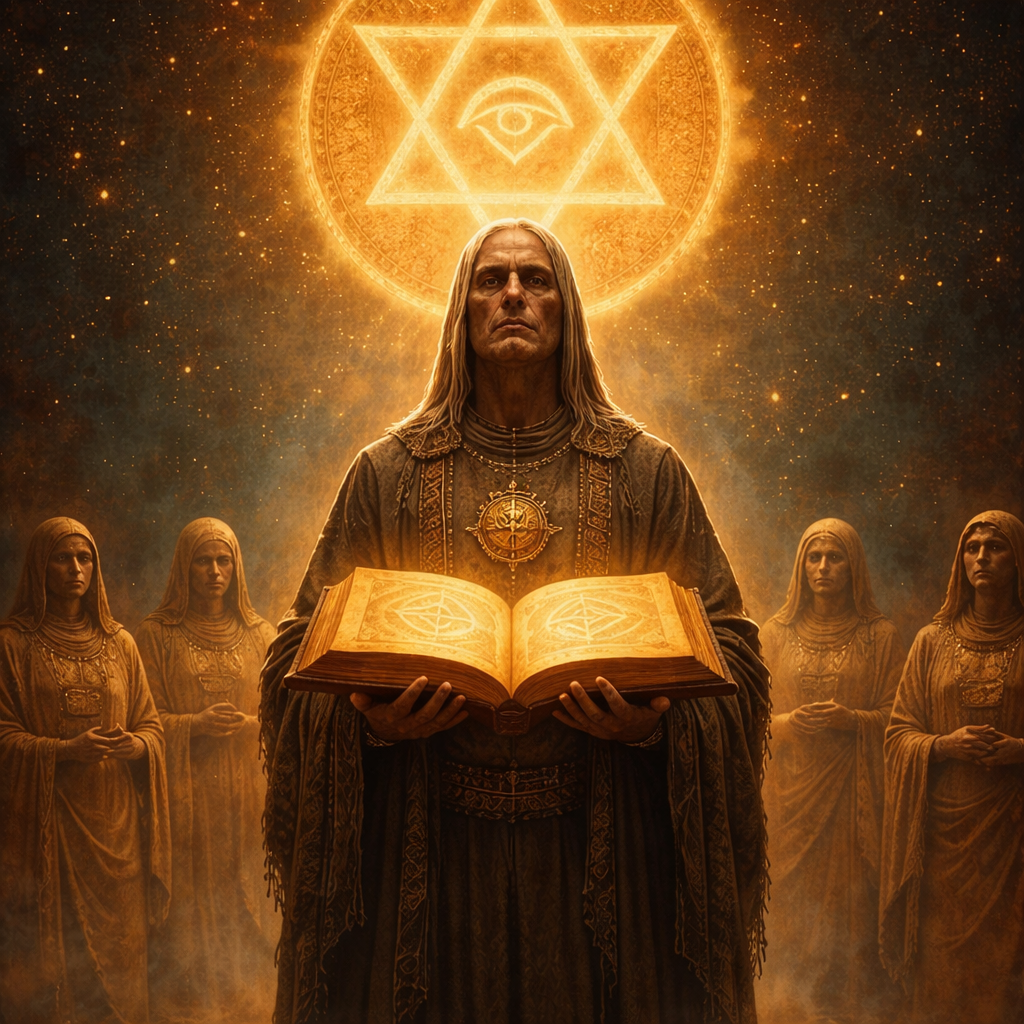

Michael D. Swartz's 'Scholastic Magic' is a revelation for anyone seeking to understand the practical application of esoteric knowledge in ancient Jewish thought. Swartz meticulously excavates the Heikhalot literature, presenting a compelling argument that magic and visionary ascent were not antithetical to scholasticism but rather its potent engine. He expertly details the practices surrounding the invocation of angels like Sar-Torah, revealing a sophisticated system of memory enhancement and knowledge acquisition deeply rooted in Jewish tradition. This book offers profound insights into the psychological and spiritual technologies employed by early mystics, challenging conventional notions of religious scholarship. It is an indispensable resource for students of Kabbalah, Jewish history, and the broader history of Western esotericism, providing a rare window into the disciplined pursuit of divine wisdom.
📝 Description
63
Michael D. Swartz's 'Scholastic Magic' examines how early Jewish mystics used magic to enhance memory and learning.
Published in 2004, Michael D. Swartz's 'Scholastic Magic' investigates the connection between intellectual pursuits and mystical practices in early Jewish traditions, specifically from the 5th to the 9th centuries CE. The book details how ascetics and rabbis employed imaginative and magical techniques, such as invoking angelic figures like Sar-Torah, to improve their memory and deepen their understanding of sacred texts. Swartz reconstructs the historical and intellectual environment of this period, showing that these esoteric practices were not isolated phenomena but served as practical tools for scholarly advancement.
The work highlights the belief that esoteric knowledge could act as a means of cognitive and spiritual development. It addresses the ways in which the mind was understood and how mystical engagement could lead to enhanced learning and personal transformation. 'Scholastic Magic' aims to illuminate the historical reality of spiritual scholarship and its intersection with imaginative practices.
This book fits within the study of early Jewish mysticism, a field that examines the development of esoteric traditions within Judaism from antiquity. It specifically focuses on a period where Kabbalistic ideas were beginning to form, influenced by earlier Merkavah mysticism. Swartz's work connects these mystical impulses to the practical needs of scholars, demonstrating how speculative thought and ritual practice were interwoven with the pursuit of knowledge. It offers insight into the techniques and beliefs of those who sought divine assistance for intellectual mastery.
💡 Why Read This Book?
Uncover the hidden mechanisms by which ancient Jewish mystics amplified their intellect and memory through ritual and vision. 'Scholastic Magic' reveals the surprising integration of arcane arts with scholastic discipline, offering a unique perspective on spiritual development and knowledge acquisition. Ideal for scholars, seekers of esoteric wisdom, and practitioners interested in the history of magical techniques for cognitive enhancement.
⭐ Reader Reviews
Honest opinions from readers who have explored this book.
❓ Frequently Asked Questions
What is the core argument of 'Scholastic Magic'?
The book argues that early Jewish mystics integrated magical practices, such as angel invocation, with scholasticism to enhance memory, learning, and spiritual insight, demonstrating a unique synergy between arcane arts and intellectual rigor.
Who was Sar-Torah?
Sar-Torah, meaning 'Prince of the Torah,' was a celestial being invoked by early Jewish mystics. It was believed to bestow extraordinary memory, learning abilities, and mastery of sacred texts upon those who successfully performed the rituals.
What historical period does the book cover?
The book primarily focuses on the period between the fifth and ninth centuries CE, a crucial era for the development and circulation of visionary and mystical literature within Judaism.
Is this book suitable for beginners in Jewish mysticism?
While dense with scholarly detail, 'Scholastic Magic' provides a foundational understanding for those new to Jewish mysticism by explaining complex concepts and historical contexts clearly. However, prior familiarity with Jewish history is beneficial.
What is the connection between magic and scholasticism presented in the book?
Swartz posits that magic served as a 'scholastic' tool, a means to achieve and solidify scholarly mastery. The imaginative and visionary elements were employed to deepen understanding and retain knowledge within a framework of rigorous intellectual pursuit.
🔮 Key Themes & Symbolism
The Angelic Mandate for Knowledge
This theme explores the profound belief that celestial beings, particularly Sar-Torah, served as direct conduits for divine knowledge and intellectual enhancement. It looks at the rituals and visionary practices employed by ascetics to commune with these entities, seeking not just spiritual enlightenment but also a formidable capacity for memory and scholarly achievement. The concept illustrates how the pursuit of wisdom was intertwined with a deep reverence for the supernatural, positing that true understanding could be divinely bestowed through carefully orchestrated encounters with the angelic realm, transforming the scholar into a vessel of sacred lore.
Imagination as an Esoteric Technology
The book elucidates how imagination transcended mere fancy, becoming a potent tool within the esoteric toolkit of early Jewish mystics. This theme examines the deliberate cultivation of vivid mental imagery and visionary experiences as a means to access hidden truths and spiritual realities. It highlights how these internal landscapes were not passive reflections but active forces, consciously manipulated to imprint knowledge, facilitate spiritual ascent, and achieve profound cognitive transformations. The power of visualization and imaginative projection is presented as a fundamental technique for unlocking the mind's latent potential and engaging with the divine.
The Scholastic Synthesis of the Sacred and the Learned
Here, the focus is on the remarkable fusion of rigorous intellectual discipline with mystical and magical practices. This theme unpacks how the pursuit of sacred knowledge was meticulously integrated into a scholastic framework, where memory, logic, and textual study were augmented by visionary experiences and ritualistic engagement. It reveals a tradition that valued both profound contemplation and active, even arcane, methods of knowledge acquisition, demonstrating that for these mystics, the pursuit of wisdom was a holistic endeavor that embraced the intellectual, the imaginative, and the divine in equal measure, forging a unique path to spiritual and intellectual mastery.
💬 Memorable Quotes
Direct passages from the work, attributed to the author.
“The Prince of Torah, a conduit for celestial erudition.”
— This highlights the central figure of Sar-Torah and its role as a direct source of divine wisdom and academic prowess for the mystics.
“Memory fortified by angelic whisperings.”
— Suggests that the enhanced memory was not achieved through mundane study alone, but through direct, supernatural intervention.
“Imagination, the forge of sacred understanding.”
— Emphasizes the active and transformative power of imagination in the pursuit of spiritual and intellectual truths.
“Where scholastic rigor met visionary flight.”
— Captures the core duality of the book: the integration of disciplined study with transcendent spiritual experiences.
“The arcane arts as keys to intellectual dominion.”
— Positions magic and esoteric practices as essential, powerful tools for achieving mastery in learning and spiritual insight.
🌙 Esoteric Significance
Tradition
This work is deeply rooted in the early forms of Jewish mysticism, particularly the Heikhalot tradition and its related mystical practices, often considered precursors to later Kabbalistic developments. It explores the practical application of these traditions, focusing on techniques for spiritual ascent, divine communion, and the acquisition of esoteric knowledge, placing it within the broader spectrum of Western esoteric thought.
Symbolism
Key symbols include the 'Prince of Torah' (Sar-Torah) as a representation of divine knowledge and mnemonic power, the 'Heikhalot' (palaces) as stages of spiritual ascent, and the invocation of angels as a symbolic act of bridging the material and divine realms. The entire system can be seen as symbolic of the mind's journey towards ultimate wisdom and divine consciousness.
Modern Relevance
In an age often characterized by superficial knowledge and information overload, 'Scholastic Magic' offers a profound model for deep learning and cognitive enhancement through disciplined, intentional practice. Its exploration of memory techniques, visionary states, and the integration of the spiritual with the intellectual appeals to contemporary interests in mindfulness, cognitive psychology, and holistic approaches to personal growth and wisdom acquisition.
👥 Who Should Read This Book
This book is an essential read for scholars of Jewish history, religious studies, and the history of esotericism, providing critical insights into a formative period of Jewish mysticism. Seekers of ancient wisdom and spiritual practitioners interested in the historical development of mystical techniques for knowledge enhancement will find invaluable perspectives. Beginners in Jewish mysticism will gain a foundational understanding of the interplay between scholasticism and visionary practices, while advanced students and practitioners will appreciate the detailed analysis of esoteric methodologies and their philosophical underpinnings.
📜 Historical Context
The period between the 5th and 9th centuries CE was a fertile ground for Jewish mystical development, characterized by the flourishing of visionary literature and esoteric traditions. Following the destruction of the Second Temple and the subsequent diaspora, there was a profound shift in Jewish religious expression, with a growing emphasis on internal spiritual experience and the exploration of divine realms. This era saw the codification and circulation of texts like the Heikhalot literature, which described ascents through heavenly palaces and encounters with angelic beings. The social and intellectual landscape was marked by a desire to preserve and deepen Jewish identity and knowledge in the face of external pressures. 'Scholastic Magic' situates itself within this dynamic milieu, exploring how the intellectual demands of rabbinic scholarship interacted with nascent mystical impulses, creating a unique synthesis where the pursuit of divine wisdom was both a scholarly and an intensely personal, often magical, undertaking.
📔 Journal Prompts
Reflect on a time when you felt a profound connection between intense study and a moment of intuitive understanding. How did your 'imagination' play a role?
Consider the concept of an 'angelic mandate' for knowledge. What does this imply about the source and nature of wisdom in your own life?
If you could invoke a celestial being to enhance a specific aspect of your learning or memory, what attribute would you seek and why?
Explore the tension and synergy between structured learning (scholasticism) and spontaneous insight (magic/vision). Where do you find this balance in your own pursuits?
How might the 'forge of sacred understanding' be ignited in contemporary life, beyond traditional mystical practices?
🗂️ Glossary
Heikhalot Rabbati
A significant text within early Jewish mysticism, often translated as 'Great Palaces,' detailing visionary ascents through celestial palaces and encounters with angelic beings and divine figures.
Ma'aseh Merkavah
Meaning 'Work of the Chariot,' this refers to a genre of Jewish mystical literature and practice focused on visionary ascents to the divine throne, inspired by Ezekiel's vision of the divine chariot.
Sar-Torah
An angelic figure, literally 'Prince of the Torah,' believed by early Jewish mystics to bestow extraordinary memory, learning abilities, and mastery of sacred texts upon those who invoked it.
Asceticism
A practice of rigorous self-discipline and abstinence from indulgence, often undertaken for religious or spiritual reasons, as a means to achieve spiritual purity and heightened awareness.
Mnemonic
Relating to or designed to assist the memory; a technique or device used to improve recollection of information.
This book appears in 1 collection
🔮 Readers Also Liked
Browse all →








More by Michael D. Swartz
All books →

From the “Kabbalah” Collection
View all →







More Free Kabbalah & Jewish Mysticism Books
View all →