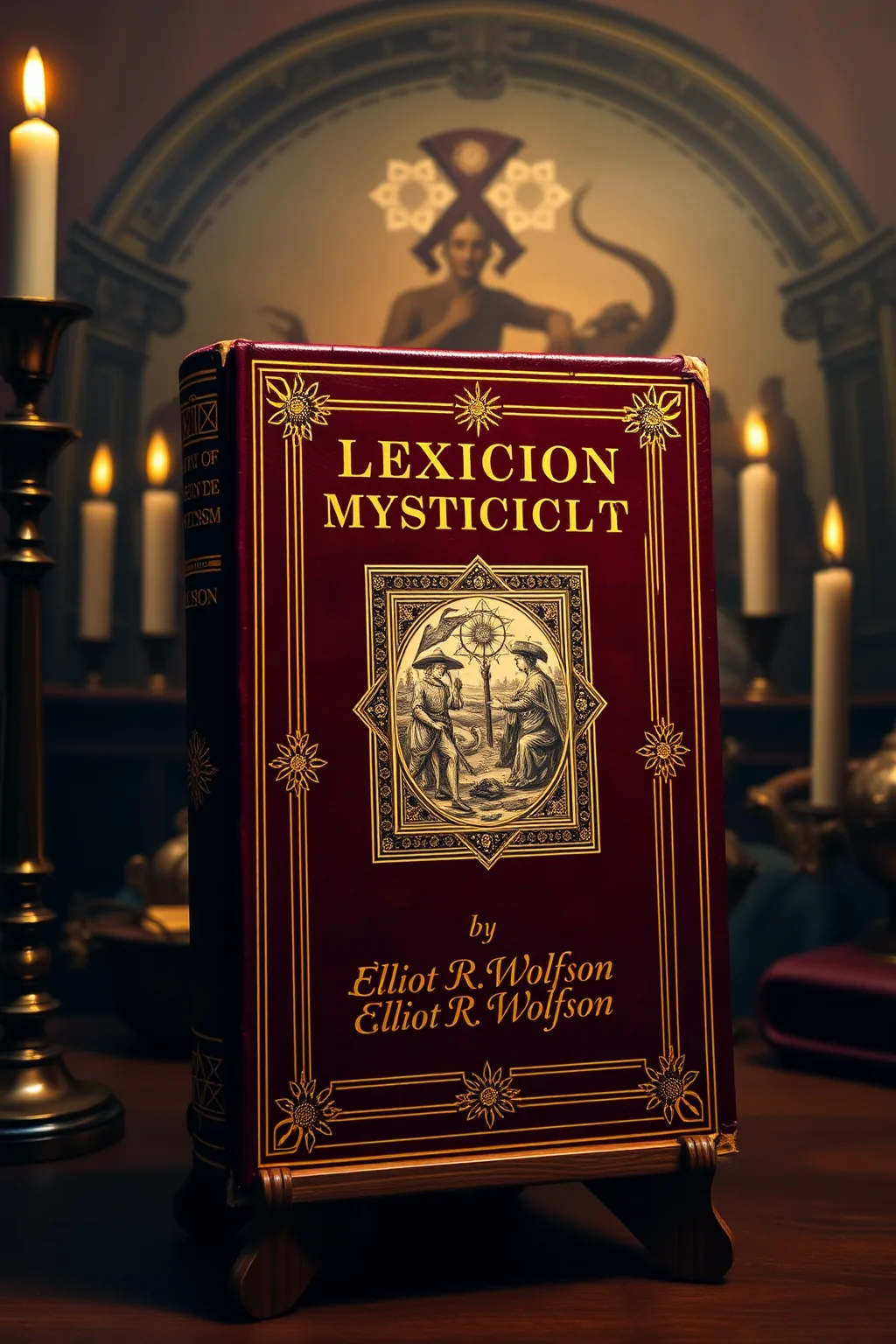
Lexicon of Jewish Mysticism (Arbeiten Zur Geschichte Des Antiken Judentums Und Des Urchristentums)
 61
61

Lexicon of Jewish Mysticism (Arbeiten Zur Geschichte Des Antiken Judentums Und Des Urchristentums)



Ophelia Vance (Mystical Literature Reviewer) — Elliot R. Wolfson's "Lexicon of Jewish Mysticism" is a monumental achievement, offering an authoritative and deeply insightful exploration of Kabbalistic terminology and concepts. Wolfson masterfully deciphers the esoteric language, revealing the profound philosophical and spiritual dimensions inherent in Jewish mystical texts. This work illuminates complex ideas with clarity and scholarly rigor, making it an essential resource for serious students of mysticism. Its comprehensive scope and nuanced explanations provide invaluable guidance for navigating the intricate world of Kabbalah, appealing to both seasoned scholars and dedicated seekers of hidden wisdom.
📝 Description
61
Elliot R. Wolfson published his 'Lexicon of Jewish Mysticism' to clarify Kabbalistic terminology.
This lexicon, published in 1996, provides detailed explanations of terms central to Jewish mysticism. Elliot R. Wolfson organizes the work alphabetically, defining concepts, figures, and texts significant to Kabbalistic thought.
The entries cover a wide range of subjects, from the nature of God and divine emanations (sefirot) to the interpretation of the Zohar and the practices of mystics. Wolfson draws on a broad spectrum of historical sources, illuminating the development and transmission of these esoteric ideas within Jewish tradition. The book aims to make complex mystical concepts accessible to those interested in the field.
This work engages with the historical and conceptual development of Kabbalah, a form of Jewish mysticism that emerged in the medieval period. Kabbalah's focus on the divine nature, creation, and the structure of the cosmos through symbolic interpretation and esoteric knowledge is the primary context. Wolfson's lexicon situates these specific terms and ideas within the broader history of Jewish thought and its mystical traditions, acknowledging influences and internal developments.
💡 Why Read This Book?
Unlock the arcane secrets of Kabbalah with this essential lexicon. If you are a seeker of spiritual wisdom, a scholar of comparative religion, or a practitioner of Jewish mysticism, this book offers unparalleled clarity. It demystifies complex concepts, revealing the profound symbolic language and philosophical depth that underpin these ancient traditions, enriching your understanding of the divine.
⭐ Reader Reviews
Honest opinions from readers who have explored this book.
❓ Frequently Asked Questions
What is the primary purpose of this lexicon?
The primary purpose is to provide a comprehensive and accessible guide to the key terms, concepts, and symbols within Jewish mysticism, particularly Kabbalah, making this profound tradition understandable to a wider audience.
Is this book suitable for beginners in Kabbalah?
Yes, while it is a scholarly work, Wolfson's clear explanations and structured approach make it an excellent starting point for individuals new to the study of Kabbalah, offering a solid foundation.
What are the main esoteric traditions covered?
The lexicon primarily focuses on Kabbalah, encompassing its various historical phases and key texts like the Zohar, as well as related Jewish mystical movements and thought.
How does this book enhance the understanding of Jewish mysticism?
It enhances understanding by providing precise definitions, contextual historical information, and explanations of symbolic meanings, thereby demystifying complex theological and cosmological ideas.
Can this lexicon be used for academic research?
Absolutely. Its scholarly depth, extensive cross-referencing, and detailed analysis make it an invaluable tool for academic research in religious studies, Jewish philosophy, and mysticism.
🔮 Key Themes & Symbolism
The Divine Emanations (Sefirot)
This lexicon meticulously unpacks the concept of the Sefirot, the ten divine emanations that form the core of Kabbalistic cosmology. Wolfson explains their intricate relationships, their symbolic representation in the Tree of Life, and their role in the divine creation and sustenance of the universe. Understanding the Sefirot is crucial for grasping the Kabbalistic view of God's immanence and transcendence, offering a blueprint for spiritual ascent and a map of the divine realms.
The Sacred Language and Gematria
Central to Jewish mysticism is the belief in the profound power and symbolic resonance of the Hebrew alphabet and its letters. This lexicon illuminates the esoteric significance of Hebrew as the primordial language of creation, detailing concepts like gematria (numerical value of letters), notarikon (acronyms), and temurah (letter permutation). These techniques are shown to be keys for unlocking hidden meanings within scripture and for understanding the divine interplay between word and reality.
The Soul's Ascent and Mystical Experience
The journey of the soul towards divine union is a paramount theme in Jewish mysticism. The lexicon explores the various stages of this ascent, the challenges faced by the mystic, and the practices employed to achieve ecstatic states or prophetic visions. It explores concepts of the soul's different faculties, the role of meditation and contemplative prayer, and the ultimate goal of devekut (cleaving to God), offering insights into the transformative power of spiritual practice.
💬 Memorable Quotes
Direct passages from the work, attributed to the author.
“The letters themselves are divine sparks, holding the secrets of creation.”
— This highlights the Kabbalistic belief in the inherent holiness and power of the Hebrew alphabet, suggesting each letter is a conduit for divine energy and a key to understanding cosmic truths.
“To know the Sefirot is to map the divine heart.”
— This emphasizes the central role of the ten Sefirot in Kabbalistic understanding, portraying them as the structure of God's being and the pathway for human connection to the divine.
“The Zohar whispers truths the intellect alone cannot grasp.”
— This points to the esoteric and intuitive nature of Kabbalistic wisdom, suggesting that texts like the Zohar reveal deeper, often non-rational, insights accessible through spiritual receptivity.
“Through contemplation, the soul mirrors the divine.”
— This underscores the practice of meditation and introspection in Jewish mysticism as a means to align the human spirit with the divine essence, fostering spiritual growth and connection.
“Every name holds a universe of meaning.”
— This reflects the Kabbalistic reverence for divine and mystical names, believing that their utterance or contemplation can unlock profound spiritual realities and connections.
🌙 Esoteric Significance
Tradition
This lexicon is firmly rooted in the esoteric tradition of Kabbalah, the principal system of Jewish mysticism. It explores the core doctrines of divine emanations (Sefirot), the symbolic interpretation of scripture, the mystical nature of Hebrew letters, and the ascent of the soul towards divine union. Wolfson explores the historical development and diverse expressions within Kabbalah, offering useful insights into its unique spiritual cosmology and practices.
Symbolism
The text is rich with the symbolic language of Kabbalah. Key symbols such as the Tree of Life, divine names, cosmic man, and the interplay of light and darkness are meticulously explained. Wolfson elucidates how these symbols are not merely decorative but function as potent conduits for understanding divine attributes, the structure of reality, and the pathways of spiritual transformation, revealing a profound symbolic grammar of the sacred.
Modern Relevance
In an era seeking deeper meaning and spiritual connection, the "Lexicon of Jewish Mysticism" offers timeless wisdom. Its exploration of consciousness, the nature of reality, and the human quest for transcendence resonates profoundly today. The Kabbalistic emphasis on interconnectedness, the power of intention, and the search for hidden truths provides valuable perspectives for personal growth, interfaith dialogue, and understanding diverse spiritual paths in the contemporary world.
👥 Who Should Read This Book
This lexicon is an invaluable resource for a broad spectrum of readers. **Beginners** seeking an accessible entry into the complexities of Jewish mysticism will find clear explanations and foundational concepts. **Scholars** of religious studies, Jewish philosophy, and comparative mysticism will appreciate the rigorous scholarship and comprehensive detail. **Spiritual seekers** yearning for deeper understanding of ancient esoteric traditions will discover useful insights into the divine and the human soul. **Practitioners** of Kabbalah or related contemplative practices will find it an indispensable guide for deepening their knowledge and practice.
📜 Historical Context
Emerging from the rich intellectual and spiritual range of medieval Judaism, Kabbalah represents a profound mystical response to the challenges and exiles faced by the Jewish people. Its development, particularly from the 12th century onwards in Provence and Spain, was influenced by Neoplatonic philosophy, Gnostic ideas, and a deep engagement with biblical and Talmudic texts. The creation of seminal works like the Zohar in the late 13th century marked a central moment, codifying and expanding upon earlier mystical traditions. The "Lexicon of Jewish Mysticism" situates these developments within their historical context, showing how Kabbalah evolved as a sophisticated system of thought aimed at understanding the nature of God, the creation, and the human soul's place within the cosmos, often serving as a source of solace and spiritual guidance.
📔 Journal Prompts
Reflect on a symbol from Jewish mysticism that appeals to you and why. How does it connect to your personal understanding of the divine or the cosmos?
Consider the concept of divine emanations (Sefirot). If you were to assign a personal quality or attribute to each Sefirah, what would they be and why?
Explore the idea of the 'sacred language' in mysticism. How might language itself be a tool for accessing deeper spiritual truths, beyond its literal meaning?
Journal about the soul's journey. What challenges do you perceive in the path of spiritual growth, and what inner resources can help overcome them?
How can the esoteric wisdom of Kabbalah inform your daily life and your understanding of the world around you, even if you are not a practitioner?
🗂️ Glossary
Sefirot
The ten divine emanations or attributes through which God reveals Himself and creates the universe in Kabbalistic cosmology. They are often visualized as a Tree of Life.
Ein Sof
The Kabbalistic term for God as the 'Infinite' or 'Without End,' representing the unknowable, transcendent aspect of the divine before any manifestation.
Zohar
The foundational work of Kabbalah, a mystical commentary on the Torah, composed primarily in Aramaic, believed by many to have been written by Rabbi Shimon bar Yochai.
Devekut
A central concept in Jewish mysticism, referring to the intense spiritual cleaving or adhesion to God, often achieved through prayer, meditation, and contemplation.
Gematria
A method of interpreting biblical texts by assigning numerical values to Hebrew letters and finding hidden meanings in the numerical equivalences of words and phrases.
This book appears in 1 collection
🔮 Readers Also Liked
Browse all →









More by Elliot R. Wolfson
All books →



From the “Kabbalah” Collection
View all →








More Free Kabbalah & Jewish Mysticism Books
View all →![[Zohar]](/img/thumb/zohar-jerry-winston.webp)