Sacred Thread
 76
76

Sacred Thread
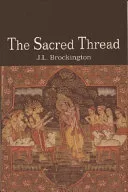
Brockington's The Sacred Thread offers a remarkably clear exposition of Hindu thought, a considerable achievement given the subject's vastness. Its strength lies in its structured approach, systematically detailing the evolution of concepts from Vedic origins through to contemporary manifestations. The book excels at demonstrating Hinduism's inherent flexibility, showing how it accommodates new dilemmas and insights without necessarily abandoning tradition. A particular passage discussing the differing interpretations of *karma* across various philosophical schools—from the early Upanishads to later Vedanta—illuminates this dynamic beautifully. If there's a limitation, it's that the textbook format, while thorough, can sometimes feel less engaging for the absolute beginner seeking a more narrative-driven introduction. Nonetheless, it remains an invaluable survey for serious students.
📝 Description
76
John Brockington's The Sacred Thread, published March 31, 2020, examines Hinduism's adaptability through ancient and modern frameworks.
Published in 2020, John Brockington's The Sacred Thread introduces readers to the diverse nature of Hinduism. The book moves past single definitions, showing how the tradition incorporates contemporary issues within its historical linguistic structures and adapts modern viewpoints to existing beliefs. Brockington's work seeks to give readers a basic understanding of Hinduism's capacity for change and its intellectual scope.
This volume suits students and scholars of comparative religion, and anyone wanting a thorough yet approachable overview of Hindu thought and practice. It appeals to those who value a text that respects the historical growth of religious ideas while also recognizing their continued development. Readers interested in how religious systems confront societal change will find this book particularly useful. The book emerged in an academic context where Hindu studies were established but often divided. Brockington aimed to combine different scholarly views, showing Hinduism as a living tradition rather than a fixed entity. Its release coincided with discussions on post-colonial views of South Asian religions and globalization's effect on established beliefs.
The Sacred Thread situates itself within the study of Hindu traditions, a field rich with esoteric lineages and philosophical schools. While not explicitly a text on Western esotericism, its examination of concepts like Dharma, Karma, and Moksha touches upon core principles found in various mystical traditions globally. By detailing interpretations across different philosophical schools and historical periods, Brockington highlights the internal diversity and adaptive nature of Hindu thought, which has historically influenced and been influenced by various spiritual practices and philosophies, including those considered esoteric.
💡 Why Read This Book?
• Gain a concrete understanding of how Hindu tradition adapts, illustrated by Brockington's analysis of contemporary dilemmas presented in traditional language, a perspective unique to the 2020 publication. • Grasp the historical evolution of key concepts like Dharma and Karma, as detailed in the text's examination of foundational scriptures like the Vedas and Upanishads. • Appreciate Hinduism's internal diversity through Brockington's structured presentation, offering insights into theological debates and devotional practices not easily found elsewhere.
⭐ Reader Reviews
Honest opinions from readers who have explored this book.
❓ Frequently Asked Questions
When was John Brockington's 'The Sacred Thread' first published?
The Sacred Thread by John Brockington was first published on March 31, 2020, establishing it as a relatively recent comprehensive introduction to Hinduism.
What is the primary focus of 'The Sacred Thread' textbook?
The book focuses on presenting Hinduism not as a monolithic entity, but as a tradition that incorporates new dilemmas within its traditional language and accommodates fresh insights to established viewpoints.
Is 'The Sacred Thread' suitable for beginners in religious studies?
Yes, it is consistently described as an invaluable introduction, making it suitable for beginners and students of comparative religion seeking a foundational understanding.
Does the book discuss core Hindu philosophical concepts?
Yes, it covers fundamental concepts such as Dharma, Karma, and Moksha, exploring their various interpretations and historical development within the Hindu tradition.
How does Brockington portray Hinduism's relationship with contemporary issues?
Brockington illustrates how Hinduism addresses contemporary dilemmas by framing them within its established linguistic and philosophical structures, showcasing its inherent adaptability.
What distinguishes 'The Sacred Thread' from other introductions to Hinduism?
Its distinction lies in its comprehensive textbook approach that emphasizes Hinduism's capacity for intellectual evolution and integration of modern insights into ancient frameworks, as first presented in 2020.
🔮 Key Themes & Symbolism
Dharma and Its Evolution
The work meticulously traces the concept of Dharma, a central tenet in Hindu philosophy, from its Vedic origins to its many-sided interpretations in later texts and practices. Brockington highlights how Dharma, often translated as duty, righteousness, or cosmic law, adapts to address new ethical quandaries and societal structures. This exploration demonstrates Hinduism's sophisticated capacity to maintain continuity while engaging with changing historical contexts, offering a nuanced view of religious obligation and social order that has evolved significantly since the earliest Vedic hymns.
Karma and Rebirth
Central to Hindu cosmology, the doctrine of Karma and its corollary, rebirth (samsara), is examined in detail. Brockington elucidates how this principle of cause and effect, governing actions and their consequences across lifetimes, functions as a framework for understanding spiritual progression and the nature of existence. The text explores variations in the understanding of Karma, from its role in ritualistic contexts to its philosophical implications in schools like Vedanta, providing readers with a foundational grasp of this pervasive concept.
Moksha: Liberation and Transcendence
The ultimate goal in many Hindu traditions, Moksha, or liberation from the cycle of birth and death, is presented as a complex aspiration. Brockington outlines the diverse paths and philosophical understandings of achieving this state, encompassing knowledge (jnana), devotion (bhakti), and action (karma yoga). The book illustrates how the concept of liberation transcends simple renunciation, often involving a profound transformation of consciousness and understanding of the self, linking spiritual aims to lived experience.
The Fluidity of Hindu Practice
A significant theme is the inherent flexibility and diversity within Hinduism. Brockington emphasizes that Hinduism is not a singular, monolithic religion but a constellation of traditions, philosophies, and practices. The text showcases how different schools of thought and regional variations contribute to its wide range, demonstrating an ongoing dialogue between tradition and innovation that has characterized its development for millennia.
💬 Memorable Quotes
Direct passages from the work, attributed to the author.
“Hinduism encompasses new dilemmas in traditional language.”
— This highlights the adaptive nature of Hindu thought, showing its capacity to address modern ethical and philosophical challenges using its ancient conceptual vocabulary and frameworks.
“The Sacred Thread has consistently proved an invaluable introduction to Hinduism.”
— This statement underscores the book's enduring utility and effectiveness as a foundational text for students and newcomers to the study of Hindu traditions since its initial publication.
“Accommodates fresh insights to established viewpoints.”
— This suggests that Hindu traditions are not static but possess mechanisms for incorporating new understandings and perspectives without necessarily invalidating older ones.
“Not just one particular approach to life.”
— This emphasizes the pluralistic nature of Hinduism, acknowledging its vast array of philosophical schools, devotional practices, and lifestyle interpretations that coexist within the broader tradition.
“Shows how Hinduism encompasses new dilemmas in traditional language.”
— This points to the sophisticated way Hindu thinkers have historically engaged with evolving societal issues, framing contemporary problems within the established vocabulary of their religious and philosophical heritage.
🌙 Esoteric Significance
Tradition
While *The Sacred Thread* is primarily an academic textbook on Hinduism, its detailed exploration of concepts like Karma, Dharma, and Moksha touches upon principles fundamental to various esoteric traditions that draw from or interpret Indic philosophies. It doesn't strictly adhere to a single lineage like Hermeticism or Gnosticism but provides the foundational knowledge base from which many Western esotericists derive their understanding of Eastern spiritual concepts, particularly those found in Theosophy and later New Age movements.
Symbolism
The text implicitly engages with strong symbolism by explaining core concepts. For instance, the 'sacred thread' itself, often referring to the *yajnopavita* or sacred initiation cord worn by men in certain Hindu traditions, symbolizes spiritual initiation, duty, and connection to lineage. Similarly, the cyclical nature of *samsara* (rebirth) is a potent symbolic representation of existence as a continuous process of transformation and learning, a motif echoed in various mystical cosmologies seeking understanding beyond linear time.
Modern Relevance
Contemporary thinkers and practitioners interested in mind-body practices, yoga philosophy, and contemplative traditions often find value in Brockington's clear exposition of Hindu concepts. Schools of thought focusing on embodied spirituality and the integration of ancient wisdom into modern life, such as certain branches of modern yoga studies and mindfulness, can draw upon the foundational understanding of Dharma and Karma presented in the book to inform their practices and theoretical frameworks.
👥 Who Should Read This Book
• Students of comparative religion and theology: Gain a structured, academic overview of Hinduism's core tenets, historical development, and philosophical diversity, essential for academic coursework. • Individuals exploring Eastern philosophies: Benefit from a clear explanation of concepts like Dharma, Karma, and Moksha, providing a solid foundation before exploring more specialized texts. • Scholars of cultural history: Understand how Hindu traditions have adapted and responded to contemporary challenges, offering insights into the dynamic interplay between religion and society since the early Vedic period.
📜 Historical Context
Published in 2020, John Brockington's *The Sacred Thread* entered a scholarly field well-versed in the study of Hinduism, yet Brockington aimed to synthesize its complexities into a cohesive textbook. The late 20th and early 21st centuries saw increased academic focus on post-colonial interpretations and the globalization of religious studies, contexts in which Brockington's emphasis on Hinduism's adaptability proved timely. While the book does not appear to have faced significant censorship or garnered specific major awards, its publication date places it within a period where comparative religion texts increasingly sought to balance historical rigor with an understanding of living traditions. It offered a counterpoint to more sectarian or overly simplified introductions, providing a nuanced overview for students engaging with the subject during a time of heightened global interconnectedness and diverse scholarly perspectives on South Asian religions.
📔 Journal Prompts
Reflect on the concept of Dharma as presented in the text, considering its implications for personal responsibility.
Analyze the various interpretations of Karma discussed by Brockington and their potential impact on worldview.
Consider the goal of Moksha in relation to contemporary aspirations for fulfillment.
Examine how the 'sacred thread' metaphor reflects Hinduism's capacity for adaptation.
Explore how the book's depiction of Hinduism's pluralism challenges monolithic views of religion.
🗂️ Glossary
Dharma
A fundamental concept in Hinduism, often translated as duty, righteousness, law, or cosmic order. It encompasses one's social responsibilities, ethical conduct, and the underlying principles governing the universe.
Karma
The principle of cause and effect, where actions (karma) in this life and previous lives determine future consequences and rebirths. It is a central doctrine explaining the cycle of existence (samsara).
Moksha
Liberation or release from the cycle of birth, death, and rebirth (samsara). It represents the ultimate spiritual goal in many Hindu traditions, achieved through various paths like knowledge, devotion, or action.
Vedas
The oldest and most authoritative scriptures in Hinduism, considered to be divinely revealed. They contain hymns, rituals, philosophical insights, and form the foundation of much subsequent Hindu thought.
Upanishads
Later Vedic texts that form the philosophical core of Hinduism. They explore concepts like Brahman (ultimate reality), Atman (the self), and the relationship between the individual soul and the divine.
Samsara
The continuous cycle of birth, death, and rebirth, driven by karma. It is often seen as a state of suffering from which liberation (Moksha) is sought.
Bhakti
Devotion or love towards a deity. Bhakti yoga is a path to liberation emphasizing passionate adoration and surrender to God.











![The Byrhtferth's Manuscript (MS 17) † Saint John’s College † Oxford † [1111]](/img/thumb/the-byrhtferth-s-manuscript-ms-17-saint-john-s-college-oxford-1111-the-monk-byrhtferth.webp)