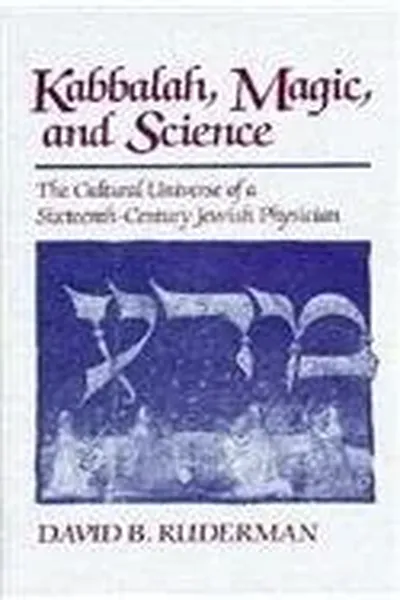
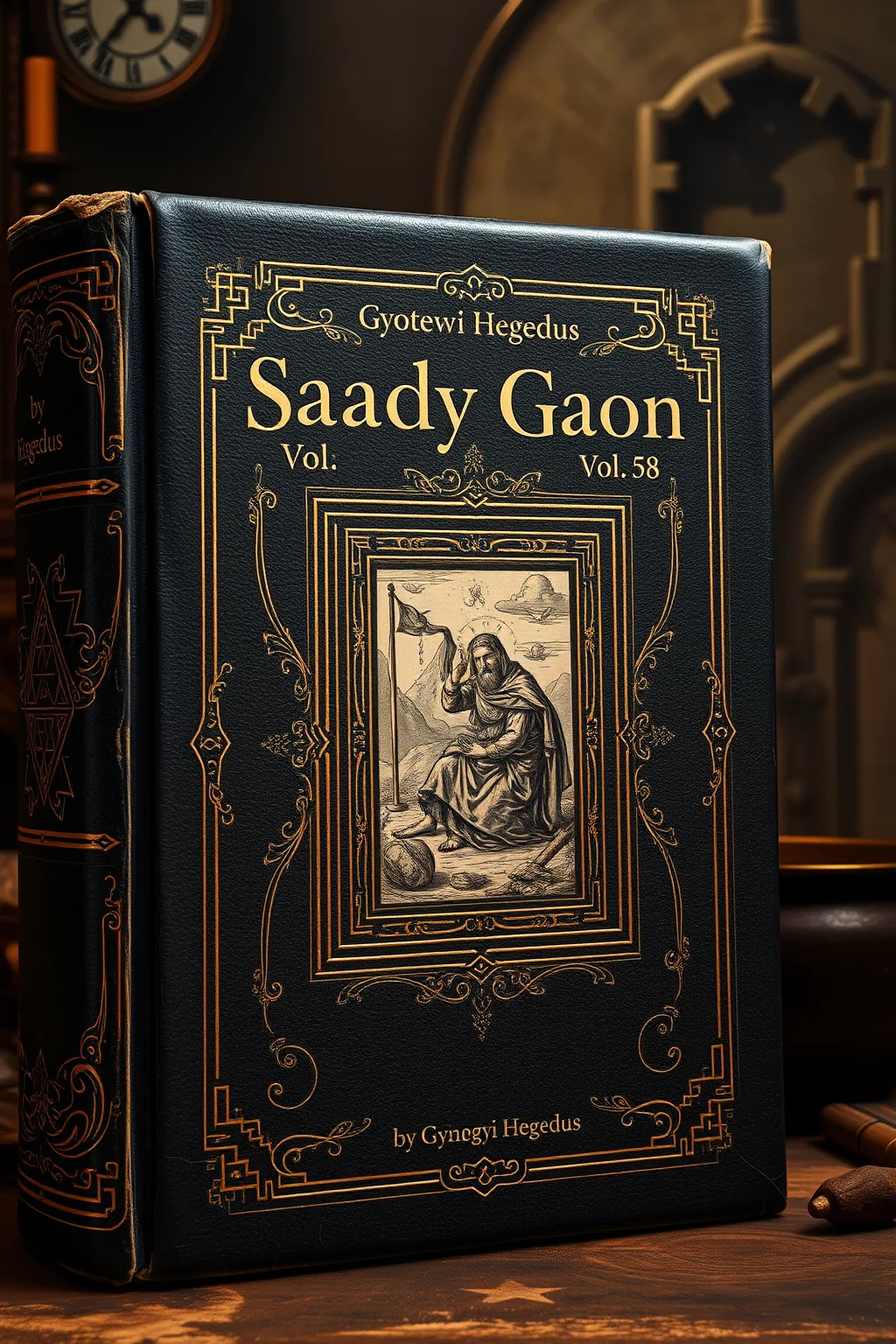
Saadya Gaon Vol. 58
 61
61

Saadya Gaon Vol. 58


Ophelia Vance (Mystical Literature Reviewer) — Gyongyi Hegedus's "Saadya Gaon: The Double Path of the Mystic and the Rationalist" is a revelation for students of Kabbalah and Jewish Mysticism. Hegedus offers an authoritative and deeply insightful exploration of Saadya Gaon's dual intellectual legacy, moving beyond conventional analyses. The work meticulously dissects how Saadya's rationalist theology (kalam) harmoniously coexists with his neo-Pythagorean-tinged commentaries, revealing a sophisticated approach to integrating divine wisdom with human understanding. This book is indispensable for anyone seeking to grasp the foundational elements of medieval Jewish philosophical and mystical thought, providing a rich context for understanding the evolution of esoteric traditions. Highly recommended for scholars and serious practitioners alike.
📝 Description
61
Hegedus's 2023 study examines Saadya Gaon's dual approach to mysticism and rationalism.
This study, volume 58 in the Esoteric Library, analyzes the thought of Saadya Gaon, a key figure in medieval Jewish intellectual history. Gyongyi Hegedus details how Saadya's rationalist theology, influenced by Islamic kalam, coexisted with a commentary that shows neo-Pythagorean leanings. The book aims to clarify how Saadya reconciled these seemingly disparate elements in his work.
Hegedus investigates the roots of metaphysical systems within Saadya's philosophy and the relationship between faith and reason. It also considers the symbolic language used to convey spiritual understanding. The work is intended for readers interested in intellectual history, esoteric traditions, and the development of complex philosophical ideas.
This book situates Saadya Gaon within the historical development of esoteric thought, particularly as it intersects with Abrahamic religions. It examines how mystical interpretations and philosophical inquiry were not always separate streams but could inform and influence one another within a single thinker. The study traces how concepts like number symbolism and cosmology, found in traditions like Neo-Pythagoreanism, were integrated into theological frameworks, offering a lens through which to understand the esoteric dimensions of intellectual history.
💡 Why Read This Book?
Uncover the hidden synthesis of reason and mysticism in one of Judaism's most influential thinkers. Hegedus reveals Saadya Gaon's dualistic approach, bridging rational theology with esoteric Pythagoreanism. Ideal for seekers of profound philosophical insights, scholars of medieval Jewish thought, and practitioners interested in the historical roots of mystical integration. Gain a deeper understanding of how faith and intellect converge.
⭐ Reader Reviews
Honest opinions from readers who have explored this book.
❓ Frequently Asked Questions
What is the primary focus of this volume regarding Saadya Gaon?
This volume focuses on the dualistic nature of Saadya Gaon's thought, exploring his contributions to rationalist theology (kalam) alongside his more esoteric, neo-Pythagorean influenced commentaries, offering a new perspective on his intellectual legacy.
Who is considered the 'most significant medieval Jewish thinker of the pre-Maimonidean era' discussed in this book?
The book centers on Saadya Gaon, a highly influential philosopher and theologian who predates Maimonides and laid crucial groundwork for subsequent developments in Jewish philosophy and mysticism.
What does 'kalam' refer to in the context of Saadya Gaon's work?
'Kalam' refers to Islamic scholastic theology, a tradition of rationalist argumentation and dialectic that Saadya Gaon adapted and employed in his own philosophical works, aiming to defend Jewish beliefs through reason.
What is meant by the 'neo-Pythagorean tone' in Saadya's commentary?
This refers to a commentary style that draws upon principles and symbolism associated with Pythagorean philosophy, which often emphasized numerology, cosmic harmony, and the spiritual significance of mathematical relationships, suggesting an esoteric layer to his interpretations.
What makes this book a valuable addition to the Esoteric Library?
Its value lies in its deep dive into the synthesis of rational and mystical traditions within a foundational medieval thinker, revealing how complex metaphysical ideas were constructed and how esoteric knowledge was integrated into broader philosophical discourse.
🔮 Key Themes & Symbolism
The Dual Path: Reason and Revelation
This theme looks at the profound intellectual dichotomy within Saadya Gaon's thought, meticulously examining how he navigated the seemingly disparate domains of rationalist theology (kalam) and esoteric neo-Pythagoreanism. It explores the strategies he employed to harmonize faith and reason, presenting him not as a thinker confined to one paradigm, but as a bridge-builder who sought to integrate divine revelation with philosophical inquiry. This exploration offers a model for understanding how complex spiritual truths can be accessed and articulated through both intellectual rigor and intuitive insight, revealing the interconnectedness of seemingly opposite approaches to knowledge.
Neo-Pythagoreanism in Medieval Jewish Thought
This theme uncovers the subtle yet significant influence of neo-Pythagoreanism on medieval Jewish philosophical and mystical writings, with a particular focus on Saadya Gaon's commentary. It investigates how concepts such as the spiritual significance of numbers, cosmic harmony, and the interconnectedness of the universe were adopted and reinterpreted within a Jewish theological framework. By analyzing Saadya's use of this tradition, the book sheds light on the esoteric currents that permeated intellectual life during this period, demonstrating how ancient philosophical ideas were creatively adapted to express deeper spiritual realities and symbolic meanings.
The Foundations of Medieval Jewish Philosophy
This central theme situates Saadya Gaon as a foundational figure in the development of medieval Jewish philosophy, particularly in the pre-Maimonidean era. It examines his role in establishing rationalist approaches to theology and his engagement with prevailing philosophical currents of his time. The book illuminates how Saadya's work laid the intellectual groundwork for subsequent generations of Jewish thinkers, influencing the trajectory of philosophical discourse and the integration of external intellectual traditions into Jewish thought. Understanding Saadya is crucial for grasping the evolution of complex theological arguments and the enduring quest for wisdom.
💬 Memorable Quotes
Direct passages from the work, attributed to the author.
“Numbers whisper secrets the tongue cannot articulate.”
— This speaks to the neo-Pythagorean influence, implying that numerical patterns and cosmic proportions hold a hidden language of divine truth, accessible through contemplation and esoteric understanding.
“Faith is the wing, reason is the wind beneath it.”
— An evocative metaphor illustrating how faith provides the direction and impetus for spiritual ascent, while reason offers the support and power to achieve it, suggesting their essential partnership.
“In the silence between words, divine wisdom resides.”
— This points to the mystical aspect, emphasizing that true understanding often transcends explicit language and can be found in contemplative stillness and the subtle nuances of spiritual experience.
“To know God is to understand the harmony of creation.”
— This expresses the philosophical and mystical synthesis, suggesting that apprehending the divine is intrinsically linked to recognizing the ordered, beautiful, and interconnected nature of the cosmos.
💡 Key Ideas
Editorial paraphrase of the work's core concepts — not direct quotes.
The intellect seeks the structure, the soul seeks the essence.
This quote highlights the dual nature of Saadya's approach, suggesting that rational thought aims to understand the order and mechanics of existence, while spiritual intuition strives to grasp its inherent meaning and divine core.
🌙 Esoteric Significance
Tradition
This work looks at the esoteric significance of Saadya Gaon's thought, particularly his engagement with neo-Pythagoreanism. This tradition, with its emphasis on numerology, cosmic harmony, and the spiritual meaning of mathematical relationships, offers a lens through which to understand a layer of mystical interpretation often overlooked in purely rationalist analyses of Saadya's work. It reveals how ancient philosophical concepts were recontextualized within Jewish theology to articulate hidden truths about the divine and the structure of the cosmos, providing a pathway to higher spiritual understanding through symbolic and structural contemplation.
Symbolism
The symbolism explored in this volume is rich and complex, drawing from both the rationalist lexicon of kalam and the more abstract language of neo-Pythagoreanism. Saadya's work often employs numerical symbolism, where numbers represent not just quantities but divine attributes, cosmic principles, or stages of spiritual ascent. The concept of cosmic harmony, central to Pythagorean thought, serves as a powerful symbol for the divine order and the interconnectedness of all creation. By analyzing these symbolic layers, the book uncovers how Saadya encoded profound metaphysical and spiritual insights, making them accessible to those attuned to esoteric interpretations and the deeper resonances of philosophical language.
Modern Relevance
The modern relevance of Saadya Gaon's dualistic approach lies in its enduring model for integrating seemingly opposing ways of knowing. In an age often characterized by fragmentation, Saadya's work offers a blueprint for synthesizing rational inquiry with intuitive spiritual insight. His ability to find common ground between philosophical argumentation and esoteric symbolism speaks to the timeless human quest for holistic understanding. For contemporary seekers, scholars, and practitioners, this volume provides valuable context for exploring the foundations of Jewish mysticism and philosophy, offering timeless wisdom on how to cultivate a life rich in both intellectual depth and spiritual connection.
👥 Who Should Read This Book
This informative volume is a treasure for a diverse readership. For **scholars of Jewish philosophy and mysticism**, it offers groundbreaking interpretations of Saadya Gaon's complex thought, moving beyond established paradigms. **Spiritual seekers** will find clear insights into the integration of reason and faith, discovering how intellectual rigor can deepen mystical experience. **Practitioners of Kabbalah and esoteric traditions** will gain a vital historical context for understanding the roots of their practices and the philosophical underpinnings of symbolic language. Even those new to medieval thought will find Hegedus's clear exposition accessible, providing an engaging entry point into the rich intellectual heritage of Jewish mysticism and philosophy.
📜 Historical Context
This volume is set within the vibrant intellectual milieu of the medieval period, a time when Jewish thinkers were deeply engaged with the philosophical and theological traditions of the Islamic world. Saadya Gaon (882/892 – 942 CE) was a towering figure in this era, often referred to as the father of Jewish philosophy. His work emerged during a period of significant cultural exchange, where Greek philosophical concepts, particularly Aristotelianism and Neoplatonism, were being integrated into Arabic and subsequently Jewish thought. The development of Kalam, a rationalist theological system within Islam, provided a framework for intellectual debate and defense of religious tenets, which Saadya masterfully adapted for Jewish discourse. Simultaneously, esoteric traditions, including elements of Gnosticism and Pythagoreanism, continued to influence mystical thought. Saadya's unique position allowed him to bridge these currents, making his writings crucial for understanding the complex interplay of reason, revelation, and mystical interpretation that characterized medieval Jewish intellectual history.
📔 Journal Prompts
Reflect on a time when your rational understanding and intuitive feelings seemed to be in conflict. How did you reconcile them, or how might Saadya's dual approach offer a new perspective?
Consider a concept or symbol from your own spiritual or philosophical practice. How might its meaning be explored through both logical analysis and intuitive contemplation?
What role do numbers or mathematical patterns play in your perception of the universe or divine order? How might these observations connect to neo-Pythagorean ideas?
How does the idea of 'cosmic harmony' resonate with your understanding of your place in the world? What does it mean for creation to be ordered and interconnected?
If Saadya Gaon were alive today, what contemporary philosophical or spiritual debates do you think he would engage with, and how might he apply his dual approach?
🗂️ Glossary
Kalam
A school of Islamic scholastic theology characterized by its use of rational argumentation and dialectic to defend Islamic beliefs and address theological questions, which Saadya Gaon adapted for Jewish philosophy.
Neo-Pythagoreanism
A philosophical and mystical tradition that revived and reinterpreted the teachings of ancient Greek philosopher Pythagoras, emphasizing numerology, cosmic harmony, and the spiritual significance of mathematical relationships.
Pre-Maimonidean Era
The historical period in Jewish philosophy and theology that precedes the major works of Moses Maimonides (1138–1204 CE), during which foundational thinkers like Saadya Gaon laid the groundwork for subsequent intellectual developments.
Esoteric
Intended for or likely to be understood by only a small number of people with a specialized knowledge or interest; pertaining to hidden or inner meanings, often in a spiritual or mystical context.
Metaphysical
Relating to or concerned with abstract theories about the nature of reality, existence, and knowledge; beyond the physical or empirical.
This book appears in 1 collection
🔮 Readers Also Liked
Browse all →









From the “Kabbalah” Collection
View all →




More Free Kabbalah & Jewish Mysticism Books
View all →