The influence of Jewish mysticism on Jewish contemporary artists
 61
61

The influence of Jewish mysticism on Jewish contemporary artists


Alaric Kestrel, Metaphysical Studies Reviewer: Susan Kriegel Leshnoff's work is a profound revelation, illuminating the often-unseen conduits between the esoteric traditions of Kabbalah and the dynamic landscape of contemporary Jewish art. Leshnoff skillfully deciphers the symbolic lexicon embedded within artworks, revealing how artists engage with primal forces and divine emanations. This text offers crucial insights for scholars of mysticism and art, as well as practitioners seeking to understand the living, breathing nature of ancient wisdom. It is a vital contribution to the dialogue between spirituality and creative expression, urging readers to perceive the mystical dimension in art with newfound clarity and depth.
📝 Description
61
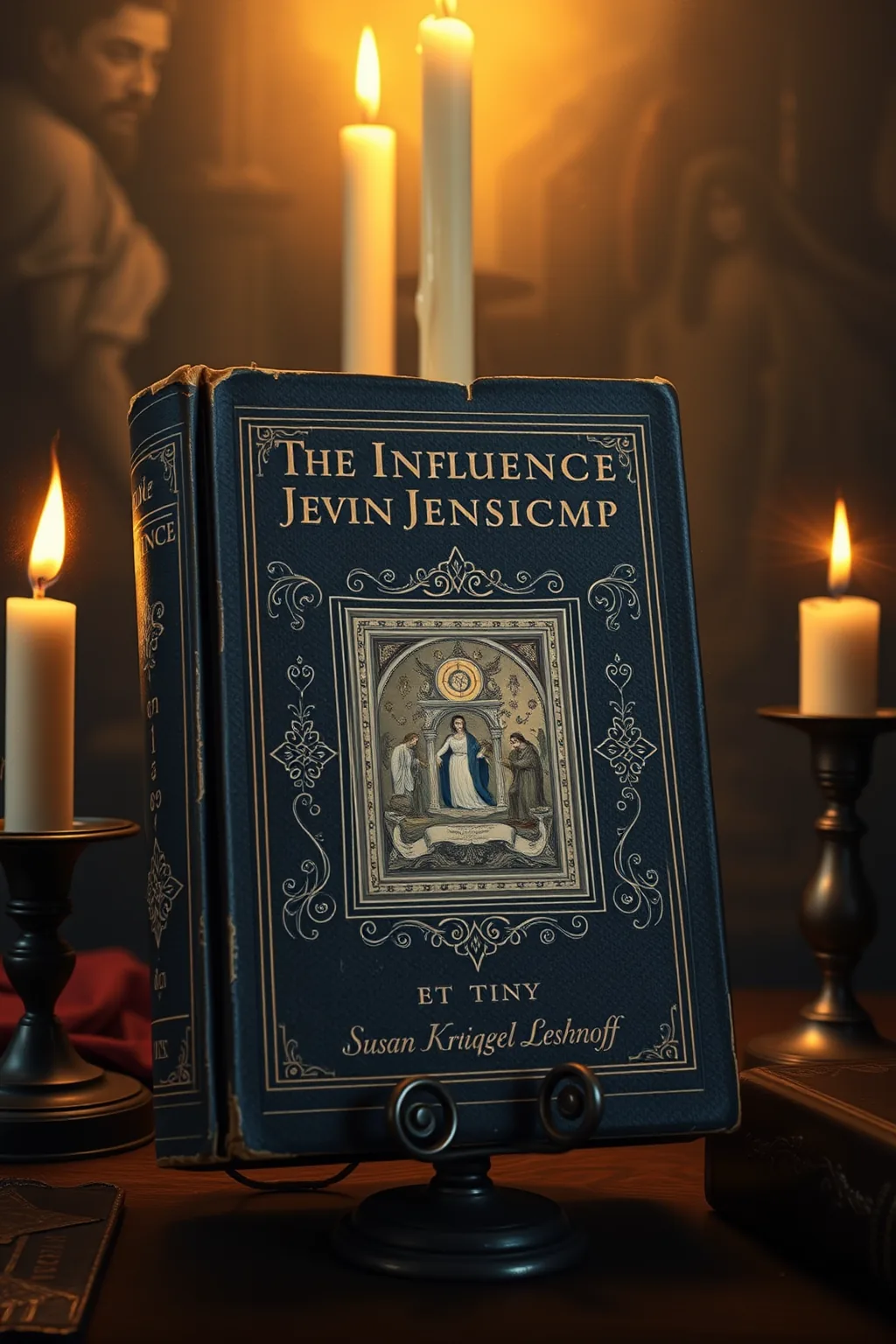
Susan Kriegel Leshnoff's 2023 book connects Jewish mysticism to contemporary Jewish artists' work.
This book examines how Jewish mystical concepts inform the art of contemporary Jewish creators. Leshnoff identifies the presence of ideas such as the Ein Sof, the Sefirot, and the divine spark within the visual language of modern artists. She shows how these artistic expressions translate esoteric thought into tangible forms. The work goes beyond standard art historical analysis to consider the spiritual dimensions of creative output. It details how artists, sometimes without explicit intent, draw on ancient symbolic frameworks. These frameworks help them convey the ineffable, the divine in everyday life, and the pursuit of universal harmony. The book aims to illuminate the spiritual origins of art and the lasting impact of mystical ideas on our contemporary era. It invites readers to reconsider the connections between art, Judaism, and mystical traditions.
This study is situated within the study of Jewish esotericism, specifically Kabbalah. It traces the lineage of mystical thought from its historical roots to its modern manifestations in artistic practice. The book treats Kabbalistic cosmology and theology not just as historical doctrines but as active sources of inspiration for contemporary creative work. It highlights how abstract spiritual concepts are given form and meaning through artistic mediums, demonstrating the ongoing vitality of these traditions.
💡 Why Read This Book?
Uncover the secret language of Jewish mysticism woven into contemporary art. Discover how artists channel ancient wisdom and divine symbols into their creations. Ideal for seekers of spiritual meaning, art enthusiasts, and scholars of Kabbalah, this book offers a unique lens to explore the profound connection between the sacred and the secular, revealing hidden layers of meaning in the world around us.
⭐ Reader Reviews
Honest opinions from readers who have explored this book.
❓ Frequently Asked Questions
What is the primary focus of this book?
The book explores the profound influence of Jewish mysticism, particularly Kabbalah, on the thematic and symbolic content of contemporary Jewish artists' works, revealing hidden spiritual dimensions.
Who is Susan Kriegel Leshnoff?
Susan Kriegel Leshnoff is an accomplished scholar and author specializing in the intersection of Jewish mysticism and art history, bringing deep insight and academic rigor to her explorations.
Is this book suitable for beginners in Kabbalah?
While it delves into complex concepts, the author's clear prose and insightful analysis make it accessible, offering a unique entry point for those new to Kabbalistic thought through the lens of art.
What kind of contemporary artists are discussed?
The book features a diverse range of contemporary Jewish artists whose work, consciously or unconsciously, engages with mystical themes, symbols, and philosophical underpinnings of Jewish tradition.
Can I find this book available to read online?
As a curated collection, Esoteric Library offers access to such profound works. Please explore our platform for details on reading this book.
🔮 Key Themes & Symbolism
The Sefirotic Tree in Contemporary Art
This theme studies how the Kabbalistic Sefirot, the ten divine emanations, serve as a foundational structure and symbolic language for contemporary artists. Explore how visual artists translate abstract concepts like Keter (Crown), Chochmah (Wisdom), Binah (Understanding), and the lower sefirot into their artistic lexicon, using color, form, and composition to represent divine pathways, human consciousness, and the interconnectedness of all existence. The exploration highlights how these ancient archetypes resonate with modern sensibilities, providing a framework for understanding the divine presence within creation.
The Concept of Tzimtzum and Artistic Creation
This section investigates the Kabbalistic concept of Tzimtzum, the divine act of contraction or self-limitation, as a metaphor for the artistic process. Leshnoff examines how artists, through their creative endeavor, engage in a similar act of withdrawal or focused intention, creating a 'space' for the artwork to emerge. This theme explores how the artist's 'emptying' of self allows divine inspiration and unique forms to manifest, mirroring the cosmic creation narrative and the inherent paradox of divine immanence and transcendence within the artistic act.
Gematria and Symbolic Resonance in Visual Art
This theme explores the esoteric practice of Gematria, the assignment of numerical values to Hebrew letters, and its subtle manifestations in contemporary Jewish art. Leshnoff discusses how artists may consciously or intuitively embed numerical relationships, letter symbolism, and wordplay derived from mystical texts into their work. This analysis reveals how these hidden layers of meaning can imbue artworks with profound spiritual resonance, connecting the visual to the textual and the numerical, and inviting viewers to engage with a deeper, coded understanding of divine order.
💬 Memorable Quotes
Direct passages from the work, attributed to the author.
“The canvas becomes a cosmic map, revealing hidden pathways.”
— This evocative phrase likens an artist's work to a diagram of spiritual journeys, implying that visual art can chart esoteric knowledge and guide the viewer through metaphysical landscapes.
“In every brushstroke, a fragment of the Ein Sof resides.”
— This statement emphasizes the concept of divine omnipresence within creation, suggesting that even the smallest element of artistic creation holds a spark of the Infinite, Undifferentiated God.
“Symbols are the ancient language of the soul's yearning.”
— This suggests that symbols are not arbitrary but deeply ingrained in human consciousness, serving as a universal means for expressing profound spiritual desires and seeking connection.
💡 Key Ideas
Editorial paraphrase of the work's core concepts — not direct quotes.
Art is the echo of the divine in the human soul.
This quote posits art as a direct channel for spiritual resonance, suggesting that creative expression is not merely human invention but a reflection of a higher, divine source experienced internally.
The silence between notes is as profound as the melody.
This quote, often applied to music but relevant to all art, highlights the importance of negative space and what is unexpressed, mirroring mystical ideas of the ineffable and the void.
🌙 Esoteric Significance
Tradition
The primary esoteric tradition explored is Kabbalah, the mystical interpretive tradition of Judaism. This encompasses its core cosmological doctrines, such as the Sefirot (divine emanations), the concept of Ein Sof (the Infinite), Tzimtzum (divine contraction), and the intricate symbolic language derived from Hebrew letters and scriptural exegesis. The book examines how these ancient teachings, once primarily confined to mystical contemplation, are now being translated and reinterpreted through the medium of contemporary visual art.
Symbolism
Key symbols analyzed include the Tree of Life (Etz Chaim), representing the divine emanations and their interconnectedness; the Hebrew alphabet, with its inherent mystical meanings and Gematria (numerical values); the concept of the divine spark (Nitzotz Elohi) within all things; and various archetypal imagery drawn from biblical narratives and mystical cosmology. These symbols are explored not just for their traditional meanings but for how artists re-imagine and embed them within contemporary visual forms, offering new interpretations of age-old esoteric concepts.
Modern Relevance
The modern relevance lies in demonstrating the enduring power and adaptability of Jewish mystical thought. By examining its influence on contemporary art, the book showcases how ancient esoteric wisdom continues to inform and inspire creative expression in the 21st century. It highlights the universal human search for meaning, connection, and transcendence, proving that Kabbalistic concepts offer a rich source of inspiration for understanding the divine in the everyday and for fostering a deeper spiritual awareness in a secularized world.
👥 Who Should Read This Book
This book is a profound resource for a diverse readership. For the **beginner** seeking an accessible entry into Kabbalah, it offers a unique and visually engaging pathway. **Scholars** of art history and religious studies will find valuable new perspectives on the intersection of mysticism and contemporary culture. **Spiritual seekers** yearning to understand the deeper currents of meaning in art and life will be deeply enriched. **Practitioners** of Kabbalah or related contemplative traditions will discover fresh interpretations and contemporary manifestations of their sacred knowledge, finding inspiration for their own creative and spiritual journeys.
📜 Historical Context
Emerging from centuries of rich intellectual and spiritual tradition, the influence of Jewish mysticism, particularly Kabbalah, has always been a potent undercurrent in Jewish cultural and artistic expression. While its esoteric nature often kept it confined to scholarly circles or specific contemplative practices, the modern era has witnessed a fascinating resurgence and reinterpretation of these ancient teachings. The mid-to-late 20th and early 21st centuries, marked by increased global exchange, a renewed interest in spirituality, and the burgeoning contemporary art scene, provided fertile ground for artists to engage with Kabbalistic concepts. Artists began to explore themes of creation, divine emanations, and the interconnectedness of the universe not just through traditional religious frameworks, but through the abstract and conceptual language of modern art, making the esoteric accessible and relevant to a wider, contemporary audience.
📔 Journal Prompts
Reflect on a piece of art that evokes a sense of the divine or the ineffable for you. What elements contribute to this feeling?
How might the Kabbalistic concept of Tzimtzum (divine contraction) relate to your own creative process or moments of focused intention?
Consider a symbol that holds personal spiritual significance. How could you translate its meaning into a visual form?
Explore the idea of 'hidden pathways' in your own life. Where have you discovered unexpected spiritual connections or insights?
If art is an 'echo of the divine,' what messages do you believe your own creative expressions (or appreciation of art) are conveying?
🗂️ Glossary
Kabbalah
A complex system of Jewish mysticism that seeks to understand the nature of God and the universe through esoteric interpretation of scripture and symbolic representation, notably the Sefirot.
Sefirot
The ten divine emanations or attributes of God, often depicted as a Tree of Life, representing the stages of divine revelation and the structure of reality in Kabbalistic thought.
Ein Sof
The Kabbalistic concept of God as infinite, boundless, and unknowable, existing beyond all comprehension and manifestation before the act of creation.
Tzimtzum
A Kabbalistic concept referring to God's divine contraction or self-limitation, creating a 'void' or 'space' necessary for the existence of the created universe.
Gematria
A system of Jewish numerology that assigns numerical values to Hebrew letters, used to interpret the mystical significance of words and phrases in religious texts.
This book appears in 1 collection
🔮 Readers Also Liked
Browse all →








From the “Kabbalah” Collection
View all →







More Free Kabbalah & Jewish Mysticism Books
View all →