The power of Kabbalah

 64
64

The power of Kabbalah

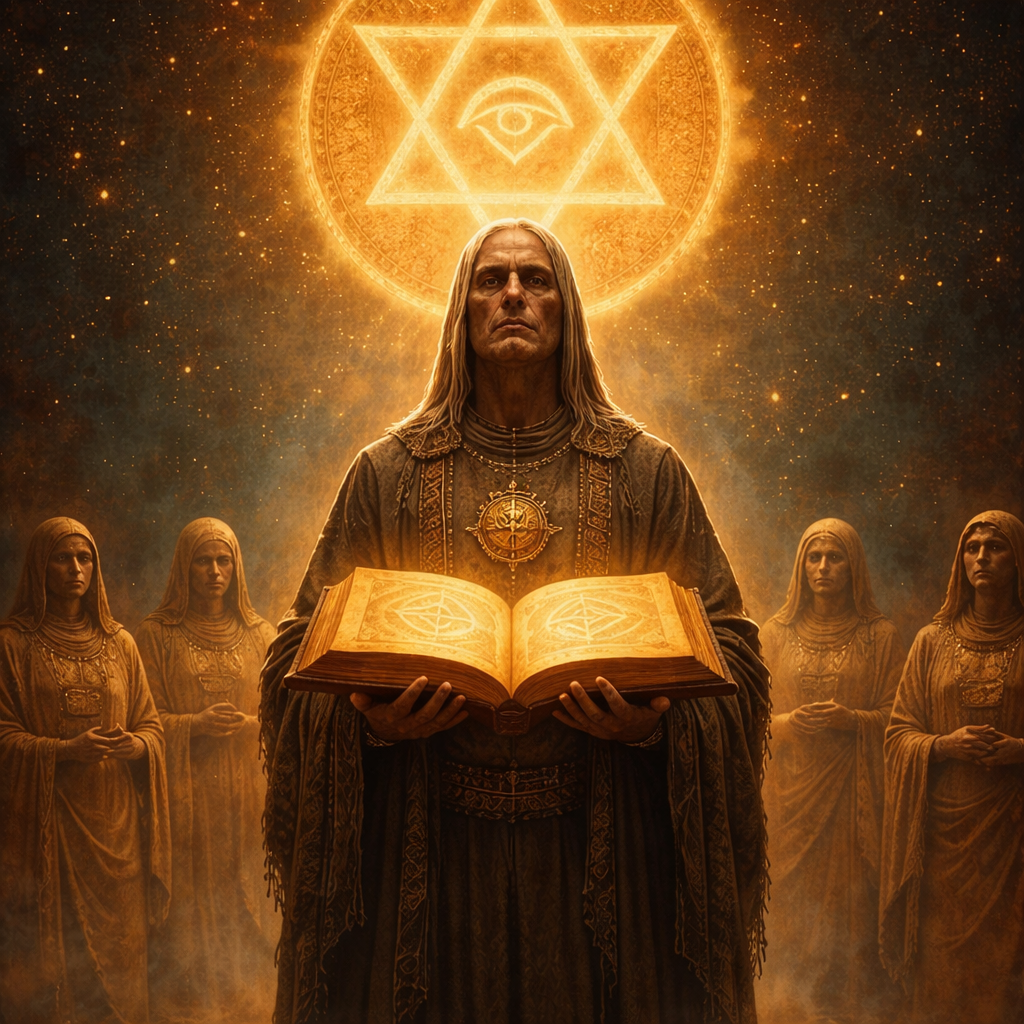

Celeste Moreau (Divination & Symbolism Reviewer) — Yehudah Berg’s 'The Power of Kabbalah' is a compelling gateway into the labyrinthine depths of Jewish mysticism. Berg masterfully demystifies complex Kabbalistic concepts, presenting them with clarity and accessibility without sacrificing their esoteric essence. The book excels in illuminating the practical application of Kabbalistic principles for spiritual growth and understanding the underlying forces of creation. Its strength lies in its ability to connect ancient wisdom to contemporary life, making it an invaluable resource for serious students and curious minds alike seeking profound spiritual insights and a deeper connection to the divine.
📝 Description
64
Yehudah Berg's 2004 book, 'The Power of Kabbalah,' aims to make complex Kabbalistic ideas accessible.
Yehudah Berg's 'The Power of Kabbalah' attempts to demystify the Kabbalistic tradition for a modern audience. The book breaks down core Kabbalistic concepts, explaining their relevance to everyday life and personal growth. Berg focuses on the practical application of this ancient wisdom, suggesting it can lead to a greater understanding of the universe and one's place within it.
The text covers themes of creation, human potential, and the interconnectedness of all things. It presents Kabbalah not just as a spiritual or religious system, but as a framework for conscious living and self-improvement. The author's intention is to provide readers with tools for empowerment and spiritual awakening, moving beyond superficial interpretations to reveal a deeper meaning in existence. The book encourages a personal engagement with these ideas, inviting readers to discover their own insights.
Kabbalah, a tradition originating in medieval Jewish mysticism, seeks to understand the divine nature and the creation of the universe. It uses symbolic interpretations of the Torah and a complex system of divine emanations, often visualized through the Tree of Life. This esoteric path focuses on spiritual ascent, the nature of evil, and the hidden meanings within scripture. 'The Power of Kabbalah' engages with this lineage, translating its abstract principles into practical guidance for personal transformation and a heightened awareness of cosmic order.
💡 Why Read This Book?
Embark on a transformative journey into the heart of ancient wisdom. 'The Power of Kabbalah' offers a unique lens through which to understand the universe and your place within it. Ideal for spiritual seekers, students of mysticism, and anyone yearning for deeper meaning and personal empowerment. Discover the hidden forces that shape reality and unlock your potential for a more fulfilling life.
⭐ Reader Reviews
Honest opinions from readers who have explored this book.
❓ Frequently Asked Questions
What is Kabbalah?
Kabbalah is an ancient esoteric tradition of Jewish mysticism that seeks to understand the divine nature and the relationship between God and the created universe through mystical interpretation of scripture and divine revelation.
Is this book suitable for beginners?
Yes, Yehudah Berg's approach is designed to be accessible to newcomers, offering clear explanations of complex concepts while retaining the depth of Kabbalistic teachings.
What are the core teachings of Kabbalah presented in this book?
The book explores key Kabbalistic concepts such as the Tree of Life, the Sefirot, the nature of the soul, spiritual transformation, and the interconnectedness of all existence.
How does Kabbalah relate to daily life?
'The Power of Kabbalah' emphasizes the practical application of its principles, showing how understanding these cosmic laws can lead to greater self-awareness, positive change, and a more meaningful existence.
What is the ultimate goal of studying Kabbalah?
The ultimate goal is to achieve a deeper connection with the divine, to understand the purpose of life, and to realize one's full spiritual potential, leading to a more harmonious and fulfilling existence.
🔮 Key Themes & Symbolism
The Tree of Life and the Sefirot
The central symbolic diagram of Kabbalah, the Tree of Life, represents the emanations of God and the structure of the universe. Each of the ten Sefirot embodies a divine attribute or energy, forming a pathway for spiritual ascent and understanding. This theme looks at the interconnectedness of these divine aspects and their influence on both the macrocosm and the individual soul, offering a blueprint for cosmic order and personal spiritual development.
Spiritual Ascent and Transformation
This book illuminates the Kabbalistic path of spiritual growth, emphasizing the journey of the soul toward greater consciousness and unity with the divine. It explores the challenges and insights gained through introspection, meditation, and the application of Kabbalistic principles in daily life. The transformative power of understanding one's true spiritual nature is a core element, guiding readers to shed limitations and embrace their divine potential.
The Interconnectedness of Creation
A fundamental tenet of Kabbalah, the concept of interconnectedness suggests that all beings and phenomena are part of a unified divine collection. This theme reveals how seemingly separate elements are intrinsically linked through spiritual energy and divine will. Understanding this unity fosters compassion, responsibility, and a profound appreciation for the delicate balance of existence, encouraging a more holistic and conscious way of living.
💬 Memorable Quotes
Direct passages from the work, attributed to the author.
“To know yourself is to know God.”
— This highlights the Kabbalistic principle that self-discovery and understanding one's own inner spiritual nature are intrinsically linked to comprehending the divine essence.
“The universe is a mirror reflecting the divine.”
— This evokes the idea that the physical and spiritual realms are not separate but are manifestations of a singular divine reality, urging a deeper contemplation of the world around us.
“Every action creates a ripple in the cosmic ocean.”
— This underscores the Kabbalistic concept of causality and interconnectedness, suggesting that our choices and deeds have far-reaching consequences throughout the spiritual and material planes.
“True freedom lies in embracing divine order.”
— This points to the paradox within Kabbalah that liberation is found not in anarchy, but in aligning oneself with the underlying divine structure and principles governing existence.
💡 Key Ideas
Editorial paraphrase of the work's core concepts — not direct quotes.
The light of the Creator is the essence of all.
This quote speaks to the fundamental Kabbalistic belief that divine energy is the source and substance of everything that exists, emphasizing unity and the pervasive presence of the divine.
🌙 Esoteric Significance
Tradition
This work is deeply rooted in the esoteric tradition of Kabbalah, specifically drawing from its Jewish mystical lineage. It explores the hidden meanings within sacred texts and the divine architecture of existence as revealed through symbolic language and contemplative practices. The emphasis is on unlocking the secrets of creation and the soul's journey toward divine consciousness.
Symbolism
Central to the book's esoteric significance is its exploration of Kabbalistic symbolism, most notably the Tree of Life, the Hebrew alphabet, and the divine names. These symbols are not mere representations but are considered energetic keys that unlock deeper levels of understanding about God, humanity, and the cosmos, serving as maps for spiritual exploration and transformation.
Modern Relevance
In a world often characterized by materialism and disconnection, 'The Power of Kabbalah' offers a profound and relevant framework for spiritual awakening. It provides tools for self-discovery, stress reduction, and cultivating a deeper sense of purpose. The book's emphasis on interconnectedness and personal responsibility speaks to contemporary concerns about global unity and conscious living.
👥 Who Should Read This Book
This book is a profound resource for a wide spectrum of readers. **Beginners** seeking an accessible yet comprehensive introduction to Kabbalistic thought will find Berg's explanations clear and engaging. **Spiritual seekers** yearning for deeper meaning and a connection to the divine will discover a roadmap for personal transformation. **Scholars** interested in comparative mysticism and esoteric traditions will appreciate the depth and historical context. **Practitioners** of various spiritual disciplines may find new insights and practical applications for their own paths.
📜 Historical Context
Yehudah Berg's 'The Power of Kabbalah' emerges from the modern resurgence of interest in Kabbalah, particularly the Lurianic Kabbalah tradition, which gained prominence in 16th-century Safed. This era was a fertile ground for mystical thought, influenced by the expulsion of Jews from Spain and the subsequent search for spiritual meaning and redemption. Berg's work builds upon centuries of interpretation and practice, adapting these profound teachings for a contemporary audience seeking spiritual understanding and personal empowerment. The book reflects a broader global trend in the late 20th and early 21st centuries, where interest in ancient wisdom traditions and esoteric philosophies has flourished.
📔 Journal Prompts
Reflect on the concept of divine light as the essence of all. How does this idea shift your perspective on the world around you?
Consider a time when you felt a deep sense of connection to others or to something larger than yourself. How might Kabbalistic principles explain this experience?
What does 'knowing yourself' mean to you, and how do you believe this process connects to understanding the divine?
Identify one area in your life where you feel a lack of control. How might understanding the 'divine order' offer a new perspective or approach?
How can you consciously create positive 'ripples' in your daily interactions, embodying the interconnectedness discussed in the book?
🗂️ Glossary
Kabbalah
An ancient Jewish mystical tradition that explores the divine nature, the structure of the universe, and the relationship between God and humanity through esoteric interpretations and symbolism.
Sefirot
The ten divine emanations or attributes of God described in Kabbalah, often depicted as a diagram known as the Tree of Life, representing the flow of divine energy.
Ein Sof
The Kabbalistic term for the infinite, unknowable, and absolute essence of God, existing beyond all comprehension and manifestation.
Tikkun Olam
A Hebrew phrase meaning 'repair of the world,' a central concept in Judaism and Kabbalah emphasizing humanity's role in rectifying spiritual and physical brokenness.
Zohar
The foundational text of Kabbalah, a mystical commentary on the Torah, believed to have been written by Rabbi Shimon bar Yochai in the 2nd century CE.
This book appears in 1 collection
🔮 Readers Also Liked
Browse all →







More by Yehudah Berg
All books →




From the “Kabbalah” Collection
View all →








More Free Kabbalah & Jewish Mysticism Books
View all →