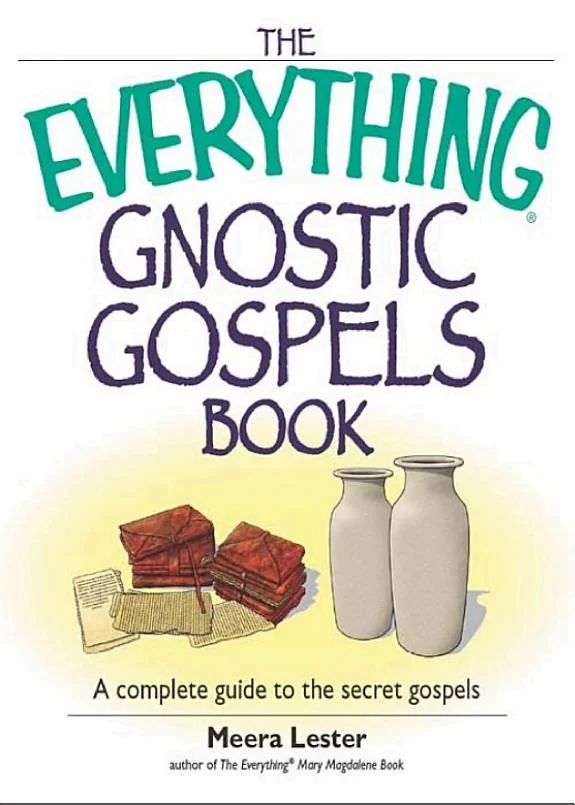
The Everything Gnostic Gospels Book
 84
84

The Everything Gnostic Gospels Book
Meera Lester's compilation provides a much-needed primer on the Gnostic Gospels, moving beyond sensationalism to offer a clear overview of their historical context and theological propositions. The strength of this work lies in its clarity; it successfully unpacks complex ideas like the dualistic cosmology and the concept of gnosis for readers unfamiliar with the subject. However, its accessibility occasionally leads to oversimplification. For instance, the discussion of the Demiurge, while accurate in its broad strokes, could benefit from more nuanced exploration of its various interpretations across different Gnostic sects. A particularly compelling section examines the Gospel of Mary Magdalene, highlighting her role as a spiritual authority, a concept that fundamentally challenges traditional patriarchal interpretations of early Christianity. While not a scholarly deep-dive, The Everything Gnostic Gospels Book serves as a competent introduction to a vital, often overlooked, area of early religious history.
📝 Description
84
Meera Lester's 2007 book introduces the Gnostic Gospels to a general readership.
Published in 2007, The Everything Gnostic Gospels Book by Meera Lester provides an introduction to Gnosticism, a collection of early Christian and pre-Christian spiritual traditions. The book examines texts that are often associated with or separate from the biblical canon. It discusses their distinct views on Jesus, the creation of the world, and the concept of salvation. Lester's work seeks to clarify these often misunderstood writings for a wider audience by detailing their main beliefs and historical background.
This volume is intended for people interested in alternative or apocryphal biblical narratives. It addresses those who want to learn about Gnostic beliefs, the individuals credited with writing these texts, such as Thomas, James, and Mary Magdalene, and how these beliefs relate to established Christian doctrine. It is suitable for students of comparative religion, esoteric studies, or anyone curious about early Christian thought outside of commonly accepted scriptures.
The book places the Gnostic Gospels within the religious environment of the 1st and 2nd centuries CE. This period saw many mystical and philosophical ideas arise, with Gnosticism becoming a notable, though often unconventional, spiritual current. The 1945 discovery of texts at Nag Hammadi significantly changed how scholars understood these movements, revealing a wide array of thought that questioned emerging orthodoxies. The book also touches on the ongoing discussions about the authenticity and interpretation of these ancient texts.
This book engages with Gnosticism, a complex set of ancient spiritual movements that offered a different path to understanding divinity and the cosmos than mainstream early Christianity. Gnostic thought often posited a supreme, unknowable God distinct from the creator of the material world, who was seen as flawed or malevolent. Salvation was typically achieved through direct, intuitive knowledge (gnosis) of one's divine origins and the true nature of reality, rather than through faith or ritual alone. The rediscovery of texts like those found at Nag Hammadi brought these diverse perspectives back into focus, challenging historical assumptions about early religious development.
💡 Why Read This Book?
• Learn about the Nag Hammadi discovery in 1945, which unearthed primary Gnostic texts, offering a counterpoint to mainstream biblical narratives. • Understand the concept of 'gnosis' as direct spiritual knowledge and its central role in Gnostic soteriology, distinct from faith-based salvation. • Explore the differing portrayals of figures like Mary Magdalene, challenging traditional interpretations and revealing her significance as a spiritual leader in early Gnostic communities.
⭐ Reader Reviews
Honest opinions from readers who have explored this book.
❓ Frequently Asked Questions
What distinguishes Gnostic Gospels from the canonical Bible?
Gnostic Gospels often present a different cosmology, view Jesus as primarily a revealer of secret knowledge rather than a sacrificial savior, and emphasize direct spiritual insight (gnosis) for salvation, contrasting with the canonical emphasis on faith and divine grace.
Who were the main authors or figures associated with Gnostic texts?
Key figures include Thomas, James, and Mary Magdalene, who are often depicted as disciples receiving special teachings from Jesus. Their writings and perspectives form a significant part of the Gnostic corpus.
When were the Gnostic Gospels written?
Most Gnostic texts are believed to have been composed between the 2nd and 4th centuries CE, though some may draw on earlier traditions. Their dating remains a subject of scholarly debate.
What is the significance of the Nag Hammadi library?
Discovered in 1945 in Egypt, the Nag Hammadi library contains a collection of early Christian and Gnostic texts, providing invaluable primary source material for understanding Gnosticism and early Christianity beyond the established canon.
Are Gnostic beliefs considered Christian?
Gnosticism emerged from the milieu of early Christianity and Jewish mysticism, sharing some figures and concepts. However, its distinct theological framework and emphasis on gnosis led to its classification as heterodox or heretical by the emerging orthodox church.
What does the term 'Gnosticism' mean?
Derived from the Greek word 'gnosis,' meaning knowledge, Gnosticism refers to a diverse set of religious and philosophical movements emphasizing direct, experiential spiritual knowledge as the path to salvation and enlightenment.
🔮 Key Themes & Symbolism
The Nature of Divinity
The book examines the Gnostic concept of a supreme, unknowable God, distinct from the creator of the material world, often referred to as the Demiurge. This dualistic view contrasts sharply with mainstream monotheism, positing a hidden, divine realm (the Pleroma) from which sparks of divinity emanate into the flawed material existence, a core tenet for understanding Gnostic cosmology and their perception of the universe.
Salvation Through Gnosis
Central to Gnostic thought is the idea that salvation is achieved not through faith or works alone, but through direct, intuitive knowledge ('gnosis'). Lester explains how this experiential understanding of the divine and one's own true nature is presented as the key to liberation from the material prison. This emphasis on inner knowing offers a unique perspective on spiritual awakening, distinct from external rituals or doctrines found in other traditions.
The Role of Jesus
Unlike the canonical Gospels, the Gnostic Jesus often appears as a divine messenger who imparts secret teachings, informative the path to gnosis for his chosen disciples. The book explores how texts like the Gospel of Thomas present Jesus as a wisdom teacher, guiding individuals to recognize the divine spark within themselves. This portrayal shifts the focus from his crucifixion and resurrection to his role as a revealer of hidden truths about existence and the divine realm.
Feminine Divine Principles
Several Gnostic texts, notably the Gospel of Mary, highlight the importance of feminine figures, particularly Mary Magdalene, as spiritual authorities and recipients of profound revelation. Lester's work touches upon how these narratives offer a more egalitarian or even matriarchal view of early spiritual leadership, challenging the patriarchal structures that later dominated orthodox Christianity and re-centering feminine wisdom within esoteric traditions.
💬 Memorable Quotes
Direct passages from the work, attributed to the author.
“Jesus said, 'If you bring forth what is within you, what you bring forth will save you. If you do not bring forth what is within you, what you do not bring forth will destroy you.'”
— This expresses the Gnostic emphasis on inner realization. Salvation is not an external gift but an internal awakening, a bringing to light of the divine spark already present within the individual, a core tenet of self-realization.
“The material world is seen as a flawed creation, a prison for the divine spirit.”
— This interpretation highlights the Gnostic dualism. The physical realm, governed by a lesser deity (the Demiurge), is inherently imperfect and a trap for the true spiritual essence, necessitating a quest for escape through knowledge.
“Gnosis is the direct experience of the divine, not merely intellectual assent.”
— This defines the central Gnostic concept. It differentiates their path from faith-based religions, emphasizing a personal, transformative encounter with the divine as the ultimate source of liberation and understanding.
“Mary Magdalene's teachings offered insights into the nature of the soul's ascent.”
— This points to the significant role of feminine figures in Gnosticism, particularly Mary Magdalene, who is often depicted as a key interpreter of Jesus's more esoteric teachings, providing alternative spiritual guidance.
“The creators of the material world did not know the true God.”
— This statement reflects the Gnostic understanding of the Demiurge as an ignorant or malevolent entity, separate from the supreme, true God. It explains the Gnostic view of a flawed cosmos and the need for a revealer from the higher realm.
🌙 Esoteric Significance
Tradition
This work engages with the Gnostic tradition, a complex spiritual lineage often considered a precursor or parallel development to later esoteric systems like Hermeticism and Kabbalah. Gnosticism emphasizes an innate divine spark within humanity and the pursuit of spiritual knowledge (gnosis) for liberation from material existence. Lester's book fits within this lineage by exploring texts that articulate these core Gnostic tenets, offering a lens through which to view the perennial quest for self-knowledge and transcendence.
Symbolism
Key symbols explored include the Pleroma, representing the totality of divine fullness and the spiritual realm, often contrasted with the material world. The Serpent, frequently depicted positively in Gnostic mythos, symbolizes wisdom and the awakening of consciousness, a stark departure from its biblical portrayal. The concept of the 'Archons'—rulers of the material cosmos—represents the forces that bind humanity to ignorance and illusion, symbolizing the oppressive structures that esoteric traditions seek to overcome.
Modern Relevance
Contemporary spiritual seekers, particularly those interested in consciousness studies, alternative spiritualities, and psychological archetypes, draw heavily on Gnostic themes. Thinkers and movements exploring the divine feminine, critiques of materialist culture, and the power of direct experience often find resonance in Gnostic narratives. The work's exploration of Mary Magdalene's role, for example, speaks to modern re-evaluations of gender and authority in spiritual traditions.
👥 Who Should Read This Book
• Students of comparative religion and early Christianity seeking to understand theological diversity beyond the canonical scriptures. • Individuals interested in esoteric philosophy and mysticism exploring alternative paths to spiritual knowledge and liberation. • Readers curious about the historical and textual basis of Gnosticism, including key figures like Mary Magdalene and concepts such as gnosis.
📜 Historical Context
The Gnostic Gospels emerged from a vibrant, often contentious, spiritual milieu in the 1st to 4th centuries CE, a period marked by the formation of early Christianity and the influence of Hellenistic philosophy and Eastern mysticism. This era saw a proliferation of diverse interpretations of Jesus's teachings and the nature of the divine, with Gnosticism representing a significant, though often marginalized, current. The discovery of the Nag Hammadi library in 1945 provided concrete evidence of this diversity, revealing texts like the Gospel of Thomas and the Gospel of Mary, which offered perspectives distinct from the developing orthodox canon. These texts challenged prevailing notions and were often met with fierce opposition from figures like Irenaeus of Lyons, who wrote extensively against what he termed 'Gnostic heresies' in the late 2nd century. The work positions Lester's book as a modern attempt to make these complex historical documents accessible.
📔 Journal Prompts
The concept of the Demiurge and its role in creating the material world.
The significance of Mary Magdalene as a spiritual authority in Gnostic texts.
Reflecting on the idea of 'gnosis' as direct experiential knowledge.
Comparing the portrayal of Jesus in the Gnostic Gospels versus the canonical Gospels.
The symbolism of the divine spark within the material existence.
🗂️ Glossary
Gnosis
Greek for 'knowledge'; in Gnosticism, it refers to direct, intuitive, experiential knowledge of the divine and the true nature of reality, seen as the key to salvation.
Demiurge
A lesser, often ignorant or malevolent, creator deity responsible for the flawed material universe, distinct from the supreme, transcendent God in Gnostic cosmology.
Pleroma
The totality of divine powers and emanations in the Gnostic cosmology; the spiritual field of the supreme God, contrasted with the material world.
Archons
Rulers or cosmic powers in Gnostic belief that govern the material world and attempt to keep humanity ignorant of its divine origins.
Aeons
Divine beings or emanations from the Pleroma, often appearing in pairs, that mediate between the supreme God and the material creation.
Apocrypha
Texts, often religious or historical, that are considered authentic or inspired by some groups but are not included in the accepted canon of scriptures.
Dualism
A philosophical or religious concept that posits two opposing fundamental principles (e.g., good and evil, spirit and matter) that are fundamental to the nature of reality.
This book appears in 1 collection
🔮 Readers Also Liked
Browse all →








From the “Gnostic Gospels” Collection
View all →







More Free Sacred Texts & Gnosticism Books
View all →