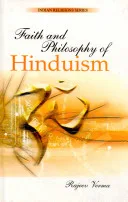
Faith & Philosophy of Hinduism
 73
73

Faith & Philosophy of Hinduism
Verma's "Faith & Philosophy of Hinduism" presents a commendable effort to demystify a vast and complex religious system. Its strength lies in its systematic approach, breaking down intricate philosophical schools like Vedanta and Samkhya into digestible components. The clarity with which concepts like Karma and Moksha are explained is particularly effective for newcomers. However, the book occasionally leans towards a more academic dryness, which might alienate readers seeking a more devotional or experiential connection to the subject. A passage discussing the nuances of Advaita Vedanta, for instance, clearly delineates the concept of Maya, but perhaps could benefit from more illustrative examples to truly convey its elusive nature. Despite this, the work serves as a solid, informative primer on Hindu philosophical underpinnings.
📝 Description
73
Rajeev Verma's 2009 book examines Hinduism's philosophical frameworks beyond devotional accounts.
Rajeev Verma's "Faith & Philosophy of Hinduism" dissects the philosophical frameworks and theological concepts that have shaped Hindu thought over millennia. Published in 2009, the book addresses a growing global interest in Eastern religions, building on a long Western tradition of studying Sanskrit texts and Hindu philosophies. It aims to clarify often misunderstood tenets of Hinduism for a Western audience unfamiliar with its doctrines. The work is intended for students of comparative religion, philosophy enthusiasts, and individuals seeking a systematic understanding of Hindu thought. It suits those who appreciate rigorous analysis and are interested in the intellectual underpinnings of religious systems. Readers who have encountered Hinduism through superficial introductions may find this a valuable resource for deeper comprehension. It also serves scholars of religious studies and those researching Indian philosophical history. Verma's synthesis acknowledges the evolution of Hindu thought within the broader field of religious studies.
While Verma's work focuses on the philosophical underpinnings of Hinduism, it engages with a tradition often considered esoteric due to its complex metaphysical systems and symbolic language. The concepts of Brahman as ultimate reality and Atman as the individual soul, alongside the pursuit of Moksha (liberation), point to a spiritual path aimed at transcending ordinary existence. This aligns with esoteric traditions that seek direct knowledge or union with the divine, moving beyond exoteric rituals and communal practices.
💡 Why Read This Book?
• Gain a structured understanding of Hindu philosophical schools like Vedanta and Samkhya, learning how their distinct metaphysical claims shape the tradition. • Comprehend core concepts such as Brahman and Atman, understanding their relationship to the individual soul and ultimate reality as presented in the text. • Appreciate the role of the Vedas and Upanishads, recognizing their foundational significance and the philosophical insights they have provided since their composition.
⭐ Reader Reviews
Honest opinions from readers who have explored this book.
❓ Frequently Asked Questions
What is the central philosophical concept explored in "Faith & Philosophy of Hinduism"?
The book centers on the concept of Brahman, the ultimate, unchanging reality in Hinduism. It explores how various philosophical schools interpret Brahman and its relationship to the individual soul (Atman).
When was "Faith & Philosophy of Hinduism" first published?
The book was first published in 2009, positioning it as a contemporary analysis of Hindu philosophical traditions.
Which major schools of Hindu philosophy does Rajeev Verma discuss?
Verma's work examines key schools including Vedanta, Samkhya, Yoga, Nyaya, Vaisheshika, and Mimamsa, detailing their unique epistemological and metaphysical frameworks.
Does the book cover the concept of Karma?
Yes, "Faith & Philosophy of Hinduism" thoroughly discusses Karma as the law of cause and effect, explaining its role in the cycle of rebirth (samsara) and its implications for spiritual liberation (moksha).
Who would benefit most from reading this book?
Students of comparative religion, philosophy enthusiasts, and scholars of Indian philosophical history will find this book particularly beneficial for its systematic and analytical approach.
What scriptural texts are referenced in the book?
The book refers to foundational Hindu scriptures such as the Vedas, Upanishads, and Puranas, explaining their significance and philosophical contributions.
🔮 Key Themes & Symbolism
The Nature of Reality (Brahman)
The work meticulously unpacks the concept of Brahman, the supreme, all-pervading consciousness that is the source of all existence. It contrasts different interpretations, particularly within Vedanta, distinguishing between the unqualified absolute (Nirguna Brahman) and the manifested divine (Saguna Brahman). This exploration is crucial for understanding the monistic or panentheistic underpinnings of much Hindu philosophy, moving beyond simplistic notions of polytheism.
The Individual and Liberation (Atman & Moksha)
Central to the text is the concept of Atman, the eternal self or soul, and its relationship to Brahman. Verma elucidates the philosophical paths leading to Moksha, liberation from samsara (the cycle of birth, death, and rebirth). This theme addresses the ultimate goal of Hindu spiritual practice, examining various yogic and meditative techniques aimed at realizing the unity of Atman and Brahman.
The Law of Action (Karma)
The book provides a detailed analysis of Karma, not merely as fate, but as a fundamental principle of cosmic and ethical causality. It explores how actions (karma) generate consequences that shape present and future existences, influencing one's journey towards spiritual emancipation. This section clarifies the intricate workings of moral responsibility within the Hindu worldview.
Philosophical Schools (Darshanas)
Verma systematically outlines the six orthodox (astika) schools of Hindu philosophy: Nyaya, Vaisheshika, Samkhya, Yoga, Mimamsa, and Vedanta. Each darshana's unique approach to epistemology (pramanas), metaphysics, and soteriology is presented, highlighting their contributions and interrelationships within the broader spectrum of Hindu thought.
💬 Memorable Quotes
Direct passages from the work, attributed to the author.
“Brahman is the sole reality; the world is an illusion.”
— This statement captures the Advaita Vedanta perspective, emphasizing the non-dualistic nature of existence and suggesting that the perceived material world lacks ultimate reality compared to the singular, divine consciousness.
“The goal of life is to realize the identity of Atman and Brahman.”
— This highlights the ultimate aim of many Hindu philosophical paths: the direct experiential understanding that the individual soul is not separate from the universal divine essence, leading to liberation.
“Every action produces a corresponding reaction that binds the soul.”
— This succinctly explains the law of Karma, illustrating how deeds, whether good or bad, create karmic imprints that necessitate future experiences and perpetuate the cycle of rebirth.
“The Vedas are the ultimate source of knowledge for Hindu dharma.”
— This points to the scriptural authority of the Vedas, framing them as the foundational texts from which Hindu philosophy and religious practice derive their legitimacy and core tenets.
“The path to liberation involves both knowledge and disciplined action.”
— This reflects the synthesis often found in Hindu thought, suggesting that achieving Moksha requires not only intellectual understanding (jnana) but also ethical conduct and spiritual practices (karma yoga).
🌙 Esoteric Significance
Tradition
While primarily a philosophical text, "Faith & Philosophy of Hinduism" engages with concepts central to esoteric traditions that draw from Vedic wisdom. It aligns with the Theosophical movement's interest in Indian metaphysics and the broader Hermetic principle of "As Above, So Below" through its exploration of Brahman and Atman. The book's focus on the underlying unity of existence and the journey of the soul provides a philosophical basis for practices found in various esoteric schools seeking self-realization.
Symbolism
The concept of Brahman as the ultimate, formless reality is a profound esoteric symbol of the Absolute. The symbol of Om (Aum) represents the primal sound of creation and the totality of consciousness, a key meditative focus. The cyclical nature of Samsara, often depicted as a wheel, symbolizes the continuous process of birth, death, and rebirth, from which liberation (Moksha) is sought.
Modern Relevance
Contemporary mindfulness and meditation practices often echo the yogic principles discussed in the book, particularly from the Yoga and Vedanta schools. Thinkers exploring consciousness studies and the nature of reality find philosophical grounding in the Upanishadic concepts of Brahman and Atman. Spiritual seekers interested in non-dualistic philosophies continue to draw upon the systematic analyses presented, finding relevance in its structured approach to profound metaphysical questions.
👥 Who Should Read This Book
• Students of comparative religion seeking a structured overview of Hindu philosophical systems, providing clear explanations of complex doctrines. • Individuals interested in Eastern philosophies who wish to understand the intellectual foundations of Hinduism beyond ritualistic practices. • Researchers in Indian studies and religious philosophy looking for a concise yet comprehensive guide to the major darshanas and their core tenets.
📜 Historical Context
Published in 2009, "Faith & Philosophy of Hinduism" arrived in an era where academic interest in comparative religion was well-established, building on decades of scholarship. Preceding it were seminal works by figures like Swami Vivekananda, who introduced Vedanta to the West in the late 19th century, and later scholars who engaged with Indian philosophical traditions. The book emerged within a broader intellectual landscape influenced by the ongoing dialogue between Eastern and Western thought, and the increasing accessibility of translated Sanskrit texts. While not facing specific censorship or major reception events, its publication occurred amidst a scholarly environment that valued rigorous analysis of religious systems, often seeking to present them objectively. It contributed to the ongoing academic discourse on Hinduism, offering a contemporary synthesis distinct from earlier, more romanticized or overtly colonial interpretations.
📔 Journal Prompts
Reflection on the concept of Brahman, the ultimate reality, as presented in the text.
How does the understanding of Karma presented in the book influence one's view of personal responsibility?
Consider the relationship between Atman and Brahman: what does this imply about the nature of the self?
Analyze the distinct philosophical contributions of two different Darshanas discussed in the book.
Explore the meaning of Moksha and its significance as the ultimate goal within Hindu philosophy.
🗂️ Glossary
Brahman
The supreme, unchanging, ultimate reality in Hinduism; the Absolute, the source of all existence.
Atman
The individual soul or self; often considered identical to Brahman in Advaita Vedanta.
Karma
The law of cause and effect; actions and their consequences that influence one's present and future lives.
Moksha
Liberation or release from the cycle of birth, death, and rebirth (samsara).
Samsara
The continuous cycle of birth, death, and reincarnation, driven by karma.
Vedas
The oldest and most authoritative scriptures in Hinduism, considered to be of divine origin.
Upanishads
Philosophical texts within the Vedas, forming the basis of Vedanta philosophy.