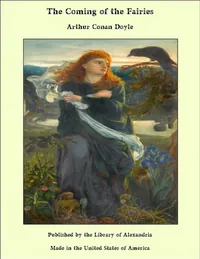
Raum

 82
82

Raum
The utilitarian design of 'Raum' journal immediately signals its purpose: a straightforward recording tool for practitioners of evocation. Its 100 pages and 6"x9" format are practical, fitting easily into a ritual kit. The inclusion of a sigil on the cover, presented as an evocation aid, is a common trope in demonological literature and serves as a visual anchor for the practitioner's intent. However, the blurb’s assertion that the sigil *allows* for evocation feels overstated; a sigil is a focal point, not an independent mechanism for summoning. The true value lies in the journal's capacity for detailed personal record-keeping. While it fulfills its basic function admirably, its lack of supplementary material or guidance beyond its physical form means its utility is entirely dependent on the user's existing knowledge and practice. It is a blank slate, not a grimoire itself, which is both its strength and its limitation.
📝 Description
82
Raum, published in 2019, functions as a private journal for recording ritualistic evocation experiences.
This 6" x 9" journal, with 100 pages, is designed for practitioners of esoteric arts. Its purpose is to act as a private repository for personal experiences and observations during ritual work, particularly concerning evocation. The book encourages meticulous recording of details, thoughts, and encounters related to these magical operations. The sigil present on the cover serves a dual role, acting as an identifier and potentially as a tool within the ritual itself. It caters to individuals who prefer physical notebooks for documenting their spiritual or occult endeavors, valuing the tangible nature of written records for reflection and safekeeping.
Raum is intended for solitary practitioners engaged in ritual work, especially those focused on the evocation of entities found in demonological grimoires. It is for those who prioritize detailed record-keeping of their magical operations and wish to maintain a private log of their occult pursuits. The journal's format specifically suits those who find value in physical notebooks for capturing insights and experiences, contrasting with digital alternatives. The emphasis is on the tangible aspect of recording for safekeeping and personal reflection.
Published in 2019, 'Raum' connects to a contemporary revival of interest in grimoire magic and traditional occult practices. It follows a long history of magical journaling, exemplified by figures like Aleister Crowley, who kept detailed accounts of his experiments and visions. The journal’s design, including a sigil, echoes the visual traditions of occult texts from the late 19th and early 20th centuries, periods rich with movements like the Golden Dawn and ceremonial magic. This journal fits within that established lineage of occult record-keeping.
💡 Why Read This Book?
• Gain a dedicated space for meticulously documenting your personal evocation experiences, a practice central to refining ritual efficacy as seen in the historical context of magical journaling. • Utilize the sigil on the cover as a tangible focal point for your rituals, directly referencing the symbolic language common in demonological studies since at least the 17th century. • Foster self-reflection and track your spiritual development over time by maintaining a private, physical record of your occult workings, ensuring insights are not lost.
⭐ Reader Reviews
Honest opinions from readers who have explored this book.
❓ Frequently Asked Questions
What is the primary purpose of the 'Raum' journal?
The 'Raum' journal is designed as a dedicated notebook for practitioners to record their experiences and thoughts during evocation rituals. Its 6"x9" size and 100 pages offer ample space for detailed documentation of magical operations.
How does the sigil on the cover function?
The sigil on the cover serves a dual purpose: it identifies the book's subject matter and is intended to act as a visual aid or focal point during evocation rituals, connecting the practitioner to the entity or concept being invoked.
What size and page count does the 'Raum' journal have?
The journal is a standard 6" x 9" size and contains 100 pages, making it convenient for carrying and providing sufficient space for recording ritualistic experiences.
Is 'Raum' a grimoire or a journal?
It is primarily a journal. While it features a sigil and is intended for esoteric use, it does not contain spells, rituals, or extensive lore. Its function is to record the practitioner's own experiences.
When was 'Raum' first published?
'Raum' was first published on November 29, 2019, placing it within the contemporary resurgence of interest in practical occultism and grimoire-based magic.
What kind of rituals is this journal best suited for?
The journal is specifically designed for recording experiences related to evocation rituals, particularly those involving entities discussed in demonological texts. It's for documenting personal encounters and observations during these workings.
🔮 Key Themes & Symbolism
Magical Documentation
The journal emphasizes the critical role of recording esoteric experiences. It provides a structured yet private space for practitioners to log details of their rituals, observations, and personal insights. This practice aligns with historical traditions of magical journaling, where meticulous record-keeping was seen as essential for understanding patterns, progress, and the nature of spiritual interactions. The act of writing itself becomes a ritual component, solidifying intent and memory.
Evocation Practice
Central to the journal's utility is its focus on evocation rituals. It is designed for those who engage with entities or forces through summoning practices. The journal serves as a logbook for these specific operations, allowing practitioners to document the process, the perceived manifestations, and their personal responses. This specialized focus caters to a niche within occultism that prioritizes direct interaction and experiential learning.
Sigil as Tool
The sigil featured on the journal's cover is presented not merely as decoration but as an integrated element of the practice. In esoteric traditions, sigils are condensed symbolic representations charged with intent. This journal leverages that concept, suggesting the sigil can function as a point of focus or an anchor during the evocation process, bridging the gap between the physical book and the spiritual work being undertaken.
Personal Esoteric Path
The private nature of the journal underscores the individual journey within esoteric studies. It provides a confidential space for self-exploration and development without external scrutiny. By recording personal encounters and reflections, practitioners can build a unique corpus of knowledge specific to their own magical system and interactions, fostering autonomy and self-discovery on their chosen path.
💬 Memorable Quotes
Direct passages from the work, attributed to the author.
“The perfect 6" x 9" 100 page journal for writing your evocation experiences with the following demon.”
— This phrase directly states the book's intended function and physical attributes, highlighting its practical design for recording specific types of magical operations and their associated entities.
“This small notebook is perfect for recording your experiences and thoughts when doing rituals.”
— This interpretation emphasizes the journal's portability and its suitability for capturing the immediate impressions and detailed observations that arise during ritualistic practice.
“Don't be left scrambling for notepaper when you can have this at hand.”
— This highlights the convenience and preparedness aspect of the journal, suggesting it should be a readily accessible tool for practitioners to ensure no detail of their workings is missed.
“You can keep these private and store them in a safe place.”
— This points to the crucial element of privacy in esoteric work, acknowledging that practitioners may wish to safeguard their personal experiences and findings from public view.
“The sigil also acts as an evocation tool.”
— This suggests the symbolic imagery on the cover is not merely aesthetic but possesses functional value within the ritual context, serving as a direct aid for invoking specific entities or energies.
🌙 Esoteric Significance
Tradition
This journal aligns with the practical, experiential branches of Western Esotericism, particularly those focused on ceremonial magic and demonology. It draws implicitly from traditions that emphasize the importance of personal experience and record-keeping, such as certain currents within Thelema or modern magical orders that practice evocation. It departs from purely theoretical or philosophical texts by providing a direct tool for experiential engagement, serving as a modern iteration of the magical diary.
Symbolism
The primary symbol is the sigil, which in demonological traditions serves as a unique identifier and focal point for a specific entity or spirit. Its presence on the cover suggests it represents a particular focus for the journal's use, perhaps referencing a known entity from a grimoire like the Lesser Key of Solomon. The journal itself, as a bound collection of pages, symbolizes the containment and ordering of the practitioner's experiences, transforming chaotic encounters into structured knowledge.
Modern Relevance
In contemporary occult practice, there is a growing emphasis on personal gnosis and empirical magical research. Journals like 'Raum' are essential tools for practitioners engaging with modern interpretations of traditional demonology or developing their own systems of spirit communication. They are utilized by solitary practitioners and members of contemporary magical groups seeking to document personal results and contribute to the evolving understanding of esoteric practices.
👥 Who Should Read This Book
• Solitary practitioners of ceremonial magic who wish to meticulously document their evocation rituals and personal encounters with entities. • Students of demonology seeking a dedicated physical journal to record observations and insights derived from practical ritual work, rather than purely academic study. • Occult researchers interested in comparative magical practices who wish to maintain a private log of their own experimental workings for personal analysis and development.
📜 Historical Context
Published in late 2019, 'Raum' emerges during a period of significant popular engagement with occultism, particularly ceremonial magic and demonology, building upon trends seen since the late 20th century. Its format reflects the functional grimoires and personal journals of earlier practitioners, such as those found in the archives of figures like Eliphas Lévi or the writings of the Hermetic Order of the Golden Dawn, which emphasized structured ritual and symbolic representation. While Lévi's works, like 'Dogme et Rituel de la Haute Magie' (1854-1856), explored the theoretical underpinnings of magical symbols and entities, journals like 'Raum' focus on the practical application and recording of such practices. The contemporary occult landscape, influenced by authors like Lon Milo DuQuette and the internet's proliferation of esoteric information, sees a demand for accessible, purpose-built tools for magical work. 'Raum' directly addresses this by providing a dedicated space for recording, contrasting with the purely theoretical or historical texts that often dominate the field.
📔 Journal Prompts
Evocation sigil: Detail the sigil's appearance and your initial impressions upon first encountering it.
Ritual environment: Describe the atmosphere and any sensory details noted immediately before and during the evocation.
Entity manifestation: Record the precise nature of the manifestation, whether visual, auditory, or purely intuitive.
Personal response: Document your emotional and psychological state throughout the ritual process.
Post-ritual reflection: Note any lingering thoughts, energies, or insights gained after the ritual concluded.
🗂️ Glossary
Evocation
A magical ritual practice involving the summoning or calling forth of spirits, entities, or intelligences, often with the intention of communication or interaction.
Sigil
A symbol created for the purpose of magical invocation or evocation, often derived from the name of a spirit or deity, condensed into a unique graphical form.
Demonology
The study of demons or beliefs about demons, often encompassing their nature, hierarchy, and supposed interactions with the human world, particularly within religious and occult contexts.
Ritual
A set of actions, performed in a specific order, often imbued with symbolic meaning, used in religious or magical practices to achieve a desired effect.
Practitioner
An individual who actively engages in the study and application of a particular discipline, especially in the context of esoteric or magical arts.
Grigorire
A type of textbook that contains instructions on how to create magical objects, perform rituals, cast spells, or invoke entities, often associated with specific traditions or periods.
Entity
In an esoteric context, a non-physical being or intelligence that can be interacted with through magical or spiritual means.
This book appears in 1 collection
🔮 Readers Also Liked
Browse all →








From the “Goetia” Collection
View all →




More Free Occult Philosophy Books
View all →