The Coming of the Fairies
 79
79

The Coming of the Fairies
Sir Arthur Conan Doyle's "The Coming of the Fairies" is less a work of occult philosophy and more a meticulous, if ultimately biased, defense of a peculiar case. Doyle presents the Cottingley photographs and the testimony surrounding them with the methodical air of a detective, his Sherlock Holmes persona subtly informing his investigative zeal. He assembles his evidence, including the girls' own accounts and technical details about the cameras used in 1917, in an attempt to build an irrefutable argument. One strength is Doyle's commitment to detailing the evidence, allowing readers to examine the case for themselves. However, the work falters in its earnest, almost desperate, conviction. Doyle’s insistence on the fairies' reality, particularly his assertion that the photographic plates themselves are unmanipulated, reveals a deep desire for this evidence to be true, overshadowing a truly critical detachment. The passage where he dismisses potential photographic trickery of the era as too complex for children to execute, while presented as logical, feels like a concession to his foregone conclusion. The book serves as a fascinating historical document of belief, but as a piece of objective inquiry, it is deeply compromised by its author's fervent advocacy.
📝 Description
79
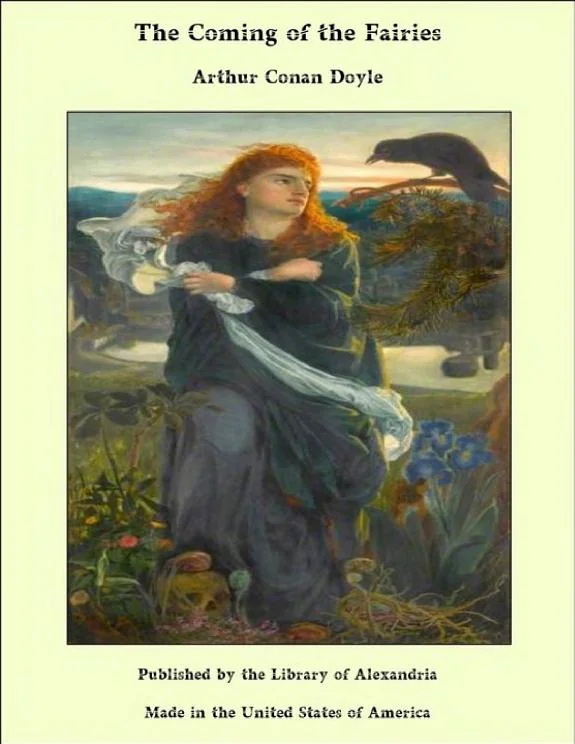
In 1922, Sir Arthur Conan Doyle published his defense of the Cottingley fairy photographs.
This volume reproduces the Cottingley fairy photographs and details the evidence Sir Arthur Conan Doyle gathered concerning their authenticity. Published in 1922, Doyle states his aim was not to compel belief but to present the facts for the reader's own judgment. He meticulously lays out the case, including witness testimonies and his own analysis, encouraging a careful consideration of the evidence. Doyle sought to equip diligent readers to form their own conclusions, cautioning against hasty dismissal.
The book is suited for those interested in the intersection of folklore, photography, and belief, especially within the context of the Edwardian era's engagement with the unseen. It serves as a primary source for students of psychical research and the cultural role of photographic evidence in the early 20th century. Readers who enjoy detailed case studies and historical investigations will find considerable material within these pages.
Published in the wake of World War I, "The Coming of the Fairies" appeared during a period of heightened interest in spiritualism and the paranormal, exacerbated by widespread loss and existential questioning. Sir Arthur Conan Doyle, a committed spiritualist, presented the Cottingley photographs as concrete proof of fairy existence. This work fits within the broader context of psychical research that was gaining traction, with various societies investigating unexplained phenomena. Doyle's advocacy placed him in direct opposition to skeptics who challenged spiritualist claims, a debate that involved figures like Harry Houdini.
💡 Why Read This Book?
• Understand the historical context of spiritualism and belief in the unseen in the early 20th century, as Doyle presents the Cottingley photographs as evidence in 1922. • Analyze a primary source from Sir Arthur Conan Doyle, examining his methods of evidence presentation and argumentation regarding phenomena beyond conventional science. • Evaluate the role of photographic evidence in validating extraordinary claims, a concept central to the book's exposition of the Cottingley case.
⭐ Reader Reviews
Honest opinions from readers who have explored this book.
❓ Frequently Asked Questions
Who were the girls who took the Cottingley fairy photographs?
The photographs were taken by two cousins, Elsie Wright (aged 16) and Frances Griffiths (aged 9), in Cottingley, Yorkshire, between 1917 and 1920. Sir Arthur Conan Doyle later investigated their claims and published this book.
What was Sir Arthur Conan Doyle's stance on the Cottingley photographs?
Doyle firmly believed the photographs were genuine evidence of fairies. He presented them in "The Coming of the Fairies" along with witness testimonies and his own analysis, arguing they proved the existence of these beings.
When was "The Coming of the Fairies" first published?
The book, featuring Doyle's investigation into the Cottingley fairy photographs, was first published in 1922.
What is the primary purpose of "The Coming of the Fairies"?
Its primary purpose is to present the evidence for the Cottingley photographs, allowing readers to judge their authenticity, and to advocate for the reality of fairies based on this evidence.
Did Sir Arthur Conan Doyle ever recant his belief in the Cottingley fairies?
While Doyle staunchly defended the photographs during his lifetime, later evidence and confessions from Elsie and Frances, decades after Doyle's death, revealed the photographs were indeed faked using cutouts.
What other subjects did Sir Arthur Conan Doyle write about?
Sir Arthur Conan Doyle is most famous for his Sherlock Holmes detective stories, but he also wrote extensively on spiritualism, historical novels, and social commentary, including "The Coming of the Fairies."
🔮 Key Themes & Symbolism
Photographic Evidence and Belief
The core of the book revolves around the Cottingley photographs, presented as potential proof of an unseen world. Doyle meticulously details the circumstances of their creation in 1917-1920, including the photographic equipment and the testimony of the girls involved. He grapples with the idea that a new technology, photography, could serve as a conduit for validating phenomena traditionally relegated to folklore and myth. The work questions the reliability of visual evidence and how readily society accepts or rejects it, particularly when it challenges established scientific paradigms.
The Nature of Fairies and Folklore
Doyle uses the Cottingley case to argue for the actual existence of fairies, moving them from the area of children's stories to tangible, albeit elusive, beings. He draws upon historical accounts and folklore to support the idea that fairies have long been perceived by humanity. The book implicitly examines how cultural beliefs and traditions shape our perception of reality and the supernatural, suggesting that widespread belief in fairies across cultures points to an underlying truth.
Spiritualism and Psychical Research
As a prominent advocate for spiritualism, Doyle frames the Cottingley photographs within the broader context of psychical research. He saw this evidence as a significant contribution to the understanding of life beyond the material world, a subject that captivated many in the post-World War I era. The book reflects the era's intense interest in mediums, spirits, and unexplained phenomena, positioning the fairy investigation as part of a larger quest to prove the existence of non-physical realities.
💬 Memorable Quotes
Direct passages from the work, attributed to the author.
“The narrative is not a special plea for that authenticity, but is simply a collection of facts the inferences from which may be accepted or rejected as the reader may think fit.”
— This statement expresses Doyle's declared intention to present a neutral case, inviting the reader to independently assess the evidence for the Cottingley photographs without authorial coercion. It positions the book as an objective report rather than a polemic.
“I would warn the critic, however, not to be led away by the sophistry”
— Here, Doyle anticipates skepticism and attempts to preemptively discredit potential counterarguments. It reveals his awareness of the controversial nature of his subject and his desire to protect his evidence from what he perceived as misleading rationalizations.
“Doyle presents the photographic plates and the girls' testimonies as the primary evidence.”
— This interpretation emphasizes the core evidentiary basis of the book. Doyle relies heavily on the visual record of the photographs themselves and the firsthand accounts of Elsie and Frances to build his case.
💡 Key Ideas
Editorial paraphrase of the work's core concepts — not direct quotes.
The case of the Cottingley fairies is one of the most curious and interesting which has ever come under my notice.
This quote highlights Doyle's personal fascination and conviction regarding the photographs. It underscores his view of the case's significance, suggesting it held exceptional weight even for someone deeply involved in investigating paranormal phenomena.
The work explores the possibility of capturing non-corporeal entities on photographic plates.
This paraphrased concept captures the essence of Doyle's argument: that photography, a tool of empirical science, could potentially reveal the existence of beings like fairies, bridging the gap between the material and the unseen.
🌙 Esoteric Significance
Tradition
While not strictly adhering to a single esoteric lineage like Hermeticism or Kabbalah, Doyle's work aligns with the broader currents of late 19th and early 20th-century spiritualism and theosophy. It reflects a widespread fascination with the 'hidden world' and the possibility of interdimensional communication. This tradition often sought empirical or evidential proof for spiritual realities, moving beyond purely philosophical or mystical contemplation to incorporate phenomena and testimonies. Doyle's effort to validate fairy existence through photography can be seen as an attempt to bring occult concepts into the area of demonstrable fact.
Symbolism
The primary symbol is the fairy itself, representing the unseen, the magical, and the connection between the human world and nature spirits. The photographs, in this context, symbolize the potential for technology to bridge these realms, acting as a modern 'window' into the ancient world of folklore. The act of photography itself becomes symbolic, representing the capture of ephemeral truths. The setting of Cottingley, a rural English village, evokes a pastoral ideal, often associated in folklore with hidden fairy realms and natural magic.
Modern Relevance
Doyle's work continues to be relevant for those studying the history of belief, folklore, and the intersection of technology and the supernatural. Contemporary scholars of media studies and visual culture examine the Cottingley case as an early example of photographic manipulation and its impact on public perception. Modern pagan and nature-based spiritual traditions might view the book as a historical document reflecting a period of renewed interest in elemental beings and the spirit of nature, even if the evidence presented has since been debunked.
👥 Who Should Read This Book
• Students of spiritualism and Victorian/Edwardian era parapsychology, seeking primary source material on the Cottingley fairy case investigated by Sir Arthur Conan Doyle. • Folklore enthusiasts and researchers interested in how supernatural beings are represented and 'proven' through evidence, particularly photographic evidence from the early 20th century. • Skeptics and critical thinkers interested in examining historical cases of alleged paranormal phenomena and the methods used to investigate and defend them, like Doyle's approach in 1922.
📜 Historical Context
In 1922, "The Coming of the Fairies" emerged amidst a fervent period for spiritualism, particularly in Britain. The Great War had left a profound societal impact, intensifying interest in the afterlife and the possibility of communication with the deceased. Sir Arthur Conan Doyle, already a celebrated author and a devout proponent of spiritualism, saw the Cottingley photographs as key evidence for the existence of fairies. This work was published during a time when psychical research was gaining academic traction, with figures like Sir Oliver Lodge also exploring phenomena beyond conventional science. Doyle's passionate advocacy placed him at odds with more stringent scientific skepticism, which was gaining ground. While not directly engaging with a specific competing school of thought in this text, Doyle's defense of the fairies implicitly challenged the materialist worldview gaining prominence, aligning him with a more mystical or spiritual interpretation of reality that was also being explored by Theosophists like Helena Blavatsky, though Doyle's focus remained distinctly on fairies.
📔 Journal Prompts
The presentation of photographic evidence in "The Coming of the Fairies".
Sir Arthur Conan Doyle's interpretation of the Cottingley photographs.
The societal belief in fairies around 1922.
The role of skepticism versus belief in evaluating extraordinary claims.
The ethical implications of presenting debated evidence as fact.
🗂️ Glossary
Cottingley Photographs
A series of five photographs taken by Elsie Wright and Frances Griffiths in the village of Cottingley, Yorkshire, between 1917 and 1920, purported to show fairies. Sir Arthur Conan Doyle extensively investigated and defended their authenticity.
Spiritualism
A religious movement that asserts the belief that the spirits of the dead can communicate with the living. Doyle was a prominent proponent, and this book reflects that interest.
Psychical Research
The study of alleged psychic phenomena and other paranormal claims, including extrasensory perception (ESP) and psychokinesis. The Society for Psychical Research was active during Doyle's time.
Empirical Evidence
Information acquired through observation and experimentation rather than theory or pure logic. Doyle sought empirical evidence, primarily photographic, for the existence of fairies.
Sophistry
The use of clever but false arguments, especially with the intention of deceiving. Doyle warns critics against being misled by such reasoning in his assessment of the fairy photographs.
Folkloric Beings
Entities or creatures that originate from the traditional stories, beliefs, and customs of a particular culture or community. Fairies are a classic example of folkloric beings.
Authenticity
The quality of being real, true, or genuine. Doyle's central concern in the book is establishing the authenticity of the Cottingley fairy photographs.
This book appears in 1 collection
🔮 Readers Also Liked
Browse all →

From the “Fairies” Collection
View all →
More Free Occult Philosophy Books
View all →