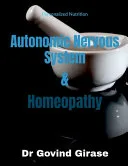
Autonomic Nervous System and Homeopathy: Personalized Nutrition
 73
73

Autonomic Nervous System and Homeopathy: Personalized Nutrition
Govind Girase's "Autonomic Nervous System and Homeopathy: Personalized Nutrition" offers an ambitious synthesis of Ayurvedic philosophy and homeopathic practice, anchored by an examination of the autonomic nervous system. The book's strength lies in its attempt to contextualize homeopathic principles within a broader physiological framework, moving beyond purely energetic explanations. Girase's exploration of how ANS activity might modulate metabolic responses to remedies is particularly compelling, presenting a novel angle for practitioners. However, the work occasionally struggles with the sheer breadth of its subject matter; the integration of modern medicine concepts feels somewhat evaluative rather than deeply explanatory, at times leaving the reader wanting more explicit connections. The discussion around consciousness and body metabolism, while conceptually rich, could benefit from more granular examples. Despite these limitations, the book provides a valuable perspective for those seeking to understand the physiological underpinnings of holistic healing. It is a commendable effort to bridge ancient wisdom with modern scientific inquiry.
📝 Description
73
Govind Girase's 2023 book connects the autonomic nervous system with homeopathic and Ayurvedic principles.
Govind Girase's "Autonomic Nervous System and Homeopathy: Personalized Nutrition" builds a structure for viewing bodily processes through Ayurvedic knowledge and homeopathic ideas. The book aims to connect older medical texts with current ideas about how the body works. It focuses on the relationship between the autonomic nervous system (ANS), how the body reacts to homeopathic remedies, and what we eat. Girase explains how ANS imbalances can cause metabolic issues and how these can be treated using personal methods based on these different medical systems.
This work is for students and practitioners of homeopathy and Ayurveda who want to understand the connection between the mind and body better. It will also interest those looking into personalized medicine and the physical basis of energetic healing. Readers with backgrounds in physiology or an interest in how thoughts affect physical metabolism will find the material useful. The book examines how classical medical theories can be reinterpreted for today's health problems.
This book engages with the Ayurvedic tradition, an ancient Indian system of medicine that views health as a balance of doshas and humors. It also incorporates homeopathy, a practice developed in the late 18th century that uses highly diluted substances to stimulate the body's healing response. Girase situates these within a holistic health framework, looking at how classical medical theories can inform contemporary approaches to well-being, especially concerning the body's energetic systems and the influence of consciousness on physical processes.
💡 Why Read This Book?
• Gain a deeper understanding of how the autonomic nervous system directly influences metabolic responses, as detailed in the book's analysis of Ayurvedic scriptures and homeopathic principles. • Learn to personalize nutritional and homeopathic interventions by recognizing the interplay between consciousness, body metabolism, and ANS activity, a concept explored through the lens of ancient texts. • Discover how understanding 'homeopathic remedy relationships' can be illuminated by examining physiological balance, as compared to purely dynamic or psychological approaches to healing, referencing the work's detailed Ayurvedic insights.
⭐ Reader Reviews
Honest opinions from readers who have explored this book.
❓ Frequently Asked Questions
What is the primary connection explored between the autonomic nervous system and homeopathy in this book?
The book explores how activity within the autonomic nervous system (ANS) influences the body's metabolic processes and its receptivity to homeopathic remedies. It posits that understanding ANS states is crucial for personalized nutrition and effective treatment.
How does the book integrate Ayurvedic knowledge with homeopathic principles?
It elaborates on coherent knowledge from ancient Ayurvedic scriptures, interpreting homeopathic remedy relationships and metabolism through the framework of ANS activity, thereby linking historical medical systems with contemporary physiological concepts.
What role does consciousness play in the book's discussion of metabolism?
The work evaluates modern medicine concepts to interpret homeopathic laws, highlighting the relationship between consciousness and body metabolism. It suggests that mental and spiritual states have a tangible impact on physical processes.
Who would benefit most from reading 'Autonomic Nervous System and Homeopathy: Personalized Nutrition'?
Practitioners and students of homeopathy and Ayurveda, as well as those interested in personalized medicine, holistic health, and the mind-body connection, will find this book particularly beneficial.
When was 'Autonomic Nervous System and Homeopathy: Personalized Nutrition' first published?
The book was first published on October 27, 2021, making it a relatively recent contribution to the literature on integrated health sciences.
Does the book offer practical advice for personalized nutrition?
Yes, it aims to provide a framework for understanding personalized nutrition by detailing the connection between the autonomic nervous system, metabolism, and the effectiveness of homeopathic remedies, drawing from both ancient and modern perspectives.
🔮 Key Themes & Symbolism
ANS and Metabolic Synergy
This theme examines the critical role of the autonomic nervous system (ANS) in regulating body metabolism. Girase elaborates on how Ayurvedic texts describe physiological balance and how this relates to the dynamic psychologic states addressed in homeopathy. The work suggests that understanding ANS activity is key to unlocking personalized nutrition strategies, moving beyond generalized dietary advice to treatments tailored to an individual's unique physiological and energetic profile.
Ayurveda Meets Homeopathy
The book establishes a dialogue between two distinct yet complementary healing traditions: Ayurveda, with its deep historical roots and emphasis on holistic balance, and homeopathy, founded by Samuel Hahnemann. It interprets homeopathic laws and principles through the framework of Ayurvedic physiological understanding and the activity of the autonomic nervous system. This synthesis aims to provide a more comprehensive view of health and disease, respecting the insights of both ancient Indian medicine and the system developed in late 18th century Europe.
Consciousness and Physical Manifestation
A significant focus is placed on the intricate relationship between consciousness and body metabolism. The work evaluates modern medicine concepts to understand how subjective states of awareness can influence objective physiological processes. This exploration explores how the energetic or 'dynamic' aspects described in homeopathy are not divorced from the physical body but are intrinsically linked to its metabolic functions, mediated by systems like the ANS.
Personalized Nutrition as Integrated Healing
The book posits personalized nutrition as a direct outcome of integrating knowledge of the autonomic nervous system, homeopathic remedy relationships, and metabolic functioning. It argues that true personalization requires understanding the individual's unique ANS profile and its connection to their overall state of being, as elucidated by both Ayurvedic and homeopathic perspectives. This approach moves towards a more individualized and effective form of healthcare.
💬 Memorable Quotes
Direct passages from the work, attributed to the author.
“Understanding the relation between consciousness and body metabolism.”
— This phrase highlights the book's core investigation into how our mental and spiritual states are not separate from our physical functioning but actively influence and are influenced by our metabolic processes, particularly in the context of health and healing.
“Homeopathic remedy relationship with respect to autonomic nervous system activity.”
— This points to the central thesis that the effectiveness and interaction of homeopathic remedies can be better understood by examining the state and activity of the autonomic nervous system, suggesting a physiological basis for energetic medicine.
“Personalized nutrition informed by ancient ayurvedic scriptures.”
— This emphasizes the book's approach to diet and health, advocating for individualized nutritional plans derived from the detailed physiological and energetic principles found in classical Ayurvedic texts.
“Modern medicine concepts are evaluated to interpret homeopathic laws and principles.”
— This indicates a critical analysis within the book, where contemporary scientific understanding is used as a tool to re-examine, validate, or expand upon the foundational laws and principles of homeopathy.
“Physiological balance as compared to homeopathic knowledge of dynamic psychologic.”
— This contrasts the detailed, holistic view of physical balance from Ayurveda with the more subtle, energetic, and psychological understanding of disease found in homeopathy, suggesting the book seeks to bridge these perspectives.
🌙 Esoteric Significance
Tradition
This work aligns with the broader esoteric tradition of mind-body integration and vitalistic philosophies that seek to understand health beyond purely materialist explanations. While not strictly Hermetic or Kabbalistic, it shares with these traditions a belief in interconnectedness and the influence of subtle energies or forces on physical well-being. It draws heavily on the yogic and Ayurvedic lineages of India, which are themselves rich in esoteric principles concerning consciousness, prana (life force), and the energetic channels within the body.
Symbolism
The autonomic nervous system itself can be viewed as a symbolic representation of the body's innate intelligence and its automatic, often unconscious, responses to the environment. In the context of the book, it symbolizes the bridge between the inner world (consciousness) and the outer world (physical manifestation), mediating the impact of both external stimuli and internal states on health. Homeopathic remedies, often prepared through potentization, symbolize the principle of 'like cures like' and the idea that subtle energetic imprints can effect profound physiological changes.
Modern Relevance
Contemporary thinkers in functional medicine and personalized health are increasingly exploring the complex interplay between the nervous system, the microbiome, and metabolic health, echoing themes present in Girase's work. Practices such as mindfulness-based stress reduction and neurofeedback directly engage with modulating the autonomic nervous system, aligning with the book's emphasis on consciousness and physiological balance. The growing interest in bio-individuality in nutrition also speaks to the book's call for personalized approaches informed by ancient wisdom.
👥 Who Should Read This Book
• Homeopathic practitioners and students seeking to deepen their understanding of the physiological underpinnings of their practice, particularly concerning metabolic responses and ANS activity. • Ayurvedic practitioners and students looking to integrate classical Ayurvedic concepts of physiological balance with the principles of homeopathy and modern physiological understanding. • Holistic health coaches and nutritionists interested in developing more personalized dietary and lifestyle recommendations by exploring the mind-body connection and the role of the autonomic nervous system.
📜 Historical Context
Published in 2021, Govind Girase's "Autonomic Nervous System and Homeopathy: Personalized Nutrition" emerges in an era marked by a resurgence of interest in holistic health, mind-body medicine, and the integration of traditional healing systems with contemporary science. This period saw thinkers like Dean Ornish advocating for lifestyle medicine and researchers exploring the gut-brain axis, providing fertile ground for Girase's synthesis. The work engages with the historical trajectory of both Ayurveda, an ancient Indian medical system predating the Common Era, and homeopathy, a system formulated by Samuel Hahnemann in the late 18th and early 19th centuries. It implicitly addresses a long-standing intellectual current in Western medicine that often viewed vitalistic explanations, common in homeopathy and Ayurveda, with skepticism compared to mechanistic approaches. While not a direct engagement with a specific contemporary author's critique, the book's approach can be seen as a response to the ongoing dialogue about the scientific validity and practical application of non-allopathic therapies.
📔 Journal Prompts
Autonomic Nervous System activity and its manifestation in your own metabolic patterns.
The relationship between your current state of consciousness and your digestive processes.
How Ayurvedic concepts of physiological balance inform your understanding of homeopathic remedy actions.
Personalized nutrition strategies derived from observing your ANS responses.
The dynamic psychologic aspect of a specific homeopathic remedy you are familiar with.
🗂️ Glossary
Autonomic Nervous System (ANS)
The part of the nervous system responsible for involuntary bodily functions such as breathing, heart rate, digestion, and blood pressure. It comprises the sympathetic and parasympathetic nervous systems.
Homeopathy
A system of alternative medicine based on the principle of 'like cures like' (similia similibus curentur), using highly diluted substances prepared through a process of potentization.
Ayurveda
An ancient Indian system of medicine that emphasizes holistic health, balancing the body, mind, and spirit through diet, herbal treatment, and other practices.
Metabolism
The chemical processes that occur within a living organism in order to maintain life. This includes digestion, respiration, and the circulation of blood.
Homeopathic Remedy Relationship
The concept in homeopathy describing how different remedies interact with each other or with a patient's condition, often involving principles of aggravation, amelioration, or antidoting.
Dynamic Psychologic
Refers to the non-physical, energetic, or psychological aspects of disease and healing as understood in homeopathy, distinct from purely material or biochemical explanations.
Physiological Balance
A state of equilibrium within the body's systems and functions, as described in Ayurvedic medicine, where all components work in harmony for optimal health.