Theories in Lucid Dreaming
 83
83

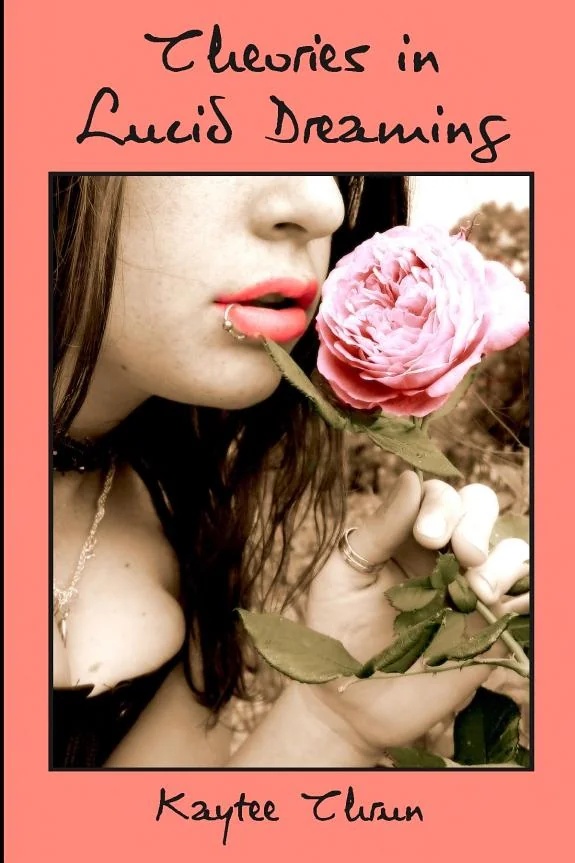
Theories in Lucid Dreaming
Kaytee Thrun's 'Theories in Lucid Dreaming' is not for the faint of heart, nor is it a conventional relationship narrative. The choice to render a romance solely through verse, particularly with its unflinching portrayal of difficulty, marks it as a distinct literary undertaking. The author’s command of dark imagery is a notable strength, painting scenes that linger long after reading. For instance, the depiction of a shared silence that feels 'like dust settling on old bones' powerfully evokes a relationship's decay. However, the exclusively poetic format, while ambitious, can at times obscure narrative clarity, leaving the reader to piece together events with a degree of effort that occasionally distracts from the emotional core. The work’s ambition lies in its unflinching examination of a relationship’s dissolution through intensely visual, sometimes abstract, poetic language. Ultimately, 'Theories in Lucid Dreaming' offers a starkly beautiful, albeit challenging, exploration of love's end.
📝 Description
83
Kaytee Thrun's 2005 book examines the emotional dreamscape of relationships.
Published in 2005, Kaytee Thrun's work delves into the subjective reality of human connection through the metaphor of dreaming. The collection uses vivid, sometimes stark, imagery to chart the emotional arc of a relationship, from its beginning to its end. Thrun’s poems explore how memories, desires, and resentments can intertwine, coloring external experiences and shifting perceptions.
The book appeals to readers interested in experimental literary forms and those who engage with the more complex emotional aspects of relationships. It is especially suited for individuals who appreciate poetry that uses potent, often unsettling, visuals to convey psychological states. Thrun's contribution sits within a literary context of the mid-2000s, a time when personal narrative and psychological depth in art were gaining prominence.
This book engages with esoteric thought by using the metaphor of dreaming to represent a subjective, internal reality. It aligns with traditions that view dreams not merely as random mental activity, but as a significant space for understanding psychological and emotional truths. The focus on the 'dreamscape' of relationships suggests an exploration of consciousness and perception that moves beyond the purely rational, touching on how inner states shape our experience of connection and intimacy. It reflects a broader interest in the psychological and spiritual dimensions of human experience prevalent in certain esoteric circles.
💡 Why Read This Book?
• Gain insight into relationship dynamics through unconventional poetic expression, as demonstrated by the 2005 publication date, offering a perspective distinct from earlier eras. • Experience the power of descriptive, sometimes dark, imagery to convey complex emotions, particularly evident in the poem describing silence as 'dust settling on old bones'. • Explore a unique literary structure that uses the metaphor of dreaming to represent the subjective and often fragmented reality of intimate connections.
⭐ Reader Reviews
Honest opinions from readers who have explored this book.
❓ Frequently Asked Questions
What is the primary literary form of 'Theories in Lucid Dreaming'?
The book is structured as a novel-in-poems. It tells a story through a collection of verse, rather than traditional prose chapters, first published in 2005.
What kind of imagery does Kaytee Thrun use in the book?
Thrun employs descriptive and often dark imagery. The poems frequently use potent visual metaphors to express the emotional states associated with a troubled relationship.
What is the central theme explored in 'Theories in Lucid Dreaming'?
The book's central theme is the bittersweet narrative of a troubled relationship, tracing its journey from beginning to end. It examines the complexities and emotional arc of intimacy.
When was 'Theories in Lucid Dreaming' originally published?
The work was first published on September 1, 2005. This places it within the literary context of the early 21st century, a period of evolving poetic forms.
Does the book offer advice on lucid dreaming techniques?
No, the title 'Theories in Lucid Dreaming' is metaphorical. The book uses the concept of dreams and altered states of perception to explore relationship dynamics, not to provide practical guidance on achieving lucidity in sleep.
Who is Kaytee Thrun?
Kaytee Thrun is the author of 'Theories in Lucid Dreaming.' While specific biographical details are not widely available, the 2005 publication marks their contribution to contemporary poetry.
🔮 Key Themes & Symbolism
Relationship Arc
The collection meticulously maps the progression of a romantic connection, from its initial stages through its eventual dissolution. The narrative structure, presented in verse, allows for a non-linear exploration of memories and emotional shifts, capturing the subjective experience of being in and out of love. The bittersweet tone suggests an acknowledgment of both the joy and the pain inherent in deep human connection.
Dark Imagery and Psychological States
Thrun employs potent, often unsettling imagery to represent the internal field of the individuals involved. This deliberate use of dark visuals—evoking decay, shadow, or psychological unease—serves to highlight the complexities and difficulties within the relationship. It suggests that the internal experience of love and conflict can be as profound and impactful as external events.
The Metaphor of Dreaming
The title itself, 'Theories in Lucid Dreaming,' frames the narrative through the lens of altered perception and subjective reality. The relationship's events and emotions are presented as if experienced within a dream state, where logic may bend and symbolism takes precedence. This allows for an exploration of how our perceptions and internal states shape our understanding of our connections.
Bittersweet Narrative Tone
A consistent thread throughout the work is its bittersweet quality. Even in moments that might be construed as negative or painful, there's an underlying acknowledgment of the value or beauty that once existed, or the lasting impact the relationship has had. This nuanced tone avoids simple condemnation or idealization, presenting a more realistic and emotionally resonant portrait.
💬 Memorable Quotes
Direct passages from the work, attributed to the author.
“Silence settling like dust on old bones.”
— This striking metaphor vividly conveys the decay and stagnation within a relationship. It suggests a profound lack of communication and vitality, where shared space has become a tomb for past connection.
“The beginning was a bright room, now the walls are closing in.”
— This captures the transition from hope and openness to confinement and pressure. It contrasts the initial promise of a relationship with its later oppressive reality, highlighting a sense of entrapment.
“We dreamt different futures in the same bed.”
— This poignant line illustrates fundamental incompatibility and diverging paths within a shared intimacy. It speaks to the loneliness that can exist even in close proximity, where individual desires pull apart.
“The end arrived not with a bang, but a slow fade.”
— This phrase characterizes the gradual, almost imperceptible dissolution of the relationship. It suggests a loss of intensity and connection that occurred over time, rather than a sudden, dramatic break.
“Memory is a landscape painted in shadow.”
— This interpretation of memory suggests that recollections, particularly of difficult experiences, are often tinged with negativity or obscured by emotional darkness. It implies that our past is not always clear or objective.
🌙 Esoteric Significance
Tradition
While not overtly tied to a specific historical esoteric lineage like Hermeticism or Gnosticism, 'Theories in Lucid Dreaming' engages with concepts resonant in many esoteric traditions: the power of the mind to shape reality, the subjective nature of perception, and the exploration of inner landscapes. It reflects a modern, psychological approach to esoteric themes, where the 'dreamscape' becomes a primary locus for understanding the self and its relationships, akin to dream analysis in depth psychology or certain meditative practices.
Symbolism
The book utilizes symbols drawn from the experience of relationships and internal states. 'Dark imagery' functions symbolically, representing not just negativity but also the unconscious depths and hidden aspects of the psyche. The 'closing walls' symbolize psychological entrapment or the suffocating nature of a failing relationship. 'Different futures dreamt in the same bed' symbolically represents fundamental disconnection and the illusion of shared destiny.
Modern Relevance
The work's exploration of subjective reality and the internal 'dreamscape' as a framework for understanding human connection finds resonance with contemporary practices in mindfulness, consciousness studies, and therapeutic approaches that emphasize inner experience. Thinkers and practitioners interested in how personal narratives are constructed and how emotional states influence perceived reality will find parallels with Thrun's imagistic exploration of psychological intimacy.
👥 Who Should Read This Book
• Readers interested in experimental poetry and narrative forms who appreciate verse that tells a story. • Individuals exploring the psychological dynamics of relationships and the emotional impact of connection and loss. • Those fascinated by the concept of subjective reality and how internal states, akin to dreams, shape our experiences.
📜 Historical Context
Published in 2005, Kaytee Thrun's 'Theories in Lucid Dreaming' emerged during a period of burgeoning interest in psychological introspection within literature. The early 21st century saw many poets exploring personal experience and emotional landscapes with increased candor. While not directly aligned with the confessional poetry movement of the mid-20th century, its focus on raw emotional truth and fragmented narrative echoes its spirit. This era also witnessed a growing engagement with non-linear storytelling across various media, influenced perhaps by postmodern thought and the digital age's fragmented information streams. Thrun's work fits within this broader trend of examining subjective reality and internal states. It stands apart from more traditional, narrative-driven poetry, offering a concentrated, imagistic approach to relationship dynamics, a stark contrast to the more overtly romantic poetry prevalent in earlier decades. The work’s unique structure as a novel-in-poems also positions it as an experiment in form.
📔 Journal Prompts
The 'landscape painted in shadow' – how does this metaphor apply to your own recollections of past relationships?
Reflect on the transition from a 'bright room' to 'closing walls' in a significant connection.
Consider the symbolism of different dreams occurring within a shared space, like 'different futures in the same bed.'
Explore the concept of a relationship's end arriving as a 'slow fade' versus a sudden event.
Analyze the emotional weight of silence described as 'dust settling on old bones.'
🗂️ Glossary
Novel-in-poems
A literary form that tells a continuous story or explores a central theme through a sequence of poems, rather than traditional prose chapters. It blends narrative elements with poetic structure.
Bittersweet
A tone or feeling that combines sadness and happiness, or pleasure and pain. In literature, it often describes experiences that are valuable but tinged with loss or melancholy.
Dark Imagery
The use of descriptive language that evokes unsettling, somber, or psychologically intense visual or sensory experiences to convey emotion or theme.
Dreamscape
A metaphorical term referring to the landscape or environment of a dream. In this context, it represents the subjective, often surreal, emotional and psychological world of a relationship.
Subjective Reality
An individual's personal perception and experience of the world, influenced by their beliefs, emotions, memories, and internal states, as opposed to an objective, universally agreed-upon reality.
Psychological States
The internal mental and emotional conditions of an individual, including feelings, thoughts, perceptions, and motivations, which influence behavior and experience.
Relationship Arc
The progression or developmental trajectory of a relationship over time, encompassing its beginning, growth, challenges, and potential end.
This book appears in 1 collection
🔮 Readers Also Liked
Browse all →








From the “Lucid Dreaming” Collection
View all →





More Free Occult Philosophy Books
View all →