The Elixir of Life
 81
81

The Elixir of Life
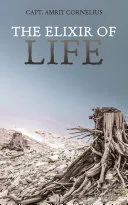
Capt. Amrit Cornelius's The Elixir of Life is a poignant, if stark, poetic commentary on humanity's estranged relationship with the natural world. The collection's strength lies in its unvarnished portrayal of ecological decline, linking it directly to a spiritual malaise. The author avoids romanticizing nature, instead presenting a raw lament for its current state. A particular passage describing the 'forgotten tenets of love and peace' as the root of environmental war feels keenly observed. However, the work sometimes leans towards a somewhat didactic tone, which, while earnest, can feel less like artistic exploration and more like a moral lecture. Despite this, the poems collectively serve as a powerful, somber reflection on our collective responsibility. The Elixir of Life offers a challenging perspective for those willing to confront it.
📝 Description
81
Published in 2016, The Elixir of Life uses poetry to address environmental decline and eroding human values.
Capt. Amrit Cornelius's 2016 collection of poems, The Elixir of Life, articulates a deep sorrow regarding humanity's destructive relationship with the natural world. The book suggests that a loss of spiritual and ethical principles is directly linked to the planet's worsening condition, resulting in unnatural events and a separation from the divine. Cornelius's verses serve as a mirror to our collective mistakes, advocating for a return to love and peace as a path to healing both society and the environment. This work is for individuals who feel a strong bond with nature, grieve its current state, and are disillusioned with modern societal values, seeking a more balanced existence with the earth.
The Elixir of Life aligns with spiritual traditions that view the physical world as a reflection of inner states. Cornelius's concept of 'The Great Deterioration' echoes gnostic ideas of a fallen world due to spiritual ignorance and a loss of connection to a divine source. The emphasis on nature as a living entity, deeply affected by human consciousness, connects to animistic beliefs and certain eco-spiritual philosophies that see the environment as sacred and responsive to human moral conduct. The call for inner peace and love as a means to ecological restoration finds parallels in practices focused on cultivating compassion and mindfulness.
💡 Why Read This Book?
• Gain a poetic perspective on ecological crisis, specifically understanding how Capt. Amrit Cornelius links the 'deterioration of human values' to environmental harm, a viewpoint distinct from purely scientific analyses. • Explore the concept of 'The Great Deterioration' as presented in the book, learning how it frames societal decline and natural imbalance as interconnected spiritual and ethical issues. • Connect with a specific call to action, understanding the author's 2016 perspective on returning to 'love and peace' as essential for restoring both human society and the natural world.
⭐ Reader Reviews
Honest opinions from readers who have explored this book.
❓ Frequently Asked Questions
When was The Elixir of Life first published and by whom?
The Elixir of Life by Capt. Amrit Cornelius was first published on October 12, 2016. It is a collection of poems focusing on nature and environmental concerns.
What is the central theme of The Elixir of Life?
The central theme is the profound deterioration of nature due to the decline in human values, specifically the loss of love and peace, as detailed in the original blurb.
What specific aspect of nature does the book address?
The book addresses the 'great deterioration' of natural resources and the resulting negative impact on nature's normal behavior, stemming from mankind's actions.
What does the author suggest is the cause of environmental problems?
Capt. Amrit Cornelius suggests that the cause is mankind forgetting the 'tenets of love and peace', leading to a spiritual and ethical breakdown that mirrors ecological destruction.
Who is the intended audience for The Elixir of Life?
The intended audience includes those concerned with environmental issues, readers seeking spiritual reflections on humanity's impact on nature, and individuals who lament the loss of traditional values.
What is the significance of the title 'The Elixir of Life' in relation to the book's content?
The title suggests that a return to fundamental human values like love and peace, and a harmonious relationship with nature, could be the 'elixir' that heals both humanity and the planet.
🔮 Key Themes & Symbolism
Ecological Deterioration
The collection vividly portrays the 'great deterioration' of natural resources, directly linking this physical decay to a spiritual and ethical decline in humanity. Cornelius illustrates how mankind's forgotten 'tenets of love and peace' manifest as environmental destruction, leading to an unnatural state where nature's behavior is negatively affected. This theme emphasizes a holistic view of planetary health, intertwined with human consciousness and morality.
Spiritual Disconnect
A core concept is humanity's estrangement from the divine through its neglect of spiritual principles. The poems interpret nature as a sacred creation, the Almighty's design, which has been defiled by mankind's focus on conflict and materialism. This spiritual amnesia is presented as the root cause of both societal strife and ecological imbalance, suggesting a path to healing lies in reconnecting with these foundational 'tenets'.
Human Values and Nature
Cornelius posits a direct correlation between the erosion of human values—such as love, peace, and respect—and the degradation of the natural world. The work critiques contemporary society for prioritizing conflict and self-interest over conservation and harmony. It suggests that only a restoration of these fundamental human virtues can lead to the preservation and healing of the beautiful nature intended for man.
Conservation and Morality
The poems frame conservation not merely as an environmental policy issue but as a moral imperative. The failure to conserve natural resources is seen as a direct consequence of moral failings. The work implies that a genuine commitment to protecting the earth stems from an internal, ethical transformation, a return to a state of grace where humanity acts as a responsible steward rather than a destructive force.
💬 Memorable Quotes
Direct passages from the work, attributed to the author.
“Man... has forgotten the tenets of love and peace.”
— This phrase points to a loss of fundamental spiritual and ethical guidance. The interpretation is that a return to these core principles of love and peace is essential for healing the rift between humanity and nature.
“thereby negatively affecting the normal behaviour of nature as we see it today.”
— This suggests that current environmental anomalies and extreme weather events are not random but are direct consequences of human moral and spiritual failings, disrupting the natural order.
“Man, for whom this beautiful nature was created by the Almighty has forgotten...”
— This highlights a perceived cosmic injustice: humanity, the intended beneficiary of a sacred natural world, has become its despoiler through forgetfulness of its divinely ordained purpose and connection.
“He is at war not only with man but has come into direct confro”
— This fragmented line implies that humanity's conflicts extend beyond interpersonal strife to a direct, adversarial relationship with the natural world itself, a consequence of its spiritual alienation.
💡 Key Ideas
Editorial paraphrase of the work's core concepts — not direct quotes.
The great deterioration of human values in man in the present times has brought about greater deterioration in the conservation of natural resources.
This line captures the book's central thesis: that a decline in ethical and spiritual principles directly leads to environmental neglect and destruction. It highlights the author's belief in a deep, causal link between inner human states and outer ecological conditions.
🌙 Esoteric Significance
Tradition
The Elixir of Life aligns with a broad current of nature-based spiritualism and ecological mysticism, drawing from traditions that emphasize the sacredness of the natural world. While not explicitly tied to a single lineage like Hermeticism or Kabbalah, it shares with them a belief in interconnectedness and the idea that the physical world reflects deeper spiritual realities. Its message of humanity's fallen state and the potential for redemption through a return to fundamental virtues can be seen as resonating with Gnostic themes of spiritual awakening and restoration.
Symbolism
The 'deterioration of human values' serves as a potent symbol for the spiritual sickness afflicting modern humanity. Nature itself, in its current 'negatively affected' state, becomes a symbol of mankind's broken covenant with the divine and the earth. The forgotten 'tenets of love and peace' function as symbolic keys, representing the lost spiritual wisdom that, if rediscovered, could unlock a path to healing and balance.
Modern Relevance
In contemporary discourse, The Elixir of Life finds relevance in the growing fields of ecopsychology and eco-spirituality. Thinkers and practitioners who explore the psychological and spiritual roots of environmental degradation, such as those involved with the Deep Ecology movement or ecofeminism, would find resonance in Cornelius's work. Its emphasis on the moral dimension of ecological issues also speaks to current debates on environmental justice and the need for ethical frameworks beyond purely scientific or economic considerations.
👥 Who Should Read This Book
• Individuals deeply concerned with environmental issues and seeking a spiritual or ethical perspective on ecological crises, moving beyond purely scientific analyses. • Readers interested in poetry that addresses contemporary societal failings, specifically the erosion of human values and its impact on the natural world as conceptualized in 2016. • Those who feel a personal connection to nature and seek to understand the spiritual underpinnings of its current state, exploring themes of loss and potential restoration.
📜 Historical Context
Published in 2016, Capt. Amrit Cornelius's The Elixir of Life emerged during a period of intensifying global awareness regarding climate change and environmental ethics. While the book's focus is on the spiritual and moral dimensions of ecological crisis, it speaks to broader concerns amplified by contemporary environmental movements. Its critique of industrialization and materialism echoes earlier spiritual and philosophical currents, such as those found in Romanticism and the works of figures like Thoreau, who advocated for a simpler, more nature-aligned existence. The book's publication predates the significant surge in youth-led climate activism that gained global traction in the late 2010s, but it taps into a similar vein of profound concern for the planet's future. The work implicitly engages with a long-standing spiritual tradition that views nature as sacred, a perspective often contrasted with purely secular or utilitarian environmentalism prevalent in academic and political discourse.
📔 Journal Prompts
The Great Deterioration of natural resources: how does it reflect in your immediate environment?
Reflect on the 'tenets of love and peace' forgotten by modern man. How can they be reawakened?
Consider nature as a sacred creation. What does this perspective mean for your daily interactions with the environment?
The author's view of humanity being 'at war' with nature. Identify one instance where you've witnessed or felt this.
If nature's behavior is 'negatively affected' by human values, what positive human values could foster its restoration?
🗂️ Glossary
The Great Deterioration
A concept introduced by Capt. Amrit Cornelius in his 2016 collection, referring to the significant decline in both human values and the conservation of natural resources.
Conservation of natural resources
The practice of protecting Earth's natural resources for current and future generations. In this work, its deterioration is directly linked to a decline in human ethics.
Tenets of love and peace
Fundamental principles of compassion, empathy, and non-violence that the author believes modern humanity has forgotten, leading to societal and environmental conflict.
Normal behaviour of nature
The natural, balanced, and predictable patterns of the environment. The book posits that this 'normal behaviour' is being disrupted by human actions and values.
Almighty
Refers to a divine creator or supreme being, from whom nature is believed to have originated according to the author's perspective in the poems.
Direct confro
An abbreviation likely implying 'direct confrontation,' suggesting humanity's adversarial relationship not only with fellow humans but also with the natural world itself.
Esoteric
Relating to or accessible only by a select group of initiated people or those with a particular knowledge or interest; mystical or secret.