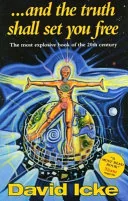
--and the Truth Shall Set You Free
 83
83

--and the Truth Shall Set You Free
David Icke’s 1996 work, '--and the Truth Shall Set You Free,' is a foundational text for those exploring alternative perspectives on global events. Its strength lies in its relentless questioning of authority and its ambitious attempt to connect disparate threads of conspiracy into a cohesive, albeit radical, narrative. Icke's prose, while sometimes dense, conveys a palpable urgency to expose what he views as systemic deception. A limitation, however, is the sheer scope of claims, which can strain credulity without extensive corroboration, a common pitfall in this genre. The assertion that global events are orchestrated by hidden hands, while central to the book's thesis, requires a significant suspension of disbelief. Despite this, the book’s impact on the landscape of conspiracy literature is undeniable, prompting many readers to re-examine information sources. It serves as a stark warning about the potential for hidden manipulation.
📝 Description
83
David Icke's 1996 book argues that hidden agendas control human history.
Published in 1996, '--and the Truth Shall Set You Free' critiques conventional explanations of world events. David Icke suggests that secret forces manipulate societal structures and public perception. The book aims to reveal what the author views as the core methods of control, encouraging readers to scrutinize information from mainstream sources. It is aimed at those interested in alternative historical perspectives and conspiracy theories, particularly individuals who feel disconnected from official narratives and seek explanations that question dominant viewpoints. The work appeals to readers drawn to investigative approaches that examine the foundations of power and global systems.
The book was released during a time of increasing globalization and technological change, which Icke contended enabled new methods of control. This period also saw the rise of internet culture, facilitating the spread of non-traditional ideas beyond mainstream media. The text engages with contemporary anxieties about hidden influences shaping society and debates surrounding media manipulation and the nature of truth. It contrasts with mainstream intellectual currents of the mid-1990s, finding its audience in underground networks.
This work fits within a tradition of conspiracy literature that posits hidden powers shaping world events, often connecting them to secret societies and ancient lineages. Such texts frequently challenge established historical accounts, suggesting a concealed reality beneath the surface of ordinary life. They often draw on Gnostic ideas of hidden knowledge and the need for liberation from illusion, framing the author as a revealer of suppressed truths. The book engages with the esoteric concept that true understanding requires looking beyond official narratives and questioning the perceived order of things.
💡 Why Read This Book?
• Learn about Icke's concept of a 'hidden hand' manipulating global events, a core thesis presented with extensive examples, offering a counter-narrative to official accounts. • Understand the historical context of the mid-1990s, a period of increasing globalization and technological shift, as Icke details how these changes purportedly enabled new forms of control. • Gain insight into Icke's critique of media and political institutions, challenging readers to critically assess information presented by mainstream sources as detailed throughout the book.
⭐ Reader Reviews
Honest opinions from readers who have explored this book.
❓ Frequently Asked Questions
What is the central argument of David Icke's '--and the Truth Shall Set You Free'?
The central argument is that global events are not random but are orchestrated by hidden forces manipulating political, economic, and social systems to maintain control over humanity. Icke urges readers to question official narratives and seek out suppressed truths.
When was '--and the Truth Shall Set You Free' originally published?
'--and the Truth Shall Set You Free' was first published in 1996.
Does David Icke cite specific groups or entities as the 'hidden hands' in his book?
Yes, the book explores various groups and lineages, often referencing historical secret societies and alleged power brokers who, according to Icke, operate behind the scenes to influence world affairs.
What kind of impact did '--and the Truth Shall Set You Free' have upon its release?
Upon its release in 1996, the book contributed significantly to the growing discourse on conspiracy theories and alternative history, resonating with readers disillusioned by mainstream explanations of global events.
Is David Icke's work considered mainstream historical analysis?
No, David Icke's work, including '--and the Truth Shall Set You Free,' is widely considered outside of mainstream historical analysis. It is categorized as alternative history and conspiracy literature.
What is the primary goal of David Icke's writing in this book?
The primary goal is to awaken readers to what Icke perceives as widespread deception and manipulation, encouraging critical thinking and a re-evaluation of accepted realities and power structures.
🔮 Key Themes & Symbolism
Hidden Agendas
The work posits that a covert network of individuals and groups orchestrates global events to maintain power and control. Icke details how these 'hidden hands' allegedly manipulate political, economic, and social systems, often through deception and the suppression of information. The core idea is that the visible world is a stage for a deeper, unseen game of influence, with populations kept in ignorance of the true forces at play.
Media and Information Control
A significant theme is the alleged manipulation of mass media and information channels to shape public perception and enforce conformity. Icke argues that mainstream news outlets, educational systems, and cultural institutions serve as tools for perpetuating the agenda of the hidden controllers. He encourages readers to critically analyze all information, seeking alternative sources to uncover truths obscured by official narratives.
The Nature of Reality
The book challenges conventional understandings of reality itself, suggesting that what is commonly accepted as truth is a carefully constructed illusion. Icke explores how societal conditioning and psychological manipulation contribute to a collective false consciousness. The pursuit of 'truth' in his work involves deconstructing these illusions to perceive a more fundamental, albeit disturbing, reality of human existence and governance.
Individual Liberation
Ultimately, '--and the Truth Shall Set You Free' advocates for individual awakening and liberation from imposed belief systems and control mechanisms. By exposing the alleged workings of hidden powers, Icke aims to empower readers to think independently and resist manipulation. The act of understanding these hidden dynamics is presented as a crucial step toward reclaiming personal autonomy and societal freedom.
💬 Memorable Quotes
Direct passages from the work, attributed to the author.
“The world is a stage, and most people are unaware they are merely actors in a play.”
— This captures Icke's view that societal structures and events are often orchestrated, and the general populace is kept ignorant of the true directors and script, living under a manufactured reality.
“Truth is not what you are told, but what you discover for yourself.”
— This highlights the book's emphasis on personal investigation and critical thinking, positioning independent discovery of facts as the only reliable path to genuine understanding, rather than accepting external pronouncements.
“Information is the currency of power; those who control it, control the world.”
— This reflects Icke's analysis of how hidden groups allegedly maintain dominance by controlling the flow of knowledge and narrative, thereby shaping public opinion and actions to suit their agenda.
“The greatest prison is not a physical one, but the limitations of the mind.”
— This interpretation points to Icke's belief that mental conditioning and societal programming are the primary means by which individuals are controlled, and breaking free requires intellectual and perceptual shifts.
“Official history is written by the victors, and often by those who seek to obscure their own culpability.”
— This suggests that historical accounts are biased and incomplete, deliberately crafted to conceal the actions and motivations of powerful individuals or groups, necessitating a deeper, critical examination of the past.
🌙 Esoteric Significance
Tradition
This work draws heavily from Gnostic and Hermetic traditions by emphasizing hidden knowledge ('gnosis') as a path to liberation from an illusory material world. Icke's concept of a controlling elite manipulating humanity aligns with Gnostic ideas of a flawed demiurge or lower powers enslaving spiritual beings. It departs from traditional Hermeticism by focusing less on individual spiritual attainment through universal principles and more on exposing external, specific conspiratorial forces.
Symbolism
The book frequently employs the serpent symbol, often associated with hidden wisdom or, conversely, deception in various esoteric traditions. Icke reinterprets these symbols, casting them as indicators of the ancient, hidden powers he claims are manipulating humanity. He also discusses the 'All-Seeing Eye' as a symbol of surveillance and control by these elite groups, turning its traditional esoteric meanings towards a more literal interpretation of power structures.
Modern Relevance
Icke's ideas continue to influence contemporary conspiracy circles, particularly online communities focused on alternative history and anti-establishment narratives. Thinkers and content creators exploring themes of global control, secret societies, and media manipulation often cite or engage with his work. His framework for understanding power dynamics, albeit controversial, has found resonance with individuals seeking to deconstruct perceived societal illusions and question dominant ideologies in the digital age.
👥 Who Should Read This Book
• Critical thinkers disillusioned with mainstream explanations of world events, seeking alternative frameworks for understanding global power dynamics. • Students of conspiracy literature and alternative history, looking to engage with a foundational text that shaped much of the discourse in the late 20th century. • Individuals interested in esoteric interpretations of control mechanisms and the nature of societal illusion, who are prepared to confront unconventional and controversial theories.
📜 Historical Context
Emerging in 1996, '--and the Truth Shall Set You Free' arrived at an important moment. The internet was beginning to democratize information dissemination, allowing alternative narratives to bypass traditional gatekeepers. This era saw thinkers like Noam Chomsky critiquing media manipulation in works like 'Manufacturing Consent' (1988), a concern echoed by Icke, though Icke’s conclusions were far more radical. The book engaged with a public increasingly skeptical of established institutions following events like the end of the Cold War and the rise of global financial markets. Icke’s work positioned itself against the more academic or socio-political critiques of power, veering sharply into esoteric and conspiratorial territory, which led to significant controversy and dismissal from mainstream academic discourse.
📔 Journal Prompts
The concept of a 'hidden hand' directing global events.
Analysis of media narratives versus Icke's proposed hidden agendas.
Personal reflections on inherited beliefs and societal conditioning.
The role of information control in shaping public perception.
Investigating the symbolism of control within societal structures.
🗂️ Glossary
Hidden Hand
A metaphorical term used by Icke to represent the alleged secret elite or group of individuals who covertly manipulate global events, politics, and economies to maintain their power and control over humanity.
Archons
In Gnostic philosophy, these are malevolent, serpentine beings who rule the material world and seek to enslave human consciousness. Icke adapts this concept to describe the alleged controllers of Earth.
False Consciousness
A Marxist concept describing the way in which the ruling class can manipulate the beliefs and understandings of the working class, preventing them from recognizing their own oppression. Icke applies this to a broader societal manipulation.
Reptilian Elite
A prominent theory within Icke's later work, suggesting that shape-shifting reptilian humanoids secretly control global affairs. While more pronounced in subsequent books, the groundwork for this is laid in earlier texts.
Babylonian Money System
Icke's critique of the global financial system, which he argues is designed to enslave humanity through debt and control, rooted in ancient practices of usury and manipulation.
Anunnaki
Ancient Mesopotamian deities. Icke, drawing on interpretations of ancient texts, posits them as extraterrestrial beings who influenced human history and genetics, linking them to the 'hidden hand'.
The Matrix
While popularized by the 1999 film, Icke uses the concept to describe the illusory reality and system of control that he argues humanity is trapped within, created by hidden forces.
This book appears in 1 collection
🔮 Readers Also Liked
Browse all →







From the “Templar Knights” Collection
View all →



More Free Occult Philosophy Books
View all →