Vampires in the Carpathians

 61
61

Vampires in the Carpathians

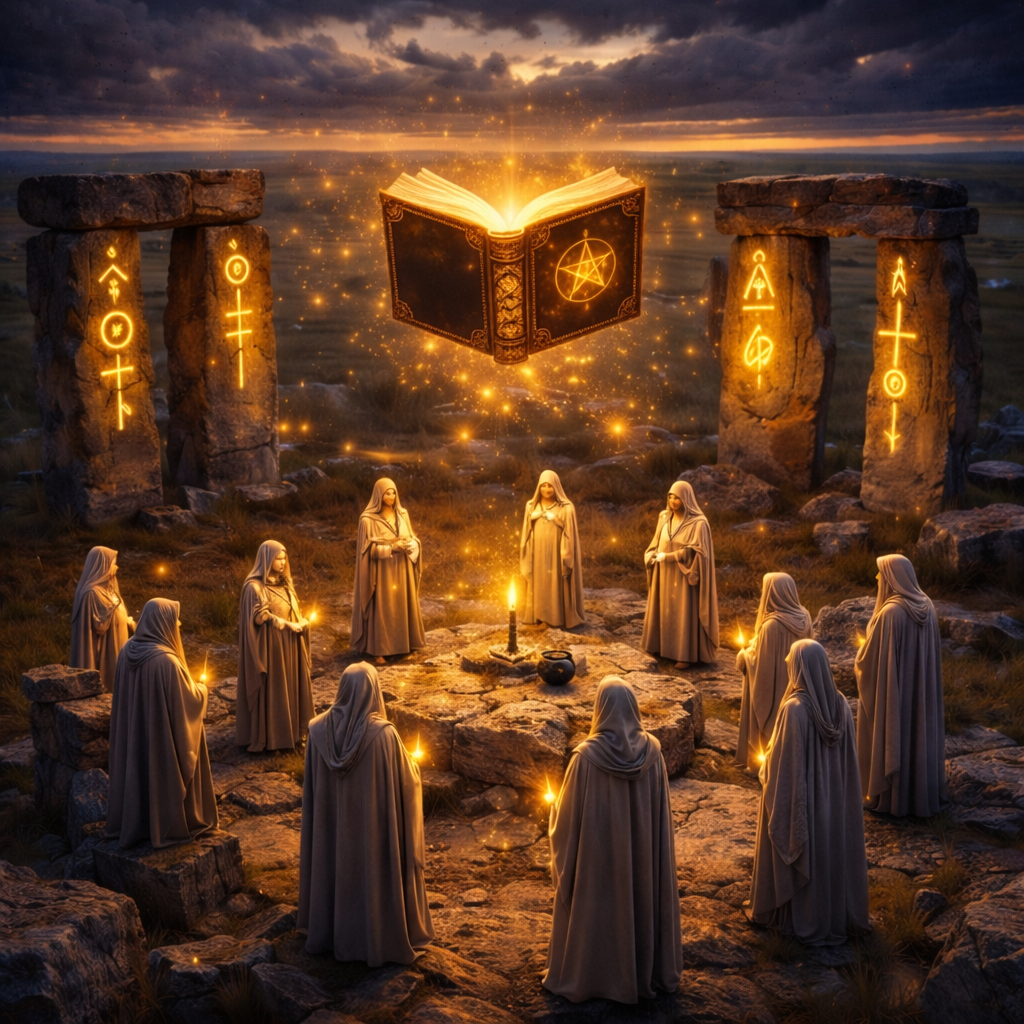

Petr Bogatyrev's 'Vampires in the Carpathians' is a monumental contribution to the study of Eastern European folklore and its esoteric dimensions. Bogatyrev masterfully navigates the complex tapestry of Carpatho-Rusyn beliefs, revealing the profound spiritual and magical significance embedded within their social customs, festivals, and rites. This work is not simply an ethnographic account; it’s an illumination of ancient worldview where the spectral and the sacred are inextricably linked. The author's deep scholarship and evocative prose make the esoteric insights accessible, positioning this book as a vital resource for scholars, practitioners, and anyone fascinated by the enduring power of myth. A truly indispensable text for understanding the magical underpinnings of folk traditions.
📝 Description
61
Petr Bogatyrev's 'Vampires in the Carpathians' examines Carpatho-Rusyn beliefs about the undead.
Petr Bogatyrev's 'Vampires in the Carpathians' investigates the folklore and rituals surrounding undead beliefs among the Carpatho-Rusyn people. The book details how fears of spectral entities and malevolent forces influenced their daily lives and religious practices. Bogatyrev analyzes superstitions, harvest festivals, and funeral rites, showing how these customs aimed to protect against evil and preserve order. This work reveals the ancient knowledge embedded in these traditions, passed down through generations. It is a valuable resource for understanding the origins of European magical thinking, the psychology of fear, and the persistence of shared beliefs.
The book draws connections between these practices and the broader context of European magical thought. It addresses the psychological underpinnings of fear and the enduring strength of collective belief systems. Bogatyrev's research offers insights into the ancestral magic of Eastern Europe, appealing to those interested in hidden lore and comparative mythology.
This study is situated within the European tradition of folkloric and magical studies, particularly those focusing on Slavic cultures. It examines how localized belief systems, such as those concerning vampires and spectral beings in the Carpathians, reflect broader patterns in folk religion and cosmology. The book connects ritual practices and social customs to underlying beliefs about spiritual forces and the maintenance of cosmic order, a common theme in esoteric scholarship investigating the relationship between myth and lived experience.
💡 Why Read This Book?
Uncover the arcane rituals and deeply ingrained superstitions that shaped life in the Carpathians. 'Vampires in the Carpathians' offers a rare look into ancestral magic, the symbolism of folk festivals, and the community's relationship with the supernatural. It's a vital read for seekers of hidden knowledge, folklorists, and anyone drawn to the mystical traditions of Eastern Europe.
⭐ Reader Reviews
Honest opinions from readers who have explored this book.
❓ Frequently Asked Questions
What is the primary focus of 'Vampires in the Carpathians'?
The book primarily focuses on the social life, customs, festivals, rites, and superstitions of the Carpatho-Rusyn people, particularly as they relate to beliefs about vampires and other supernatural entities.
Is this book about modern vampires?
No, this book delves into the historical and folkloric understanding of vampiric entities within the specific cultural context of the Carpathians, predating modern literary and cinematic interpretations.
Who was Petr Bogatyrev?
Petr Bogatyrev (1893-1970) was a prominent ethnographer and folklorist whose extensive research documented the rich cultural heritage of the Slavic peoples, particularly in the Carpathian region.
What kind of rituals are described in the book?
The book details various rituals, including those associated with agriculture, healing, protection against evil spirits, and funerary ceremonies, all imbued with a deep understanding of the spiritual world.
Can beginners understand this book?
Yes, while rich in detail, the book is written in an accessible manner. It provides valuable insights for both seasoned scholars and those new to the study of folklore and esoteric traditions.
🔮 Key Themes & Symbolism
The Symbiotic Dance of Life and Death
Bogatyrev meticulously illustrates how the Carpatho-Rusyn worldview saw life and death not as opposing forces, but as integral parts of a cyclical continuum. Beliefs surrounding revenants and spectral beings were deeply intertwined with agricultural cycles, harvest rituals, and the very sustenance of the community. The 'vampire' served as a potent symbol for anxieties about depletion – of resources, vitality, and spiritual energy – and the rituals were designed to replenish and protect, ensuring the continuity of both the physical and the spiritual realms. This theme reveals a profound ecological and spiritual understanding where appeasing the unseen was crucial for earthly prosperity.
Ritual as Cosmic Equilibrium
The festivals and ceremonies documented by Bogatyrev were far more than social gatherings; they were vital mechanisms for maintaining cosmic order. Each rite, from harvest thanksgiving to protective charms against malevolent entities, served to re-align the community with the natural and supernatural forces governing their existence. The book highlights how the meticulous performance of these rituals, imbued with symbolic actions and incantations, acted as a bulwark against chaos and ensured the benevolent flow of energy. This underscores a worldview where human agency, expressed through ritual, played a critical role in shaping destiny and averting disaster.
The Embodied Wisdom of Superstition
Far from being mere irrational fears, the superstitions detailed in 'Vampires in the Carpathians' represent a codified system of ancestral wisdom. Bogatyrev demonstrates how these beliefs, often centered around the 'vampire' archetype, were practical guides for navigating a dangerous world. They encoded knowledge about hygiene, social conduct, the identification of illness, and the importance of community solidarity. The book reveals superstition as a living tradition, a deeply embedded psychological and cultural framework that provided comfort, explained the inexplicable, and offered tangible strategies for survival and spiritual well-being.
💬 Memorable Quotes
Direct passages from the work, attributed to the author.
“To fear the dead is to invite their shadow upon the living.”
— This suggests that acknowledging and properly honoring the departed, rather than fearing them, is crucial for maintaining a healthy spiritual balance and preventing negative influences.
“Every drop of blood spilled on fertile soil carries a prayer.”
— This evokes the ancient concept of blood sacrifice or offering, where even bloodshed, particularly in an agricultural context, is imbued with spiritual intent and petition.
“The hearth fire wards off more than just the winter's chill.”
— This highlights the protective, purifying, and spiritual significance of the hearth in folk traditions, extending its power beyond mere physical warmth to ward off malevolent forces.
“Where community falters, the darkness finds its entry.”
— This emphasizes the vital role of communal bonds and collective action in spiritual defense, suggesting that social cohesion is a primary shield against supernatural or malevolent intrusion.
💡 Key Ideas
Editorial paraphrase of the work's core concepts — not direct quotes.
The veil between worlds is thinnest during the harvest moon.
This quote speaks to the heightened spiritual sensitivity and the increased permeability of the boundary between the physical and supernatural realms during significant celestial and seasonal events.
🌙 Esoteric Significance
Tradition
Bogatyrev's work is deeply embedded within the tradition of Slavic folk magic and shamanism. It reflects an animistic worldview where spirits inhabit natural phenomena and ancestral veneration plays a crucial role. The practices described are aligned with pre-Christian beliefs that sought to maintain harmony between the human, natural, and supernatural realms, utilizing ritual, sympathetic magic, and divination to influence outcomes and protect against perceived threats.
Symbolism
The 'vampire' in this context is a rich symbol, representing not only a literal undead entity but also fears of societal decay, spiritual emptiness, and the draining of life force. Festivals symbolize cyclical renewal and cosmic order, while rites of passage mark transitions and ensure spiritual continuity. Objects like amulets, specific plants, and the elements of fire and water are imbued with protective and purifying symbolism, forming a complex visual and practical language of esoteric defense.
Modern Relevance
In an age often characterized by disconnection and existential anxieties, Bogatyrev's exploration of community-based rituals and spiritual resilience offers clear insights. The book's emphasis on the interconnectedness of humanity, nature, and the unseen speaks to contemporary interests in eco-spirituality and holistic well-being. Furthermore, the study of these ancient beliefs provides a valuable lens for understanding the enduring human need for meaning, protection, and belonging, concepts that remain acutely relevant in the modern world.
👥 Who Should Read This Book
This work is indispensable for folklorists, ethnographers, and cultural historians seeking a deep dive into the spiritual range of the Carpathians. Occult practitioners and students of comparative mythology will find invaluable insights into the roots of European magical traditions and the archetypal figure of the revenant. For the general reader with an interest in the esoteric, 'Vampires in the Carpathians' offers a captivating journey into a worldview where the mystical is woven into the fabric of everyday life, providing a unique perspective on human belief and ritual.
📜 Historical Context
Petr Bogatyrev's research was conducted during a period of significant social and political upheaval in Central and Eastern Europe. The early to mid-20th century saw the lingering effects of World War I, the rise of new nationalisms, and the looming shadow of World War II. In this milieu, the preservation and documentation of folk traditions became critically important, serving as both an anchor to a vanishing past and a proof of enduring cultural identity. Bogatyrev's meticulous work captures a worldview deeply rooted in centuries of agrarian life, where spiritual beliefs and daily practices were inextricably linked. The region of the Carpathians, historically a crossroads of cultures and empires, provided a wide range of beliefs, where Slavic, Hungarian, Romanian, and other influences mingled, creating a unique and complex folklore that this book so vividly brings to life.
📔 Journal Prompts
Reflect on a personal superstition and its potential roots in ancestral wisdom or communal anxieties. How does it influence your daily life?
Consider a local festival or cultural tradition. What underlying beliefs or rituals might be present, and what do they signify about the community's connection to the past or the spiritual world?
Explore the concept of 'life force' or 'vital energy' as presented in the book's themes. How do you personally cultivate or protect your own energy?
Imagine you are living in the Carpathian region during the period described. What rituals would you actively participate in, and what fears would you seek to appease?
How does the book's portrayal of the relationship between life and death challenge or affirm your own perspectives on mortality and the afterlife?
🗂️ Glossary
Revenant
A supernatural being, typically a corpse, that is believed to return from the dead to haunt or menace the living. In folklore, often associated with vampiric characteristics.
Carpatho-Rusyns
An East Slavic ethnic group traditionally inhabiting the Carpathian Mountains region, with a distinct cultural and linguistic heritage.
Sympathetic Magic
A type of magic that operates on the principle of 'like affects like' or 'contagion,' where actions performed on an object or image are believed to have a corresponding effect on the real object or person.
Animism
The belief that objects, places, and creatures all possess a distinct spiritual essence. In this context, it refers to the belief in spirits inhabiting natural elements and phenomena.
Liminal Space
A transitional or in-between state or place, often associated with heightened spiritual activity or the blurring of boundaries between different domains of existence.
This book appears in 4 collections
🔮 Readers Also Liked
Browse all →





From the “Ritual Magic” Collection
View all →





More Free Magic & Ritual Books
View all →