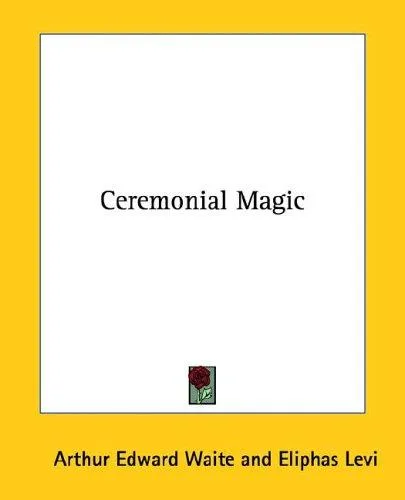
Ceremonial Magic
 61
61

Ceremonial Magic


Sophia Crane (Associate Editor) — Arthur Edward Waite's "Ceremonial Magic" remains an indispensable cornerstone for students of the occult. Waite's erudition shines, presenting complex magical theories with clarity and depth. He meticulously dissects the principles and history of ceremonial magic, offering invaluable insights into its structure and purpose. This work is particularly potent for those seeking a historical and theoretical grounding before engaging in practical application. Its strength lies in its comprehensive approach, demystifying the perceived 'otherness' of ritual and revealing its underlying philosophical and psychological dimensions. An essential read for practitioners and scholars alike who desire a rigorous, yet spiritually informed, exploration of magical arts.
📝 Description
61
Arthur Edward Waite published "Ceremonial Magic" in 1911, cataloging occult rituals and theory.
Arthur Edward Waite's 1911 book "Ceremonial Magic" details various forms of ritualistic practice. Waite examines sympathetic magic, the theory behind invocation, and the symbolic systems used in occult work. The text aims to provide a systematic understanding of magical principles.
Within its structure, the book addresses forgotten lore, presenting it with scholarly attention. It covers the mechanics of both the manifest and unmanifest worlds, as understood within esoteric traditions. Readers can expect an academic approach to mystical subjects, with an emphasis on deciphering cosmic symbolism and achieving gnosis.
Published in 1911, "Ceremonial Magic" is a product of the late Victorian and Edwardian occult revival. Arthur Edward Waite, a prominent figure in the Hermetic Order of the Golden Dawn, sought to systematize and explain the practices of Western esotericism. This work reflects his effort to codify ceremonial magic, drawing from diverse sources and presenting them within a structured, albeit esoteric, framework. It stands as a significant text for understanding the intellectual currents of magic in the early 20th century.
💡 Why Read This Book?
Embark on a profound exploration of the hidden currents of power that shape our reality. Waite's "Ceremonial Magic" offers a rare glimpse into the foundational principles and historical evolution of ritualistic practice. Ideal for seekers of esoteric knowledge, scholars of the occult, and practitioners who wish to deepen their understanding of the theoretical underpinnings of magical work. Discover the symbolic language and philosophical depth that makes ceremonial magic a timeless pursuit.
⭐ Reader Reviews
Honest opinions from readers who have explored this book.
❓ Frequently Asked Questions
Is "Ceremonial Magic" suitable for absolute beginners?
While comprehensive, Waite's work assumes a certain level of intellectual engagement. Beginners are encouraged to approach it with an open mind and perhaps supplement with introductory texts on esoteric philosophy for a smoother journey into its depths.
What is the primary focus of Waite's approach to ceremonial magic?
Waite emphasizes the psychological and philosophical dimensions of ceremonial magic, viewing it as a path to self-knowledge and spiritual development, rather than solely as a means to external manipulation.
Does the book offer practical spells or instructions?
The book is primarily theoretical and historical, focusing on the principles and traditions of ceremonial magic. It provides context and understanding rather than direct instructional spellcraft.
How does Waite's work differ from modern occult books?
Waite's approach is rooted in historical research and a more academic, less dogmatic presentation. He often critiques contemporary magical trends, offering a discerning historical perspective.
What esoteric traditions does "Ceremonial Magic" explore?
The book delves into various branches of Western Esotericism, including Hermeticism, Kabbalah, and Rosicrucianism, examining their influence on ceremonial magical practices.
🔮 Key Themes & Symbolism
The Art of the Ritual
Waite illuminates the profound significance of ritual as a structured framework for spiritual endeavor. He explores how meticulously crafted ceremonies, imbued with intention and symbolic resonance, serve to bridge the mundane and the divine. This theme explores the psychology of ritual, its power to focus the mind, and its capacity to evoke profound shifts in consciousness. The book dissects the components of effective ritual, from invocation and evocation to the use of talismans and incantations, presenting them not as mere superstition, but as potent tools for inner transformation and communion with higher forces.
Symbolism and the Language of the Soul
Central to Waite's exploration is the intricate range of symbolism that forms the bedrock of magical practice. He meticulously deciphers the hidden meanings embedded within the visual language of occultism, from alchemical symbols to astrological glyphs and the archetypal imagery found in Tarot. This theme emphasizes how symbols act as keys, unlocking deeper levels of understanding and facilitating communication with the subconscious and the collective unconscious. Waite argues that mastering this symbolic lexicon is crucial for any serious practitioner seeking to grasp the esoteric truths that lie concealed beneath the surface of everyday reality.
The Inner Path to Gnosis
Waite posits ceremonial magic as a profound path toward spiritual enlightenment and direct apprehension of truth (gnosis). He argues that the external rituals are but a reflection of an inner process, a means to cultivate the soul and align oneself with universal principles. This theme explores the transformative potential of magical work, highlighting its role in self-discovery, the refinement of character, and the attainment of higher consciousness. The book encourages a dedication to personal growth, demonstrating how the disciplined practice of ceremonial magic can lead to a profound and lasting spiritual awakening.
💬 Memorable Quotes
Direct passages from the work, attributed to the author.
“Symbolism is the universal language of the soul.”
— This highlights the profound importance of symbols in communicating with the subconscious and understanding esoteric truths, transcending literal interpretation.
“Ritual is the framework upon which the spirit builds.”
— This suggests that ritual provides structure and purpose, enabling the focused expression and development of spiritual energies and aspirations.
“The outer is a reflection of the inner.”
— This core esoteric principle underscores that external phenomena and magical manifestations are directly linked to one's internal state and consciousness.
“Knowledge without application is a seed unplanted.”
— This emphasizes that theoretical understanding must be coupled with practical effort and diligent practice to yield meaningful results and spiritual growth.
💡 Key Ideas
Editorial paraphrase of the work's core concepts — not direct quotes.
The true magician is one who has mastered himself.
This quote emphasizes that external magical power is secondary to internal self-control and spiritual discipline. True mastery begins within.
🌙 Esoteric Significance
Tradition
Waite's "Ceremonial Magic" is deeply rooted in the Western Esoteric Tradition, drawing heavily from Hermeticism, Kabbalah, Rosicrucianism, and alchemical philosophy. He meticulously traces the lineage of magical practices, demonstrating how these interwoven threads have contributed to the collection of ceremonial magic. The book is significant for its scholarly yet spiritual approach, offering a nuanced understanding of these traditions and their practical application within ritualistic frameworks, emphasizing their role in spiritual evolution and the attainment of higher consciousness.
Symbolism
The book is a profound exploration of magical symbolism, treating it as the essential language through which the unseen is understood and manipulated. Waite dissects the symbolic lexicon of ceremonial magic, from the geometric forms and elemental correspondences to the archetypal figures and divine names. He illustrates how these symbols are not mere decorations but potent keys that unlock specific energies and consciousness states. Understanding this symbolic language is presented as crucial for both the efficacy of ritual and the practitioner's inner transformation, bridging the gap between the material and the spiritual realms.
Modern Relevance
Despite its historical origins, "Ceremonial Magic" remains remarkably relevant for contemporary practitioners and scholars. Waite's emphasis on the psychological and philosophical underpinnings of ritual offers a timeless framework for understanding magical practice. In an age often characterized by rapid information and superficial engagement, his call for rigorous study, self-mastery, and deep symbolic comprehension provides a much-needed antidote. The book's insights into ritual structure, intention, and the energetic dynamics of magic continue to inform modern occult studies and personal spiritual development, making it an enduring guide for those seeking authentic esoteric knowledge.
👥 Who Should Read This Book
This foundational text is essential for a diverse audience. Aspiring practitioners of ceremonial magic will find an invaluable guide to its theoretical framework, historical context, and symbolic language. Scholars of the occult and religious studies will benefit from Waite's meticulous research and critical analysis. Seekers of deeper spiritual understanding will discover a profound exploration of consciousness, symbolism, and the potential for personal transformation through disciplined ritual. Even those new to esoteric subjects, but possessing a curious mind and a desire to understand the underpinnings of ancient magical arts, will find "Ceremonial Magic" a rich and useful read, offering a gateway into a profound world of hidden knowledge.
📜 Historical Context
Arthur Edward Waite penned "Ceremonial Magic" during a vibrant period of occult revival in the late 19th and early 20th centuries. This era, marked by a reaction against rigid materialism and industrialization, saw a surge of interest in spiritualism, mysticism, and ancient wisdom traditions. Societies like the Hermetic Order of the Golden Dawn were active, fostering the study and practice of ceremonial magic. Waite, a prolific writer and influential figure within these circles, sought to provide a comprehensive and scholarly account of the subject, distinguishing it from sensationalized or superficial treatments. His work reflects the intellectual currents of the time, blending historical research with a deeply personal and philosophical engagement with the esoteric arts, aiming to legitimize and clarify these ancient practices for a new generation of seekers.
📔 Journal Prompts
Reflect on a personal experience where you felt a connection to something larger than yourself. How might ceremonial magic provide a framework for understanding such experiences?
Waite discusses the importance of self-mastery in magic. What aspects of your own character or habits do you believe require 'magical' transformation?
Consider a common object in your daily life. How could you imbue it with symbolic meaning and intention to transform it into a magical artifact?
The book emphasizes the symbolic language of magic. Choose a symbol from nature or mythology and explore its potential esoteric meanings and applications.
How does the concept of 'bridging the mundane and the divine' resonate with your current life path and spiritual aspirations?
🗂️ Glossary
Invocation
A ritualistic act of calling upon a divine being, spirit, or force, typically to manifest or to inspire the practitioner.
Evocation
A ritualistic act of summoning a spirit or entity from another realm into a visible or perceptible form within the magician's sphere of influence.
Gnosis
Direct spiritual knowledge or intuitive insight, often considered a higher form of understanding that transcends rational thought and dogma.
Sympathetic Magic
A form of magic based on the principle that like affects like, and that a cause and effect relationship can exist between things that are not physically connected, often through the use of effigies or correspondences.
Esoteric
Intended for or likely to be understood by only a small number of people with a specialized knowledge or interest; relating to inner, hidden, or secret doctrines.
This book appears in 3 collections
🔮 Readers Also Liked
Browse all →






More by Arthur Edward Waite
All books →
From the “Ritual Magic” Collection
View all →







More Free Magic & Ritual Books
View all →