Book of Ceremonial Magic
 61
61

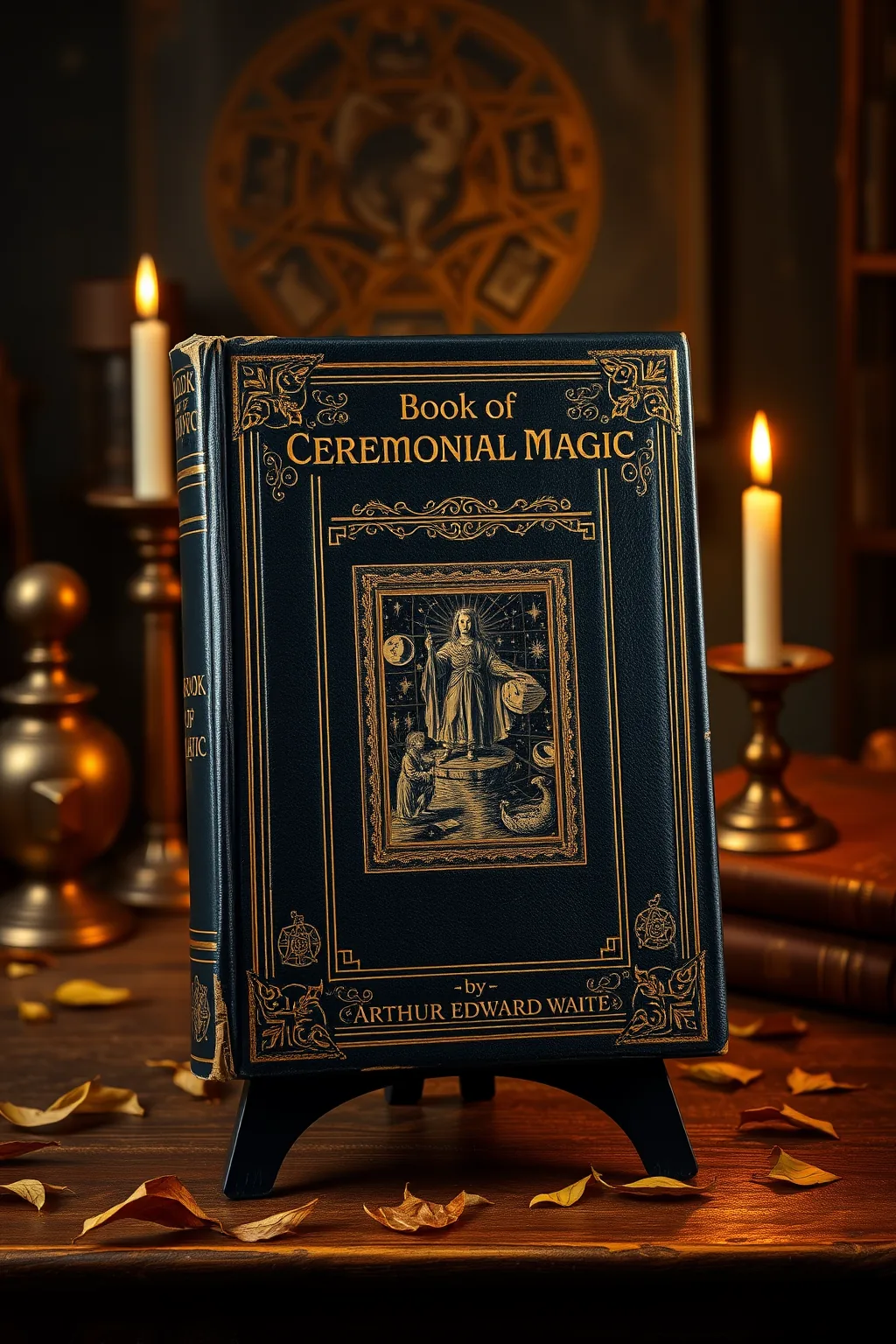
Book of Ceremonial Magic


Aurelia Blackwood, Occult Philosophy Critic — Arthur Edward Waite's 'Book of Ceremonial Magic' stands as a monumental pillar in occult literature. Waite's erudition shines through, offering a scholarly yet accessible exploration of diverse magical traditions and their ritualistic frameworks. He masterfully deciphers complex symbolic languages and illuminates the philosophical underpinnings of practices often shrouded in mystery. This work is an invaluable resource for serious students of esotericism, providing a comprehensive overview that bridges historical understanding with practical insight. Its strength lies in its rigorous approach, making it essential reading for anyone seeking to grasp the true depth and breadth of ceremonial magic, beyond superficial sensationalism.
📝 Description
61
Arthur Edward Waite published 'The Book of Ceremonial Magic' in 1911, detailing historical magical practices.
Arthur Edward Waite's 1911 work, 'The Book of Ceremonial Magic,' examines the history and theory of ritual magic. Waite, a prolific writer on the occult, breaks down the methods, symbols, and philosophical ideas behind these practices. The book covers topics such as invocation and evocation, explaining the connections and powers believed to operate in the spiritual world.
Waite presents this material not just as a historical record but as a resource for those seriously interested in magic. It addresses the practical aspects of spiritual change and connection to the cosmos. The text reflects ancient rituals and humanity's ongoing efforts to connect with the divine and control the forces of existence. It is intended as a guide for individuals who wish to understand the path of ceremonial magic.
Published in 1911, Waite's book emerged during a period of significant interest in occultism and esotericism in the Western world. It sits within a tradition of grimoire study and magical compendiums that date back centuries, aiming to codify and explain practices that were often passed down orally or through fragmented manuscripts. Waite's scholarly approach, while rooted in a fascination with these traditions, sought to analyze them critically, distinguishing between historical practice and speculative interpretation. This work contributed to the broader discourse on magic as a system of spiritual discipline and metaphysical understanding.
💡 Why Read This Book?
Embark on a profound journey into the heart of ritualistic arts. 'Book of Ceremonial Magic' offers unparalleled insight into historical practices, intricate symbolism, and the philosophical foundations of magic. It's ideal for occult scholars, serious practitioners, and seekers of hidden knowledge who desire a comprehensive, authoritative guide to understanding and potentially engaging with the deeper currents of esoteric practice. Unlock ancient wisdom and elevate your comprehension.
⭐ Reader Reviews
Honest opinions from readers who have explored this book.
❓ Frequently Asked Questions
What is ceremonial magic according to Waite?
Waite defines ceremonial magic as a structured system of ritualistic practices aimed at invoking spiritual forces, achieving altered states of consciousness, and effecting transformations, often involving complex symbolic language and divine names.
Is this book a 'how-to' guide for performing spells?
While it details historical rituals, its primary focus is scholarly and philosophical. It provides context and understanding rather than a simple recipe for modern spellcasting, encouraging deep study before practice.
What makes Waite's approach unique?
Waite's approach is characterized by rigorous research, a deep understanding of Gnosticism and Christian Mysticism, and a critical yet respectful examination of various magical traditions, avoiding sensationalism.
Who was Arthur Edward Waite?
Arthur Edward Waite was a prominent occult scholar, mystic, and co-creator of the Rider-Waite Tarot deck. He was a prolific writer on esoteric subjects, known for his encyclopedic knowledge and scholarly rigor.
What kind of rituals are discussed?
The book covers a wide spectrum, including angelic invocation, planetary magic, demonology, and rituals derived from grimoires and ancient esoteric texts, all examined through a historical and symbolic lens.
🔮 Key Themes & Symbolism
The Architecture of Ritual
Waite meticulously deconstructs the fundamental principles and structural components of ceremonial magic. This theme explores the essential elements – sacred space, divine invocation, symbolic tools, and precise timing – that form the backbone of effective ritual practice. It explores how these elements work in concert to create a conduit between the mundane and the spiritual realms, allowing practitioners to harness specific energies and achieve designated outcomes. The emphasis is on understanding the underlying logic and philosophical intent behind each component, moving beyond mere rote performance to a profound appreciation of ritual as a sacred art.
The Language of Symbolism
This theme examines the profound symbolic language that underpins all forms of ceremonial magic. Waite illuminates how symbols are not mere decorations but potent keys to unlocking higher consciousness and communicating with unseen forces. From the geometric precision of sigils to the cosmic significance of planetary correspondences, each symbol carries layers of meaning that, when understood, amplify the magician's intent and the ritual's efficacy. The exploration explores the universal archetypes and specific esoteric glyphs that serve as a bridge between the material and the spiritual, offering a wide range of visual and conceptual meaning.
The Quest for Divine Connection
Fundamentally, ceremonial magic, as presented by Waite, is a profound quest for communion with the divine or higher intelligences. This theme explores the spiritual aspirations driving such practices – the desire for enlightenment, for understanding the mysteries of existence, and for aligning oneself with cosmic order. Waite navigates the intricate pathways of invocation and evocation, highlighting how these rituals serve as a means to purify the self, elevate the spirit, and establish a direct connection with celestial powers or the divine essence within. It underscores the transformative potential of magic as a path to spiritual evolution.
💬 Memorable Quotes
Direct passages from the work, attributed to the author.
“Ritual is the skeleton of the divine.”
— This highlights how structured rites provide the essential framework and form for manifesting spiritual energies and divine power in the earthly realm.
“Knowledge is the key, but will is the hand that turns it.”
— This underscores the duality of magic: intellectual understanding of esoteric principles must be combined with focused, determined volition to effect change.
“The universe speaks in symbols.”
— This points to the fundamental belief that reality is imbued with symbolic meaning, and understanding these symbols is crucial for deciphering the hidden truths of existence.
“To know, to dare, to will, and to keep silent.”
— A classic esoteric maxim representing the four cardinal virtues of the adept: acquiring knowledge, possessing courage, exercising willpower, and maintaining discretion.
💡 Key Ideas
Editorial paraphrase of the work's core concepts — not direct quotes.
The art of the magician is the art of the spirit.
This quote emphasizes that true magic is not merely about external manipulation but an internal transformation of consciousness and will, rooted in the spiritual essence of the practitioner.
🌙 Esoteric Significance
Tradition
Waite's work draws heavily from the Western Esoteric Tradition, particularly Kabbalistic magic, Hermeticism, Gnosticism, and medieval grimoire lore. He meticulously bridges these streams, presenting ceremonial magic not as isolated practices but as interconnected facets of a grander, unified system aimed at spiritual ascent and divine communion.
Symbolism
The book is a valuable collection of esoteric symbolism, from the geometric precision of pentagrams and hexagrams to the rich allegorical meanings embedded in planetary correspondences, angelic hierarchies, and divine names. Waite elucidates how these symbols act as energetic conduits and conceptual keys, essential for directing magical will and invoking specific forces.
Modern Relevance
Despite its historical roots, 'Book of Ceremonial Magic' remains profoundly relevant for contemporary practitioners. It offers a robust theoretical framework, a critical understanding of ritual ethics, and a deep dive into the symbolic language that still informs modern occultism, providing essential grounding for anyone seeking to explore the more structured and profound aspects of magical practice.
👥 Who Should Read This Book
This important work is indispensable for occult scholars and historians seeking a comprehensive understanding of historical magical practices. Serious practitioners of ceremonial magic will find its detailed analysis of rituals, symbolism, and philosophical underpinnings useful for deepening their craft. Seekers of esoteric wisdom will discover a rich exploration of spiritual quests and the mechanics of manifestation. While beginners may find some concepts dense, diligent study will yield useful insights into the foundations of Western magic.
📜 Historical Context
Written at the cusp of the 20th century, Arthur Edward Waite's 'Book of Ceremonial Magic' emerged during a period of intense interest in the occult, spiritualism, and esoteric revivalism across Europe. The late Victorian and Edwardian eras saw a burgeoning of secret societies, mystical orders, and a fascination with ancient wisdom traditions as a counterpoint to burgeoning industrialization and scientific rationalism. Waite, a key figure in organizations like the Hermetic Order of the Golden Dawn, sought to synthesize and codify the vast, often disparate, body of knowledge concerning ceremonial magic. His work reflects a scholarly attempt to understand and present these practices within their historical and philosophical contexts, offering a comprehensive survey of grimoires, Kabbalistic influences, and the underlying principles that guided generations of practitioners, making it a vital document of its time.
📔 Journal Prompts
Reflect on the concept of 'sacred space' as described by Waite. How can you create and consecrate a personal sacred space for your own practices?
Waite discusses the power of divine names. Explore the significance and potential resonance of a divine name that calls to you personally.
Consider the role of 'will' in ceremonial magic. How does Waite differentiate between mere desire and true magical will?
Analyze a specific symbol discussed in the book (e.g., the pentagram, the circle). What are its layers of meaning, and how might it be applied in ritual?
Waite emphasizes the spiritual quest underlying magic. How does the practice of ceremonial magic, as he presents it, serve as a path toward self-transformation or enlightenment?
🗂️ Glossary
Invocation
The act of calling upon a divine or spiritual entity to be present or to imbue the practitioner or ritual space with its energy, often involving an internal drawing down of power.
Evocation
The act of summoning a spiritual entity to appear or manifest in a visible form or in a specific location, typically outside the practitioner's immediate being.
Grimoire
A textbook of magic, typically containing instructions on how to create magical tools, perform rituals, and invoke spirits, often associated with medieval and Renaissance periods.
Kabbalah
An esoteric system of Jewish mysticism that explores the divine nature and the relationship between God and the created world, often represented by the Tree of Life.
Sigil
A symbol created to represent a specific magical intention or entity, often formed by combining letters, geometric shapes, or other symbolic elements.
This book appears in 3 collections
🔮 Readers Also Liked
Browse all →









From the “Ritual Magic” Collection
View all →





More Free Magic & Ritual Books
View all →