Proof of Heaven
 75
75

Proof of Heaven
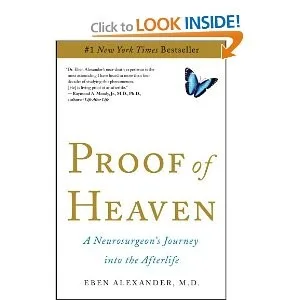
Eben Alexander's *Proof of Heaven* is a remarkable, if contentious, account of a neurosurgeon's journey through a near-death experience. The book’s strength lies in its unflinching portrayal of Alexander’s personal transformation, moving from hard-nosed skepticism to profound spiritual conviction. His description of the "seven-day coma" and the vivid imagery of the "gateway" and the "Winged Man" are particularly arresting. However, the scientific community has rightfully pointed out the limitations of interpreting such an experience through a purely neurological lens, especially given Alexander's own damaged brain state during the coma. While Alexander attempts to reconcile his experience with science, the leap from subjective perception to objective proof remains a significant hurdle. The work is compelling as a personal testament, but its claims about the objective nature of the afterlife invite considerable scientific and philosophical debate. It is a powerful personal narrative that challenges conventional thinking about consciousness.
📝 Description
75
Eben Alexander, a neurosurgeon, wrote *Proof of Heaven* in 2012 detailing his week-long coma experience.
In 2012, neurosurgeon Eben Alexander published *Proof of Heaven*, recounting his personal experience during a week-long coma. His near-death experience (NDE) presented a direct challenge to his scientific understanding of the brain and consciousness. The book describes his subjective encounter with what he calls a spiritual realm, moving beyond anecdotal evidence to a first-hand account.
Alexander's narrative aims to connect scientific inquiry with spiritual belief. The book is directed at readers questioning life, death, and consciousness, especially those who find traditional religious or purely materialistic views insufficient. It will appeal to those interested in NDE accounts, seeking reassurance about an afterlife, or medical professionals and scientists curious about consciousness beyond current neurological models. It also serves individuals engaged in personal spiritual exploration.
Published in the early 2010s, *Proof of Heaven* arrived during a resurgence of public interest in NDEs. Alexander's background as a neurosurgeon lent significant weight to his account, distinguishing it from faith-based testimonies. His work entered a conversation with figures who explored consciousness outside the physical brain, though Alexander's perspective was personal and medically informed.
Alexander's account fits within a tradition of individuals claiming direct experience of non-physical realities, often triggered by altered states of consciousness. While distinct from older mystical traditions or shamanic journeys, it echoes the core assertion that subjective experience can reveal truths beyond the material world. His medical background grounds his claims in a way that attempts to bridge the gap between empirical science and spiritual phenomena, a common pursuit in modern esoteric thought that seeks to validate inner experience.
💡 Why Read This Book?
• Learn about the specific neurological condition (bacterial meningitis) that led to Alexander's coma in 2008, providing a concrete medical anchor for his extraordinary experience. • Understand Alexander's concept of "omnipresent, unconditional love" as described during his NDE, offering a perspective on universal consciousness that goes beyond typical self-help narratives. • Explore the author's critique of scientific materialism, presented through his personal journey, to consider alternative frameworks for understanding consciousness and reality beyond the physical brain.
⭐ Reader Reviews
Honest opinions from readers who have explored this book.
❓ Frequently Asked Questions
When was Eben Alexander's book 'Proof of Heaven' first published?
Eben Alexander's 'Proof of Heaven' was first published on October 23, 2012, quickly becoming a significant bestseller and sparking widespread discussion about near-death experiences.
What medical condition caused Eben Alexander's coma?
Eben Alexander fell into a coma due to a rare and severe case of bacterial meningitis, which affected a significant portion of his brain, including the neocortex.
What is the 'Winged Man' in 'Proof of Heaven'?
The 'Winged Man' is a benevolent, angelic figure who guided Eben Alexander during his near-death experience, communicating with him telepathically and offering profound reassurance.
How did Alexander's scientific background influence his NDE account?
As a neurosurgeon, Alexander initially approached his experience with scientific skepticism. His NDE forced him to re-evaluate his understanding of consciousness and the brain, leading him to question established neuroscience paradigms.
What does Alexander mean by 'The Veil' in his book?
In 'Proof of Heaven,' 'The Veil' refers to the boundary between the physical world and the spiritual realm that Alexander claims to have traversed during his coma.
What was the primary reception of 'Proof of Heaven' from the scientific community?
The scientific community's reception was largely critical, with many neuroscientists and philosophers questioning the interpretation of Alexander's experience, citing the effects of brain damage and the subjective nature of NDEs.
🔮 Key Themes & Symbolism
Consciousness Beyond the Brain
Alexander's central thesis posits that consciousness is not solely a product of brain activity but a fundamental aspect of the universe that can exist independently. His near-death experience, particularly the extended coma in 2008, served as empirical, albeit subjective, evidence for this. He describes vivid experiences, interactions, and an awareness that seemed to transcend his damaged physical brain, suggesting that the brain may act more as a receiver or filter for consciousness rather than its sole generator. This challenges the prevailing materialistic view in neuroscience and opens avenues for exploring spiritual dimensions of existence.
The Nature of the Afterlife
The book offers a deeply personal and detailed depiction of what Alexander interprets as the afterlife. He encountered a area of profound beauty, light, and unconditional love, guided by a spiritual being he refers to as the 'Winged Man.' This experience led him to conclude that death is not an end but a transition into a higher, more benevolent existence. He emphasizes the presence of God or a divine force, described as pure love, which permeates this non-physical reality, providing solace and a counterpoint to existential fears about mortality.
Scientific Skepticism vs. Spiritual Revelation
As a practicing neurosurgeon, Alexander's journey from staunch scientific rationalism to spiritual conviction forms the narrative backbone. He meticulously details his initial disbelief and subsequent awe as his near-death experience unfolded, directly contradicting his professional understanding of brain function. The book chronicles his struggle to reconcile his medical knowledge with the profound, ineffable truths he encountered. This internal conflict highlights the limitations of a purely empirical approach to phenomena that may extend beyond current scientific comprehension, urging a more open-minded investigation into consciousness and spirituality.
Divine Love and Universal Connection
A recurring and dominant theme in Alexander's account is the overwhelming presence of divine love, which he perceives as the fundamental essence of the universe. This love is described as unconditional, all-encompassing, and deeply personal, yet also universally accessible. He felt an intrinsic connection to everything and everyone, a profound sense of belonging that dissolved fear and isolation. This aspect of his experience serves as a core message of hope and a call for humanity to recognize and embody this universal love in earthly life.
💬 Memorable Quotes
Direct passages from the work, attributed to the author.
“The world is not made of things, but of meaning.”
— This statement expresses Alexander's shift in perspective. It suggests that the perceived reality is not defined by physical objects but by the underlying significance and interconnectedness of all things, a truth he claims to have grasped during his NDE.
“I learned that the world is not made of things, but of meaning.”
— This phrasing directly links Alexander's intellectual understanding to his profound spiritual realization during his coma. It emphasizes a fundamental shift in how he perceives reality, moving from a materialist to a meaning-centric worldview.
“The most important thing that happened to me was that I learned that the world is not made of things, but of meaning.”
— This longer version highlights the personal and transformative nature of his revelation. The emphasis is on the *learning* and the *most important* aspect of this newfound understanding of existence.
“I had been a neurosurgeon, and I had seen the brain from the inside out. But in the coma, I saw the world from the outside in.”
— This powerful contrast articulates the rethinking Alexander underwent. His professional, objective view of the brain was inverted by his subjective, spiritual experience of the universe, highlighting the limitations of his prior scientific framework.
💡 Key Ideas
Editorial paraphrase of the work's core concepts — not direct quotes.
There is a loving God who is not distant, but intimately involved in our lives.
This quote directly addresses the nature of the divine as experienced by Alexander. It asserts a personal, immanent God, contrasting with conceptions of a remote or indifferent deity, and underscores the profound personal connection felt during the NDE.
🌙 Esoteric Significance
Tradition
While not explicitly aligning with a single esoteric lineage, Alexander's account draws heavily from perennialist philosophies and New Age interpretations of spirituality. It echoes Gnostic themes of a higher, benevolent realm contrasted with a flawed material world, and Hermetic concepts of interconnectedness and divine immanence. The emphasis on unconditional love and a unified consciousness aligns with mystical traditions across various religions, presenting a universalist spiritual message that transcends dogma. It departs from structured occult traditions by focusing on a direct, personal revelation rather than adherence to specific doctrines or practices.
Symbolism
The 'Gateway' serves as a potent symbol of transition, representing the threshold between the physical and spiritual realms, a common motif in shamanic and mystical journeys. The 'Winged Man' embodies divine guidance and benevolent intelligence, akin to angelic figures in Abrahamic traditions or higher spiritual guides found in Theosophy and other esoteric schools. The pervasive 'light' and 'love' symbolize ultimate reality, divine presence, and the fundamental nature of existence as perceived in many mystical experiences, representing purity, knowledge, and unconditional acceptance.
Modern Relevance
Alexander's work continues to be highly relevant in contemporary discussions surrounding consciousness, NDEs, and the intersection of science and spirituality. It is frequently cited by proponents of consciousness-based healing modalities and thinkers who challenge materialistic paradigms. Contemporary authors and researchers in fields like transpersonal psychology, quantum consciousness, and even certain branches of neuroscience that explore subjective experience, find resonance in his narrative. His work fuels discussions on platforms exploring spirituality outside traditional religious frameworks, influencing those seeking empirical or experiential validation for concepts of an afterlife and interconnectedness.
👥 Who Should Read This Book
• Individuals grappling with existential questions about death and the afterlife, seeking reassurance and a narrative that bridges science and spirituality. • Skeptics of traditional religion or materialism who are open to exploring consciousness beyond conventional neurological models and seek a credible, personal account. • Students of comparative religion and consciousness studies interested in first-hand NDE testimonies that have significantly impacted public discourse and scientific debate.
📜 Historical Context
When *Proof of Heaven* was published in 2012, it landed amidst a surge of interest in near-death experiences (NDEs) and consciousness studies, a trend amplified by earlier popular works and the burgeoning accessibility of scientific research. Eben Alexander, a practicing neurosurgeon, brought a unique perspective to the conversation. His medical background lent significant credibility to his account of a week-long coma in 2008, distinguishing it from purely faith-based testimonies. The book entered a discourse already populated by thinkers exploring consciousness beyond the physical brain, such as psychologist Stanislav Grof, who had extensively studied NDEs and transpersonal psychology since the 1970s. However, Alexander's narrative was distinct in its direct challenge to established neuroscience from within its own ranks. While lauded by many seeking spiritual validation, the work faced considerable critique from the scientific community, notably from figures like neurologist Dr. Michael Shermer, who questioned the interpretation of Alexander's experience given his damaged brain state.
📔 Journal Prompts
The concept of 'meaning' as opposed to 'things' in Alexander's revelation.
Reflecting on the 'Winged Man' as a symbol of divine guidance.
The feeling of 'unconditional love' experienced by Alexander and its potential implications.
Reconciling the 'brain from the inside out' versus 'outside in' perspectives.
The 'Gateway' as a symbol of transition and transformation.
🗂️ Glossary
Near-Death Experience (NDE)
A profound personal experience associated with being close to death, often involving altered states of consciousness, vivid sensory perceptions, and feelings of peace or spiritual insight.
Bacterial Meningitis
A serious infection causing inflammation of the membranes covering the brain and spinal cord. Alexander contracted a severe form, leading to his coma.
Neocortex
The part of the brain involved in higher-order functions such as sensory perception, conscious thought, and language. Alexander's neocortex was significantly affected during his coma.
Spiritual Realm
A non-physical dimension or plane of existence believed by many to be inhabited by spiritual beings, divine consciousness, or the souls of the deceased.
Scientific Materialism
The philosophical belief that matter is the fundamental substance in nature, and that all phenomena, including consciousness, are results of material interactions.
Divine Love
In Alexander's context, the pervasive, unconditional, and all-encompassing benevolent force he perceived as the fundamental essence of the universe.
The Veil
The boundary or separation between the physical world and the spiritual realm, which Alexander believed he traversed during his NDE.