The encyclopedia of dim-mak
 81
81

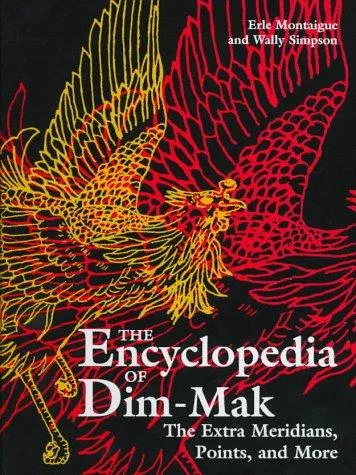
The encyclopedia of dim-mak
Erle Montaigue’s *The Encyclopedia of Dim-Mak* presents a bold, anatomically-grounded exploration of a martial art concept often shrouded in myth. Montaigue’s strength lies in his meticulous deconstruction of Dim-Mak, attempting to provide a physiological rationale for its purported effects. He grounds the discussion in verifiable anatomy, a welcome departure from speculative lore. For instance, his detailed mapping of points and their nervous system connections offers a concrete, if controversial, framework for understanding the efficacy of such strikes. However, the book’s primary limitation is its occasional reliance on an almost dogmatic assertion of scientific validity for concepts that remain debated within both medical and martial arts communities. While the 1997 publication date means some physiological understanding may have evolved, the core anatomical references remain solid. The work provides a dense, technical resource for dedicated practitioners seeking to understand the mechanics behind these targeted strikes. Montaigue’s encyclopedic approach offers a valuable, albeit challenging, perspective for those committed to the scientific study of martial arts.
📝 Description
81
Erle Montaigue's Encyclopedia of Dim-Mak, published in 1997, details striking vital points.
Published in 1997, Erle Montaigue's Encyclopedia of Dim-Mak acts as a detailed manual on striking vital points in martial arts. The book moves past theory, giving anatomical and physiological reasons for how specific pressure points affect the body. It covers the history and practical uses of these techniques across different martial traditions. This work is for martial artists who want to understand combat strategy beyond brute strength, especially those in internal arts. It also interests those studying historical combat or the links between anatomy and martial effectiveness. A basic grasp of martial arts concepts aids full understanding.
Montaigue's research into Dim-Mak, or the 'Death Touch,' looks at the existence of meridians and pressure points from traditional Chinese medicine. He connects these to physical reactions. He stresses the scientific basis for these points, talking about nerve clusters, organ weaknesses, and how precise, often light, strikes can incapacitate someone.
Montaigue's work appeared in the late 20th century, a time when Western interest in Eastern martial arts and healing grew. While many arts focused on physical training, Montaigue investigated Dim-Mak, an aspect less explored. He sought to explain the subject using scientific and anatomical methods, differing from accounts based only on tradition or anecdote. This approach places his research within a tradition of demystifying esoteric concepts through empirical observation.
💡 Why Read This Book?
• Gain an understanding of the physiological basis for striking vital points, as detailed in Montaigue's anatomical diagrams and explanations of nerve pathways. • Explore the historical context of Dim-Mak, understanding its place within martial traditions and how Montaigue sought to scientifically validate its principles in the late 20th century. • Learn specific pressure point locations and their supposed effects, moving beyond esoteric myth to a more structured, albeit debated, understanding of their application.
⭐ Reader Reviews
Honest opinions from readers who have explored this book.
❓ Frequently Asked Questions
What is Dim-Mak according to Erle Montaigue's encyclopedia?
Erle Montaigue's *The Encyclopedia of Dim-Mak* defines it as the martial art of striking vital points, emphasizing anatomical and physiological effects rather than mystical powers. The 1997 publication aimed to provide a scientific basis for these techniques.
Is Dim-Mak real or just a myth?
Montaigue's work argues for its reality, presenting anatomical evidence and physiological responses to striking specific points. While debated, the book provides a detailed framework for understanding its potential efficacy.
What kind of knowledge is required to understand this book?
A foundational understanding of martial arts principles and human anatomy is highly beneficial. The book uses precise anatomical terminology and discusses physiological reactions to strikes on specific pressure points.
How does this book differ from other martial arts texts?
Unlike purely descriptive texts, *The Encyclopedia of Dim-Mak* (1997) focuses on the scientific and anatomical underpinnings of striking vital points, offering a technical, systematic approach.
Can this book teach me to perform Dim-Mak techniques instantly?
No, the book is an informational resource. It details the theory and anatomy behind Dim-Mak, but mastery requires extensive dedicated practice under qualified instruction, as with any martial art.
What is the significance of the publication year, 1997?
The 1997 publication date places the book within a period of growing academic and practical interest in the scientific validation of traditional martial arts and medical concepts from the East.
🔮 Key Themes & Symbolism
Anatomical Vital Points
The work meticulously details specific anatomical locations on the human body that are considered vulnerable when struck. Montaigue maps these points, often correlating them with nerve clusters and organ proximity, presenting a system that moves beyond anecdotal claims. This section emphasizes the physiological impact, suggesting that precise strikes can lead to incapacitation or severe systemic effects, grounding the esoteric concept of Dim-Mak in corporeal reality.
Physiological Responses
Beyond mere location, the book examines the predicted physiological consequences of striking these vital points. It discusses how pressure, impact, or vibration at these sites can disrupt normal bodily functions, affecting nerve signals, blood flow, and organ systems. Montaigue's analysis attempts to provide a scientific explanation for the efficacy attributed to Dim-Mak techniques, aligning them with known biological reactions.
Martial Application and Theory
The encyclopedia frames Dim-Mak within the broader context of martial arts strategy. It explores how these techniques can be integrated into combat scenarios, offering an alternative to brute force. The work examines the theoretical underpinnings, including concepts of energy flow and meridian pathways, while consistently attempting to link them to demonstrable physical outcomes.
Historical and Scientific Validation
Montaigue's project, initiated in the late 20th century, aimed to validate Dim-Mak through scientific inquiry. The book presents a systematic approach to understanding these ancient principles, contrasting with more mystical interpretations. It highlights the author's effort to bridge the gap between traditional knowledge and modern scientific understanding of the human body.
💬 Memorable Quotes
Direct passages from the work, attributed to the author.
“The effectiveness of Dim-Mak relies on understanding the precise anatomical vulnerabilities.”
— This statement captures Montaigue's core argument: that the power of the 'Death Touch' is not supernatural but rooted in specific, knowable physical weaknesses of the human form.
“Striking a vital point can disrupt nerve function or internal organ activity.”
— This highlights the physiological mechanism Montaigue proposes for Dim-Mak's impact, suggesting that it works by interfering with the body's natural operational systems.
“Meridians and pressure points have a basis in the body's physiological pathways.”
— This interpretation suggests Montaigue sought to connect traditional Chinese medicine concepts with Western anatomical and physiological understanding, advocating for a scientific grounding.
“Knowledge of anatomy is paramount for any serious practitioner.”
— This emphasizes the foundational requirement for studying Dim-Mak, according to Montaigue, positioning anatomical study as essential for effective application of these techniques.
“Dim-Mak techniques require precision over brute force.”
— This points to the strategic advantage Montaigue attributes to Dim-Mak, suggesting that accuracy and knowledge of specific points are more critical than sheer physical power.
🌙 Esoteric Significance
Tradition
While not strictly adhering to a single esoteric lineage, Montaigue's work draws heavily from the principles of Traditional Chinese Medicine (TCM), particularly its concepts of meridians and acupressure points. His project attempts to translate these concepts into Western anatomical and physiological terms, bridging the gap between Eastern energetic theories and Western biological science. This approach situates his work at the intersection of martial arts, esoteric medicine, and empirical inquiry.
Symbolism
The primary 'symbol' in this context is the vital point itself, which represents a nexus of physiological vulnerability. Meridians function as symbolic pathways of vital energy (Qi) in TCM, but Montaigue interprets them through the lens of nerve pathways and circulatory systems. The effectiveness of a strike on these points symbolizes the power of precise knowledge and application over brute force, a recurring theme in many esoteric traditions that emphasize intellect and skill.
Modern Relevance
Montaigue's work continues to influence practitioners interested in the scientific underpinnings of martial arts, particularly those focusing on pressure points and anatomical vulnerabilities. His approach informs modern discussions on combat effectiveness, self-defense, and even therapeutic bodywork that utilizes knowledge of specific anatomical sites. Thinkers and practitioners in fields like scientific martial arts and evidence-based bodywork may find his research a foundational, albeit sometimes controversial, reference.
👥 Who Should Read This Book
• Martial artists seeking a deeper, scientifically-informed understanding of vital point striking, moving beyond lore to anatomical specifics. • Students of Traditional Chinese Medicine or acupressure interested in how these principles might apply to combat and self-defense applications. • Researchers of historical combat systems and the intersection of anatomy, physiology, and esoteric practices.
📜 Historical Context
Erle Montaigue's *The Encyclopedia of Dim-Mak*, published in 1997, emerged in an era where Western engagement with Eastern martial arts was diversifying. While popular culture often sensationalized concepts like the "Death Touch," Montaigue sought a more empirical approach. His work entered a landscape where internal martial arts were gaining more academic and practical scrutiny, moving beyond their purely spiritual or philosophical dimensions. He engaged with anatomical and physiological data, attempting to provide a scientific framework for practices that had previously relied heavily on tradition and anecdotal evidence. This contrasted with more spiritual interpretations prevalent in some lineage-based arts. Montaigue's research positioned his work as a bridge between ancient theories and modern scientific understanding, aiming to explain the subject for a Western audience increasingly interested in the mechanics of combat and healing.
📔 Journal Prompts
The concept of Dim-Mak as presented by Montaigue, focusing on anatomical vulnerability.
The physiological pathways described in the book and their potential impact.
Erle Montaigue's approach to validating ancient martial concepts.
The distinction between esoteric theory and scientific explanation in the context of vital points.
Practical considerations for applying precise strikes versus brute force.
🗂️ Glossary
Dim-Mak
A martial art principle, often translated as 'Death Touch' or 'Striking Vital Points,' focusing on targeting specific anatomical locations believed to cause incapacitation or other physiological effects.
Vital Point
A specific anatomical location on the body considered particularly vulnerable to impact, pressure, or vibration, capable of disrupting normal physiological functions.
Meridian
In Traditional Chinese Medicine, a pathway through which vital energy (Qi) is believed to flow. Montaigue often correlates these with anatomical structures like nerve pathways.
Acupressure
A technique involving the application of firm pressure to specific points on the body, often derived from acupressure points, to influence physiological responses.
Physiology
The study of the normal functions of living organisms and their parts, focusing on biological and chemical processes.
Anatomy
The branch of science concerned with the bodily structure of humans, animals, and other living organisms, especially as revealed by dissection and the separation of parts.
Qi (Chi)
A fundamental concept in Traditional Chinese Medicine, often translated as 'vital energy' or 'life force,' believed to flow through meridians in the body.
🔮 Readers Also Liked
Browse all →









More by Erle Montaigue
All books →

More Free Occult Philosophy Books
View all →