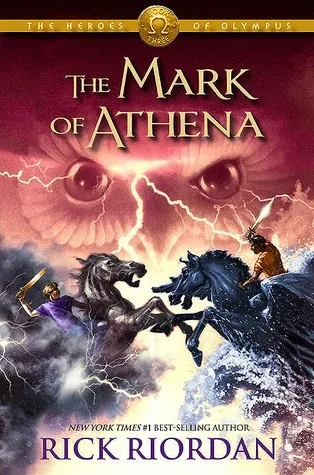
The Mark of Athena
 82
82

The Mark of Athena
Riordan’s *The Mark of Athena* excels at maintaining momentum across multiple character perspectives, a significant feat for a series this deep. The author’s knack for imbuing ancient myths with relatable teenage anxieties remains sharp. A particular strength is the palpable tension generated by the looming war between Greek and Roman demigods, a conflict Riordan skillfully escalates. However, the sheer number of characters and subplots can occasionally dilute the focus, making certain narrative threads feel less developed than others. The introduction of the Athena Parthenos, a colossal statue central to the plot, serves as a powerful, if somewhat literal, symbol of the stakes. Overall, it’s a propulsive entry that delivers on the series' promise of epic mythological stakes.
📝 Description
82
Rick Riordan's The Mark of Athena was published in 2017.
The Mark of Athena, the third book in Rick Riordan's Heroes of Olympus series, continues the story of Greek and Roman demigods. These young heroes find their lives entangled with the ancient gods and their ongoing celestial disputes. The novel focuses on a critical quest to unite the disparate camps of demigods. Their success is vital to prevent an impending war among the gods themselves.
The narrative appeals to young adults who know the Percy Jackson universe. They will recognize Riordan's familiar mix of mythology, humor, and adventure. The book is especially relevant for readers interested in modern retellings of classical myths. Its characters wrestle with their identities, their loyalties, and their predetermined destinies.
This novel engages with the modern resurgence of interest in classical mythology, particularly within young adult fiction. Riordan's work revisits ancient Greek and Roman pantheons, framing divine conflicts and demigod struggles within a contemporary setting. The series makes historical myths accessible by juxtaposing powerful, immortal beings with the relatable challenges of teenage life. The 'Mark of Athena' itself symbolizes a blend of ancient strategy and potential retribution, connecting mythological lineage to present-day quests.
💡 Why Read This Book?
• Learn how Rick Riordan reimagines ancient Greek and Roman mythology for a contemporary audience, focusing on the clash and eventual integration of these distinct demigod cultures, as seen in the narrative's climax. • Experience the unique challenges faced by demigods in 2017, grappling with prophecies and divine legacies, particularly through the lens of Annabeth Chase's internal struggles. • Discover how the author uses specific mythological artifacts and locations, like the Athena Parthenos, to drive the plot and symbolize larger thematic conflicts between different divine factions.
⭐ Reader Reviews
Honest opinions from readers who have explored this book.
❓ Frequently Asked Questions
What is the significance of the Mark of Athena in Rick Riordan's book?
The Mark of Athena refers to a significant artifact and a prophecy central to the plot, representing wisdom and strategy. It is intrinsically linked to the goddess Athena and her children, the demigods.
When was The Mark of Athena by Rick Riordan published?
The book was first published in 2017 as part of the Heroes of Olympus series.
How does The Mark of Athena connect to the Percy Jackson series?
It is a direct sequel to the Percy Jackson & The Olympians series, continuing the adventures of demigods and introducing Roman counterparts to Greek heroes.
What are the main themes explored in The Mark of Athena?
Key themes include fate versus free will, the merging of Greek and Roman demigod cultures, loyalty, and the psychological weight of prophecy.
Who are the main protagonists in The Mark of Athena?
The story follows multiple protagonists from both Greek and Roman demigod camps, with Annabeth Chase and Percy Jackson playing central roles in this installment.
Does The Mark of Athena involve prophecies?
Yes, prophecies are a driving force in the narrative, guiding the demigods' quests and contributing to the overarching conflict between the gods.
🔮 Key Themes & Symbolism
Greek vs. Roman Identity
The novel intensely explores the division and eventual need for unity between Greek and Roman demigods, who previously saw each other as separate entities or even enemies. This conflict mirrors historical tensions and the challenges of cultural assimilation. Riordan uses characters like Percy Jackson and Hazel Levesque to navigate these differing identities, highlighting how shared divine ancestry creates both conflict and common ground. The quest to unite them is paramount to averting the gods' war.
Prophecy and Agency
A central concern is the nature of prophecy and whether characters are bound by fate or possess free will. The Great Prophecy looms large, dictating many actions, yet characters like Annabeth Chase constantly struggle with their choices and the consequences. The book questions if destiny is predetermined or if individual decisions can alter the course of events, especially when facing divine mandates and ancient threats.
The Burden of Divinity
Being a demigod comes with immense pressure. *The Mark of Athena* emphasizes the psychological toll of having divine parentage, the weight of expectations, and the constant threat of dangerous monsters and warring gods. Characters grapple with their unique powers, their flaws inherited from their godly parents, and the sacrifices required to protect both the mortal and immortal worlds.
Wisdom and Strategy
The 'Mark of Athena' itself symbolizes wisdom, skill, and strategic thinking, often associated with the goddess Athena and her children, particularly Annabeth. The narrative highlights the importance of intelligence and planning alongside brute strength or divine power. Success hinges not just on bravery but on cleverness and understanding the intricate workings of both mortal and divine politics.
💬 Memorable Quotes
Direct passages from the work, attributed to the author.
“Annabeth knew that if she wasn't strong enough for Percy, then she wasn't strong enough for Rome.”
— This highlights Annabeth's internal struggle and her deep connection to Percy. It underscores the theme that her strength is not just physical or magical, but emotional and tied to her relationships and her perceived role in the larger conflict.
“The gods could be dangerous. They had to be. Otherwise, they wouldn't be gods.”
— This observation reflects the inherent power imbalance and the often fearsome nature of the deities. It suggests that their divinity is intrinsically linked to their capacity for both creation and destruction, a concept central to understanding their influence on mortal affairs.
“We were just kids, trying to survive.”
— This statement grounds the epic narrative in the relatable experience of youth. Despite their extraordinary circumstances and divine heritage, the characters are portrayed as fundamentally children facing overwhelming challenges, emphasizing their vulnerability and resilience.
💡 Key Ideas
Editorial paraphrase of the work's core concepts — not direct quotes.
It was like the whole world was holding its breath.
This line captures the immense tension and anticipation building throughout the narrative. It conveys a sense of impending doom or a key moment where the fate of multiple worlds hangs in the balance, reflecting the high stakes of the demigods' quest.
It's hard to be a demigod. You're always in the middle of a war.
This paraphrased concept emphasizes the constant peril and conflict inherent in the demigod existence. It speaks to the unending battles they face, both against external monsters and internal struggles, driven by the machinations of the gods.
🌙 Esoteric Significance
Tradition
While not strictly an esoteric text in the vein of Hermeticism or Kabbalah, Riordan's work draws heavily from classical Greco-Roman mythology, which itself contains many layers of ancient spiritual and philosophical thought. The series can be seen as a modern, secularized interpretation of these myths, focusing on their archetypal power and narrative structures rather than their original ritualistic or theological contexts. It functions as a gateway to exploring these older traditions for a younger audience.
Symbolism
The Athena Parthenos, a colossal statue of the goddess Athena, is a primary symbol representing wisdom, strategic victory, and the unification of disparate forces (Greek and Roman demigods). The ‘Mark of Athena’ itself symbolizes cunning, divine favor, and perhaps a destined path linked to the goddess. The Pegasus, a recurring mythological creature, often represents freedom, inspiration, and swiftness, crucial elements in the demigods' perilous journeys.
Modern Relevance
Contemporary interest in mythology, particularly its psychological interpretations via Jungian archetypes, finds resonance in Riordan's work. While not directly academic, the series popularizes mythological figures and narratives, encouraging further exploration. Modern fantasy authors and game designers continue to draw inspiration from these archetypal characters and conflict structures, demonstrating the enduring appeal of these ancient stories when presented in engaging formats.
👥 Who Should Read This Book
• Young adult readers interested in adventure stories that integrate classical mythology with contemporary settings and themes of friendship and destiny. • Students and educators seeking accessible entry points into Greek and Roman myths, presented through engaging characters and plotlines. • Fans of the *Percy Jackson* series looking to continue the overarching narrative and explore the further adventures of their favorite demigods and Olympians.
📜 Historical Context
Published in 2017, *The Mark of Athena* arrived as Rick Riordan solidified his dominance in young adult mythology-based fiction. The early 21st century saw a surge in fantasy literature that reinterpreted ancient myths for contemporary audiences, with Riordan’s *Percy Jackson* series preceding and influencing this work. This period also saw authors like Madeline Miller beginning to explore mythological retellings from different perspectives. Riordan's approach, however, leaned towards fast-paced adventure and humor, making classical stories accessible to a broad readership. While not facing significant censorship, the series built upon a cultural fascination with Greek and Roman lore that had seen revivals throughout the 20th century, notably in the work of scholars like Edith Hamilton, whose *Mythology* was a foundational text for many.
📔 Journal Prompts
Annabeth Chase's internal conflict regarding her heritage and destiny.
The symbolic meaning of the Athena Parthenos in the context of the demigods' quest.
The tension between predetermined prophecy and individual free will faced by the characters.
The challenges of merging distinct cultural identities, as represented by Greek and Roman demigods.
Percy Jackson's evolving role as a leader amidst divine and mortal conflicts.
🗂️ Glossary
Demigod
An individual who is half-human and half-god, possessing extraordinary abilities but also facing mortal limitations and the attention of divine beings.
Camp Half-Blood
A training ground and sanctuary for Greek demigods, located on Long Island, New York, where they learn to harness their powers and survive monsters.
Camp Jupiter
The equivalent of Camp Half-Blood for Roman demigods, located in California, where they train and live under the protection of the Roman goddess of wisdom, Minerva.
Olympians
The twelve principal deities of the Greek pantheon, residing on Mount Olympus, who frequently interfere in mortal affairs and have demigod children.
Great Prophecy
A prophecy foretelling a major conflict involving the children of the Big Three (Zeus, Poseidon, Hades) that will determine the fate of Olympus.
Athena Parthenos
A colossal statue of the goddess Athena, which is a central artifact in the plot of *The Mark of Athena*, symbolizing wisdom and strategic importance.
Tartarus
The deepest abyss of the Underworld in Greek mythology, a place of torment and punishment, often depicted as a final destination for defeated monsters and villains.
🔮 Readers Also Liked
Browse all →









More by Rick Riordan
All books →




More Free Occult Philosophy Books
View all →