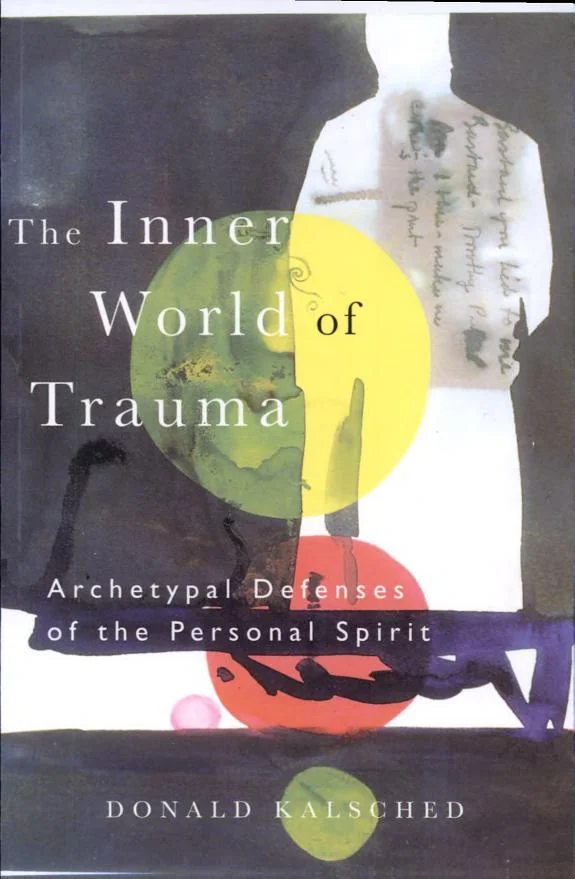
The Inner World of Trauma
 80
80

The Inner World of Trauma
Donald Kalsched's exploration of the inner terrain of trauma offers a stark, unvarnished look at how psychic defenses can turn inward with destructive force. He meticulously details how dream and fantasy images, meant to shield the self from unbearable reality, can morph into malevolent internal figures. A particularly striking element is his clinical depiction of how the very psychic structures designed for survival can become prisons of further suffering. While the clinical material is compelling, some readers might find the theoretical framework, rooted in Jungian archetypes, dense without prior familiarity. The book's strength lies in its unflinching honesty about the soul's capacity for self-torment when wounded. It is a vital, albeit challenging, study of the psyche's intricate and often paradoxical responses to profound injury.
📝 Description
80
Donald Kalsched's 1996 book examines how the mind's defenses can create further suffering after severe trauma.
Donald Kalsched's 1996 book, The Inner World of Trauma, addresses the psychological effects of severe adversity. The work details how the mind's protective mechanisms, intended to shield individuals, can inadvertently generate internal imagery that intensifies suffering. Kalsched investigates the dynamics of these psychic defenses, tracing their development and their impact on the individual's psyche.
This text is aimed at therapists, analysts, and students of depth psychology who want to grasp the complexities of a traumatized mind. It also speaks to those interested in the connections between mythology, dream analysis, and clinical practice, particularly those who examine the symbolic language of the unconscious as it appears in the face of deep distress. The book emerged in the mid-1990s, a time of growing discussion about trauma in clinical and academic settings. It offered a perspective that engaged with Jungian psychology and its use in understanding severe psychological distress, providing an alternative to solely behavioral or cognitive approaches.
Published in 1996, Kalsched's work engages with Jungian psychology's exploration of the unconscious. It situates the experience of trauma not just as a psychological event but as one that accesses deeper, archetypal dimensions of the psyche. The book considers how the soul, or anima mundi, responds to overwhelming experiences through symbolic imagery, often found in dreams and fantasies. This perspective aligns with esoteric traditions that view psychic life as interconnected with a symbolic, non-material reality, where internal images hold significant meaning for healing and understanding.
💡 Why Read This Book?
• Understand the paradox of psychic defenses: Learn how the images generated to protect against unbearable experiences, as detailed in Kalsched's clinical work, can ironically become the source of further trauma, offering a unique perspective beyond standard trauma literature. • Explore the 'anima mundi' concept: Gain insight into Kalsched's application of the anima mundi, or world soul, as a framework for understanding the collective, symbolic dimension of individual trauma responses, as presented in his 1996 publication. • Decipher symbolic language of distress: Discover how dreams and fantasies, through the lens of Jungian psychology discussed in the book, serve as vital, albeit often distorted, expressions of the soul's struggle with overwhelming life events, providing a deeper interpretative key.
⭐ Reader Reviews
Honest opinions from readers who have explored this book.
❓ Frequently Asked Questions
What is Donald Kalsched's primary argument in The Inner World of Trauma?
Kalsched argues that the psychic images formed to defend the self against unbearable trauma can, in an ironic twist, become malevolent and destructive, creating a secondary layer of suffering for the individual.
When was The Inner World of Trauma first published?
The Inner World of Trauma by Donald Kalsched was first published in 1996.
What psychological tradition does Kalsched draw upon?
Kalsched primarily draws upon Jungian psychology, specifically exploring concepts related to archetypes, the unconscious, and the symbolic life of the psyche.
Who is this book most beneficial for?
The book is most beneficial for therapists, analysts, and students of depth psychology who work with severely traumatized individuals and are interested in the symbolic and imaginal dimensions of psychic suffering.
Does the book offer practical advice for trauma survivors?
While rich in clinical observation and theoretical exploration, the book is primarily an analytical study. Its practical benefit lies in deepening understanding for clinicians and those interested in the psychology of trauma rather than direct survivor guidance.
What is the 'tyrannical ego' concept discussed?
The 'tyrannical ego' refers to the self-protective structures within the psyche that, after a severe trauma, can become rigid, oppressive, and actively harmful to the individual's well-being.
🔮 Key Themes & Symbolism
Defensive Imagery's Betrayal
This theme examines the paradox where internal psychic imagery, initially serving as a defense mechanism against overwhelming trauma, becomes transformed into an oppressive and destructive force. Kalsched illustrates how these very images, born from the need for survival, can paradoxically inflict further psychological damage, leading to a complex cycle of suffering. The work explores the mechanisms behind this 'ironical twist of psychical life,' drawing on extensive clinical material to demonstrate how the soul's protective strategies can become its captors.
The Archetypal Wound
Kalsched posits that severe trauma doesn't just affect the personal psyche but also engages with deeper, archetypal patterns. The 'wound' becomes a gateway to the anima mundi, or world soul, where universal symbols and energies are activated. These archetypal forces, when distorted by personal suffering, can manifest as powerful, malevolent figures within the inner world, reflecting a universal human struggle against psychic fragmentation and the forces that threaten psychic wholeness.
The Language of the Soul in Distress
The book emphasizes that dreams and fantasy images are not mere byproducts of trauma but are the primary language through which the soul communicates its state of distress. Kalsched analyzes these symbolic expressions to understand how the psyche attempts to process, contain, or, in some cases, becomes imprisoned by the trauma. The exploration of these imaginal narratives is crucial for understanding the depth and complexity of the inner world of those who have experienced unbearable life events.
The Tyranny of the Ego Defense
A core concept is the 'tyrannical ego,' representing the rigid, overbearing ego defenses that solidify in response to trauma. These defenses, while initially necessary for survival, can become so entrenched that they prevent healing and integration. Kalsched details how this internal tyranny can manifest as self-sabotage, profound alienation, and a persistent sense of being attacked from within, making it a critical area of focus for therapeutic intervention.
💬 Memorable Quotes
Direct passages from the work, attributed to the author.
“the very images which are generated to defend the self can become malevolent and destructive, resulting in further trauma”
— This core assertion highlights the central paradox Kalsched explores: the mind's protective mechanisms, designed to shield against unbearable experiences, can themselves morph into sources of ongoing psychological torment and suffering.
“the interior world of dream and fantasy images encountered in therapy”
— This phrase emphasizes the book's focus on the subjective, imaginal landscape as the primary locus for understanding and treating severe trauma, positioning dreams and fantasies as vital clinical material.
“an ironical twist of psychical life”
— Kalsched uses this phrase to encapsulate the deeply counterintuitive way the psyche can operate under severe stress, where intended solutions (defenses) become the problem itself.
“people who have suffered unbearable life experiences”
— This direct description grounds the theoretical exploration in the stark reality of profound human suffering, indicating the book's focus on individuals dealing with extreme psychological adversity.
“malevolent and destructive”
— These terms convey the potent, actively harmful nature of the internal psychic imagery Kalsched describes when it shifts from defense to attack, underscoring the severity of the psychic condition.
🌙 Esoteric Significance
Tradition
Kalsched's work is deeply rooted in Jungian analytical psychology, a school that itself has significant esoteric underpinnings. It engages with concepts like the collective unconscious, archetypes, and the individuation process, which echo Gnostic and Hermetic ideas about the soul's journey and the search for wholeness. The book's focus on the soul's inner world and its symbolic language places it within a tradition that views psychological distress not merely as pathology but as a spiritual or existential crisis manifesting through the psyche.
Symbolism
Central symbols explored include the 'anima mundi' (world soul), representing the deep, interconnected psyche that can become wounded and distorted by trauma. Kalsched also studies the symbolic manifestations of the 'tyrannical ego' – often appearing as oppressive, monstrous figures in dreams and fantasies – which represent the internalized destructive aspects of self-defense mechanisms gone awry. These symbols are interpreted not just as personal complexes but as expressions of universal psychic dramas.
Modern Relevance
Contemporary thinkers and practitioners in depth psychology, trauma studies, and ecopsychology continue to draw on Kalsched's insights. His work remains relevant for those exploring the spiritual dimensions of trauma, the role of imagination in healing, and the application of archetypal psychology to severe psychological suffering. Approaches that emphasize somatic experiencing alongside imaginal work often find Kalsched's framework for understanding the psyche's internal dynamics particularly valuable.
👥 Who Should Read This Book
• Therapists and counselors: Gain a deeper understanding of how psychological defenses can become internalized oppressors, enriching clinical approaches to severe trauma by exploring the imaginal realm. • Students of Jungian psychology: Deepen knowledge of Kalsched's specific contributions to archetypal theory and the understanding of the wounded psyche, particularly concerning the evolution of defensive imagery. • Individuals interested in the symbolism of suffering: Explore how profound life experiences manifest in symbolic language, offering a framework for interpreting personal struggles through the lens of the anima mundi and archetypal patterns.
📜 Historical Context
Published in 1996, Donald Kalsched's The Inner World of Trauma emerged during a significant period of evolving understanding regarding trauma's impact. The 1990s saw widespread adoption of diagnostic categories like PTSD, but Kalsched's work offered a deeper, Jungian-informed perspective. While many contemporary approaches focused on behavioral or cognitive reprocessing, Kalsched's emphasis on the symbolic, imaginal, and archetypal dimensions of trauma provided a counterpoint. His exploration of the soul's inner world and the potential for defensive imagery to become malevolent engaged with a lineage of depth psychology that sought meaning in suffering, distinct from purely symptom-reduction models. This work contributed to a growing discourse within Jungian and post-Jungian circles that sought to bridge clinical practice with mythological and symbolic understanding of profound psychic injury.
📔 Journal Prompts
The transformation of protective imagery into malevolent forces.
The 'tyrannical ego' and its internal manifestations.
Interpreting the symbolic language of one's own dreams post-adversity.
The concept of the 'anima mundi' in personal psychological experience.
How psychic defenses can paradoxically create further suffering.
🗂️ Glossary
Anima Mundi
Latin for 'world soul,' a concept in Neoplatonic and Gnostic philosophy that refers to the soul of the universe. In Jungian psychology, it relates to the collective unconscious and the archetypal layer of the psyche.
Psychic Defense
Mental strategies employed by the ego, often unconsciously, to protect oneself from anxiety, unacceptable thoughts, or emotional pain arising from traumatic experiences or internal conflict.
Archetypes
In Jungian psychology, universal, archaic patterns and images that derive from the collective unconscious and are the psychic counterpart of instinct. They represent fundamental human experiences and motifs.
Malevolent Imagery
Internal psychic images or figures that are perceived as hostile, destructive, and actively harmful to the individual's psychological well-being, often arising from distorted defense mechanisms.
Depth Psychology
A branch of psychology, including Jungian analysis, that explores the unconscious aspects of the personality and the psychological roots of behavior, often focusing on symbolic meaning and inner experience.
Trauma
A deeply distressing or disturbing experience that has a lasting psychological impact, often involving a sense of helplessness, loss of control, and a threat to life or integrity.
Ego
In psychoanalytic theory, the part of the mind that mediates between the conscious and the unconscious, and between the id and the superego. In Kalsched's work, it refers to the self-protective structures.
This book appears in 1 collection
🔮 Readers Also Liked
Browse all →









From the “Jungian Psychology” Collection
View all →




More Free Occult Philosophy Books
View all →