Psychological Astrology
 78
78

Psychological Astrology
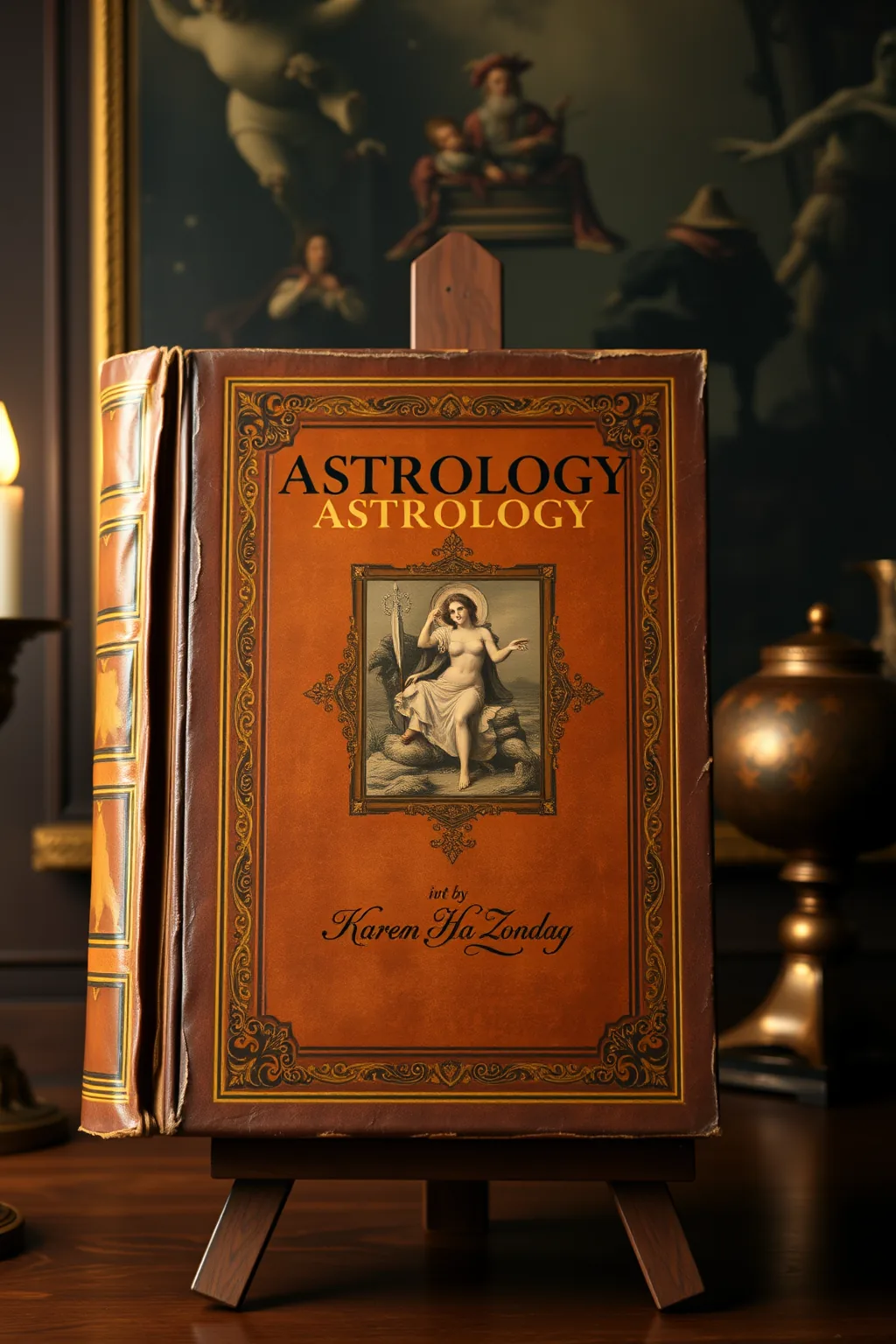
Karen Hamaker-Zondag’s Psychological Astrology is a dense, academically-minded exploration that grounds astrological interpretation in psychological theory. Its strength lies in its systematic approach, meticulously dissecting the birth chart's components—planets, signs, houses, and aspects—as expressions of psychic dynamics. The detailed analysis of the Midheaven, for instance, offers a nuanced perspective on vocational calling and life purpose that transcends superficial career advice. However, the book’s extensive theoretical grounding can, at times, feel overwhelming for those without a robust background in psychology or advanced astrology. The prose, while precise, rarely offers the more intuitive or poetic insights found in some contemporary astrological works. Ultimately, Hamaker-Zondag provides a solid, analytical tool for understanding the psyche's blueprint, making it a valuable, if demanding, addition to the serious astrologer's library.
📝 Description
78
Karen Hamaker-Zondag's 1989 book, Psychological Astrology, treats the birth chart as a map of potentials, not a deterministic prediction.
Karen Hamaker-Zondag's Psychological Astrology, first published in 1989, offers a detailed framework for interpreting the human psyche through astrological symbolism. The book moves beyond basic horoscopes, examining the relationships between planetary positions, house systems, and personality development. Hamaker-Zondag presents the birth chart as a dynamic guide to innate potentials, inherent challenges, and unconscious motivations, rather than a fixed forecast.
This text is for serious astrology students who want a deeper psychological interpretation. It is especially useful for those interested in how Jungian psychology applies to astrological symbols. Readers with a basic grasp of astrology who seek to merge psychological theory with their practice will find this work valuable. It encourages individuals to use their birth chart for self discovery and personal growth.
Published in 1989, Psychological Astrology arrived as psychological interpretations of astrology were gaining momentum. Following the work of Dane Rudhyar and Liz Greene, Hamaker-Zondag's book contributed to the growing discourse on astrology as a tool for self-awareness. This era saw increasing application of analytical psychology, particularly Jungian archetypes, to esoteric systems. This provided a more sophisticated and therapeutic lens for astrological readings, moving away from earlier deterministic or predictive approaches.
💡 Why Read This Book?
• Gain a structured understanding of how astrological archetypes map onto psychological complexes, specifically through Hamaker-Zondag's detailed analysis of planetary energies as psychic forces. • Learn to interpret the birth chart as a dynamic map of personal development, focusing on concepts like the Ascendant as the ego-projection, as explored in Chapter 3. • Discover a systematic method for integrating Jungian psychological concepts with astrological symbolism, offering a therapeutic lens for self-exploration, particularly through the book's treatment of aspects.
⭐ Reader Reviews
Honest opinions from readers who have explored this book.
❓ Frequently Asked Questions
What psychological theories does Psychological Astrology by Karen Hamaker-Zondag draw upon?
The book primarily integrates concepts from Jungian psychology, focusing on archetypes, individuation, and the symbolic language of the unconscious as expressed through astrological configurations.
When was Psychological Astrology first published and what was its impact?
First published in 1989, it arrived during a period of growing interest in psychological interpretations of astrology, contributing to a more therapeutic and self-exploratory approach.
How does Hamaker-Zondag interpret the birth chart differently from traditional astrology?
Hamaker-Zondag views the birth chart not as a predictive destiny, but as a symbolic map of potentials and inner dynamics, emphasizing self-awareness and psychological integration over fate.
What is the significance of the Midheaven and Ascendant in this book?
The Midheaven is explored as a key indicator of life direction and purpose, while the Ascendant is analyzed as the outward projection of the ego-self and initial approach to life.
Is Psychological Astrology suitable for beginners in astrology?
While it offers valuable insights, the book is best suited for those with a foundational understanding of astrological principles and an interest in psychological theory.
What role do planetary aspects play in Hamaker-Zondag's analysis?
Aspects are interpreted as dynamic dialogues between different psychic energies within the personality, revealing internal relationships and potential areas of integration or conflict.
🔮 Key Themes & Symbolism
Planets as Psychic Energies
Hamaker-Zondag posits that planets in the birth chart represent fundamental psychic energies or drives within the individual. Rather than mere celestial bodies, they are seen as archetypal forces that manifest in distinct ways depending on their sign, house, and aspectual relationships. This perspective shifts the focus from external events to internal psychological processes, viewing the chart as a blueprint of the psyche's architecture and its inherent potentials for growth and integration.
The Birth Chart as a Psychological Map
The book reframes the astrological chart from a predictive tool to a sophisticated map of the human psyche. It details how the arrangement of planets, signs, and houses illustrates the individual's innate capacities, developmental challenges, and unconscious patterns. This approach encourages self-reflection and understanding, using the chart to illuminate the internal landscape and the dynamics of personality formation.
Archetypes and Individuation
Drawing heavily from Jungian psychology, Hamaker-Zondag explores astrological symbols as manifestations of universal archetypes. The process of astrological interpretation becomes a journey toward individuation, the integration of conscious and unconscious aspects of the self. By understanding these archetypal patterns within the birth chart, individuals can better navigate their psychological development and strive for wholeness.
The Ascendant and Midheaven
Specific points in the chart are given particular attention. The Ascendant is analyzed as the point of ego-consciousness and the individual's initial approach to the world, representing how one projects oneself. The Midheaven (MC) is explored as a crucial indicator of life direction, vocation, and public image, offering insights into the soul's highest aspirations and societal contribution.
💬 Memorable Quotes
Direct passages from the work, attributed to the author.
“The planets are not forces that act upon us, but rather energies within us.”
— This interpretation emphasizes the internal nature of astrological influence. It suggests that planets represent inherent psychological potentials and drives that are part of our own psychic makeup, rather than external agents dictating our fate.
“The birth chart shows the psychological structure of a person.”
— This highlights the book's core premise: that the astrological blueprint serves as a detailed map of an individual's psyche, outlining their inherent patterns, strengths, and challenges.
“The Ascendant represents the ego's identification with the outer world.”
— This explains the Ascendant's role in how we perceive ourselves and present ourselves to others, framing it as the point where our conscious identity engages with external reality.
“Aspects describe the relationship between different psychic functions.”
— This interpretation focuses on the dynamic interplay within the psyche, where astrological aspects reveal how various internal energies or psychological functions interact, cooperate, or conflict.
“The Midheaven points towards the individual's potential contribution to society.”
— This frames the Midheaven not just as a career indicator, but as a symbol of an individual's highest calling and their unique way of manifesting purpose in the wider world.
🌙 Esoteric Significance
Tradition
This work aligns with the Western Esoteric tradition, specifically the modern psychological branch of astrology that gained prominence in the mid-to-late 20th century. It builds upon Hermetic principles of correspondence ('as above, so below') by mapping celestial patterns to the human psyche. It departs from purely divinatory or fate-based interpretations, aligning more with a Gnostic emphasis on self-knowledge and the inner divine spark, facilitated through understanding symbolic language.
Symbolism
Key symbols include the planets, which are interpreted as archetypal psychic energies (e.g., Mars as the drive for assertion, Venus as the principle of attraction). Signs represent the modes of expression for these energies, and houses delineate the life arenas where they manifest. The aspect patterns between planets are crucial, symbolizing the dynamic interplay and integration challenges between different facets of the personality.
Modern Relevance
Hamaker-Zondag's approach continues to influence contemporary psychological astrologers and therapists who utilize birth charts for self-exploration. Thinkers in the fields of archetypal psychology and consciousness studies find resonance in her mapping of the psyche's structure. Modern astrological training programs often incorporate her systematic method for chart interpretation, particularly regarding the integration of Jungian concepts.
👥 Who Should Read This Book
['Students of Jungian psychology interested in exploring the symbolic language of the unconscious through astrological archetypes.', 'Astrologers seeking to deepen their interpretive skills beyond predictive methods, focusing on psychological integration and self-awareness.', 'Individuals undergoing personal development or therapy who wish to understand their birth chart as a map of their inner world and potential for growth.']
📜 Historical Context
Karen Hamaker-Zondag's *Psychological Astrology*, first released in 1989, emerged at an important moment for esoteric studies. The late 20th century saw a surge in the application of depth psychology, particularly Carl Jung's theories, to various symbolic systems, including astrology. Following pioneers like Dane Rudhyar and Liz Greene, who had already established a psychological framework for astrological interpretation, Hamaker-Zondag's work contributed a systematic, almost textbook-like approach. This period was characterized by a move away from predictive astrology towards a focus on personal growth and self-understanding. While figures like Stephen Arroyo were also publishing influential psychological astrological texts around the same time, Hamaker-Zondag’s specific integration of Jungian concepts into a detailed analysis of chart components offered a distinct contribution. The reception of such works generally favored those seeking therapeutic applications, differentiating them from more traditional or predictive astrological schools.
📔 Journal Prompts
The archetypal energies of the planets within your own chart.
The symbolic meaning of your Ascendant in daily interactions.
How the Midheaven's symbolism relates to your life direction.
The dynamic interplay between specific planetary aspects in your chart.
Interpreting the houses as arenas for psychic manifestation.
🗂️ Glossary
Archetype
In Jungian psychology, an inherited, universal pattern of thought or imagery derived from the collective unconscious, influencing human behavior and experience. In this context, planets and zodiacal figures represent archetypal energies.
Ascendant
The zodiac sign and degree rising on the eastern horizon at the moment of birth. It represents the outward personality, the ego's initial identification, and the way one projects oneself into the world.
Midheaven (MC)
The highest point in the birth chart, representing career, public image, life direction, and one's ultimate aspirations or contribution to the world.
Aspects
The geometric angular relationships between planets in a birth chart, interpreted as indicators of how different psychic energies interact, integrate, or conflict within the individual.
Psychic Energy
The concept that planets represent fundamental forces or drives within the human psyche, rather than external influences. These energies shape personality and behavior.
Individuation
A Jungian psychological concept referring to the process of integrating conscious and unconscious aspects of the self to achieve psychological wholeness and self-realization.
Birth Chart
A diagram representing the positions of the planets and celestial bodies at the exact time and location of a person's birth, interpreted as a symbolic map of the psyche.
🔮 Readers Also Liked
Browse all →









More by Karen Hamaker-Zondag
All books →





More Free Occult Philosophy Books
View all →