Obras completas

 83
83

Obras completas
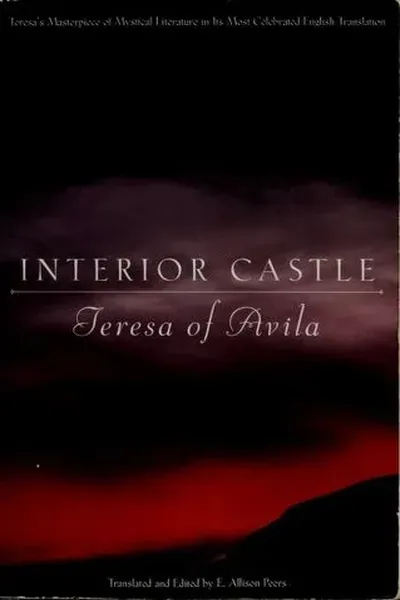
Teresa of Avila's "Obras completas" is not merely a collection of spiritual treatises; it is an intensely personal and meticulously structured account of the soul's ascent. The clarity with which she articulates the stages of prayer, particularly in "The Interior Castle," remains astonishing. Her ability to translate ineffable mystical experiences into relatable, albeit demanding, practices sets her apart. The work's primary limitation, for a modern reader without theological training, is the dense theological framework, which requires significant contextual understanding. However, her description of the 'prayer of self-abandonment' as a state of profound peace and surrender offers a glimpse into the transformative power of her teachings, transcending mere doctrine. This compilation stands as an indispensable record of one of Western mysticism's most articulate voices.
📝 Description
83
Teresa of Avila's collected writings, including 'The Interior Castle,' detail her 16th-century path to divine union.
Obras completas gathers the spiritual writings of Teresa of Avila, a 16th-century Spanish Carmelite nun. Her work details her experiences with contemplative prayer and her structured approach to the soul's progression toward God. Key texts like "The Interior Castle" and "The Way of Perfection" describe a spiritual life through metaphors of castles and journeys, outlining stages of inner development. Teresa's writings reflect her deep engagement with Catholic doctrine during the Counter-Reformation, though they also drew the attention of the Spanish Inquisition.
This compilation offers direct access to primary source material for students of Christian mysticism. It presents Teresa's methods for prayer, her insights into self-knowledge and humility, and her descriptions of various prayer states, from vocal prayer to mystical union. The texts are valuable for understanding the development of Western contemplative traditions and the personal articulation of profound spiritual encounters. Readers interested in the history of Western esotericism will find significant material here, particularly concerning the interplay of religious experience and theological expression.
Teresa of Avila's writings are central to the Christian mystical tradition, specifically within the Carmelite reform she co-founded. Her emphasis on interior experience and direct knowledge of God, articulated through structured methods of prayer, places her work within a lineage of Christian contemplation that seeks union with the divine. While firmly rooted in orthodox Catholic theology, her detailed descriptions of inner states and spiritual progression align with broader esoteric interests in the transformative potential of consciousness and the inner life.
💡 Why Read This Book?
• Gain a structured method for contemplative prayer directly from Teresa of Avila's "The Interior Castle," learning how to approach the 'prayer of quiet' through disciplined practice. • Understand the historical context of 16th-century Spanish mysticism by engaging with her writings, which were shaped by the Counter-Reformation and the scrutiny of the Inquisition. • Explore the concept of the 'Interior Castle' and its seven mansions, a powerful metaphor for the soul's journey towards union with the divine, offering a unique framework for self-examination.
⭐ Reader Reviews
Honest opinions from readers who have explored this book.
❓ Frequently Asked Questions
What is the primary focus of Teresa of Avila's "Obras completas"?
The collection focuses on Teresa of Avila's spiritual writings, particularly her systematic explorations of contemplative prayer, the soul's journey toward God, and mystical union, as exemplified in "The Interior Castle" and "The Way of Perfection."
When were Teresa of Avila's major works first published or compiled?
While Teresa of Avila lived in the 16th century, her major works like "The Interior Castle" were published in the 1570s and 1580s. This compilation, "Obras completas," first appeared in 1986, gathering her writings for a modern audience.
What is the "Interior Castle" in Teresa of Avila's teachings?
The "Interior Castle" is a central metaphor in Teresa's work, representing the soul as a castle with many mansions. Each mansion signifies a different stage of spiritual development and the soul's progression toward union with God.
Was Teresa of Avila's work controversial during her lifetime?
Yes, her writings were examined by the Spanish Inquisition due to their intensely personal and ecstatic descriptions of divine union, although she ultimately remained within orthodox doctrine.
What is the significance of "The Way of Perfection"?
"The Way of Perfection" offers practical guidance for nuns in the reformed Carmelite convents, detailing methods of prayer and virtuous living necessary for spiritual progress and community life.
How does Teresa of Avila describe the process of prayer?
She describes prayer as a progression through various stages, from mental and vocal prayer to higher forms of contemplative union, emphasizing humility, self-knowledge, and the active use of the intellect and affections.
🔮 Key Themes & Symbolism
The Interior Castle
This central metaphor depicts the soul as a castle with multiple mansions, representing stages of spiritual growth and intimacy with God. Teresa guides the reader through these levels, from the outer courts where the soul may be distracted, to the innermost chamber where union with the Divine occurs. Understanding the progression through these mansions is key to grasping her systematic approach to spiritual development and the challenges faced at each stage.
Forms of Prayer
Teresa meticulously outlines various methods of prayer, differentiating between vocal prayer, mental prayer, and the more advanced stages of contemplative prayer, such as the prayer of quiet and the prayer of union. She emphasizes that even simple forms of prayer, when practiced with devotion and perseverance, can lead to profound spiritual transformation. Her work provides practical instructions for cultivating a consistent prayer life.
Self-Knowledge and Humility
A recurring theme is the absolute necessity of self-knowledge and profound humility as the foundation for any genuine spiritual progress. Teresa argues that understanding one's own weaknesses and dependence on God is crucial for detaching from pride and worldly distractions. This self-awareness, coupled with humility, opens the soul to receive divine grace and move closer to God.
Divine Union
The ultimate goal of Teresa's spiritual program is union with God. She describes this state not as a loss of self, but as a profound merging of the will and affections with the Divine will, characterized by peace, joy, and an overwhelming sense of God's presence. Her descriptions of these mystical experiences are both deeply personal and universally resonant for those seeking spiritual fulfillment.
💬 Memorable Quotes
Direct passages from the work, attributed to the author.
“The soul that gives itself to prayer is the object of my greatest love.”
— This statement highlights Teresa's deep conviction about the efficacy and importance of prayer. It suggests that dedicating oneself to prayer is the most pleasing and significant act one can perform in the eyes of God.
“Let nothing disturb you, let nothing frighten you, all things pass, God alone is unchanging.”
— This expresses a core principle of Stoic and mystical detachment. It encourages the practitioner to maintain inner peace amidst life's transience by anchoring oneself in the eternal nature of the Divine.
“The path to God is not through many books, but through a life of prayer.”
— This emphasizes practice over theory in spiritual development. Teresa prioritizes direct experience and consistent prayer over mere intellectual study, valuing lived faith above all else.
“When we are in the prayer of union, we are truly ourselves.”
— This paradoxical statement suggests that true selfhood is realized not in isolation, but in the profound connection and merging with the Divine. It implies that our deepest identity is found in God.
💡 Key Ideas
Editorial paraphrase of the work's core concepts — not direct quotes.
I am not afraid of suffering; I am afraid of not suffering enough.
This quote, often attributed to her, reflects a perspective where hardship is seen as a means of purification and a sign of God's favor, an opportunity to grow closer to the Divine through shared suffering.
🌙 Esoteric Significance
Tradition
Teresa of Avila is a paramount figure within the Christian mystical tradition, specifically the contemplative branch of Catholicism. While not fitting neatly into later esoteric movements like Hermeticism or Kabbalah, her work profoundly influenced later Western esoteric thought by providing a detailed map of interior consciousness and divine encounter. Her structured approach to the soul's journey and emphasis on direct experience of the Divine aligns with the goals of many esoteric paths seeking Gnosis or union.
Symbolism
The "Interior Castle" is her most potent symbol, representing the soul's architecture and stages of spiritual ascent. The "mansions" within the castle signify levels of purification, prayer, and divine indwelling. Another key motif is the "fountain" or "living water," symbolizing God's grace and the soul's thirst for divine connection, a common symbol across many spiritual traditions.
Modern Relevance
Teresa's teachings continue to be studied by spiritual directors, theologians, and practitioners of contemplative prayer. Contemporary schools of mindfulness and contemplative practices, even those secularized, often draw implicitly or explicitly on the deep psychological insights and methods of spiritual discipline articulated by Teresa and other Christian mystics. Her work is a touchstone for anyone exploring the depths of consciousness and the nature of divine encounter.
👥 Who Should Read This Book
• Students of Christian mysticism: To engage directly with one of the most articulate and influential voices in the tradition, understanding the historical development of contemplative prayer. • Seekers of profound spiritual experience: To learn systematic methods for deepening one's prayer life and cultivating a more intimate relationship with the Divine, as outlined in "The Interior Castle." • Scholars of religious history and comparative spirituality: To analyze the intersection of mysticism, institutional religion (the Catholic Church), and individual spiritual authority during the 16th century.
📜 Historical Context
Teresa of Avila penned her influential works in the latter half of the 16th century, a tumultuous period for Catholicism marked by the Counter-Reformation. As the Catholic Church grappled with the Protestant Reformation, figures like Teresa offered a renewed focus on interior spirituality and mystical experience. Her writings, particularly "The Interior Castle" (published 1577), were scrutinized by the Spanish Inquisition, a proof of their lasting impact and the era's theological vigilance. She engaged in significant reform of the Carmelite Order, establishing new convents and advocating for a stricter, more contemplative life. Her contemporary, St. John of the Cross, shared her reformist zeal and mystical insights, collaborating on the spiritual renewal of the order. While deeply orthodox, the intensity of her mystical experiences sometimes placed her work on the edge of perceived heterodoxy, highlighting the delicate balance mystics had to strike.
📔 Journal Prompts
Reflection on the "Interior Castle"'s first mansion and its relation to current distractions.
Mapping personal prayer practices onto Teresa's described "forms of prayer."
Examining the role of "humility" in navigating spiritual challenges.
Contemplating the concept of "divine union" as described by Teresa.
Writing about moments of profound peace, akin to the "prayer of quiet."
🗂️ Glossary
Interior Castle
A central metaphor used by Teresa of Avila to describe the soul as a castle with multiple rooms or 'mansions,' representing different stages of spiritual development and closeness to God.
Mansions
The individual rooms or levels within the 'Interior Castle,' each signifying a distinct phase in the soul's journey towards God, characterized by specific spiritual challenges and graces.
Vocal Prayer
Prayer that is recited aloud or mentally, using set words, often the Our Father or Hail Mary. Teresa saw this as a foundational but not ultimate form of prayer.
Mental Prayer
Prayer that involves internal reflection, meditation, and conversation with God using one's own thoughts and affections, moving beyond recited words.
Prayer of Quiet
A supernatural infused state where the soul experiences a profound sense of divine presence and peace, with the faculties (intellect, will, memory) being gently drawn towards God.
Prayer of Union
A higher form of contemplative prayer where the soul experiences a temporary, intense merging with God, often described as a spiritual marriage, characterized by ecstasy and profound transformation.
Self-Knowledge
The crucial practice of understanding one's own nature, limitations, sins, and dependence on God, seen by Teresa as essential for spiritual growth and humility.
🔮 Readers Also Liked
Browse all →






More by Teresa of Avila
All books →
![Camino de perfección [por] Santa Teresa de Jesús](/img/thumb/camino-de-perfecci-n-por-santa-teresa-de-jes-s-teresa-of-avila.webp)



More Free Mysticism & Contemplation Books
View all →