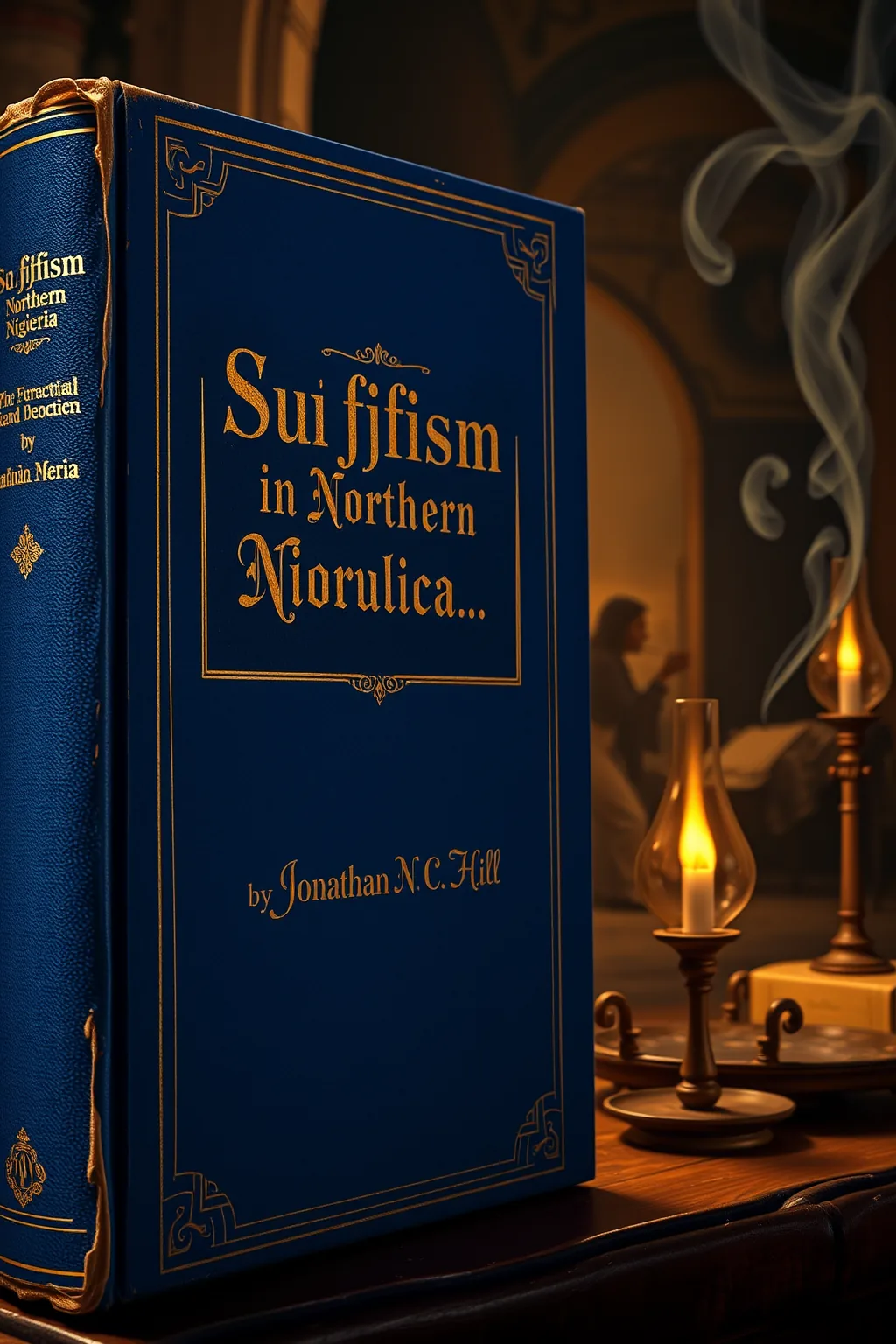
Sufism in Northern Nigeria: A Force for Counter-Radicalization?
 78
78

Sufism in Northern Nigeria: A Force for Counter-Radicalization?



Alaric Kestrel (Metaphysical Studies Reviewer) — In 'Sufism in Northern Nigeria,' Jonathan N.C. Hill masterfully excavates the esoteric underpinnings of a tradition often misunderstood. He highlights how Sufi metaphysics, emphasizing the annihilation of the ego in divine love and the recognition of the Universal Man, provides a robust spiritual bulwark against divisive extremism. The author's meticulous research illuminates the symbolic language and ritualistic practices that foster communal cohesion and inner peace, crucial elements in countering radicalization. This work is indispensable for scholars of Islamic mysticism and for strategists seeking to grasp the subtle yet powerful forces shaping West Africa's spiritual and geopolitical future.
📝 Description
78
Jonathan N.C. Hill's 2022 book examines Sufism's role in countering radicalism in Northern Nigeria.
Jonathan N.C. Hill's research investigates the complex relationship between Sufism and radical ideologies in Northern Nigeria. The book focuses on how traditional Sufi practices, particularly within the Tijaniyya and Qadiriyya orders, function as a spiritual bulwark against extremist recruitment. Hill details the symbolic language, contemplative disciplines, and community structures inherent in these orders, arguing they foster a resilient form of West African Islam.
The work assesses the potential of these Sufi traditions to promote peace and safeguard spiritual heritage amidst contemporary challenges. It considers the interplay between faith, local culture, and the broader geopolitical situation. The book aims to provide a clear understanding of how established spiritual paths can offer alternatives to violent extremism.
This work situates Sufism, the mystical dimension of Islam, within the specific context of Northern Nigeria. It highlights contemplative practices, symbolic interpretation, and the pursuit of divine knowledge as central to Sufi life. The book emphasizes how these esoteric elements, passed down through established orders, offer a distinct spiritual path that contrasts with radical interpretations of faith. It examines the tradition's capacity for internal resilience and its role in fostering societal cohesion through devotional engagement.
💡 Why Read This Book?
This book offers critical insights into the spiritual resilience of West African Islam. It is essential for seekers of esoteric knowledge, scholars of comparative religion, and practitioners interested in the practical application of mystical traditions for peacebuilding. Discover how ancient Sufi wisdom offers a potent antidote to modern radicalization, fostering understanding and hope.
⭐ Reader Reviews
Honest opinions from readers who have explored this book.
❓ Frequently Asked Questions
What is Sufism?
Sufism, or Tasawwuf, is the mystical dimension of Islam, focusing on the inner journey towards direct experience of God through practices like meditation, remembrance, and self-purification.
How does Sufism counter radicalization?
Sufism emphasizes love, compassion, tolerance, and the pursuit of inner peace, offering a spiritual framework that inherently rejects extremist ideologies of hate and violence.
Which Sufi orders are prominent in Northern Nigeria?
The most influential orders in Northern Nigeria are the Tijaniyya and Qadiriyya, each with distinct lineages, practices, and interpretations of Islamic mysticism.
What is the historical significance of Sufism in the region?
Sufism has been a dominant force in West African Islam for centuries, shaping its cultural, social, and spiritual landscape, and historically serving as a bulwark against external ideological pressures.
Is this book suitable for beginners?
Yes, while rigorous, the book provides accessible explanations of Sufi concepts, making it valuable for both newcomers and seasoned scholars interested in Islamic mysticism and its societal impact.
🔮 Key Themes & Symbolism
The Inner Path of Divine Love
This theme explores the core Sufi doctrine of 'ishq ilahi,' the passionate, transformative love for the Divine. It explores how the pursuit of this love, through rigorous spiritual discipline and contemplation, cultivates inner peace, humility, and a profound sense of interconnectedness, thereby inoculating individuals against the divisive narratives of radical ideologies. The emphasis is on the personal transformation that emerges from seeking nearness to God, fostering a spiritual strength that transcends worldly temptations.
Symbolism and Community in Sufi Practice
This theme examines the collection of symbolism and ritual that underpins Sufi practice in Northern Nigeria. From the vivid language of poetry and music to the structured communal gatherings (dhikr), these elements serve to transmit esoteric knowledge and reinforce spiritual bonds. The communal aspect is vital, fostering a sense of belonging and mutual support that acts as a powerful deterrent to isolation and susceptibility to extremist recruitment. The symbolic language provides a deeper, multi-layered understanding of faith, far removed from simplistic literalism.
Sufism as a Sociopolitical Stabilizer
This theme investigates the historical and contemporary role of Sufi orders as stabilizing forces within Nigerian society. Beyond individual spiritual development, Sufism has traditionally fostered social cohesion, promoted education, and engaged in conflict resolution. The book explores how these established networks and their inherent values of tolerance and peaceful coexistence can be strategically leveraged to counter the spread of radical thought and contribute to regional security and stability, presenting a nuanced view of faith as a tool for peace.
💬 Memorable Quotes
Direct passages from the work, attributed to the author.
“Radicalism thrives in the void; Sufism fills it with love.”
— This highlights the contrast between extremist ideologies that exploit spiritual and emotional emptiness and the Sufi practice of cultivating divine love, which provides fulfillment and meaning.
“In the echo of dhikr, unity is found.”
— This refers to the Sufi practice of remembrance of God, often performed communally, which fosters a profound sense of spiritual and social unity among participants.
“The veil of the self obscures the face of the Beloved.”
— This poetic expression signifies the Sufi goal of ego annihilation (fana), where the illusion of individual selfhood must be dissolved to perceive and unite with the Divine.
“Wisdom is not found in dogma, but in direct tasting.”
— This emphasizes the experiential nature of Sufi knowledge, where true understanding comes from direct spiritual encounter rather than rigid adherence to external doctrines.
💡 Key Ideas
Editorial paraphrase of the work's core concepts — not direct quotes.
The path to God is the path of the heart.
This quote expresses the Sufi emphasis on inner experience and emotional connection with the Divine as the primary means of spiritual realization, transcending mere intellectual understanding.
🌙 Esoteric Significance
Tradition
The esoteric tradition explored is classical Islamic mysticism, known as Sufism (Tasawwuf). It centers on the Sufi path (tariqa) as a method for purifying the heart and soul to achieve direct experiential knowledge of God (ma'rifa). This tradition emphasizes spiritual states, inner purification, and the guidance of a spiritual master (shaykh) to read through the complexities of the inner journey towards divine proximity.
Symbolism
Key symbols include the heart (qalb) as the seat of divine light, the veil (hijab) representing what obscures truth, the mirror as a reflection of the Divine, and the concept of the 'Universal Man' (al-insan al-kamil) as a perfect manifestation of God's attributes. Practices like dhikr (remembrance) and muraqaba (contemplation) employ symbolic actions and words to access deeper spiritual realities, moving beyond literal interpretation.
Modern Relevance
In an era grappling with extremism and alienation, the esoteric teachings of Sufism offer profound modern relevance. Its emphasis on compassion, inner peace, and the interconnectedness of all beings provides a potent antidote to divisive ideologies. The communal structures and spiritual discipline inherent in Sufism foster resilience, critical thinking, and a deep sense of purpose, equipping individuals to resist radicalization and contribute to harmonious societies.
👥 Who Should Read This Book
This book is a vital resource for several audiences. For **seekers of spiritual wisdom**, it offers a profound exploration of an ancient mystical tradition and its capacity for peacebuilding. **Scholars of Islamic studies, comparative religion, and African history** will find it an indispensable, rigorously researched academic text. **Practitioners of contemplative traditions** will gain insights into a living, dynamic form of Islamic mysticism. Furthermore, **policymakers, defense analysts, and those concerned with global security** will discover a nuanced understanding of how traditional spiritual forces can serve as powerful agents of counter-radicalization in volatile regions.
📜 Historical Context
The period examined by Jonathan N.C. Hill in 'Sufism in Northern Nigeria' is one marked by the enduring legacy of Islamic scholarship and a deep-seated tradition of mystical practice. For centuries, Sufi orders have been integral to the socio-cultural fabric of the region, shaping intellectual discourse, ethical frameworks, and community life. This historical continuity provides a crucial backdrop against which contemporary challenges, including the rise of extremist ideologies, are viewed. The influence of figures like Usman dan Fodio and the established networks of the Qadiriyya and Tijaniyya demonstrate a long-standing capacity for resilience and adaptation within these spiritual traditions, offering a rich historical reservoir of counter-narratives and communal strength.
📔 Journal Prompts
How does the concept of 'divine love' in Sufism offer an alternative to the 'hate' espoused by extremist groups?
Reflect on a personal experience where community and shared spiritual practice provided strength against external pressures.
What symbolic elements from Sufism resonate with your own spiritual journey, and why?
Consider the role of spiritual discipline in cultivating inner peace and resilience in the face of societal challenges.
How can the principles of tolerance and compassion, central to Sufism, be practically applied in contemporary interfaith dialogue?
🗂️ Glossary
Tasawwuf
The Arabic term for Sufism, referring to the mystical dimension of Islam focused on the purification of the heart and the pursuit of direct experiential knowledge of God.
Tariqa
A Sufi order or path, a spiritual brotherhood or sisterhood guided by a specific lineage of masters and distinct practices for attaining spiritual realization.
Dhikr
The remembrance of God, a central Sufi practice involving the recitation of divine names, phrases, or prayers, often performed communally and rhythmically.
Ma'rifa
Direct experiential knowledge of God, a goal of the Sufi path, transcending intellectual understanding to a state of intuitive and profound spiritual insight.
Shaykh
A spiritual guide or master in Sufism, who possesses deep spiritual knowledge and guides disciples on the path towards God.
This book appears in 2 collections
🔮 Readers Also Liked
Browse all →






From the “Christian Mysticism” Collection
View all →









More Free Mysticism & Contemplation Books
View all →